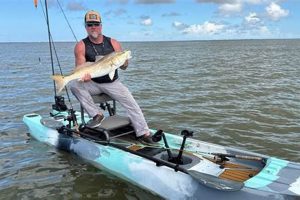
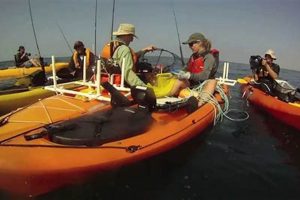
Small, human-powered watercraft designed for angling offer distinct advantages. Kayaks, characterized by a closed cockpit and double-bladed paddle, provide maneuverability and stability, particularly in challenging conditions. Canoes, open vessels propelled by single-bladed paddles, offer greater carrying capacity and versatility for diverse fishing styles and gear. Both options enable access to shallow waters and secluded fishing spots often unreachable by larger motorized boats.
The use of these vessels for angling has a rich history, evolving from traditional indigenous fishing practices to a popular recreational activity. Modern designs incorporate specialized features like rod holders, anchor trolleys, and livewells, enhancing the fishing experience. Their relatively low cost and ease of transport contribute to their widespread appeal, offering a cost-effective and environmentally friendly way to enjoy the sport. Moreover, they promote a closer connection with nature and a more active, engaging form of angling.
This discussion will further explore the specific attributes of each vessel type, highlighting their respective strengths and weaknesses in various fishing scenarios. Factors such as stability, speed, storage capacity, and suitability for different water conditions will be considered to provide a comprehensive understanding of appropriate vessel selection for diverse angling pursuits.
Tips for Angling from Small Watercraft
Proper preparation and technique enhance safety and fishing success when using small human-powered vessels. Consider these essential tips before embarking on an angling excursion.
Tip 1: Prioritize Safety Equipment: Always wear a personal flotation device (PFD). Carry a whistle, signaling device, and first-aid kit. Inform someone of the planned fishing location and estimated return time.
Tip 2: Check Weather Conditions: Consult marine forecasts before departure. Avoid venturing out in strong winds, lightning storms, or hazardous conditions. Be aware of changing weather patterns throughout the day.
Tip 3: Balance and Stability: Distribute weight evenly within the vessel. Avoid sudden movements or leaning too far over the side. Practice entering and exiting the craft in shallow water before venturing into deeper areas.
Tip 4: Paddle or Paddle Choice: Select an appropriately sized paddle for optimal efficiency and comfort. Learn basic paddling techniques to maximize maneuverability and minimize fatigue.
Tip 5: Fishing Gear Organization: Secure and organize fishing rods, tackle boxes, and other equipment to prevent entanglement and loss overboard. Utilize rod holders and storage compartments effectively.
Tip 6: Respect Wildlife and the Environment: Adhere to catch and release guidelines whenever possible. Properly dispose of fishing line and other waste. Avoid disturbing nesting areas and sensitive habitats.
Tip 7: Navigation and Awareness: Familiarize oneself with local waterways and regulations. Carry a map or GPS device, and be mindful of other boat traffic and potential hazards.
By adhering to these guidelines, anglers can significantly enhance their safety and enjoyment while fishing from small watercraft. Careful planning and responsible practices ensure a rewarding experience on the water.
The subsequent section will offer further insights into selecting the most suitable vessel type based on individual fishing preferences and targeted species.
1. Stability

Stability is a paramount concern when selecting a small watercraft for angling. A stable platform ensures angler safety and facilitates effective fishing techniques, allowing focus on the sport rather than maintaining balance. Various design elements and external factors influence vessel stability, impacting the overall angling experience.
- Hull Design:
Hull shape significantly impacts stability. Wider, flatter hulls generally offer greater initial stability, resisting tipping when at rest. However, they may be less stable in rough water compared to hulls with a deeper V-shape or those incorporating outriggers or pontoons. For example, a wide, flat-bottomed canoe excels in calm lakes, while a kayak with a moderate V-hull performs better in choppy conditions. Anglers should consider their typical fishing environment when evaluating hull design.
- Center of Gravity:
A lower center of gravity enhances stability. Weight distribution within the vessel significantly affects the center of gravity. Keeping heavier items low and centered improves stability. Standing up in a small watercraft raises the center of gravity, decreasing stability. Anglers should remain seated whenever possible, especially in challenging conditions, and distribute gear evenly to maintain a low center of gravity.
- Water Conditions:
Calm water allows for greater stability in most vessels. Wind, waves, and currents can significantly compromise stability, demanding careful vessel selection and operation. A stable vessel in calm lake conditions might become unstable in a swift river or choppy ocean bay. Anglers should choose a vessel appropriate for the anticipated water conditions and exercise caution when navigating challenging environments.
- Angler Behavior:
Sudden movements or leaning over the side can compromise stability, potentially leading to capsizing. Anglers should move deliberately and avoid abrupt shifts in weight distribution. Practicing entering, exiting, and moving within the vessel in shallow, calm water can improve confidence and reduce the risk of accidental capsizing. Furthermore, understanding the vessel’s stability limits is crucial for safe operation.
Ultimately, achieving optimal stability involves a combination of selecting a vessel with appropriate design characteristics for the intended fishing environment and practicing safe operating procedures. Understanding the interplay of these factors allows anglers to make informed decisions and enjoy a safe and productive fishing experience.
2. Maneuverability

Maneuverability is a critical factor influencing the effectiveness and enjoyment of angling from small watercraft. The ability to precisely position the vessel, navigate tight spaces, and efficiently cover diverse water features directly impacts fishing success. Several factors contribute to a vessel’s maneuverability, each playing a distinct role in the overall angling experience.
- Hull Length and Shape:
Shorter hulls generally offer greater maneuverability, allowing for tighter turns and quicker changes in direction. Longer hulls, while offering superior tracking in straight lines, require more effort and space to turn. Hull shape also influences maneuverability. A kayak with a pronounced rocker (upward curve at the bow and stern) facilitates turning, while a flatter hull tracks more efficiently in a straight line. Canoes, with their generally shorter lengths and shallow drafts, are often highly maneuverable in calm water.
- Water Conditions:
Currents, wind, and waves can significantly impact maneuverability. Strong currents may require substantial paddling effort to maintain desired positioning, while wind can push lightweight vessels off course. Kayaks, with their lower profile and directional stability, generally handle windy conditions better than canoes. Calm, flat water provides the optimal conditions for maximizing maneuverability regardless of vessel type.
- Propulsion System:
Paddle type and technique directly affect maneuverability. Double-bladed kayak paddles provide efficient propulsion and precise control, enabling quick turns and adjustments. Single-bladed canoe paddles, while offering versatility, may require more practice to achieve precise maneuvering. Pedal-driven kayaks offer hands-free propulsion, allowing anglers to focus on fishing while maintaining position, enhancing maneuverability in specific situations.
- Vessel Weight and Load:
Lighter vessels are generally more maneuverable than heavier ones. The weight of gear and the angler also contribute to overall mass and inertia, impacting maneuverability. A heavily loaded canoe will require more effort to turn and accelerate than a lightly loaded one. Distributing weight evenly within the vessel also contributes to balanced handling and improved maneuverability.
The interplay of these factors determines a vessel’s maneuverability, influencing its suitability for specific fishing environments and techniques. Anglers seeking to navigate narrow creeks or swiftly changing currents require highly maneuverable vessels, while those fishing open lakes may prioritize stability and tracking over nimble handling. Careful consideration of these elements ensures selecting the appropriate craft for a successful and enjoyable fishing experience.
3. Storage Capacity

Storage capacity is a critical consideration when selecting a fishing kayak or canoe. Adequate storage space directly impacts the angler’s ability to carry essential gear, including tackle boxes, rods, safety equipment, and personal items. Insufficient storage can lead to a cluttered vessel, hindering movement and potentially compromising safety. Conversely, ample storage facilitates organized gear stowage, promoting efficient angling and a more enjoyable experience. For instance, a kayak angler targeting large saltwater species requires significantly more storage for specialized equipment compared to a canoe angler fishing for panfish in a small pond. The type and duration of the fishing trip also influence storage needs. Overnight excursions necessitate space for camping gear and provisions, demanding vessels with larger storage compartments or the capacity to securely lash gear to the deck.
Several factors influence the storage capacity of these vessels. Kayaks often feature sealed hatches and internal storage compartments, providing protection from water and the elements. Sit-on-top kayaks offer open deck space for storing gear in dry bags or crates, while sit-inside kayaks prioritize internal storage. Canoes, with their open design, provide ample space for gear but often lack dedicated, waterproof compartments. Modern fishing kayaks and canoes frequently incorporate specialized storage solutions, such as rod holders, tackle box compartments, and anchor trolleys, maximizing space utilization and enhancing angling efficiency. Anglers should carefully assess their gear requirements and anticipated fishing conditions when evaluating storage capacity, ensuring sufficient space for essential equipment and personal items.
Understanding the relationship between storage capacity and vessel type empowers anglers to make informed decisions. Selecting a vessel with appropriate storage capacity ensures efficient gear management, contributing to a safe, organized, and ultimately more successful fishing experience. While maximizing storage space is desirable, it should be balanced against other essential factors such as stability and maneuverability, ensuring the chosen vessel meets the angler’s overall needs and fishing style.
4. Fishing Features
Specialized features distinguish fishing kayaks and canoes from their recreational counterparts. These features enhance angling effectiveness, efficiency, and overall enjoyment. Integrating these design elements caters specifically to the needs of anglers, optimizing the vessel for diverse fishing styles and environments. Careful consideration of these features is essential when selecting a kayak or canoe for angling purposes.
- Rod Holders
Rod holders secure fishing rods, freeing the angler’s hands for other tasks like paddling, landing fish, or adjusting tackle. Flush-mounted rod holders offer a streamlined profile, minimizing interference while paddling, while adjustable rod holders allow for customized positioning based on fishing technique and target species. Multiple rod holders enable anglers to employ diverse fishing methods simultaneously, increasing catch potential. For example, a kayak angler might use one rod for trolling and another for bottom fishing.
- Anchor Trolleys
Anchor trolleys allow controlled positioning in current, wind, or along specific structures. By adjusting the anchor line’s position along the side of the vessel, anglers can maintain optimal presentation and prevent drifting away from target areas. This feature proves especially valuable in river fishing or when targeting specific underwater features like drop-offs or weed beds. An angler fishing from a canoe in a river can use an anchor trolley to hold position upstream of a promising eddy.
- Livewells
Livewells maintain the health and vitality of caught fish intended for later release or consumption. These integrated tanks circulate and aerate water, providing a suitable environment for keeping fish alive. Livewells are particularly beneficial in tournaments or when fishing for species requiring immediate release, ensuring their survival after capture. A bass angler in a kayak tournament utilizes a livewell to keep caught fish healthy until weigh-in.
- Gear Tracks and Mounts
Gear tracks and mounts offer versatile attachment points for fish finders, GPS units, cameras, and other accessories. These standardized systems allow anglers to customize their vessel setup based on individual needs and fishing preferences. A kayak angler might mount a fish finder on the dashboard using a gear track system, enhancing their ability to locate fish.
These specialized features, while not exhaustive, represent key considerations when selecting a fishing kayak or canoe. Evaluating these elements in conjunction with hull design, stability, and maneuverability ensures the chosen vessel aligns with the angler’s specific fishing style, target species, and intended environment. The integration of these features contributes significantly to improved angling efficiency, success, and overall enjoyment on the water.
5. Propulsion Method
Propulsion method significantly influences a fishing kayak or canoe’s performance, impacting speed, maneuverability, and overall fishing experience. Selecting an appropriate propulsion system depends on factors such as fishing environment, target species, angler preference, and physical capabilities. Understanding the advantages and disadvantages of each method is crucial for informed decision-making.
- Paddling
Traditional paddling, using a single-bladed paddle for canoes or a double-bladed paddle for kayaks, offers a cost-effective and versatile propulsion method. It provides excellent maneuverability, particularly in shallow water or tight spaces, and allows for a quiet approach, minimizing disturbance to fish. However, paddling requires physical exertion, potentially limiting fishing time or range, especially in challenging conditions like strong currents or wind. A kayak angler paddling in a mangrove forest benefits from the quiet and precise control offered by paddling, while a canoe angler traversing a large lake might find paddling tiring over long distances.
- Pedal Drive
Pedal-driven kayaks utilize a foot-powered propeller system, freeing the angler’s hands for fishing. This method offers increased speed and efficiency over long distances, reduces fatigue, and allows for simultaneous fishing and maneuvering. However, pedal drives add complexity and cost to the kayak, increase draft, potentially limiting access to shallow waters, and may be less maneuverable in tight spaces compared to paddling. A kayak angler trolling for offshore species benefits from the speed and hands-free operation of a pedal drive, while a kayak angler fishing in shallow, rocky areas might find a pedal drive impractical.
- Motorized Propulsion
Small electric motors or gas outboards can be added to kayaks or canoes, providing significant range and speed. This method reduces physical exertion and allows anglers to access distant fishing spots quickly. However, motors add weight and cost, require fuel or battery management, introduce noise that can disturb fish, and may be subject to regulatory restrictions in certain areas. A canoe angler fishing a large reservoir benefits from the range and speed of a motor, while a kayak angler fishing a protected estuary might be prohibited from using a motor.
- Sailing
Some specialized kayaks and canoes incorporate sailing rigs, harnessing wind power for propulsion. This method offers a unique and environmentally friendly way to cover long distances with minimal effort. However, sailing requires specific skills and knowledge, relies on favorable wind conditions, and may be less effective in confined or sheltered waters. A kayak angler exploring coastal areas with consistent winds might find sailing enjoyable and efficient, while a canoe angler fishing a small, inland lake would find sailing impractical.
The optimal propulsion method depends on individual angler preferences and the specific fishing scenario. Considering factors such as desired fishing range, physical capabilities, water conditions, and target species allows anglers to select the most suitable propulsion system for their needs, maximizing efficiency and enjoyment on the water. Balancing speed, maneuverability, cost, and environmental impact ensures a well-informed decision, contributing to a more rewarding fishing experience.
6. Target Species
Target species significantly influence the selection and outfitting of fishing kayaks or canoes. Different species present unique challenges and require specific angling techniques, influencing vessel choice based on factors like size, habitat, and fighting strength. Matching vessel characteristics to the target species enhances angling effectiveness, safety, and overall success.
- Size and Fighting Strength
Larger, stronger fish like tuna or muskie demand stable, robust vessels capable of handling powerful runs and aggressive fights. Smaller species like panfish or trout can be comfortably targeted from smaller, more maneuverable kayaks or canoes. For example, a large, stable sit-on-top kayak with heavy-duty rod holders is better suited for offshore angling targeting tuna compared to a lightweight, nimble kayak designed for trout fishing in small streams.
- Habitat and Fishing Environment
Target species habitat dictates the necessary vessel characteristics. Fishing for bass in shallow, weedy lakes requires a maneuverable vessel with a shallow draft, while targeting offshore species necessitates a stable, seaworthy craft capable of handling rougher conditions. A shallow-draft kayak or canoe excels in navigating tight spaces in mangrove forests or shallow flats pursuing bonefish, whereas a larger, more stable kayak is better suited for open ocean fishing targeting pelagic species like mahi-mahi.
- Fishing Techniques and Gear
Specific fishing techniques employed for different species influence vessel choice. Trolling for salmon requires a stable platform with rod holders and downriggers, while fly fishing for trout benefits from a maneuverable vessel with a low profile. A kayak equipped with a trolling motor and rod holders is ideal for trolling for walleye in large lakes, while a lightweight, maneuverable canoe is better suited for fly fishing in small rivers targeting trout.
- Angler Experience and Skill Level
Matching vessel choice to both target species and angler experience enhances safety and success. Beginners targeting smaller, less demanding species may find a stable, recreational kayak or canoe suitable, while experienced anglers pursuing larger, more challenging species may opt for specialized fishing kayaks with advanced features. A beginner angler targeting panfish in a calm pond might be comfortable in a stable recreational kayak, whereas an experienced angler targeting largemouth bass in heavy cover might prefer a bass-specific kayak with enhanced maneuverability and specialized features.
Careful consideration of target species characteristics and preferred fishing techniques is essential for selecting the appropriate fishing kayak or canoe. Matching vessel characteristics to the target species enhances angling efficiency, safety, and ultimately contributes to a more successful and rewarding fishing experience. Choosing a vessel tailored to the specific demands of the target species optimizes performance and maximizes the angler’s chances of success, whether pursuing small panfish in a quiet pond or battling powerful game fish in the open ocean.
7. Water Conditions

Water conditions significantly influence the selection and operation of fishing kayaks or canoes. Appropriate vessel choice hinges on an accurate assessment of prevailing and anticipated conditions. Navigating diverse aquatic environments requires careful consideration of factors like current, wind, waves, and water temperature. Understanding the impact of these elements ensures angler safety and contributes to a successful fishing experience.
- Current
Current strength and direction dictate vessel control and maneuverability. Strong currents necessitate kayaks or canoes with excellent tracking and efficient propulsion systems. River fishing requires vessels designed to handle moving water, while lake fishing often prioritizes stability over current management. A kayak with a rudder or skeg enhances control in flowing water, while a canoe’s shallow draft allows navigation in shallow, swift streams. Ignoring current dynamics can lead to loss of control and potentially hazardous situations.
- Wind
Wind strength and direction impact vessel stability and drift. Lightweight vessels are particularly susceptible to wind drift, requiring careful positioning and anchoring strategies. Kayaks with lower profiles generally handle wind better than canoes due to reduced windage. Fishing in open, exposed areas demands consideration of prevailing wind patterns. A strong headwind can significantly impede progress and necessitate adjustments in paddling technique or route planning. Crosswinds can destabilize a vessel, requiring corrective strokes or deployment of a sea anchor.
- Waves
Wave height and frequency influence vessel stability and seaworthiness. Kayaks designed for open water conditions typically feature longer hulls and deeper V-shapes to handle chop and swell. Canoes, generally less stable in waves, are better suited for calmer waters. Attempting to navigate rough conditions in an unsuitable vessel can result in capsizing or swamping. Understanding wave dynamics and choosing an appropriate vessel are essential for safe and successful angling in coastal or open water environments.
- Water Temperature
Water temperature affects angler comfort and safety, influencing clothing choices and the necessity of safety gear like wetsuits or drysuits. Cold water immersion poses significant risks, requiring appropriate precautions and preparedness. Furthermore, water temperature influences fish behavior and distribution, impacting fishing strategies and location selection. Anglers should dress appropriately for anticipated water temperatures and carry necessary safety equipment, particularly when fishing in cold or rapidly changing conditions. Awareness of water temperature fluctuations and potential hazards associated with cold water immersion is critical for angler safety and well-being.
Assessing water conditions before and during a fishing trip is paramount for safe and effective angling from a kayak or canoe. Selecting a vessel appropriate for the anticipated conditions, understanding the impact of these dynamic forces on vessel handling, and employing appropriate safety measures are essential for a successful and enjoyable fishing experience. Ignoring these factors can compromise safety, limit fishing effectiveness, and detract from the overall enjoyment of the sport.
Frequently Asked Questions
This section addresses common inquiries regarding the selection and use of small human-powered watercraft for angling.
Question 1: Which is more stable, a fishing kayak or a canoe?
Stability depends on hull design, width, and weight distribution. Generally, wider, flatter-bottomed canoes offer greater initial stability, while kayaks with a lower center of gravity and a V-shaped hull may provide better secondary stability in rougher water. Individual vessel design variations significantly impact stability.
Question 2: Which is easier to paddle, a fishing kayak or a canoe?
Kayaks, using a double-bladed paddle, often require less effort for sustained paddling and offer better tracking. Canoes, propelled by a single-bladed paddle, can be more versatile for maneuvering in tight spaces but may require more skill for efficient forward movement. Personal preference and physical conditioning also influence perceived ease of paddling.
Question 3: What essential safety gear is recommended for fishing from a small watercraft?
Essential safety gear includes a personal flotation device (PFD), a whistle, a visual signaling device, a first-aid kit, and communication equipment. Informing someone of the planned fishing location and estimated return time is also crucial. Additional safety equipment may be required depending on specific regulations and environmental conditions.
Question 4: How does one choose between a sit-on-top and a sit-inside kayak for fishing?
Sit-on-top kayaks offer easier entry and exit, better self-rescue capabilities, and more open storage space. Sit-inside kayaks provide greater protection from the elements and often feature more dedicated storage compartments. Angler preference, fishing style, and anticipated water conditions influence the choice between these kayak types.
Question 5: Are fishing kayaks or canoes suitable for saltwater fishing?
Specific models of both kayaks and canoes are designed for saltwater fishing. These typically feature enhanced stability, corrosion-resistant hardware, and specialized features for handling rougher water conditions. Careful selection based on intended saltwater environment and target species is essential.
Question 6: How does one transport a fishing kayak or canoe?
Transport methods vary depending on vessel size and vehicle type. Roof racks, trailers, and truck bed systems are common transport solutions. Proper securing and weight distribution during transport are crucial for safe handling and to prevent damage to the vessel or vehicle.
Understanding these frequently asked questions provides a foundational knowledge base for making informed decisions regarding the selection and safe operation of fishing kayaks and canoes. Further research and consultation with experienced anglers can enhance understanding and ensure a safe and enjoyable angling experience.
The following section will explore specific considerations for choosing between a kayak and a canoe for various fishing scenarios.
Conclusion
Careful vessel selection, informed by factors such as stability, maneuverability, storage capacity, specialized features, propulsion method, target species, and anticipated water conditions, is paramount for successful angling from small watercraft. Whether a kayak or canoe proves most suitable depends entirely upon individual angler needs and preferences, balanced against the practicalities of the intended fishing environment and target species. No single vessel type universally outperforms the other; rather, each presents distinct advantages and disadvantages within specific contexts.
Informed decision-making, combined with a commitment to safety practices and environmental stewardship, ensures a rewarding and sustainable approach to angling from human-powered watercraft. Continued exploration of available vessel options, combined with practical experience on the water, empowers anglers to refine their approach, maximize their effectiveness, and deepen their connection with the aquatic environment. The choice between a fishing kayak or canoe represents a pivotal decision, shaping the overall angling experience and influencing success on the water.