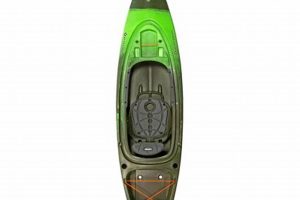
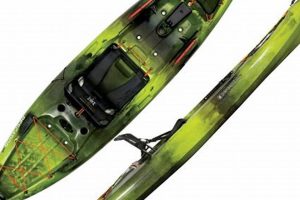
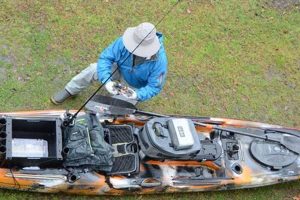
This specific model is a sit-on-top vessel designed for angling. Its compact size, the “10” designating a 10-foot length, offers maneuverability ideal for navigating smaller waterways, including ponds, creeks, and rivers, while retaining sufficient stability for open water. The sit-on-top design promotes ease of entry and exit, making it suitable for anglers of varying experience levels.
The combination of portability, stability, and fishing-specific features positions this type of watercraft as a versatile option for anglers. These features often include integrated rod holders, gear tracks for mounting accessories, and ample storage for tackle and equipment. This focus on angler-specific design contributes to a comfortable and efficient fishing experience. The relatively compact size simplifies transportation and storage, broadening its appeal to those with limited space or those seeking a less cumbersome vessel.
This discussion will explore the design features, performance characteristics, target audience, and potential accessories related to compact, sit-on-top fishing kayaks. Furthermore, it will address considerations for selecting and utilizing such a vessel for a successful and enjoyable angling experience.
Tips for Optimized Kayak Fishing
Proper preparation and technique enhance on-the-water safety and fishing success. The following tips offer guidance for maximizing the angling experience in compact, sit-on-top kayaks.
Tip 1: Prioritize Stability: Weight distribution plays a crucial role in kayak stability. Centering gear and maintaining a low center of gravity minimizes the risk of capsizing. Avoid sudden movements and distribute weight evenly throughout the hull.
Tip 2: Practice Paddle Strokes: Efficient paddling conserves energy and allows for precise maneuvering. Mastering basic forward and reverse strokes, along with sweep strokes for turning, enhances control and navigation, particularly in challenging conditions.
Tip 3: Utilize Anchor Systems: Proper anchoring maintains position in desired fishing locations. Deploying a lightweight anchor system, suitable for the kayak’s size and the waterway’s conditions, proves essential for staying on target, especially in currents or wind.
Tip 4: Organize Tackle and Gear: Accessibility to essential tackle and equipment streamlines the fishing process. Utilizing waterproof storage compartments and readily accessible gear tracks keeps essential items within reach and protected from the elements.
Tip 5: Dress Appropriately: Appropriate attire contributes to comfort and safety. Dressing in layers allows for adaptation to changing weather conditions. Wearing a personal flotation device (PFD) is crucial for safety and often legally required.
Tip 6: Plan Fishing Locations Strategically: Researching fishing locations and understanding water conditions enhances the likelihood of success. Identifying target species habitats and considering factors like water depth, current, and structure inform strategic location selection.
Tip 7: Respect Wildlife and the Environment: Responsible angling practices preserve the natural environment. Adhering to catch-and-release guidelines when appropriate, properly disposing of fishing line and other waste, and respecting wildlife habitats contribute to sustainable angling.
Implementing these strategies contributes to a safer and more productive angling experience, maximizing enjoyment and minimizing potential challenges.
These considerations underscore the importance of preparation, technique, and responsible practices for successful kayak fishing. The following section concludes with key takeaways for enhancing on-the-water experiences.
1. Compact Size
The compact size of the Moken 10, measuring approximately 10 feet in length, directly influences its suitability for specific angling environments and transportation logistics. This length facilitates maneuverability within confined waterways such as creeks, smaller rivers, and ponds, where larger vessels would be cumbersome or impractical. The reduced length also decreases the turning radius, allowing for quicker adjustments in position and navigation through complex obstacles like fallen trees or emergent vegetation. This attribute proves advantageous when targeting species that inhabit these tighter environments.
The compact dimensions contribute to simplified transportation and storage. The kayak’s lighter weight and shorter length make it easier to load and unload from vehicle roof racks or transport on trailers. This portability expands access to remote fishing locations and reduces the physical demands associated with handling larger, heavier kayaks. Furthermore, the compact size simplifies storage in garages, sheds, or even apartments, appealing to anglers with limited storage space. For instance, an angler living in an urban environment with limited storage could easily store the Moken 10, whereas a larger kayak might prove impractical.
The compact size of the Moken 10 offers distinct advantages for navigating confined waterways and simplifying transport and storage. While this size may limit capacity for extended multi-day trips or extremely rough water conditions, the benefits of maneuverability and portability make it a practical choice for anglers targeting specific fishing environments and prioritizing ease of transport and storage. Understanding these size considerations allows anglers to select a vessel appropriate for their individual needs and target fishing locations.
2. Sit-on-top Design

The sit-on-top design of the Moken 10 significantly influences its usability and suitability for specific angling scenarios. This design eliminates the enclosed cockpit found in traditional sit-inside kayaks, providing several key advantages for anglers. The open deck allows for easier entry and exit, a crucial factor for anglers who may need to quickly reposition themselves, re-enter the kayak after a swim, or manage unexpected situations on the water. This ease of access also benefits anglers with mobility limitations who may find entering and exiting a traditional kayak challenging. For example, an angler experiencing a sudden shift in balance can easily regain stability on a sit-on-top design, minimizing the risk of capsizing.
The self-draining nature of the sit-on-top design enhances safety and simplifies water management. Scupper holes in the deck allow water to drain continuously, preventing water accumulation and maintaining buoyancy. This feature proves particularly advantageous in choppy conditions or when navigating through waves, as it eliminates the need for manual bilge pumping. Furthermore, the open design allows anglers to easily re-enter the kayak from the water, a crucial safety consideration in the event of an accidental capsize. Consider an angler fishing in a region prone to sudden downpours. The self-draining feature of the sit-on-top design ensures the kayak remains buoyant and manageable, even in unexpected rain.
The sit-on-top design of the Moken 10 prioritizes accessibility, stability, and water management. While it may offer slightly less protection from the elements compared to a sit-inside design, the benefits of ease of entry/exit and self-draining capabilities make it a practical and safe choice for various angling scenarios. The design’s inherent stability and ease of recovery from unexpected situations further contribute to its suitability for both novice and experienced anglers. This understanding allows for informed decisions regarding kayak selection based on individual needs and anticipated fishing conditions.
3. Fishing-Specific Features

Fishing-specific features distinguish the Moken 10 from recreational kayaks, optimizing it for angling activities. These integrated design elements enhance efficiency, organization, and overall fishing success. Flush-mounted rod holders provide secure rod storage and hands-free operation, crucial for techniques like trolling or managing multiple lines. Gear tracks, strategically placed throughout the deck, allow for customizable mounting of accessories such as fish finders, GPS units, and camera mounts. These adaptable mounting systems accommodate individual preferences and specific fishing styles. Ample storage compartments, including a tank well and sealed hatches, provide secure storage for tackle boxes, dry bags, and other essential equipment. This dedicated storage minimizes clutter and keeps gear readily accessible, promoting a streamlined and efficient fishing experience. For example, an angler targeting specific species can tailor their accessory arrangement using gear tracks, optimizing their setup for the chosen fishing style.
The strategic incorporation of these features directly impacts angling practicality. Integrated rod holders prevent rod loss or damage, crucial in dynamic fishing environments. The ability to customize accessory placement via gear tracks caters to individual angling styles and specific target species. Secure storage protects valuable equipment from the elements and minimizes the risk of loss or damage. Consider an angler navigating a shallow, heavily vegetated area. Flush-mounted rod holders prevent snagging on overhanging branches, while readily accessible tackle storage allows for quick lure changes without disrupting the fishing flow. The combined effect of these features creates a dedicated fishing platform, maximizing angler efficiency and enjoyment.
The efficacy of the Moken 10 as a fishing platform hinges on the thoughtful integration of fishing-specific features. These features directly address the practical needs of anglers, enhancing organization, efficiency, and overall fishing success. The ability to customize the kayak’s setup further contributes to its versatility, allowing anglers to tailor their vessel to specific fishing styles and target species. This focused design ultimately contributes to a more productive and enjoyable on-the-water experience. This understanding allows for informed equipment selection and optimized utilization, maximizing the benefits offered by the Moken 10’s design.
4. Stability and Maneuverability
The balance between stability and maneuverability represents a critical design consideration for kayaks, particularly those intended for fishing. The Moken 10 addresses this balance to cater to the specific needs of anglers in diverse on-the-water environments. Understanding this interplay is essential for maximizing performance and safety.
- Hull Design and Stability:
The Moken 10’s hull design contributes significantly to its stability. The relatively wide beam and flat bottom enhance primary stability, resisting initial tipping. This design feature instills confidence, particularly for anglers new to kayak fishing or those navigating challenging conditions. While a wider hull can compromise maneuverability in tight spaces, the Moken 10’s moderate length mitigates this trade-off. The hull’s design allows anglers to comfortably stand and cast, a crucial advantage for sight fishing or fly fishing.
- Maneuverability in Confined Waters:
The Moken 10’s shorter length, compared to larger touring kayaks, enhances maneuverability in confined waterways. Rivers, creeks, and mangrove tunnels often require quick turns and precise navigation. The kayak’s responsiveness to paddle input facilitates these maneuvers, allowing anglers to access prime fishing spots inaccessible to larger vessels. This maneuverability also proves valuable in navigating through obstacles like fallen trees or emergent vegetation, common in these environments.
- Tracking and Speed:
While prioritizing maneuverability, the Moken 10’s hull design retains reasonable tracking performance. The moderate length and defined keel line prevent excessive wandering, allowing for efficient paddling over longer distances. While not designed for speed, the kayak maintains adequate glide for covering water and reaching desired fishing locations. This balance between maneuverability and tracking optimizes performance across a range of fishing scenarios.
- Impact of Weight Capacity:
Weight capacity influences both stability and maneuverability. Exceeding the recommended weight capacity can compromise stability, making the kayak more susceptible to tipping. It can also impact maneuverability, making the kayak feel sluggish and less responsive. Adhering to the manufacturer’s specified weight capacity ensures optimal performance and maintains the intended balance between stability and maneuverability.
The Moken 10’s design carefully balances stability and maneuverability, prioritizing angler needs in diverse fishing environments. The hull design promotes stability without sacrificing essential maneuverability in confined waterways. Understanding the interplay of these factors empowers anglers to maximize the kayak’s performance and ensures a safe and efficient on-the-water experience.
5. Portability and Storage

Portability and storage considerations are essential factors influencing kayak selection, particularly for individuals with limited storage space or transportation constraints. The Moken 10 addresses these considerations with its compact design and relatively lightweight construction, enhancing its appeal for anglers seeking convenient transport and storage solutions. This practicality expands accessibility to diverse fishing locations and simplifies off-season storage.
- Transportation:
The Moken 10’s compact size and lighter weight simplify transportation. Its length allows for easier loading and unloading from vehicle roof racks, minimizing the need for specialized lifting equipment or assistance. This ease of transport expands access to remote fishing locations, including those inaccessible to larger, more cumbersome vessels. For example, an angler can easily transport the Moken 10 on a small car’s roof rack, whereas a larger kayak might require a trailer.
- Storage Space Requirements:
The kayak’s compact dimensions facilitate storage in various locations, including garages, sheds, apartments, and even closets. This attribute caters to anglers living in urban environments or those with limited storage space. The reduced footprint compared to larger kayaks minimizes the space required for off-season storage, preserving valuable space for other equipment or belongings. For instance, an angler living in an apartment can store the Moken 10 vertically against a wall, minimizing its impact on living space.
- Weight and Handling:
The Moken 10’s weight, typically under 60 pounds, contributes to ease of handling. This manageable weight simplifies maneuvering the kayak during transport, launching, and retrieval, reducing the physical strain associated with heavier vessels. This feature is particularly beneficial for individuals with physical limitations or those who prefer solo fishing trips. The lighter weight also simplifies car-topping and reduces the risk of injury during loading and unloading.
- Impact on Fishing Accessibility:
The combined portability and storage convenience of the Moken 10 directly impact fishing accessibility. The ability to easily transport the kayak expands the range of fishing locations within reach, allowing anglers to explore diverse waterways and target specific species in their preferred habitats. This enhanced accessibility fosters versatility and promotes exploration of new fishing opportunities.
The Moken 10s thoughtful design prioritizes portability and storage practicality without compromising on-the-water performance. This focus on convenient transport and storage expands fishing accessibility, caters to diverse living situations, and minimizes the logistical challenges associated with kayak ownership. These factors collectively enhance the overall angling experience, allowing anglers to focus on what matters most: fishing.
6. Targeted Angler Usability

The Moken 10 Feelfree fishing kayak demonstrates a focus on targeted angler usability through its design and features. This prioritization of angler-specific needs differentiates it from recreational kayaks and contributes to its effectiveness as a fishing platform. The design choices directly influence on-the-water performance, angler comfort, and overall fishing success. Cause and effect relationships exist between specific design elements and their impact on the angling experience. For example, the inclusion of flush-mounted rod holders directly addresses the need for secure rod storage and hands-free operation, a practical requirement for various fishing techniques. Similarly, the integration of gear tracks allows for personalized customization of accessory placement, catering to individual fishing styles and preferences. An angler specializing in fly fishing might prioritize quick access to fly boxes, while a bass angler might prioritize electronic fish finders. The Moken 10 accommodates these diverse needs through its adaptable design.
The importance of targeted angler usability as a component of the Moken 10’s design becomes evident through real-life examples. Consider an angler targeting bass in a shallow, weedy lake. The kayak’s stability allows for comfortable stand-up casting, enhancing visibility and casting accuracy. The maneuverability proves crucial for navigating through dense vegetation, while the integrated rod holders and readily accessible tackle storage streamline lure changes and maximize fishing time. Alternatively, consider an angler fishing in a fast-flowing river. The kayak’s tracking performance and maneuverability enable precise navigation through currents and around obstacles, while the secure storage compartments protect valuable gear from splashes and potential water damage. These examples illustrate the practical significance of angler-centric design choices in diverse fishing scenarios.
The Moken 10’s focus on targeted angler usability enhances its appeal to serious anglers. The kayak’s design directly addresses practical fishing needs, promoting efficiency, comfort, and overall success on the water. The ability to customize the kayak through accessory placement further reinforces its adaptability to individual fishing styles and target species. While the kayak may not be suitable for all angling scenarios, such as extended expeditions or extreme open-water conditions, its design effectively caters to a specific segment of the angling community, prioritizing practical functionality and user experience. Understanding this targeted design philosophy allows for informed decision-making during kayak selection, ensuring alignment between the kayak’s capabilities and individual angler requirements.
Frequently Asked Questions
This section addresses common inquiries regarding the Moken 10 fishing kayak, providing concise and informative responses to facilitate informed decision-making.
Question 1: What is the maximum weight capacity of the Moken 10?
The maximum weight capacity typically ranges between 400 and 450 pounds, encompassing angler weight, gear, and any additional equipment. Consulting the manufacturer’s specifications provides precise figures for specific model years.
Question 2: Is the Moken 10 suitable for ocean fishing?
While capable of handling calm coastal waters and protected bays, the Moken 10 is primarily designed for inland waterways and calmer conditions. Its compact size may limit suitability for extended open-ocean excursions or rough seas.
Question 3: What materials comprise the Moken 10’s construction?
The Moken 10 typically utilizes rotomolded polyethylene, a durable and UV-resistant plastic known for its impact resistance and longevity. This material contributes to the kayak’s robust construction and ability to withstand typical on-the-water wear and tear.
Question 4: Does the Moken 10 come equipped with a paddle?
While some retailers may offer bundled packages including a paddle, the standard Moken 10 configuration typically does not include a paddle. Paddles are often purchased separately, allowing anglers to select a paddle length and style appropriate for their individual needs and preferences.
Question 5: How does the Moken 10 perform in windy conditions?
The Moken 10’s shorter length and higher profile can make it susceptible to wind drift. Utilizing a rudder or drift anchor can mitigate this effect and enhance directional control in windy conditions.
Question 6: What are the maintenance requirements for the Moken 10?
Maintenance requirements are minimal, primarily involving rinsing with fresh water after each use and periodic inspection for damage. Proper storage out of direct sunlight prolongs the lifespan of the kayak’s materials.
Understanding these key aspects of the Moken 10 facilitates informed purchasing decisions and prepares prospective owners for responsible kayak operation and maintenance.
The following section offers concluding remarks regarding the Moken 10’s suitability for specific angling scenarios.
Conclusion
Analysis of the Moken 10 Feelfree fishing kayak reveals a vessel designed for specific angling applications. Its compact size, sit-on-top configuration, and fishing-oriented features combine to create a platform suitable for navigating smaller waterways and prioritizing angler efficiency. Maneuverability within confined spaces, ease of entry and exit, and integrated accessory mounting options contribute to its practicality. Portability and storage considerations further enhance its appeal for anglers seeking convenient transport and storage solutions. While not designed for extreme open-water conditions or extended expeditions, its targeted design effectively caters to a specific segment of the angling community. Understanding these attributes allows for informed decisions regarding its suitability for individual angling needs and preferences.
The Moken 10 represents a practical option within the broader landscape of fishing kayaks. Selection of any angling vessel necessitates careful consideration of individual requirements, target fishing locations, and desired on-the-water experiences. Thorough research and informed decision-making empower anglers to select equipment optimally suited for their specific needs, maximizing enjoyment and promoting responsible engagement with the aquatic environment.