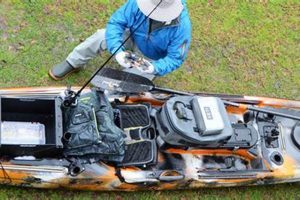
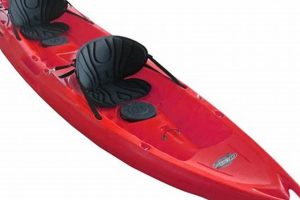
High-end kayaks designed for angling often incorporate advanced features and materials. These may include lighter, more durable hull construction utilizing carbon fiber or premium rotomolded plastics, integrated sonar and GPS systems, specialized seating for enhanced comfort and stability, and ample storage for fishing gear. Consider a kayak with a pedal-drive system and a built-in livewell as a potential illustration.
Investing in top-tier fishing kayaks can significantly enhance the angling experience. Superior stability, speed, and maneuverability allow anglers to access challenging fishing spots and cover more water efficiently. Furthermore, the integration of advanced technology improves fish-finding capabilities and overall angling success. The evolution of these specialized watercraft reflects a growing demand for high-performance equipment tailored to serious anglers. Historically, fishing kayaks were simpler, less feature-rich vessels. Modern advancements, driven by both technological progress and angler demand, have resulted in highly sophisticated kayaks capable of delivering a premium on-the-water experience.
This article will further explore the key features that distinguish top-of-the-line fishing kayaks, analyze the cost-benefit relationship of such investments, and offer guidance on selecting the ideal vessel for specific angling needs and budgets. Discussions on popular brands, emerging technologies, and maintenance considerations will provide a comprehensive overview of this specialized market segment.
Tips for Selecting High-End Fishing Kayaks
Choosing a premium fishing kayak requires careful consideration of various factors to ensure alignment with individual angling styles, target species, and budgetary constraints. The following tips provide guidance for making informed purchasing decisions.
Tip 1: Prioritize Stability and Hull Design: Hull design significantly influences stability, tracking, and maneuverability. Wider, flatter hulls offer superior stability, particularly beneficial for stand-up fishing, while longer, narrower hulls excel in speed and tracking, advantageous for covering larger distances. Consider the prevailing water conditions and target fishing locations when evaluating hull design.
Tip 2: Evaluate Propulsion Systems: High-end kayaks offer various propulsion options, including paddle, pedal, and motor drives. Pedal drives provide hands-free operation, beneficial for fishing techniques requiring constant rod manipulation. Motorized kayaks offer extended range and effortless navigation, particularly advantageous in larger bodies of water.
Tip 3: Assess Storage Capacity and Organization: Adequate storage is crucial for carrying essential fishing gear, including tackle boxes, rods, and safety equipment. Consider kayaks with specialized compartments, integrated rod holders, and dry storage options to ensure organized and protected gear storage.
Tip 4: Consider Comfort and Ergonomics: Extended fishing trips necessitate comfortable seating and adjustable features. Look for ergonomic seating designs, adjustable footrests, and ample legroom to ensure sustained comfort and prevent fatigue.
Tip 5: Factor in Material and Durability: High-end kayaks often utilize premium materials like carbon fiber or rotomolded polyethylene for enhanced durability, impact resistance, and lighter weight. The choice of material influences the kayak’s lifespan and overall performance.
Tip 6: Research Integrated Technology and Features: Modern fishing kayaks often integrate advanced technologies, such as fish finders, GPS systems, and underwater cameras. Evaluate these features based on individual fishing preferences and technical proficiency.
Tip 7: Establish a Realistic Budget: High-end fishing kayaks represent a significant investment. Establish a clear budget and prioritize essential features based on individual needs and financial constraints. Consider the long-term value and potential resale value when evaluating pricing.
Careful consideration of these factors ensures the selection of a kayak optimized for individual fishing styles and enhances the overall angling experience. Investing in a high-quality vessel ultimately contributes to improved performance, comfort, and enjoyment on the water.
This discussion serves as a foundation for a more detailed analysis of specific models, brands, and advanced features within the premium fishing kayak market. Subsequent sections will delve into these aspects, providing further guidance for informed purchasing decisions.
1. Advanced Materials

Material selection significantly influences the performance, durability, and cost of high-end fishing kayaks. Advanced materials contribute to lighter, stronger, and more resilient vessels, justifying the higher price point. An understanding of these materials provides a critical foundation for evaluating investment value.
- Carbon Fiber
Carbon fiber, renowned for its exceptional strength-to-weight ratio, allows for the construction of lighter kayaks without compromising structural integrity. This translates to improved speed, maneuverability, and ease of transport. However, carbon fiber’s high production cost contributes significantly to the overall price of the kayak. A kayak with a carbon fiber hull will likely be more responsive on the water and easier to carry, but also considerably more expensive than a comparable model made from traditional materials.
- Rotomolded Polyethylene
High-quality rotomolded polyethylene offers enhanced durability and impact resistance compared to standard polyethylene. While not as lightweight as carbon fiber, it provides a robust construction capable of withstanding harsh conditions. This material often incorporates UV stabilizers for increased longevity and resistance to sun damage. The added durability and lifespan of rotomolded polyethylene kayaks often justify their higher cost compared to kayaks made with less robust materials.
- Thermoformed ABS
Thermoformed ABS (Acrylonitrile Butadiene Styrene) offers a balance between durability and weight. This process creates a strong, rigid hull with a smooth finish, often at a lower cost than carbon fiber. Thermoformed ABS kayaks often feature complex hull designs that enhance performance. While generally more expensive than basic rotomolded polyethylene, thermoformed ABS offers a compelling combination of performance and value.
- Proprietary Composites and Blends
Manufacturers often develop proprietary composite materials and blends that combine the benefits of different materials. These specialized blends might prioritize specific characteristics, such as impact resistance, stiffness, or UV resistance, depending on the intended use of the kayak. These proprietary blends often represent a premium offering, further increasing the cost but potentially providing significant performance advantages.
The utilization of advanced materials significantly contributes to the elevated price of high-end fishing kayaks. However, the resulting benefits in terms of performance, durability, and overall user experience often justify the increased investment for serious anglers seeking superior equipment. Choosing the appropriate material ultimately depends on individual priorities, budget constraints, and intended usage.
2. Integrated Technology

Integration of advanced technology distinguishes high-end fishing kayaks, enhancing angling effectiveness and overall user experience. These technological advancements contribute significantly to the elevated cost but offer substantial benefits for serious anglers seeking a competitive edge.
- Fish Finders
Integrated fish finders utilize sonar technology to locate fish, map underwater terrain, and identify submerged structures. High-end models offer advanced features such as side-imaging, down-imaging, and CHIRP sonar, providing detailed underwater views. These systems often integrate seamlessly with the kayak’s design, minimizing clutter and maximizing efficiency. Examples include Lowrance HDS LIVE, Humminbird HELIX, and Garmin ECHOMAP series. The integration of sophisticated fish finders enhances angling success by providing real-time underwater intelligence.
- GPS and Navigation Systems
GPS integration enables precise navigation, waypoint marking, and route planning. This is particularly beneficial in larger bodies of water or unfamiliar environments. Some systems offer advanced features such as chartplotting and automatic route guidance. Integrated GPS simplifies navigation, allowing anglers to focus on fishing. Examples include Raymarine Element, Simrad GO, and Furuno NavNet TZtouch3. Seamless GPS integration enhances safety and efficiency on the water.
- Motorized Propulsion
High-end fishing kayaks increasingly incorporate motorized propulsion systems, offering increased range and effortless navigation. Electric motors, often integrated with GPS and autopilot functionality, allow anglers to cover larger distances and conserve energy for fishing. These systems offer variable speed control and precise maneuverability. Examples include Torqeedo Ultralight, Minn Kota Riptide, and MotorGuide Xi5. Motorized propulsion expands fishing possibilities and reduces physical strain, especially beneficial in challenging conditions.
- Power Management and Connectivity
Integrated power management systems provide efficient power distribution for electronic devices, ensuring uninterrupted operation of fish finders, GPS units, and other accessories. Some systems incorporate USB charging ports and connectivity features for data transfer and communication. Efficient power management maximizes battery life and enhances overall system integration. Examples include Blue Sky Solar Boost and Goal Zero Yeti portable power stations. Seamless power management simplifies electronics operation and ensures continuous functionality.
These integrated technologies contribute significantly to the elevated cost of high-end fishing kayaks. However, the resulting improvements in angling effectiveness, navigation, and overall user experience represent a compelling value proposition for serious anglers. The seamless integration of these technologies streamlines kayak operation, maximizing efficiency and enjoyment on the water.
3. Enhanced Performance
Enhanced performance represents a core attribute justifying the higher cost of specialized fishing kayaks. This superior performance stems from a combination of factors, including advanced hull designs, lighter materials, and optimized construction techniques. These elements translate directly into tangible on-the-water advantages, impacting speed, maneuverability, stability, and overall efficiency. Consider a kayak designed for offshore fishing. Its longer, sleeker hull, often constructed from lightweight composites, allows for efficient paddling and swift movement through open water, crucial for covering vast distances and reaching distant fishing grounds. Conversely, a kayak designed for river fishing might prioritize maneuverability and stability, achieved through a shorter, wider hull design. The ability to navigate shallow, fast-flowing water with precision underscores the practical value of performance-driven design.
The relationship between cost and performance manifests in several key areas. Lightweight construction, often achieved through the use of premium materials like carbon fiber, directly impacts speed and efficiency. A lighter kayak requires less effort to propel, allowing anglers to cover more water with less fatigue. This translates to more time spent fishing and less energy expended on paddling. Similarly, advanced hull designs, optimized for specific fishing environments, contribute significantly to enhanced stability and maneuverability. A stable platform is essential for stand-up fishing, while precise maneuverability is crucial for navigating tight spaces and targeting specific fish-holding areas. The investment in performance-enhancing features ultimately translates to improved angling success and a more rewarding experience on the water.
Understanding the connection between enhanced performance and cost is essential for informed decision-making. While higher-priced kayaks often offer superior performance characteristics, careful consideration of individual needs and fishing styles is crucial. Anglers prioritizing speed and efficiency might justify the investment in a lightweight, streamlined kayak designed for open water. Conversely, anglers prioritizing stability and maneuverability might opt for a kayak with a wider, more stable hull design, even if it means sacrificing some speed. Evaluating the practical implications of these performance characteristics ensures a well-informed purchase aligned with individual angling goals and budgetary constraints.
4. Specialized Features

Specialized features differentiate high-end fishing kayaks from their more basic counterparts, justifying the increased investment for serious anglers. These features enhance functionality, comfort, and overall fishing effectiveness. The cause-and-effect relationship between these features and the higher price point stems from the research, development, and manufacturing processes required to incorporate such specialized components. For example, integrating a retractable pedal-drive system requires intricate engineering and specialized manufacturing techniques, directly impacting the final cost. Similarly, incorporating a livewell with an oxygenation system necessitates specialized components and design considerations, contributing to the overall expense. These features are not merely cosmetic additions but represent substantive improvements that directly enhance the angling experience.
Consider the practical significance of these specialized features. Rod holders strategically positioned throughout the kayak allow anglers to keep multiple rods rigged and ready for action, maximizing fishing efficiency. Integrated tackle storage systems provide organized and readily accessible storage for lures, hooks, and other essential gear, minimizing clutter and streamlining workflow. Adjustable seating systems with lumbar support enhance comfort during long hours on the water, reducing fatigue and maximizing focus on fishing. These features, while contributing to the higher cost, offer tangible benefits that enhance both comfort and functionality. A well-designed kayak becomes an extension of the angler, seamlessly integrating with their fishing style and maximizing their effectiveness on the water.
In summary, specialized features represent a crucial component of expensive fishing kayaks. These features are not superficial additions but rather purpose-built enhancements that directly impact fishing performance and overall enjoyment. Understanding the relationship between these features and the associated cost empowers informed purchasing decisions. While the initial investment may be higher, the long-term benefits in terms of increased efficiency, comfort, and angling success often justify the expense for dedicated anglers seeking a premium on-the-water experience.
5. Increased Durability

Durability represents a critical factor influencing the long-term value of expensive fishing kayaks. Superior construction and robust materials ensure these vessels withstand the rigors of regular use in diverse environments, justifying the higher initial investment. Understanding the elements contributing to increased durability provides valuable insights for prospective buyers.
- Construction Techniques
Advanced construction techniques, such as rotational molding and thermoforming, contribute significantly to enhanced durability. Rotational molding creates a seamless, one-piece hull with uniform wall thickness, eliminating potential weak points. Thermoforming utilizes high temperatures and precise molds to create strong, rigid hulls with complex shapes. These techniques enhance impact resistance and structural integrity, ensuring longevity and reliable performance in demanding conditions. For example, rotomolded polyethylene kayaks are known for their exceptional resistance to impacts and abrasion, making them well-suited for navigating rocky shorelines and shallow waters. Thermoformed ABS kayaks often feature reinforced keel lines and impact zones, further enhancing their durability in challenging environments.
- Material Selection
High-end kayaks utilize premium materials specifically chosen for their durability and resistance to wear and tear. Carbon fiber, renowned for its exceptional strength-to-weight ratio, offers superior impact resistance and resilience. High-grade rotomolded polyethylene provides exceptional durability and UV resistance, ensuring the kayak withstands prolonged exposure to sunlight and harsh weather conditions. Military-grade polymers and proprietary composite blends further enhance impact resistance and structural integrity. For example, kayaks constructed with UV-stabilized polyethylene retain their color and structural integrity even after years of exposure to intense sunlight, while those made with impact-modified polymers withstand collisions with rocks and submerged obstacles with minimal damage.
- Hardware and Fittings
Durable hardware and fittings are essential for long-term performance. High-end kayaks often feature marine-grade stainless steel hardware, resistant to corrosion and degradation in saltwater environments. Reinforced deck rigging and heavy-duty latches ensure secure storage and prevent equipment failure. High-quality seating systems and adjustable components are designed to withstand repeated use and exposure to the elements. For example, stainless steel D-rings and attachment points provide secure anchoring points for gear and accessories, while heavy-duty latches ensure hatches remain securely closed even in rough conditions. The use of durable hardware contributes to the overall longevity and reliability of the kayak.
- UV Resistance and Weatherproofing
Protection against UV radiation and weather elements is crucial for maintaining the kayak’s structural integrity and aesthetic appeal. High-end kayaks often incorporate UV inhibitors in their construction materials to prevent fading and degradation from prolonged sun exposure. Specialized coatings and sealants protect against water intrusion and weathering, ensuring the kayak remains watertight and structurally sound over time. Proper storage and maintenance practices further enhance UV resistance and weatherproofing, preserving the kayak’s appearance and functionality for extended periods. For example, kayaks treated with UV-resistant coatings maintain their vibrant colors and resist fading even after extended exposure to sunlight, while those with waterproof hatches and compartments protect stored gear from moisture damage.
Increased durability translates directly into a longer lifespan and higher resale value for expensive fishing kayaks. The initial investment in robust construction, premium materials, and specialized features ultimately yields a more reliable and resilient vessel capable of withstanding the demands of regular use. This long-term perspective underscores the value proposition of high-end kayaks, making them a worthwhile investment for serious anglers seeking durable, high-performance equipment.
Frequently Asked Questions
This section addresses common inquiries regarding high-value fishing kayaks, providing clarity on key aspects related to cost, features, and overall value.
Question 1: What justifies the higher cost of specialized fishing kayaks compared to recreational models?
Specialized fishing kayaks command a premium due to the integration of advanced features, superior materials, and specialized design elements. These include enhanced stability for stand-up fishing, integrated technology like fish finders and GPS, specialized storage for fishing gear, and durable construction for harsh environments. These enhancements contribute significantly to on-the-water performance and angler effectiveness, justifying the elevated price point.
Question 2: How do advanced materials contribute to the performance and longevity of expensive fishing kayaks?
High-end kayaks often utilize materials like carbon fiber and advanced polymers. Carbon fiber offers exceptional strength and light weight, enhancing speed and maneuverability. Advanced polymers provide superior impact resistance and durability, ensuring longevity in demanding conditions. These material advancements directly impact performance and lifespan, justifying the higher cost.
Question 3: What are the key features that differentiate high-end fishing kayaks from standard recreational models?
Key differentiating features include integrated rod holders, specialized storage compartments, advanced seating systems, pedal or motor-driven propulsion, and integrated technology like fish finders and GPS. These specialized features enhance angler efficiency, comfort, and overall fishing effectiveness.
Question 4: How does the hull design of an expensive fishing kayak influence its performance characteristics?
Hull design significantly impacts stability, tracking, and maneuverability. Wider hulls enhance stability for stand-up fishing, while longer, narrower hulls improve speed and tracking. Specialized hull designs cater to specific fishing styles and water conditions, influencing overall performance.
Question 5: Is the higher cost of a specialized fishing kayak a worthwhile investment for all anglers?
The value proposition depends on individual angling needs and frequency of use. For dedicated anglers seeking enhanced performance, specialized features, and increased durability, the investment often justifies the enhanced fishing experience and long-term value. Recreational anglers with less demanding needs may find standard models sufficient.
Question 6: What maintenance considerations are essential for preserving the longevity and performance of an expensive fishing kayak?
Regular cleaning, proper storage, and timely maintenance of moving parts, such as pedal drives and rudder systems, are essential. Protecting the hull from UV exposure and harsh weather conditions further ensures long-term durability and optimal performance.
Careful consideration of these factors empowers informed purchasing decisions aligned with individual angling needs and budgetary constraints. Understanding the value proposition of high-end fishing kayaks ensures a worthwhile investment that enhances the overall angling experience.
The subsequent section will offer comparative analyses of specific models and brands, providing further guidance for navigating the premium fishing kayak market.
Conclusion
High-end fishing kayaks represent a significant investment, offering a convergence of advanced materials, cutting-edge technology, and specialized design. This comprehensive exploration has highlighted the key features differentiating these premium vessels from standard recreational models, emphasizing the enhanced performance, increased durability, and specialized functionality they offer. Careful consideration of hull design, propulsion systems, integrated technology, and material selection empowers informed purchasing decisions. The analysis of cost versus benefit underscores the value proposition for serious anglers seeking superior equipment tailored to demanding needs.
The evolution of fishing kayak technology continues to drive innovation, promising further advancements in materials, propulsion systems, and integrated electronics. Discerning anglers seeking peak performance and a premium on-the-water experience will find that investing in high-quality equipment yields substantial returns in terms of efficiency, comfort, and long-term angling success. A thorough understanding of the features, benefits, and associated costs empowers anglers to make informed choices aligned with individual needs and aspirations, ultimately enhancing the pursuit of angling excellence.