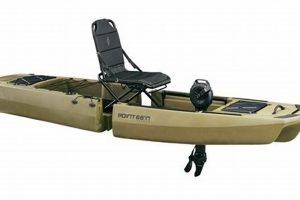
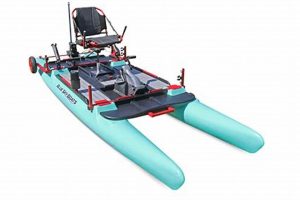
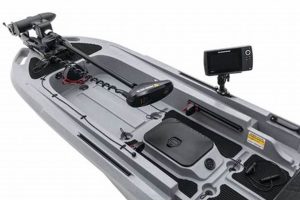
Evaluations of kayaks specifically designed for fishing provide consumers with critical information regarding vessel stability, storage capacity, specialized features (like rod holders and mounting tracks), and overall performance in angling scenarios. These assessments, often compiled from expert analyses and user feedback, offer prospective buyers a comprehensive understanding of a kayak’s suitability for their fishing needs. For instance, an evaluation might detail how well a specific model tracks in moving water, its maneuverability in tight spaces, or its capacity to handle various fishing gear configurations.
Access to this type of information is invaluable for making informed purchasing decisions. It empowers anglers to choose kayaks optimized for their preferred fishing style, target species, and waterway conditions. Historically, anglers relied on limited resources like word-of-mouth or print publications for product information. The digital age has revolutionized this process, providing a wealth of readily available assessments, comparisons, and user experiences, fostering a more transparent and informed marketplace. This shift has elevated the importance of comprehensive product evaluations, making them an essential resource for anglers seeking the ideal fishing kayak.
This understanding of the importance of evaluating fishing kayaks leads naturally to explorations of specific kayak features, various fishing styles and their corresponding kayak requirements, and ultimately, a more informed purchasing decision. Considerations such as hull design, propulsion systems, and integrated technology will be further examined.
Tips for Utilizing Fishing Kayak Evaluations
Thorough research is essential when selecting a fishing kayak. Effective use of available evaluations can significantly improve the decision-making process.
Tip 1: Identify Target Species and Fishing Environment: Clarifying the intended fishing style (e.g., freshwater bass fishing, offshore saltwater angling) helps narrow the search and focus on reviews relevant to specific needs. Reviews often categorize kayaks by their suitability for different environments.
Tip 2: Prioritize Stability and Capacity Requirements: Anglers require a stable platform, especially when casting, reeling, or landing fish. Reviews typically address stability and weight capacity, crucial factors for safety and comfort. Consider the combined weight of the angler, gear, and potential catch.
Tip 3: Evaluate Storage and Feature Options: Adequate storage for tackle, rods, and other equipment is essential. Reviews often detail storage compartments, rod holders, and mounting tracks, allowing anglers to assess their practicality and convenience.
Tip 4: Compare Hull Designs: Different hull designs (sit-on-top, sit-inside) offer varying performance characteristics. Reviews discussing maneuverability, tracking, and speed in various water conditions can aid in selecting the optimal hull type.
Tip 5: Consider Propulsion Systems: Paddle kayaks offer excellent exercise and maneuverability, while pedal-powered and motorized versions provide speed and range. Reviews often compare different propulsion systems, highlighting their advantages and disadvantages for specific fishing scenarios.
Tip 6: Scrutinize User Feedback: Real-world experiences shared in user reviews provide valuable insights into a kayak’s performance and durability. Pay attention to recurring comments and patterns in user feedback to identify potential strengths and weaknesses not readily apparent in manufacturer descriptions.
Tip 7: Cross-Reference Multiple Sources: Consulting multiple review platforms and publications provides a more balanced perspective. Varied viewpoints and experiences contribute to a more comprehensive understanding of a kayak’s suitability.
By following these guidelines, prospective buyers can effectively utilize available information to select a fishing kayak that aligns with their individual needs and preferences, enhancing their on-the-water angling experience.
This detailed exploration of evaluation strategies serves as a foundation for making an informed decision. The next section will provide a comparative analysis of popular fishing kayak models.
1. Stability

Stability is a paramount consideration in fishing kayak evaluations, directly impacting angler safety, comfort, and fishing effectiveness. A stable platform is crucial for various on-the-water activities, including casting, reeling, landing fish, and navigating varying water conditions. Evaluations frequently address stability as a key performance indicator, providing insights into a kayak’s suitability for different fishing styles and environments.
- Primary Stability
Primary stability refers to a kayak’s initial resistance to tipping when at rest. A wider, flatter hull typically exhibits higher primary stability, providing a secure feeling platform ideal for calmer waters and stationary fishing. Reviews often assess primary stability through observations and measurements, informing anglers about a kayak’s suitability for activities like still-water fishing or photography.
- Secondary Stability
Secondary stability describes a kayak’s resistance to tipping when leaned or tilted. This characteristic is crucial for maneuvering in rougher waters or engaging in dynamic fishing techniques. Kayaks with rounded or flared hulls often possess greater secondary stability, enabling them to recover from leans and maintain balance in challenging conditions. Evaluations addressing secondary stability are particularly relevant to anglers venturing into moving water or engaging in techniques requiring more dynamic body movements.
- Impact of Kayak Design on Stability
Hull design, including width, shape, and length, significantly influences a kayak’s stability profile. Shorter, wider kayaks generally offer enhanced stability, while longer, narrower designs prioritize speed and tracking. Features like outriggers or pontoons can further enhance stability, particularly beneficial for anglers requiring additional support. Reviews often analyze the interplay between these design elements and their resulting impact on stability performance.
- Stability Considerations for Different Fishing Styles
Different fishing styles necessitate varying levels of stability. Stand-up fishing requires exceptional stability, while sit-down fishing in calm waters may prioritize other performance characteristics. Reviews often categorize kayaks based on their suitability for specific fishing styles, allowing anglers to select models optimized for their intended use. For example, a kayak designed for offshore fishing would prioritize stability in rougher conditions over a kayak designed for small ponds.
Understanding the nuances of stability in kayak evaluations empowers anglers to make informed decisions. By considering primary and secondary stability, the impact of design features, and the demands of specific fishing styles, anglers can choose kayaks offering the appropriate level of stability for their individual needs and intended usage, ultimately enhancing safety and fishing performance.
2. Storage Capacity

Storage capacity plays a vital role in fishing kayak evaluations. The ability to transport essential gear directly influences angling success and overall experience. Evaluations often dedicate significant attention to storage solutions, analyzing their practicality, accessibility, and overall impact on fishing functionality. A kayak with insufficient storage can limit tackle options, necessitate multiple trips, or compromise safety by creating clutter on the deck.
Various storage configurations cater to diverse angling needs. Dedicated compartments for tackle boxes, rod holders, and bungee systems for securing loose items represent typical storage features. Evaluations typically assess the size, placement, and security of these features. For example, a reviewer might highlight the advantages of a recessed tackle storage area for protecting sensitive equipment from water damage or the convenience of readily accessible rod holders positioned within easy reach of the angler. Another example might involve analyzing the capacity and security of a rear cargo well for storing larger items like coolers or dry bags. These practical assessments provide prospective buyers with valuable insights into a kayak’s storage capabilities.
Careful consideration of storage needs is paramount when selecting a fishing kayak. Anglers targeting larger species or employing diverse fishing techniques require more extensive storage solutions. Evaluations frequently address these considerations, relating storage capacity to specific fishing styles and scenarios. Understanding these practical implications empowers informed decisions, ensuring anglers select a kayak equipped to handle their specific storage requirements. This ultimately contributes to a more organized, efficient, and enjoyable fishing experience.
3. Fishing Features
Specialized features designed to enhance angling efficiency and enjoyment play a crucial role in kayak evaluations. These features directly influence a kayak’s suitability for specific fishing techniques and target species. Evaluations often dedicate considerable attention to these features, analyzing their practicality, durability, and overall contribution to the angling experience. Cause and effect relationships between specific features and fishing outcomes are frequently explored. For instance, the presence of flush-mounted rod holders might be linked to reduced line tangling and improved casting accuracy, while integrated track systems might be evaluated based on their versatility in accommodating various accessories like fish finders or camera mounts. The importance of these features as a component of comprehensive reviews stems from their direct impact on fishing performance.
Real-life examples illustrate the practical significance of these features. An evaluation might describe how adjustable footrests contribute to angler comfort during long fishing sessions, impacting stamina and focus. Similarly, the effectiveness of a rudder system in maintaining course in windy conditions might be highlighted through real-world testing scenarios. The integration of live wells for keeping caught fish fresh and viable might be assessed based on their capacity, insulation, and ease of access. These practical applications underscore the value of considering specialized fishing features in the evaluation process.
In summary, evaluating specialized fishing features is essential for discerning a kayak’s suitability for specific angling needs. Analyses of these features, supported by real-world examples and considerations of their practical impact, empower informed purchasing decisions. Challenges such as feature durability and potential interference with paddling efficiency are also frequently addressed within these evaluations, providing a balanced perspective. This focus on fishing-specific features directly contributes to the broader goal of matching anglers with kayaks optimized for their individual requirements and enhancing their overall fishing experience.
4. Hull Design

Hull design is a critical factor in fishing kayak evaluations, significantly influencing performance characteristics relevant to specific fishing environments and techniques. Understanding the nuances of various hull designs empowers informed decision-making, aligning kayak selection with individual angling needs. Evaluations frequently analyze hull characteristics, relating their impact to stability, maneuverability, tracking, and overall suitability for diverse fishing scenarios. This connection between hull design and performance makes it a central theme in comprehensive kayak reviews.
- Displacement Hulls
Displacement hulls, characterized by a longer, narrower profile and a pointed bow, excel in tracking and efficiency, making them well-suited for covering longer distances and paddling in open water or currents. Their streamlined shape minimizes water resistance, promoting efficient paddling strokes and conserving energy over extended journeys. Reviews often highlight the advantages of displacement hulls for anglers targeting pelagic species or those frequently paddling in rivers or coastal areas. However, this design typically sacrifices maneuverability and stability compared to other hull types, a trade-off often discussed in evaluations.
- Planing Hulls
Planing hulls, featuring a flatter bottom and wider beam, prioritize stability and maneuverability. Their design enables them to plane across the water’s surface at higher speeds, facilitating quick turns and agile maneuvering in tight spaces. Reviews often emphasize the suitability of planing hulls for fishing in calmer waters like ponds, lakes, and protected bays, where maneuverability for navigating around structure or vegetation is paramount. While offering excellent stability and maneuverability, planing hulls generally compromise tracking and efficiency compared to displacement hulls, a key consideration often addressed in evaluations.
- Pontoon Hulls
Pontoon hulls utilize two separate pontoons connected by a platform, providing exceptional stability, particularly beneficial for stand-up fishing. This design maximizes stability, allowing anglers to stand and cast with confidence, even in challenging conditions. Reviews often focus on the stability advantages of pontoon hulls, highlighting their suitability for anglers prioritizing stability above other performance characteristics. However, this design typically sacrifices speed and maneuverability compared to other hull types, a trade-off explored in evaluations.
- Hybrid Hulls
Hybrid hulls attempt to combine the advantages of different hull designs, often integrating features of displacement and planing hulls to achieve a balance between stability, tracking, and maneuverability. These designs aim to offer versatility for anglers fishing in diverse environments. Reviews often assess the effectiveness of hybrid designs in achieving this balance, considering factors like water conditions, fishing styles, and individual preferences. The compromise inherent in hybrid designs, often involving slightly reduced performance in specific areas compared to specialized hulls, is a recurring theme in evaluations.
Understanding the nuances of these hull designs is integral to interpreting kayak evaluations effectively. Reviews often analyze how specific hull characteristics contribute to overall performance in various fishing scenarios. By considering the trade-offs inherent in each design, anglers can select a kayak optimized for their specific needs and fishing style. This connection between hull design and practical application makes it a critical component of comprehensive kayak reviews.
5. Propulsion Type
Propulsion type is a critical aspect of fishing kayak evaluations, directly influencing performance characteristics such as speed, range, maneuverability, and hands-free fishing capability. Evaluations frequently analyze various propulsion systemspaddles, pedals, and motorsassessing their suitability for diverse fishing environments and angling styles. The choice of propulsion directly impacts how anglers navigate waterways, access fishing spots, and manage their fishing experience. For instance, paddle propulsion offers excellent maneuverability and affordability but requires continuous physical effort. Pedal-powered kayaks provide speed and hands-free fishing but can be more expensive and less maneuverable in tight spaces. Motorized kayaks excel in speed and range, ideal for covering large distances, but introduce considerations of battery life, maintenance, and potential environmental impact. These cause-and-effect relationships between propulsion type and fishing experience underscore the importance of this component within kayak reviews.
Practical examples further illustrate the significance of propulsion type. An evaluation might compare the efficiency of a paddle kayak in navigating shallow, vegetated areas versus the speed and range advantages of a motorized kayak when traversing open water. The hands-free fishing capability offered by pedal-powered kayaks, allowing anglers to maintain position and cast simultaneously, might be contrasted with the physical demands and potential limitations of paddle propulsion during extended fishing trips. Real-world scenarios, such as navigating strong currents, accessing remote fishing locations, or trolling for specific species, are often used to highlight the practical implications of different propulsion systems. These concrete examples provide valuable context for prospective buyers.
In summary, understanding propulsion systems is essential for interpreting fishing kayak reviews effectively. Evaluations analyze the advantages and disadvantages of each propulsion type, considering factors like speed, maneuverability, cost, maintenance, and environmental impact. Addressing potential challenges, such as battery life limitations or the impact of wind and currents on different propulsion methods, provides a balanced perspective. This focus on propulsion’s practical implications empowers informed decision-making, allowing anglers to select a kayak optimized for their individual needs, fishing style, and target environment. Ultimately, the choice of propulsion contributes significantly to the overall fishing experience, highlighting its importance as a key element within comprehensive kayak reviews.
6. User Experiences
User experiences form a cornerstone of comprehensive kayak evaluations, offering invaluable insights into real-world performance and practicality. These firsthand accounts provide a crucial perspective often absent from manufacturer specifications, bridging the gap between theoretical design and on-the-water realities. Analyzing user experiences empowers prospective buyers to make informed decisions aligned with practical fishing needs and expectations. The importance of this element stems from its capacity to validate or challenge marketing claims and provide a nuanced understanding of a kayak’s strengths and weaknesses in actual fishing scenarios.
- Durability and Build Quality
User feedback provides crucial insights into a kayak’s long-term durability. Comments regarding material quality, construction techniques, and resistance to wear and tear offer valuable information often unavailable through other sources. For example, a user might report on the resilience of a specific hull material to impacts with rocks or submerged debris, providing practical insight into its durability in real-world fishing environments. These observations directly impact purchasing decisions, as durability is a key factor in long-term value and overall satisfaction.
- On-the-Water Performance
User experiences offer practical assessments of a kayak’s performance characteristics in various fishing scenarios. Feedback on tracking, maneuverability, stability, and speed in different water conditions provides a nuanced understanding of how a kayak handles in real-world situations. For instance, a user might describe the challenges of paddling a specific kayak model in strong winds or currents, offering valuable information beyond theoretical performance specifications. These insights are crucial for aligning kayak selection with intended fishing environments and techniques.
- Feature Functionality and Practicality
User reviews often provide detailed assessments of specific features, such as rod holders, storage compartments, and seating comfort. Practical feedback regarding ease of use, accessibility, and overall effectiveness informs purchasing decisions. A user might comment on the convenience of a specific rod holder placement or the limitations of a particular storage compartment design, providing insights into the practical implications of these features. These real-world perspectives are invaluable for evaluating the functionality and overall usability of a kayak’s features.
- Customer Support and Warranty Experiences
User feedback can extend beyond the kayak itself, encompassing experiences with customer support and warranty claims. These insights offer valuable information about the manufacturer’s responsiveness and commitment to customer satisfaction. A user’s positive or negative experience with a warranty claim can significantly influence purchasing decisions, as it reflects the manufacturer’s commitment to product quality and customer support. This information provides a broader context for evaluating the overall value and potential long-term ownership experience.
By considering the collective insights derived from user experiences, prospective buyers gain a more comprehensive understanding of a fishing kayak’s strengths and weaknesses. This information, coupled with technical specifications and expert reviews, empowers informed purchasing decisions that align with individual needs and fishing styles. The focus on practical, real-world experiences distinguishes user feedback as a crucial component within comprehensive kayak evaluations.
7. Price Point

Price point plays a crucial role in fishing kayak evaluations, significantly influencing purchasing decisions. Evaluations often analyze the relationship between price and features, performance, and overall value. Understanding this relationship empowers informed decision-making, aligning kayak selection with budgetary constraints without compromising essential angling requirements. Price point considerations are particularly important given the wide range of fishing kayaks available, spanning from budget-friendly options to high-end, feature-rich models. This price spectrum necessitates careful evaluation to determine the optimal balance between cost and desired features.
Evaluations frequently explore the cause-and-effect relationship between price and specific kayak attributes. Higher-priced kayaks often incorporate advanced materials, cutting-edge designs, and specialized features. Lower-priced models may utilize more basic materials and simpler designs, potentially compromising performance or durability. For example, a high-end fishing kayak might feature a lightweight carbon fiber hull, integrated GPS and fish finder technology, and premium seating, justifying its higher price point. Conversely, a budget-friendly kayak might utilize a more conventional rotomolded polyethylene hull, basic seating, and fewer specialized features. Evaluations analyze these trade-offs, enabling consumers to understand the value proposition at different price points. Real-world examples, such as comparing the long-term durability of different hull materials or the practical benefits of advanced features, illustrate the value proposition at various price levels. Understanding these trade-offs is crucial for aligning kayak selection with both budgetary constraints and desired performance characteristics.
In summary, effective analysis of price point within fishing kayak reviews enables informed purchasing decisions. By considering the interplay between cost, features, performance, and long-term value, consumers can select kayaks that meet their specific needs and budgetary constraints. Addressing potential challenges, such as the temptation to overspend on unnecessary features or the risk of compromising quality with excessively budget-conscious choices, provides a balanced perspective. This focus on price as a critical factor within evaluations empowers informed decision-making and contributes to a more satisfying long-term ownership experience.
Frequently Asked Questions
This section addresses common inquiries regarding the evaluation of kayaks designed for fishing, providing concise and informative responses to facilitate informed purchasing decisions.
Question 1: How does hull design influence fishing kayak performance?
Hull design significantly impacts stability, maneuverability, and tracking. Displacement hulls excel in tracking and efficiency, while planing hulls prioritize stability and maneuverability in calmer waters. Pontoon hulls maximize stability for stand-up fishing, and hybrid designs attempt to balance these characteristics.
Question 2: What are key features to prioritize in a fishing kayak evaluation?
Essential features include rod holders, storage compartments, seating comfort, and stability enhancements. Prioritization depends on individual fishing styles and target species. Features like integrated fish finders or GPS systems cater to specific angling needs.
Question 3: How do user reviews contribute to kayak evaluations?
User reviews offer real-world insights into performance, durability, and practicality. These firsthand accounts complement manufacturer specifications and expert analyses, providing a balanced perspective on a kayak’s strengths and weaknesses.
Question 4: How does price relate to quality and performance in fishing kayaks?
Price often reflects material quality, design complexity, and integrated features. Higher-priced kayaks may offer advanced materials, enhanced performance, and specialized features, while budget-friendly options prioritize affordability over premium features.
Question 5: What are the primary propulsion options for fishing kayaks, and how do they influence performance?
Primary propulsion options include paddles, pedals, and motors. Paddles offer maneuverability and affordability, pedals provide speed and hands-free fishing, and motors excel in speed and range. Propulsion choice depends on individual fishing styles, target environments, and physical capabilities.
Question 6: How can one effectively utilize online resources for fishing kayak evaluations?
Consult reputable review platforms, manufacturer websites, and online forums. Cross-referencing information from multiple sources provides a balanced perspective. Focus on reviews relevant to specific fishing styles and target species.
Careful consideration of these frequently asked questions equips prospective buyers with the knowledge necessary to navigate fishing kayak evaluations effectively. A comprehensive understanding of these elements contributes to informed purchasing decisions aligned with individual angling needs and preferences.
Moving forward, a detailed comparison of popular fishing kayak models will further assist in the selection process.
Conclusion
Comprehensive evaluations of fishing kayaks provide crucial insights for informed purchasing decisions. Analyses of hull design, propulsion systems, storage capacity, specialized features, and user experiences empower anglers to select kayaks optimized for their specific needs and fishing styles. Price point considerations further refine the decision-making process, ensuring alignment between budgetary constraints and desired kayak attributes. Understanding the interplay of these factors is essential for maximizing on-the-water performance, comfort, and overall fishing enjoyment.
The abundance of information available through online reviews, expert analyses, and user feedback underscores the importance of critical evaluation. By effectively navigating this information landscape, anglers can confidently select the ideal fishing kayak, enhancing their angling pursuits and fostering a deeper connection with the aquatic environment. This informed approach to kayak selection contributes not only to individual angling success but also to a more responsible and sustainable engagement with the natural world.