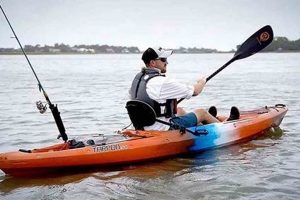
A specialized storage container designed for use in kayaks, this equipment typically offers organized compartments and mounting options tailored to angling needs. These containers often feature secure closures and durable construction to withstand the marine environment and protect tackle, tools, and other essential gear.
Organized storage is crucial for efficient angling in a kayak’s limited space. This equipment provides a dedicated location for fishing gear, optimizing space utilization and enhancing safety by reducing clutter. Secure storage prevents gear loss and damage due to water exposure or shifting cargo. Evolution from simpler tackle boxes underscores the growing popularity and specialization of kayak fishing, reflecting anglers’ needs for dedicated solutions in this demanding environment.
This discussion will further explore factors like size, material, mounting options, and specific features that contribute to choosing the appropriate storage solution for various kayak fishing styles and needs.
Tips for Optimized Kayak Angling Storage
Effective storage solutions are essential for a successful kayak fishing experience. These tips offer guidance on maximizing space and efficiency.
Tip 1: Prioritize Waterproofing: Ensure chosen storage solutions offer reliable protection against water intrusion to safeguard valuable equipment.
Tip 2: Consider Size and Weight Capacity: Select appropriately sized containers to accommodate necessary gear without overloading the kayak or compromising stability.
Tip 3: Evaluate Mounting Options: Choose mounting systems that provide secure attachment and easy access while minimizing interference with paddling or fishing activities.
Tip 4: Organize Tackle Strategically: Utilize internal compartments and dividers to organize tackle and tools for efficient retrieval and prevent tangling.
Tip 5: Secure Loose Items: Secure smaller items and tools within containers using straps or foam inserts to prevent shifting and noise during transport.
Tip 6: Balance Weight Distribution: Distribute weight evenly within the kayak by strategically placing storage containers to maintain stability and maneuverability.
Tip 7: Regularly Inspect and Maintain: Regularly check containers for wear and tear, ensuring latches and seals function correctly to prevent equipment damage.
By implementing these strategies, anglers can enhance their kayak fishing experience through improved organization, efficiency, and safety.
These tips provide a foundation for selecting and utilizing appropriate storage solutions, ultimately contributing to a more productive and enjoyable time on the water.
1. Durability
Durability is a critical factor in selecting a suitable storage solution for kayak angling. Exposure to the marine environment, potential impacts, and regular use necessitate a robust container capable of withstanding demanding conditions. A durable storage solution safeguards valuable equipment and ensures long-term functionality, contributing significantly to a positive fishing experience.
- Impact Resistance
Impact resistance protects against accidental drops, collisions with other gear, or impacts from fish. High-impact plastics or reinforced composites offer superior protection compared to brittle materials. A highly impact-resistant container preserves its structural integrity, protecting stored items from damage during unavoidable impacts inherent in the dynamic environment of kayak fishing.
- UV Resistance
Constant exposure to sunlight can degrade plastics, leading to brittleness and cracking. UV-resistant materials maintain structural integrity and colorfastness over extended periods. This resistance ensures the storage solution remains functional and aesthetically pleasing despite prolonged sun exposure.
- Corrosion Resistance
Saltwater and freshwater environments can corrode metal components like hinges, latches, and screws. Corrosion-resistant materials, such as stainless steel or specialized plastics, are essential for long-term functionality. Choosing corrosion-resistant materials ensures smooth operation and prevents failure of critical components, maintaining the box’s utility over time.
- Water Resistance
Protecting stored items from water damage is paramount. Tight seals, waterproof gaskets, and specialized closure mechanisms prevent water intrusion. Effective water resistance safeguards sensitive equipment like electronics, tackle, and personal items from damage due to splashes, rain, or accidental submersion.
These facets of durability contribute directly to the overall performance and lifespan of a kayak fishing storage solution. Investing in a durable container minimizes the risk of equipment damage and ensures reliable functionality throughout numerous fishing excursions. Choosing a solution built to withstand the rigors of kayak fishing ultimately contributes to a more successful and enjoyable experience on the water.
2. Secure Closure

Secure closure mechanisms are essential for maintaining the integrity of stored items within a kayak fishing environment. The dynamic nature of kayaking, combined with potential exposure to water and the elements, necessitates reliable closure systems to prevent loss or damage to equipment. A secure closure safeguards against accidental opening due to impacts, jostling, or capsizing, ensuring valuable tackle, electronics, and personal items remain protected within the storage unit. For example, a latch system capable of withstanding jarring motions and impacts prevents accidental spills, even in rough conditions. Furthermore, waterproof seals or gaskets integrated into the closure system provide an additional layer of protection against water intrusion, preserving the contents even during submersion.
The practical significance of a robust closure system extends beyond simply preventing loss. A secure closure contributes to overall safety by minimizing the risk of loose items in the kayak’s cockpit, which can interfere with paddling or create entanglement hazards. Efficient closure mechanisms also facilitate quick access to stored items, streamlining tackle changes and equipment retrieval, thus enhancing the overall fishing experience. Different closure types offer varying levels of security and convenience, such as latches, buckles, or waterproof zippers. Selecting an appropriate closure system depends on the specific needs of the angler and the anticipated conditions, balancing security with ease of access.
Effective closure systems represent a critical design element in specialized kayak fishing storage solutions. They provide a fundamental layer of protection against the elements and the inherent challenges of the kayaking environment. A secure closure directly contributes to the safety, efficiency, and overall success of a fishing excursion by safeguarding valuable equipment and ensuring its readiness for use when needed. Understanding the importance of this seemingly simple feature contributes to making informed decisions when selecting appropriate storage for kayak angling.
3. Mounting Options

Mounting options are integral to the functionality of a kayak fishing box, dictating accessibility, stability, and space optimization within the limited confines of a kayak. Secure and appropriate mounting ensures the box remains firmly in place during paddling, maneuvering, and battling fish, preventing unwanted shifting or potential capsizing hazards. Various mounting systems cater to different kayak designs and angler preferences. Track systems, for example, offer adjustable positioning along tracks installed on the kayak, allowing customization based on individual needs and fishing styles. Alternatively, fixed mounts provide a permanent solution, often integrated into the kayak’s design itself, offering a streamlined and robust attachment point.
The choice of mounting system influences how effectively anglers interact with their equipment. A well-placed and securely mounted box allows efficient access to tackle and tools without compromising balance or requiring awkward reaching. Consider a scenario where an angler needs to quickly change lures; a readily accessible box, mounted within easy reach, facilitates a swift and seamless transition, maximizing fishing time. Conversely, a poorly mounted or unstable box can disrupt the angling experience, leading to frustration and potentially jeopardizing safety. Furthermore, mounting options contribute to overall space management within the kayak. Strategic placement maximizes usable deck space, accommodating other essential equipment and ensuring comfortable movement within the limited area.
Understanding the diverse range of mounting options and their implications for kayak fishing is crucial for optimizing the angling experience. Factors such as kayak compatibility, desired accessibility, and the intended use of the box influence the selection of an appropriate mounting system. Careful consideration of these elements ensures the chosen solution enhances both efficiency and safety on the water, contributing to a more productive and enjoyable fishing trip. Selecting the correct mounting system transforms a simple storage container into an integrated component of the kayak fishing system, maximizing its utility and enhancing overall performance.
4. Size and Capacity
Appropriate size and capacity are critical considerations when selecting a kayak fishing box. The limited space within a kayak necessitates careful evaluation of storage needs against the available room. Balancing storage capacity with maneuverability and stability ensures a safe and efficient fishing experience. Choosing the correct size and capacity directly impacts organization, accessibility, and overall comfort on the water.
- Storage Footprint
The physical dimensions of the box determine its footprint within the kayak. Larger boxes offer greater storage volume but may restrict movement or interfere with paddling. Smaller boxes conserve space but may limit the amount of gear that can be carried. Careful measurement and consideration of available deck space are essential for selecting a box that optimizes storage without compromising kayak stability or angler comfort.
- Carrying Capacity
Carrying capacity refers to the weight a box can safely hold. Overloading a box can strain mounting hardware, damage the box itself, and negatively impact the kayak’s stability. Matching the box’s capacity to the intended load ensures safe and reliable performance. For example, carrying heavier items like batteries or tackle requires a box with a higher weight capacity than one intended for lighter items like lures or line.
- Internal Organization
While overall size relates to external dimensions, internal organization significantly impacts usable capacity. Compartments, dividers, and trays maximize storage efficiency within a given volume. A well-organized box allows anglers to carry more gear in the same amount of space, improving access and preventing items from shifting during transit. Consider a box with adjustable dividers, allowing customization for different tackle types and sizes, maximizing usable space and promoting efficient organization.
- Kayak Compatibility
Size and capacity must be considered in relation to the kayak’s design and available space. Larger kayaks generally accommodate larger boxes, while smaller kayaks require more compact solutions. Compatibility also extends to mounting options, ensuring the chosen box integrates seamlessly with the kayak’s existing features. A box designed specifically for a particular kayak model ensures optimal fit and functionality.
Careful consideration of size and capacity is paramount when selecting a kayak fishing box. Balancing storage needs with the constraints of the kayak’s dimensions and weight capacity ensures a safe, efficient, and enjoyable fishing experience. Choosing a box that optimizes space utilization, provides adequate carrying capacity, and integrates seamlessly with the kayak’s design contributes significantly to overall angling success and on-the-water comfort.
5. Organization Features

Organization features within a kayak fishing box significantly influence angling efficiency and overall success. Efficient organization translates directly into reduced time spent searching for specific items, minimizing disruption and maximizing time spent fishing. Compartmentalization, dividers, and specialized trays within a box contribute to a structured system for storing various types of tackle, tools, and accessories. Consider the scenario of needing a specific lure quickly amidst varying water conditions; a well-organized box allows immediate access, facilitating a swift response to changing fishing conditions and ultimately increasing the likelihood of success. Conversely, a disorganized box leads to frustration, wasted time, and potentially missed opportunities. The impact extends beyond mere convenience; a structured system prevents tackle tangling, maintaining lure integrity and preventing damage to delicate fishing line. This preservation of equipment contributes to cost savings and ensures readiness for various fishing scenarios.
Practical applications of organization features extend to safety considerations. A well-organized box reduces clutter within the kayak’s limited space, minimizing tripping hazards and facilitating safe movement within the vessel. Secure storage of sharp hooks and tools protects against accidental injury, an essential aspect of safe kayak angling practices. Furthermore, organization promotes situational awareness. Knowing the precise location of essential safety gear, such as a first-aid kit or signaling device, allows rapid access in emergencies, contributing to a safer and more prepared on-the-water experience. Specific examples include dedicated compartments for pliers, hooks, weights, and various lure types, each contributing to a streamlined and efficient system tailored to the angler’s individual needs.
Effective organization within a kayak fishing box is essential for optimizing both efficiency and safety. The ability to quickly locate and deploy necessary equipment enhances angling success while promoting a safe and organized environment. The practical application of organization features translates directly into a more enjoyable and productive fishing experience. Investing time and consideration in organizing tackle within a dedicated fishing box contributes significantly to a more successful and enjoyable experience on the water, transforming potential chaos into a streamlined and efficient system. This structured approach to tackle management reflects a serious commitment to maximizing angling potential and ensuring a safe and rewarding time on the water.
6. Material
Material selection significantly impacts the performance, longevity, and overall utility of a kayak fishing box. The chosen material directly influences the box’s durability, weight, resistance to environmental factors, and ultimately, its ability to protect valuable fishing gear. Understanding the properties of various materials empowers informed decisions aligned with specific angling needs and conditions.
- High-Impact Plastic
High-impact plastics, such as polyethylene or polypropylene, are commonly used due to their durability, impact resistance, and relatively low cost. These materials withstand the rigors of kayak fishing, offering protection against accidental drops, collisions, and general wear and tear. A high-impact plastic box maintains structural integrity even after repeated impacts, safeguarding stored equipment from damage.
- Reinforced Composites
Reinforced composites, often incorporating fiberglass or carbon fiber, offer enhanced strength and stiffness compared to standard plastics. While generally more expensive, these materials provide superior protection in demanding environments. A composite box offers increased resistance to cracking or deformation under stress, making it suitable for carrying heavier loads or navigating challenging terrains.
- Aluminum
Aluminum offers a robust and lightweight alternative to plastic, though it requires specialized coatings or treatments to prevent corrosion in marine environments. Aluminum boxes provide excellent structural integrity and can withstand heavy use. Powder-coated or anodized aluminum resists corrosion, ensuring long-term durability in saltwater or freshwater environments.
- Rotationally Molded Plastic
Rotationally molded plastic offers exceptional durability and impact resistance, often exceeding that of standard high-impact plastics. This process creates a seamless, one-piece construction, eliminating weak points and enhancing overall strength. Rotationally molded boxes are particularly well-suited for extreme conditions, providing superior protection against impacts, UV degradation, and water intrusion.
The material of a kayak fishing box is a fundamental aspect that directly impacts its performance and longevity. Careful consideration of material properties, such as impact resistance, UV resistance, and corrosion resistance, ensures the chosen box aligns with the specific demands of the angling environment. Selecting the appropriate material contributes significantly to the long-term value and utility of the box, safeguarding stored equipment and contributing to a more efficient and enjoyable fishing experience. For example, a lightweight, UV-resistant plastic box might be ideal for a casual angler in calm waters, while a heavy-duty, corrosion-resistant composite or aluminum box would better suit the needs of an angler frequently fishing in harsh saltwater environments or carrying heavier gear.
Frequently Asked Questions
Addressing common inquiries regarding specialized kayak fishing storage solutions clarifies key aspects and assists informed decision-making.
Question 1: What are the primary advantages of using a dedicated kayak fishing box compared to a standard tackle box?
Specialized boxes offer features like secure mounting systems, water resistance, and optimized layouts for tackle and gear, enhancing stability and efficiency in a kayak’s unique environment.
Question 2: How does one determine the appropriate size and capacity for individual needs?
Consider the types and quantities of gear typically carried, available kayak space, and potential weight distribution implications for stability. Prioritize essential items and avoid overloading the vessel.
Question 3: What mounting mechanisms are commonly available for these specialized storage solutions?
Common options include track systems offering adjustable positioning, fixed mounts integrated into the kayak’s structure, and strap-based systems for versatile attachment. Kayak compatibility and desired accessibility influence the optimal choice.
Question 4: What materials are commonly used in the construction of kayak fishing boxes, and how do these materials impact performance?
Common materials include high-impact plastics for durability, reinforced composites for enhanced strength, and aluminum for lightweight robustness. Material choice impacts weight, durability, and resistance to environmental factors.
Question 5: How does proper organization within a kayak fishing box contribute to angling success?
Efficient organization streamlines tackle retrieval, minimizes disruptions during critical moments, and promotes a safe environment by securing sharp objects and reducing clutter. Rapid access to essential gear enhances efficiency and overall fishing success.
Question 6: What maintenance practices are recommended for ensuring the longevity and optimal performance of a kayak fishing box?
Regular cleaning, inspection of seals and hardware, and proper storage practices prevent premature wear and tear. Addressing minor damage promptly ensures continued functionality and extends the lifespan of the storage solution. Rinsing with freshwater after saltwater exposure minimizes corrosion.
Understanding these key aspects empowers informed decisions regarding storage solutions, enhancing safety, efficiency, and enjoyment while kayak fishing. Careful consideration of individual needs and environmental conditions contributes to selecting the most appropriate equipment.
Exploring specific product examples and reviews further assists in making informed purchasing decisions tailored to specific angling styles and preferences.
Conclusion
Specialized storage solutions significantly impact kayak angling effectiveness and safety. Considerations encompassing material durability, secure closure mechanisms, versatile mounting options, appropriate size and capacity, efficient organization features, and material selection contribute to informed decisions. Optimizing these elements enhances equipment protection, streamlines access, and promotes a safe, organized on-the-water environment. Prioritizing these factors ensures anglers can focus on the fishing experience, maximizing enjoyment and success. This focused approach to equipment selection reflects a commitment to maximizing angling potential while prioritizing safety.
Strategic equipment choices empower anglers to navigate diverse fishing environments effectively. Investing in appropriate storage solutions elevates the kayak fishing experience, fostering a seamless blend of functionality, safety, and enjoyment. This proactive approach to equipment management reflects a dedication to maximizing angling success and preserving the pristine environments explored.