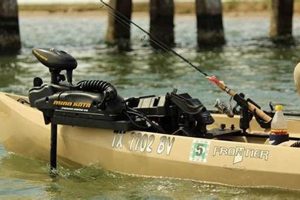
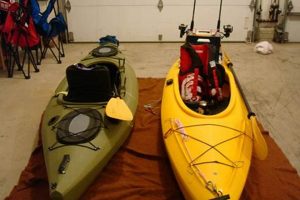
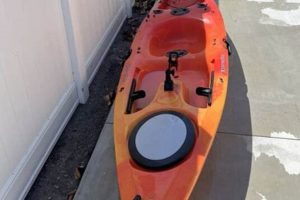
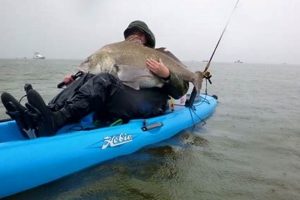
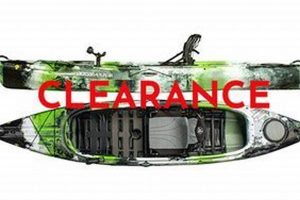
This specific model of watercraft is a sit-on-top vessel designed for angling. Characterized by its 12.5-foot length, it offers stability and maneuverability, particularly in calmer waters like lakes and slow-moving rivers. Its design typically incorporates features such as rod holders, storage compartments, and a comfortable seating system, all aimed at enhancing the fishing experience.
The vessels compact size contributes to its ease of transport and storage, making it a popular choice for anglers seeking portability. This type of kayak often bridges the gap between smaller recreational kayaks and larger, more specialized fishing kayaks, providing a balance of stability, performance, and convenience. This balance makes it suitable for a range of anglers, from beginners to more experienced individuals.
Further exploration will delve into the specific features, advantages, and disadvantages of this particular model, offering a detailed analysis for prospective buyers. Discussions will also cover essential accessories, paddling techniques, and safety considerations for utilizing this type of watercraft effectively and safely.
Tips for Kayak Fishing
Proper preparation and technique enhance safety and enjoyment while on the water. These tips offer guidance for maximizing one’s fishing experience.
Tip 1: Stability and Balance: Understanding the vessel’s center of gravity is crucial. Even weight distribution helps maintain stability, especially when casting or reeling. Avoid sudden movements that could compromise balance.
Tip 2: Paddle Selection: Choosing the right paddle length is essential for efficient paddling and reduced fatigue. Consider factors such as torso height and kayak width when selecting a paddle.
Tip 3: Essential Gear: Carry essential safety equipment, including a personal flotation device (PFD), a whistle, and a signaling device. A first-aid kit, sunscreen, and appropriate clothing are also recommended.
Tip 4: Fishing Accessories: Rod holders, tackle boxes, and fish finders are valuable additions. Ensure these accessories are securely mounted and within easy reach.
Tip 5: Navigation and Planning: Plan routes in advance, considering weather conditions and water currents. Carry a map or GPS device and inform someone of the planned route and return time.
Tip 6: Respecting the Environment: Practice Leave No Trace principles. Pack out all trash, avoid disturbing wildlife, and respect other water users.
Tip 7: Launching and Landing: Choose a suitable launch site with calm water and easy access. Practice entering and exiting the kayak smoothly and safely.
Adhering to these guidelines will contribute to a more rewarding and safe fishing experience, allowing anglers to focus on enjoying the sport.
This advice provides a foundation for successful kayak fishing. Subsequent sections will delve deeper into specific techniques and considerations.
1. Stability

Stability represents a critical factor in kayak fishing, significantly influencing angler safety and success. The Perception 12.5 fishing kayak addresses this through its design and features. A stable platform allows anglers to cast, reel, and land fish effectively without compromising balance. This is particularly important in challenging conditions such as windy days or when battling larger fish. The kayak’s hull design, width, and length contribute to its inherent stability. A wider hull generally provides greater primary stability (resistance to initial tipping), while the length contributes to secondary stability (the ability to recover from a significant tilt). This balance is crucial for creating a secure fishing platform.
Enhanced stability translates to increased angler confidence and reduced risk of capsizing. For example, an angler standing to cast in a stable kayak can focus on fishing technique rather than maintaining balance. Furthermore, a stable platform facilitates activities like landing fish, handling gear, and navigating shallow or turbulent water. Conversely, a less stable kayak can hinder performance and create a hazardous environment. This underscores the practical significance of stability in kayak fishing. The combination of inherent stability and design features allows anglers to concentrate on fishing, contributing to a more enjoyable and productive experience.
In summary, stability forms a cornerstone of effective kayak fishing. The Perception 12.5 fishing kayak’s design prioritizes this aspect, creating a platform that instills confidence and enhances performance. This emphasis on stability enables anglers to focus on their fishing techniques and enjoy their time on the water without undue concern for balance, ultimately contributing to a safer and more rewarding experience. Future discussions will analyze how this stability interacts with other design elements to create a comprehensive fishing platform.
2. Maneuverability

Maneuverability represents a crucial aspect of kayak fishing, particularly in environments requiring precise navigation. The Perception 12.5 fishing kayak’s design seeks to balance maneuverability with stability. Efficient maneuvering allows anglers to navigate tight spaces, access secluded fishing spots, and respond effectively to changing water conditions or fish movement. This capability hinges on factors like hull design, length, and the kayak’s interaction with water resistance. A shorter kayak generally offers greater maneuverability, allowing for quicker turns and adjustments in direction. However, shorter lengths can sometimes compromise tracking (the ability to maintain a straight course). The Perception 12.5 fishing kayak aims to strike a balance, offering sufficient maneuverability for navigating various fishing scenarios while retaining reasonable tracking performance.
Consider navigating a narrow, winding creek or approaching a promising fishing spot obscured by overhanging branches. In these situations, maneuverability becomes paramount. The ability to execute precise turns and adjustments allows anglers to position themselves optimally for casting and retrieving. Furthermore, responsive handling enables anglers to react swiftly to changes in current or fish behavior. For instance, pursuing a hooked fish might necessitate quick turns and adjustments to maintain proper line tension and control. Conversely, a less maneuverable kayak can hinder access to prime fishing locations and limit responsiveness to dynamic fishing situations, potentially impacting success and overall enjoyment. The Perception 12.5 fishing kayaks design strives to provide the necessary agility for a variety of fishing environments, enhancing the angler’s control and adaptability.
In essence, maneuverability contributes significantly to effective kayak fishing. The Perception 12.5 fishing kayak aims to provide a suitable level of maneuverability, allowing anglers to navigate diverse waterways and respond effectively to changing conditions. This balance between maneuverability and other performance characteristics, such as stability and tracking, enhances versatility and contributes to a more successful and enjoyable angling experience. Subsequent discussions will explore the interplay between maneuverability and other design features to provide a comprehensive understanding of the kayak’s performance characteristics.
3. Storage Capacity

Storage capacity represents a pivotal factor in kayak fishing, directly impacting organization, efficiency, and overall angling success. The Perception 12.5 fishing kayak addresses this need through dedicated storage compartments designed to accommodate essential gear and tackle. Ample storage allows anglers to carry a variety of lures, tackle boxes, safety equipment, and personal items, eliminating the need for multiple trips or cumbersome external storage solutions. This contributes to a streamlined and organized fishing experience, enabling anglers to focus on the task at hand rather than managing equipment. Dedicated compartments within the kayak facilitate easy access and prevent gear from shifting or becoming damaged during transport or while on the water. For example, rod holders secure fishing rods, preventing tangling and damage while allowing for quick deployment. Similarly, dry storage compartments protect sensitive items like electronics and personal belongings from water damage.
Consider a scenario where an angler encounters changing fish behavior or water conditions. Sufficient storage capacity allows for carrying a diverse selection of lures and tackle, enabling quick adaptation to these changes. This adaptability can significantly impact fishing success. Furthermore, integrated storage solutions contribute to a clutter-free deck, enhancing safety and ease of movement within the kayak. Conversely, limited storage capacity can restrict the variety of gear carried, potentially hindering an angler’s ability to respond effectively to changing conditions or target different species. This can also lead to a disorganized and less efficient fishing experience. The practical implication is a potential reduction in fishing success and overall enjoyment.
In summary, adequate storage capacity plays a vital role in enhancing the kayak fishing experience. The Perception 12.5 fishing kayak’s design incorporates various storage solutions to address this need, promoting organization, efficiency, and adaptability on the water. This thoughtful approach to storage empowers anglers to carry essential gear, facilitating a more streamlined and productive fishing experience. By addressing this practical consideration, the kayak contributes to enhanced angling success and overall enjoyment. Subsequent analysis will explore the integration of storage solutions within the overall kayak design and its impact on performance.
4. Portability

Portability represents a significant factor influencing the practicality and appeal of a fishing kayak. The Perception 12.5 fishing kayak’s design considers portability as a key element, aiming to balance transportability with on-the-water performance. Ease of transport and storage directly impacts accessibility and convenience, making it a crucial consideration for anglers with limited storage space or those who frequently transport their kayaks.
- Weight and Dimensions
The kayak’s weight and dimensions directly influence its portability. A lighter kayak is easier to lift, carry, and load onto a vehicle. Compact dimensions simplify storage and maneuvering in tight spaces. The Perception 12.5 strikes a balance between a manageable size for transport and sufficient on-the-water stability and storage capacity. For example, an angler living in an apartment with limited storage might find the kayak’s relatively compact size a significant advantage. Similarly, the ability to transport the kayak on a smaller vehicle expands access to various fishing locations.
- Hull Material
The hull material contributes to both weight and durability. High-density polyethylene (HDPE) is a common material known for its durability and relatively light weight, making it suitable for kayaks requiring portability. The choice of material impacts not only transport but also the kayak’s resistance to damage during loading, unloading, and storage. This durability contributes to the kayak’s longevity and reduces the risk of damage during transport, enhancing its overall practicality.
- Transportation Options
Various transportation options exist, including roof racks, trailers, and even carrying the kayak by hand for short distances. The kayak’s design should accommodate these options, potentially including features like molded handles or integrated carrying straps. The availability of suitable transportation solutions directly influences the ease and convenience of accessing different fishing locations. For instance, an angler with a roof rack can easily transport the kayak, while integrated carrying handles facilitate short-distance transport from a vehicle to the water’s edge.
- Storage Considerations
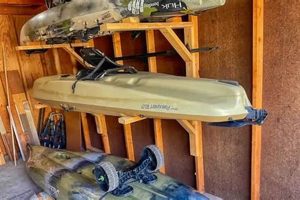
Storage considerations encompass both long-term storage and temporary storage during transport. A kayak that can be easily stored in a garage, shed, or even an apartment contributes to its overall practicality. Features like stackability or the ability to hang the kayak vertically can optimize storage space. For example, an angler with limited garage space may appreciate the ability to store the kayak vertically, maximizing space utilization. This consideration enhances the kayak’s appeal for those with limited storage options.
These facets of portability contribute significantly to the Perception 12.5 fishing kayak’s overall practicality and appeal. By carefully balancing size, weight, and design features, the kayak aims to provide a convenient and accessible fishing platform without compromising on-the-water performance. This focus on portability expands fishing opportunities, allowing anglers to explore diverse waterways with ease and convenience. The combined considerations of weight, material, transportation options, and storage solutions enhance the kayak’s versatility and contribute to a more enjoyable and accessible angling experience.
5. Fishing Features

Dedicated fishing features distinguish a purpose-built fishing kayak from recreational models. These features enhance functionality, efficiency, and overall angling success. In the context of the Perception 12.5 fishing kayak, these features are integrated into the design to create a comprehensive and user-friendly fishing platform.
- Rod Holders
Rod holders provide secure storage and quick access to fishing rods. Flush-mounted or adjustable rod holders allow anglers to keep rods organized and readily available while paddling or maneuvering. Multiple rod holders enable carrying different rod setups for various fishing techniques or targeting different species. This contributes to a more streamlined and efficient fishing experience, eliminating the need to constantly manage rods and tackle.
- Tackle Storage
Integrated tackle storage solutions, such as compartments, trays, or storage wells, keep essential gear organized and within easy reach. Dry storage compartments protect sensitive items like electronics and phones from water damage. Designated areas for tackle boxes and other fishing accessories prevent clutter and enhance efficiency. This organized approach to tackle management minimizes time spent searching for gear, allowing anglers to focus on fishing.
- Gear Tracks and Mounting Points
Gear tracks and mounting points provide versatile options for customizing the kayak with accessories like fish finders, GPS units, cameras, and additional rod holders. This adaptability allows anglers to tailor their setup to specific fishing styles and preferences. The ability to easily add or remove accessories enhances the kayak’s versatility and adaptability to different fishing scenarios.
- Comfort and Ergonomics
Features like adjustable seating systems, footrests, and ergonomic designs contribute to angler comfort during long fishing trips. A comfortable and supportive seating position reduces fatigue and enhances focus, allowing anglers to fish longer and more effectively. The integration of ergonomic principles into the design prioritizes angler comfort and well-being, contributing to a more enjoyable and sustainable fishing experience.
These fishing-specific features, integrated into the Perception 12.5 fishing kayak’s design, transform it from a simple watercraft into a dedicated fishing platform. The strategic placement and thoughtful design of these features enhance functionality, efficiency, and overall angler comfort. This combination of features contributes to a more productive and enjoyable fishing experience, enabling anglers to focus on their technique and maximize their time on the water. The integration of these specialized features distinguishes the Perception 12.5 fishing kayak from recreational models, highlighting its purpose-built design for angling pursuits.
Frequently Asked Questions
This section addresses common inquiries regarding the Perception 12.5 fishing kayak, providing concise and informative responses.
Question 1: What is the weight capacity of this specific kayak model?
The weight capacity typically ranges between 325 and 425 pounds, depending on the specific model year and configuration. Consulting the manufacturer’s specifications provides precise information for the specific kayak in question.
Question 2: Is this kayak suitable for ocean use?
While designed primarily for calmer waters like lakes and slow-moving rivers, it can handle moderate ocean conditions, especially in protected bays or estuaries. However, caution is advised in rough seas or strong currents. Prioritizing safety and adhering to appropriate paddling techniques is essential in any water environment.
Question 3: What materials comprise the construction of this kayak?
High-density polyethylene (HDPE) is commonly employed in the construction of this kayak model. This material offers a balance of durability, impact resistance, and UV protection, contributing to the kayak’s longevity and performance in various environmental conditions.
Question 4: What are the typical dimensions of this kayak model?
The Perception 12.5 fishing kayak typically measures approximately 12.5 feet in length and 32-34 inches in width. These dimensions contribute to a balance of stability and maneuverability, making it suitable for a variety of fishing environments. Precise dimensions can vary slightly depending on the model year and specific configuration. Consulting the manufacturer’s specifications confirms accurate measurements.
Question 5: What is the recommended maintenance for this kayak?
Regular rinsing with fresh water after each use helps prevent saltwater corrosion and the buildup of dirt and debris. Periodic inspection for damage and proper storage in a protected environment contribute to the kayak’s longevity and performance. Following manufacturer recommendations for specific maintenance procedures ensures optimal upkeep and extends the kayak’s lifespan.
Question 6: What accessories are commonly used with this kayak?
Commonly used accessories include paddles, personal flotation devices (PFDs), anchors, rod holders, fish finders, and dry bags. Selection of specific accessories depends on individual angler preferences and the intended fishing environment. Researching and selecting appropriate accessories enhances functionality and safety during fishing excursions.
Understanding these key aspects contributes to informed decision-making regarding the suitability of this kayak for individual needs and preferences.
Further information on specific features, performance characteristics, and user experiences can enhance understanding and aid in evaluating this kayak model.
Conclusion
Analysis of the Perception 12.5 fishing kayak reveals a watercraft designed to balance key performance characteristics. Stability and maneuverability combine to create a platform suitable for various fishing environments. Dedicated features, including ample storage and integrated fishing-specific components, enhance functionality and efficiency on the water. Portability considerations further broaden the kayak’s appeal, simplifying transport and storage. Examination of these elements provides a comprehensive understanding of the kayak’s capabilities and its suitability for diverse angling pursuits.
Careful consideration of individual needs, fishing styles, and target environments remains crucial in selecting appropriate fishing equipment. The Perception 12.5 fishing kayak presents a compelling option for anglers seeking a balance of performance, features, and portability. Further research and hands-on experience can provide valuable insights, ultimately contributing to informed decisions and enhanced enjoyment on the water.