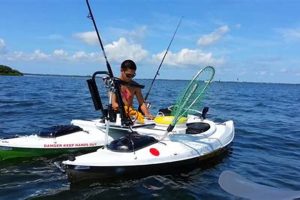
A kayak designed for fishing can be constructed with three distinct sections that connect and disconnect easily. This allows for adaptability in length and configuration, transforming from a compact solo vessel to a larger, more stable platform suitable for tandem paddling or carrying additional gear. For instance, a shorter configuration might be ideal for navigating narrow streams, while a longer setup could offer greater speed and stability on open water. The ability to add or remove sections also simplifies transport and storage.
This adaptable design offers several advantages to anglers. The ability to customize the kayak’s length and capacity allows for optimization based on fishing conditions, target species, and individual preferences. Smaller configurations enhance maneuverability in confined spaces, while larger configurations provide increased stability and load capacity for longer trips or heavier equipment. The ease of disassembly and reassembly significantly reduces the challenges associated with transporting and storing longer kayaks. Furthermore, the modularity may offer cost-saving potential by allowing anglers to adapt to evolving needs without purchasing multiple watercraft.
The following sections delve deeper into the design considerations, specific applications, and potential drawbacks of this type of fishing kayak. Topics covered include material selection, connection mechanisms, performance comparisons with traditional kayaks, and recommendations for choosing the right configuration based on fishing style and environment.
Tips for Utilizing a Modular Three-Body Fishing Kayak
Careful consideration of several factors can significantly enhance the fishing experience and overall utility offered by a modular, three-section kayak. These tips address key aspects of configuration, transport, and maintenance.
Tip 1: Configuration Matching Environment: Shorter configurations offer increased maneuverability, ideal for navigating tight rivers and streams or fishing close to shore. Longer configurations provide improved tracking and speed, better suited for open water or covering greater distances.
Tip 2: Balancing Stability and Capacity: Consider the weight of anticipated gear and the desired level of stability. Adding the middle section increases stability and load capacity but reduces maneuverability. Experimentation helps determine the optimal balance for specific needs.
Tip 3: Secure Connection Verification: Prior to each outing, ensure all connecting components are properly engaged and secured. This prevents accidental separation during use and maintains structural integrity.
Tip 4: Transport and Storage Optimization: Disassemble the kayak into its component sections for transport and storage. This reduces the required storage space and simplifies transportation, especially on smaller vehicles.
Tip 5: Regular Maintenance: Rinse the kayak thoroughly with fresh water after each use, paying particular attention to the connection points. This prevents corrosion and maintains the integrity of the seals.
Tip 6: Seal Inspection: Periodically inspect the seals around the connection points for wear or damage. Replace worn seals promptly to prevent leakage and maintain buoyancy.
Tip 7: Weight Distribution Awareness: Distribute weight evenly throughout the kayak to maintain balance and prevent tipping. Consider the placement of gear and the angler’s position to optimize stability.
By adhering to these guidelines, users can maximize the adaptability and performance offered by these kayaks, leading to more efficient and enjoyable fishing experiences.
The concluding section summarizes the key advantages and potential limitations of modular fishing kayaks, offering final recommendations for prospective buyers.
1. Adaptability

Adaptability stands as a defining characteristic of the modular three-body fishing kayak, distinguishing it from traditional kayak designs. This inherent flexibility allows the vessel to conform to a range of fishing environments and angler preferences, maximizing its utility across diverse conditions.
- Length Configuration:
The ability to adjust the kayak’s length by adding or removing sections profoundly impacts its performance characteristics. A shorter configuration favors maneuverability in confined waterways, enabling navigation through tight turns and shallow areas. Conversely, a longer configuration prioritizes speed and tracking on open water, facilitating efficient travel over longer distances. This adaptability proves invaluable when transitioning between different fishing locations or targeting various species.
- Capacity Adjustment:
Modular design inherently allows for capacity adjustments. Adding the middle section increases the kayak’s weight capacity and stability, accommodating larger anglers, additional gear, or even a second paddler. This flexibility caters to diverse needs, from solo excursions requiring minimal equipment to tandem fishing trips or longer expeditions demanding substantial supplies. Removing the middle section reduces weight and enhances maneuverability, optimizing the kayak for solo use in confined environments.
- Fishing Style Accommodation:
Different fishing styles often necessitate specialized equipment and approaches. The modular kayak’s adaptability caters to these varying requirements. Its configurable nature supports diverse angling methods, from stand-up fishing requiring enhanced stability to trolling demanding efficient tracking, or still fishing in shallows requiring exceptional maneuverability. The ability to customize the kayak’s configuration optimizes the fishing experience across a spectrum of techniques.
- Transportation and Storage:
Adaptability extends beyond on-the-water performance to encompass logistical considerations. The ability to disassemble the kayak into smaller sections greatly simplifies transportation and storage. This modularity proves particularly beneficial for individuals with limited storage space or smaller vehicles. The ease of disassembly and reassembly further enhances the kayak’s overall portability and convenience.
The convergence of these facets of adaptability underscores the significant advantages offered by the modular three-body fishing kayak. Its capacity to transform and conform to varying needs and environments positions it as a remarkably versatile platform, enhancing the fishing experience across a wide range of conditions and preferences. This adaptability ultimately allows anglers to optimize their approach, maximizing their chances of success while minimizing logistical challenges.
2. Transportability
Transportability represents a significant advantage of modular three-body fishing kayaks, directly addressing a common challenge associated with traditional kayak ownership. The ability to disassemble the kayak into smaller, more manageable sections significantly reduces the logistical complexities often associated with transporting longer, single-piece kayaks. This modularity eliminates the need for specialized roof racks or trailers, enabling transport on smaller vehicles or even within public transportation systems. Consider, for example, an angler living in an apartment complex with limited storage. A traditional kayak might present significant storage and transportation challenges, whereas a modular design allows for compact storage and easier transport in a standard vehicle.
The practical implications of enhanced transportability extend beyond convenience. This feature expands access to a wider range of fishing locations. Anglers can readily transport their kayaks to remote lakes, narrow rivers, or coastal areas previously inaccessible with larger, less portable vessels. Furthermore, the ease of transport encourages more frequent outings, promoting greater engagement with the sport. For instance, a quick fishing trip after work becomes feasible when transporting the kayak requires minimal effort and time. This ease of access contributes to a more dynamic and adaptable fishing experience, fostering exploration and spontaneity.
In summary, enhanced transportability achieved through modular design addresses practical limitations inherent in traditional kayaks. This feature empowers anglers with greater flexibility, expanding access to diverse fishing locations while simplifying logistical considerations. The resulting convenience promotes increased usage and encourages exploration, ultimately enriching the overall fishing experience.
3. Stability

Stability is a critical performance attribute in fishing kayaks, directly influencing angler safety, comfort, and fishing effectiveness. In the context of modular three-body fishing kayaks, stability is a dynamic factor influenced by the chosen configuration and environmental conditions. Understanding how these factors interact is crucial for optimizing performance and ensuring a secure and productive fishing experience.
- Configuration and Stability:
The modular nature of these kayaks allows for adjustments to stability through configuration changes. Adding the middle section increases the kayak’s width and overall footprint, enhancing stability, particularly beneficial for stand-up fishing or when navigating choppy water. Conversely, removing the middle section reduces stability but increases maneuverability, advantageous in confined spaces or when navigating tight turns in rivers or streams. Anglers can tailor the kayak’s stability based on anticipated conditions and fishing style. A longer, wider configuration offers more stability for open water, while a shorter, narrower configuration might be preferred for tight maneuvers in calmer waters.
- Weight Distribution and Balance:
Proper weight distribution is crucial for maintaining stability in any kayak, particularly in modular designs. Evenly distributing gear and maintaining a low center of gravity significantly enhances stability. Uneven weight distribution can lead to instability, increasing the risk of capsizing. For instance, placing heavy gear at one end of the kayak can compromise balance. Anglers must consider the placement of gear and their own body position to maintain optimal stability.
- Environmental Factors:
Environmental conditions, including wind, waves, and currents, play a significant role in kayak stability. A longer, more stable configuration is generally preferred in challenging conditions. Wind and waves can exert considerable force on the kayak, and a stable platform helps mitigate the risk of capsizing. In calm conditions, a shorter, more maneuverable configuration may be suitable. Anglers must assess prevailing conditions and adjust the kayak’s configuration accordingly to ensure optimal stability and safety.
- Hull Design and Stability:
While the modular nature allows for some degree of stability adjustment, the inherent hull design of each kayak section also plays a crucial role. Kayaks with flatter hulls tend to be more stable initially, while those with more rounded or V-shaped hulls prioritize speed and maneuverability over primary stability. Understanding the hull design characteristics of the chosen kayak model is essential for optimizing stability based on anticipated conditions and fishing preferences.
In conclusion, stability in modular three-body fishing kayaks is a multifaceted aspect influenced by configuration, weight distribution, environmental conditions, and inherent hull design. By carefully considering these factors, anglers can optimize stability to enhance safety, improve fishing effectiveness, and maximize overall enjoyment on the water. Selecting the appropriate configuration and maintaining proper weight distribution are essential practices for achieving a balanced and secure kayaking experience.
4. Storage
Storage considerations are often paramount when choosing a kayak, particularly for those with limited space. Modular three-body fishing kayaks offer distinct advantages in this regard, presenting a compelling solution for anglers seeking efficient storage options. The ability to disassemble the kayak into smaller components significantly reduces the overall storage footprint compared to traditional single-piece designs. This feature allows for compact storage in smaller spaces such as apartments, garages, or even closets, eliminating the need for dedicated storage areas or cumbersome roof racks during the off-season.
- Disassembly and Compact Storage:
The primary storage advantage of modular kayaks lies in their disassembly capability. Breaking the kayak down into three separate sections allows for much more compact storage. These sections can often be nested or stacked, further minimizing the required space. For example, a 12-foot kayak might require significant dedicated storage space when fully assembled, but when disassembled, its sections can be stored in a closet or under a bed. This characteristic makes modular kayaks particularly appealing to those living in apartments or smaller homes with limited storage capacity.
- Transportation and Storage Integration:
The benefits of modularity extend beyond home storage to transportation. The disassembled sections are easier to transport, often fitting within the confines of a standard vehicle. This eliminates the need for specialized roof racks or trailers, reducing transportation costs and complexities. The ability to easily transport the disassembled sections also allows for spontaneous fishing trips, as the kayak can be quickly packed and transported without requiring extensive preparation or specialized equipment. This seamless integration of transportation and storage enhances the overall convenience and usability of the modular kayak.
- Long-Term Storage Considerations:
Proper long-term storage practices ensure the longevity and performance of a modular kayak. Storing the disassembled sections in a cool, dry environment protects them from damage caused by excessive heat, sunlight, or moisture. Using protective covers or bags can further shield the sections from dust and scratches during storage. Proper storage maintenance preserves the kayak’s structural integrity and ensures its readiness for use when the fishing season returns. For example, storing the kayak sections in a climate-controlled garage or shed prevents warping or degradation due to temperature fluctuations.
- Component Organization:
Organizing the disassembled sections and associated accessories, such as paddles, seats, and fishing gear, contributes to efficient storage and simplifies reassembly. Utilizing storage bins, bags, or dedicated shelving units keeps the components neatly organized and readily accessible. This organized approach saves time and reduces frustration when preparing for a fishing trip, as all necessary components can be quickly located and assembled. Labeling storage containers or bags can further enhance organization and ensure that all parts are accounted for.
The modular design addresses the storage challenges often associated with kayak ownership, offering a practical solution for anglers seeking efficient and convenient storage options. The ability to disassemble the kayak into smaller sections significantly reduces the required storage space, facilitating storage in a variety of environments. This feature, combined with the ease of transportation and reassembly, enhances the overall usability and accessibility of the modular three-body fishing kayak, making it a compelling choice for anglers seeking a versatile and space-saving watercraft.
5. Customization

Customization represents a significant advantage inherent in the design of modular three-body fishing kayaks. Unlike traditional single-piece kayaks, the modular design allows for a high degree of personalization, enabling anglers to tailor the kayak’s configuration and features to their specific needs and preferences. This adaptability extends beyond simply adjusting the length of the kayak; it encompasses a range of modifications that enhance comfort, functionality, and overall fishing effectiveness. For example, an angler targeting large game fish might configure the kayak for maximum stability and add specialized rod holders and fish finders, while an angler focused on fly fishing in shallow streams might opt for a shorter, more maneuverable configuration with accessories tailored to that specific style.
The modularity facilitates the addition and removal of various accessories, further enhancing customization. Specialized seating systems, rod holders, fish finders, and storage compartments can be integrated or removed as needed, optimizing the kayak for specific fishing techniques and target species. This adaptable platform allows anglers to fine-tune their setup based on evolving needs and preferences, enhancing versatility and maximizing efficiency on the water. Consider an angler transitioning from bass fishing in a lake to trout fishing in a river. The modular kayak allows for quick reconfiguration and adaptation of accessories to suit the different environments and fishing styles. This level of customization ensures optimal performance and comfort in diverse fishing scenarios.
The ability to customize a modular three-body fishing kayak significantly enhances its long-term value and adaptability. As an angler’s skills and preferences evolve, the kayak can be modified to accommodate these changes, eliminating the need for frequent replacements or upgrades. This inherent flexibility makes the modular kayak a cost-effective investment that can adapt to a wide range of fishing styles and evolving needs over time. By offering a platform that can be tailored to individual preferences and specific fishing scenarios, the modular design empowers anglers with greater control over their fishing experience, ultimately enhancing performance, comfort, and overall satisfaction on the water.
6. Durability

Durability is a critical factor influencing the long-term value and performance of a modular three-body fishing kayak. A durable kayak withstands the rigors of regular use, including transportation, storage, and exposure to various environmental conditions. The materials used in construction, the quality of manufacturing processes, and the design of the connection system all contribute to the overall durability and longevity of the kayak. Evaluating durability requires consideration of potential stressors, including impacts, abrasion, UV exposure, and the effects of repeated assembly and disassembly.
- Material Selection:
The choice of materials significantly impacts a kayak’s durability. High-density polyethylene (HDPE) is a common choice due to its impact resistance, UV stability, and relatively low cost. Other materials, such as ABS plastics and composites, offer varying degrees of durability and performance characteristics. HDPE, for instance, offers excellent impact resistance, crucial for navigating rocky rivers or shallow waters. ABS plastics, while potentially lighter, might be more susceptible to cracking under stress. The selected material directly influences the kayak’s ability to withstand impacts, abrasion, and long-term exposure to the elements.
- Connection System Robustness:
The modular design introduces potential points of vulnerability at the connection points between sections. A robust and well-designed connection system is essential for maintaining structural integrity and preventing leaks. Secure latches, reinforced joints, and durable sealing mechanisms contribute to the overall strength and longevity of the kayak. For example, a connection system utilizing stainless steel hardware and high-quality gaskets is more likely to withstand corrosion and maintain a watertight seal compared to a system using less durable components. The strength and reliability of the connection system directly influence the kayak’s ability to withstand repeated assembly and disassembly without compromising performance or safety.
- Manufacturing Quality:
The manufacturing process plays a crucial role in the overall durability of the kayak. Consistent wall thickness, proper welding techniques (for HDPE kayaks), and meticulous quality control measures ensure structural integrity and minimize the risk of defects. A well-manufactured kayak exhibits consistent quality throughout, minimizing weak points that could compromise durability. For example, variations in wall thickness could create stress points that weaken the kayak’s structure over time. Rigorous quality control procedures throughout the manufacturing process are essential for ensuring consistent durability and performance.
- UV Resistance:
Exposure to ultraviolet (UV) radiation from sunlight can degrade certain plastics over time, leading to discoloration, brittleness, and reduced strength. Kayaks constructed from UV-resistant materials are better equipped to withstand prolonged sun exposure, maintaining their structural integrity and aesthetic appeal over time. HDPE, for instance, typically exhibits good UV resistance, while some other plastics may require additional UV-protective coatings or treatments. Choosing a kayak with inherent UV resistance ensures long-term durability and minimizes the detrimental effects of sun exposure.
Durability in a modular three-body fishing kayak is a complex interplay of material properties, connection system design, and manufacturing quality. Selecting a kayak constructed from durable materials, featuring a robust connection system, and manufactured to high standards ensures long-term performance and resistance to wear and tear. Careful consideration of these factors ensures a reliable and long-lasting investment, capable of withstanding the demands of regular use and diverse environmental conditions. Ultimately, a durable kayak enhances the overall fishing experience by providing a reliable and dependable platform for years to come.
Frequently Asked Questions
This section addresses common inquiries regarding modular three-body fishing kayaks, providing concise and informative responses to facilitate informed decision-making.
Question 1: How does the modular design affect on-the-water performance compared to a traditional one-piece kayak?
Performance characteristics are influenced by the specific configuration. Shorter configurations prioritize maneuverability, while longer configurations enhance tracking and speed. Some flex may be experienced at connection points, though typically minimal with proper assembly. Overall performance depends on design, materials, and configuration choices.
Question 2: What are the primary advantages of choosing a modular kayak for fishing?
Key advantages include adaptability to different water bodies and fishing styles, simplified transport and storage due to disassembly, and potential cost savings compared to owning multiple specialized kayaks. Modularity allows customization based on evolving needs and preferences.
Question 3: Are modular kayaks as durable as traditional single-piece kayaks?
Durability depends on the materials and construction quality. High-quality modular kayaks utilize robust materials and connection systems designed to withstand regular use and environmental exposure. Proper assembly and maintenance are crucial for maximizing lifespan and performance.
Question 4: How difficult is it to assemble and disassemble a modular fishing kayak?
Most modular kayak systems are designed for straightforward assembly and disassembly, often requiring minimal tools and time. Connection mechanisms vary between manufacturers, but generally involve latching or locking systems designed for ease of use and secure connections. Practice ensures efficient and accurate assembly.
Question 5: What are the key factors to consider when choosing a modular kayak?
Material selection, connection system design, weight capacity, storage considerations, and intended fishing applications should be primary considerations. Evaluating these factors in relation to individual needs and preferences ensures optimal selection.
Question 6: Are there any specific maintenance requirements for modular kayaks?
Regular cleaning and inspection of connection points and seals are essential for maintaining performance and preventing leaks or damage. Proper storage in a dry, protected environment minimizes wear and tear. Following manufacturer recommendations for care and maintenance ensures optimal longevity.
Careful consideration of these frequently asked questions clarifies key aspects of modular kayak ownership, enabling potential buyers to make informed decisions based on individual needs and intended applications. Understanding the advantages, limitations, and maintenance requirements associated with modular kayaks empowers informed choices and maximizes the potential for a satisfying fishing experience.
The next section offers concluding thoughts and recommendations regarding modular three-body fishing kayaks.
Modular Three-Body Fishing Kayak
Modular three-body fishing kayaks offer a compelling alternative to traditional kayak designs, particularly for anglers seeking enhanced versatility and adaptability. The ability to modify length and capacity through the addition or removal of sections allows these kayaks to perform effectively in diverse environments, from narrow streams to open lakes. This adaptability extends to transportation and storage, where the disassembled components significantly reduce logistical challenges. While potential drawbacks such as connection point durability and slight performance variations compared to single-piece kayaks warrant consideration, the overall benefits of modularity often outweigh these concerns, particularly for anglers prioritizing flexibility and convenience.
The modular three-body fishing kayak represents a significant step toward personalized and adaptable watercraft. As technology and design continue to evolve, further refinements in materials, connection systems, and customization options are likely. The continued development of this modular approach promises to further enhance the fishing experience, offering anglers increasingly versatile and adaptable platforms for pursuing their passion on the water. Careful consideration of individual needs, fishing styles, and environmental conditions will guide anglers toward informed decisions, maximizing the potential benefits offered by this innovative kayak design.