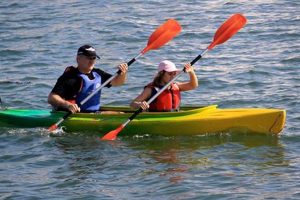
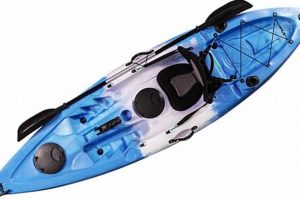
A specialized type of small watercraft designed for angling, these vessels typically feature modifications like rod holders, storage compartments for tackle, and sometimes even livewells or fish finders. They prioritize stability and maneuverability, enabling anglers to access shallow waters and navigate diverse aquatic environments effectively.
The rising popularity of this specialized vessel stems from enhanced access to fishing grounds often unreachable by larger boats, offering a closer-to-nature angling experience. This style of fishing often allows for a quieter, less intrusive approach, potentially improving fishing success. Furthermore, the relatively low cost and ease of transport and storage compared to larger motorized boats contribute to their appeal.
This article will explore the various types of these specialized watercraft, factors to consider when selecting one, essential safety equipment, and popular fishing techniques best suited for this style of angling.
Tips for Kayak Fishing
Effective kayak angling requires careful planning and preparation. The following tips offer guidance for a safe and productive experience.
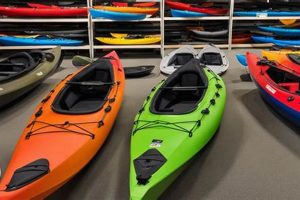
Tip 1: Choose the Right Vessel: Kayak selection depends on intended fishing locations and angler preferences. Sit-on-top kayaks offer stability and ease of re-entry after a water landing, while sit-inside kayaks provide better protection from the elements but can be more challenging if capsized. Pedal-powered versions offer hands-free fishing while maintaining maneuverability.
Tip 2: Prioritize Safety: Always wear a personal flotation device (PFD). Carry a whistle, signaling mirror, and waterproof communication device for emergencies. Check weather conditions before embarking and inform someone of your fishing plans, including location and estimated return time.
Tip 3: Organize and Secure Gear: Utilize rod holders, tackle boxes, and dry bags to keep equipment organized and protected from water damage. Secure loose items to prevent loss in case of capsizing. Distribute weight evenly within the kayak for optimal balance and stability.
Tip 4: Practice Paddling and Maneuvering: Develop proficient paddling skills and practice maneuvering techniques before venturing into challenging waters. Understanding how the kayak responds to wind and currents is crucial for safe and efficient navigation.
Tip 5: Master Basic Fishing Techniques: Adapt fishing techniques to the kayak environment. Practice casting while seated and learn to manage the line and retrieve fish efficiently within the confined space of the kayak.
Tip 6: Respect the Environment: Adhere to “leave no trace” principles by properly disposing of waste, avoiding disturbing wildlife, and respecting other anglers and boaters.
Tip 7: Check Local Regulations: Familiarize oneself with local fishing regulations, including licensing requirements, catch limits, and any specific restrictions related to kayak fishing.
By following these guidelines, anglers can maximize their enjoyment and success on the water while prioritizing safety and environmental responsibility. These preparations contribute to a more fulfilling and rewarding experience.
This information provides a foundation for successful kayak angling. The next section will delve into advanced techniques for specific fish species and environments.
1. Stability

Stability forms a cornerstone of effective and safe kayak angling. A stable platform allows anglers to cast, retrieve, and land fish without compromising balance, a critical factor impacting both fishing success and personal safety. Compromised stability can lead to capsizing, equipment loss, and potentially dangerous situations, particularly in challenging conditions such as strong currents or windy weather. A stable kayak permits anglers to focus on fishing techniques rather than constantly correcting balance, enhancing overall performance and enjoyment. For example, the ability to stand and sight-cast in a stable kayak provides significant advantages in shallow-water fishing scenarios.
Several design elements contribute to kayak stability. Hull design, including width and shape, plays a significant role. Wider hulls generally offer greater initial stability, while specific hull shapes can enhance secondary stability, the resistance to tipping when leaned. Features like outriggers or pontoons further augment stability, providing additional support and enhancing confidence, particularly for less experienced anglers or those fishing in rougher waters. Weight distribution within the kayak also influences stability. Properly distributing gear and maintaining a low center of gravity contribute significantly to a balanced and stable platform.
Understanding the factors contributing to kayak stability is paramount for informed decision-making during the selection process. Choosing a kayak with appropriate stability characteristics for the intended fishing environment and angler experience level directly impacts safety and performance on the water. Prioritizing stability ensures a more confident and enjoyable angling experience, minimizing the risk of accidents while maximizing fishing opportunities.
2. Maneuverability

Maneuverability represents a critical performance attribute in specialized fishing kayaks, directly influencing angling effectiveness and access to prime fishing locations. Precise and responsive handling allows anglers to navigate complex waterways, including shallow creeks, narrow inlets, and obstacle-laden environments like fallen trees or submerged vegetation. This agility enables access to secluded areas often inaccessible to larger vessels, expanding fishing opportunities and potentially improving catch rates. Moreover, responsive maneuverability aids in precise boat control for techniques like drift fishing or trolling, optimizing bait presentation and lure action. For example, navigating tight turns in a swift-flowing river requires a highly maneuverable kayak to maintain position and effectively target specific areas holding fish. Similarly, the ability to quickly reposition the kayak in response to changing wind or current conditions is essential for maintaining an optimal fishing presentation and avoiding snags or entanglement.
Several factors contribute to kayak maneuverability. Shorter kayaks generally turn more quickly, while longer kayaks offer better tracking in open water. Hull design, including the presence of a keel or skeg, significantly impacts directional stability and turning performance. The type of propulsion system also influences maneuverability. Paddle kayaks offer immediate directional control, while pedal-driven systems provide hands-free fishing but may require wider turning radiuses. Understanding the interplay of these factors is essential for selecting a kayak with maneuverability characteristics suited to the intended fishing environment. For instance, a shorter, more maneuverable kayak is advantageous in confined environments like mangrove forests, while a longer, tracking-oriented kayak might be preferable for open-water trolling or covering greater distances.
Effective maneuverability empowers anglers to exploit diverse fishing environments, presenting lures or bait with precision and maintaining optimal positioning relative to target species. Selecting a kayak with appropriate maneuverability for specific fishing scenarios enhances angling success and expands access to productive waters. This careful consideration of maneuverability, combined with other key attributes like stability and storage capacity, optimizes the angling experience and contributes to a more rewarding time on the water.
3. Storage Capacity

Ample storage capacity represents a critical factor in fishing kayak selection, directly impacting angling efficiency and overall success. The ability to transport essential gear, including tackle boxes, rods, safety equipment, and personal items, influences both the practicality and enjoyment of kayak fishing excursions. Insufficient storage can lead to compromised organization, limiting access to essential equipment and potentially hindering effective fishing practices. Conversely, well-designed storage solutions allow anglers to maintain order and readily access necessary items, promoting efficient lure changes, tackle adjustments, and overall fishing fluidity. For example, dedicated compartments for rods, reels, and tackle boxes prevent entanglement and damage, while dry storage areas protect sensitive electronics and personal belongings from water exposure. Furthermore, adequate storage facilitates multi-day trips or excursions to remote locations by enabling transport of camping gear, food, and water.
Storage solutions in specialized fishing kayaks vary considerably, from integrated compartments and hatches to bungee cord systems and accessory mounting points. Evaluating storage capacity involves considering both the volume and accessibility of storage spaces. Factors such as the size and type of tackle used, the duration of typical fishing trips, and the need to transport additional equipment like cameras or fish finders influence optimal storage requirements. Prioritizing storage capacity during kayak selection ensures sufficient space for all essential gear, promoting a more organized and efficient angling experience. For instance, an angler targeting large pelagic species may require substantial storage for heavy tackle and specialized equipment, while a casual angler fishing in local ponds may prioritize compact and easily accessible storage for a smaller selection of lures and tackle.
Adequate storage capacity directly contributes to a more productive and enjoyable kayak fishing experience. By facilitating organized gear management and enabling transport of essential equipment, appropriate storage solutions enhance angling efficiency and contribute to overall success on the water. Careful consideration of storage needs, combined with an assessment of other key features like stability and maneuverability, empowers anglers to select a kayak optimized for their individual fishing style and preferences. This thoughtful approach to storage capacity maximizes on-the-water performance and enhances the overall enjoyment of kayak angling.
4. Comfort and Ergonomics

Comfort and ergonomics play crucial roles in the overall kayak fishing experience, directly impacting both angling performance and long-term physical well-being. Extended periods on the water, often in demanding physical positions, necessitate a comfortable and supportive seating system. An ergonomic design minimizes strain on the back, legs, and arms, allowing anglers to maintain focus and effectively execute fishing techniques without discomfort or fatigue. A poorly designed seating system can lead to pain, stiffness, and reduced mobility, hindering casting accuracy, fish fighting capability, and overall enjoyment. For example, an adjustable seat with proper lumbar support allows anglers to customize the seating position for optimal comfort and body posture, while padded seating surfaces reduce pressure points and enhance comfort during long hours on the water. Similarly, strategically placed footrests provide crucial support and stability, enabling anglers to maintain balance and leverage while paddling and casting.
Beyond seating, other ergonomic considerations influence kayak fishing effectiveness. Paddle length and design impact paddling efficiency and minimize strain on shoulders and arms. The placement and accessibility of rod holders, tackle storage, and other essential equipment contribute to a streamlined and efficient workflow, reducing unnecessary movements and maximizing fishing time. For instance, adjustable rod holders positioned within easy reach minimize strain during casting and retrieving, while well-organized tackle storage reduces time spent searching for lures and equipment. Furthermore, the design of the kayak’s cockpit, including legroom and deck layout, impacts overall comfort and freedom of movement. A spacious cockpit allows for comfortable leg positioning and facilitates easy entry and exit, while a well-designed deck provides ample space for gear placement and movement within the kayak.
Prioritizing comfort and ergonomics in kayak selection contributes significantly to both short-term fishing performance and long-term angler health. A comfortable and ergonomically sound kayak enables anglers to fish longer, maintain focus, and effectively execute techniques without experiencing physical limitations. This, in turn, enhances fishing success and promotes sustained enjoyment of the sport. Careful consideration of seating design, paddle ergonomics, equipment layout, and cockpit design ensures a comfortable and efficient fishing platform, optimizing performance and minimizing the risk of discomfort or injury during extended periods on the water. This contributes to a more rewarding and sustainable approach to kayak angling.
5. Propulsion Systems

Propulsion systems represent a defining feature of specialized fishing kayaks, significantly influencing angling effectiveness and overall experience. Diverse propulsion methods cater to varied fishing styles, environments, and angler preferences. Traditional paddle kayaks offer versatility, affordability, and a direct connection to the water, relying on upper body strength and paddling technique for movement. This method provides excellent maneuverability in tight spaces and shallow water, advantageous for navigating complex shorelines, weaving through vegetation, or accessing secluded fishing spots. However, paddling requires physical exertion, potentially limiting range and fishing duration, particularly in challenging conditions like strong currents or wind. Paddle propulsion also occupies both hands, requiring pauses in fishing to reposition or maintain boat control.
Pedal-driven kayaks offer hands-free operation, a significant advantage for anglers seeking to maximize fishing time and efficiency. These systems allow simultaneous fishing and maneuvering, enhancing lure presentation, line management, and fish fighting capability. Pedal kayaks often utilize either propeller or fin-based propulsion, each offering distinct advantages. Propeller systems generally provide higher speeds, suitable for covering greater distances or trolling in open water, while fin-based systems excel in shallow water and offer enhanced maneuverability around submerged obstacles, minimizing the risk of entanglement or damage. However, pedal kayaks typically come at a higher price point than paddle kayaks and may require more maintenance due to the added mechanical complexity. The choice between paddle and pedal propulsion depends on individual fishing preferences, physical capabilities, target fishing environments, and budgetary constraints. For example, a fly fisherman navigating a shallow, technical river might prioritize the precise maneuverability of a paddle kayak, while an angler trolling for offshore species may prefer the speed and hands-free operation of a pedal-driven system.
Careful consideration of propulsion system characteristics is paramount for selecting a fishing kayak optimized for specific angling needs. Factors such as target fishing environments, desired fishing techniques, physical limitations, and budgetary considerations play crucial roles in determining the most appropriate propulsion method. Understanding the advantages and disadvantages of each propulsion system empowers anglers to make informed decisions, maximizing on-the-water efficiency, comfort, and overall fishing success. This informed selection contributes to a more rewarding and productive kayak angling experience, tailored to individual preferences and fishing goals.
6. Material and Durability

Material and durability are fundamental considerations in fishing kayak selection, directly impacting vessel lifespan, performance, and overall cost-effectiveness. Kayaks face exposure to harsh environmental conditions, including UV radiation, saltwater corrosion, impacts with rocks or submerged objects, and temperature fluctuations. Selecting durable materials suited to the intended fishing environment ensures long-term reliability, minimizes maintenance requirements, and preserves the kayak’s value over time. A durable kayak withstands regular use and potential impacts, providing a reliable platform for angling adventures.
- Polyethylene (PE)
Polyethylene, particularly high-density polyethylene (HDPE), represents a prevalent material in kayak construction due to its durability, impact resistance, and affordability. HDPE kayaks withstand abrasion and impacts effectively, making them suitable for navigating rocky shorelines or shallow, obstacle-laden waters. Rotational molding, a common manufacturing process for PE kayaks, creates a seamless, one-piece hull with uniform thickness, enhancing overall strength and durability. While HDPE kayaks offer excellent impact resistance, they can be heavier than kayaks constructed from other materials and may be more susceptible to UV degradation over time.
- Thermoformed ABS/ASA
Thermoformed ABS or ASA plastics offer higher stiffness and impact resistance compared to HDPE, resulting in lighter and more performance-oriented kayaks. This material combination provides excellent UV resistance, minimizing fading and degradation from prolonged sun exposure. Thermoformed kayaks often feature multi-layer construction, incorporating a core material for added stiffness and impact absorption. While generally more expensive than HDPE kayaks, thermoformed ABS/ASA kayaks offer a balance of durability, performance, and weight savings.
- Fiberglass/Composite
Fiberglass and composite materials, often incorporating carbon fiber or Kevlar reinforcements, offer superior strength, stiffness, and lightweight construction compared to plastic kayaks. These materials allow for precise hull shaping, resulting in enhanced performance characteristics like speed and maneuverability. However, fiberglass and composite kayaks are typically more expensive than plastic kayaks and may require more careful handling to prevent damage from impacts or abrasion. They also tend to be less resistant to impacts than plastic kayaks, requiring greater care in rocky or shallow environments.
- Inflatable Kayaks
Inflatable kayaks, typically constructed from durable PVC or Hypalon fabrics, offer portability and convenience, particularly for anglers with limited storage space or transportation options. These kayaks can be easily deflated and packed for transport, making them ideal for travel or accessing remote fishing locations. While durable, inflatable kayaks are susceptible to punctures and require careful handling around sharp objects or abrasive surfaces. Technological advancements in inflatable kayak construction, such as drop-stitch technology, have significantly improved rigidity and performance, bridging the gap between inflatable and rigid-hulled kayaks.
Selecting appropriate materials and construction methods significantly impacts kayak durability and longevity. Considering the intended fishing environment, transportation and storage constraints, and budget limitations allows anglers to prioritize durability features relevant to their specific needs. Evaluating material characteristics and manufacturing processes empowers informed decision-making, ensuring a durable and reliable kayak capable of withstanding the rigors of regular use and providing years of reliable service on the water.
7. Specific Fishing Features
Specialized fishing kayaks differentiate themselves from recreational kayaks through integrated features designed to enhance angling performance and efficiency. These purpose-built additions cater specifically to the needs of anglers, optimizing various aspects of the fishing experience, from tackle management and rod placement to fish finding and comfort. Understanding these specialized features is crucial for selecting a kayak that aligns with individual fishing styles and target species.
- Rod Holders
Rod holders provide secure storage and convenient access to fishing rods, freeing hands for paddling, maneuvering, and other essential tasks. Various rod holder configurations exist, including flush-mounted, adjustable, and rotating designs. Flush-mounted rod holders offer a streamlined profile, minimizing snag potential, while adjustable rod holders allow anglers to customize rod angles for specific fishing techniques. Rotating rod holders facilitate trolling and other techniques requiring dynamic rod positioning. The number and placement of rod holders depend on individual fishing styles and the number of rods typically used.
- Tackle Storage
Dedicated tackle storage solutions within fishing kayaks facilitate organized gear management and efficient access to lures, hooks, lines, and other essential equipment. Integrated tackle boxes, trays, and compartments keep items secure and readily available, minimizing time spent searching for specific items. Dry storage compartments protect sensitive electronics and personal belongings from water damage, while open storage areas with bungee cords offer quick access to frequently used items. The type and capacity of tackle storage depend on the angler’s preferred fishing style and the variety of tackle typically carried.
- Fish Finders and Electronics Mounts
Fish finders and GPS units provide valuable information about water depth, bottom structure, fish location, and navigation, enhancing angling success. Integrated mounting points and transducer scuppers allow for seamless installation of these electronic devices, providing clear displays and convenient access to data. Pre-wired electrical systems simplify fish finder installation and power management. The inclusion of electronics mounts and wiring provisions demonstrates a kayak’s design focus on serious angling pursuits.
- Anchor Trolleys and Systems
Anchor trolleys and anchoring systems allow anglers to maintain position in specific fishing locations, particularly in currents or windy conditions. These systems facilitate controlled drifts, optimizing bait presentation and maximizing fishing effectiveness in targeted areas. Anchor trolleys allow for easy adjustment of anchor position, adapting to changing currents or wind directions. Integrated anchor trolley systems reflect a kayak’s design focus on serious fishing applications, providing anglers with the tools necessary to maintain precise boat control and optimize fishing presentations.
These specialized features collectively enhance the functionality and efficiency of fishing kayaks, catering specifically to the needs of anglers. Careful consideration of these features during kayak selection ensures a vessel optimized for individual fishing styles, target species, and desired level of on-the-water performance. The presence and quality of these fishing-specific features distinguish dedicated angling kayaks from recreational models, contributing significantly to enhanced fishing success and overall enjoyment on the water. By understanding the purpose and benefits of each feature, anglers can make informed decisions, selecting a kayak that aligns perfectly with their angling aspirations and enhances their overall fishing experience.
Frequently Asked Questions
This section addresses common inquiries regarding specialized fishing kayaks, providing concise and informative responses to assist in informed decision-making.
Question 1: What are the primary advantages of a specialized fishing kayak compared to a recreational kayak?
Specialized fishing kayaks offer features like rod holders, tackle storage, and enhanced stability crucial for angling. Recreational kayaks lack these specialized features, potentially hindering fishing effectiveness and convenience.
Question 2: How does one choose between a sit-on-top and a sit-inside fishing kayak?
Sit-on-top kayaks offer superior stability and ease of re-entry after a water landing, making them suitable for warmer climates and calmer waters. Sit-inside kayaks provide better protection from the elements and enhanced paddling efficiency, ideal for colder conditions or longer-distance paddling. Angler preferences and intended usage dictate the appropriate choice.
Question 3: What safety precautions are essential for kayak fishing?
Wearing a personal flotation device (PFD) is paramount. Informing someone of fishing plans, including location and expected return time, enhances safety. Carrying essential safety equipment like a whistle, signaling mirror, and waterproof communication device is strongly recommended. Checking weather conditions before embarking is crucial.
Question 4: How does one transport and store a fishing kayak?
Roof racks designed for kayaks facilitate vehicle transport. Securing the kayak with straps ensures safe transit. Storage options include specialized kayak cradles, wall mounts, or designated floor space in a garage or shed. Proper storage protects the kayak from damage and prolongs its lifespan. Transportation and storage considerations often influence kayak selection based on individual logistical limitations.
Question 5: What essential gear should one carry when kayak fishing?
Essential gear includes appropriate fishing rods, reels, tackle, and bait suitable for the target species. Safety equipment comprising a PFD, whistle, signaling mirror, and communication device is crucial. Navigation tools, such as a compass or GPS, are recommended, along with appropriate clothing for weather conditions. Additional items like sunscreen, insect repellent, and a first-aid kit enhance comfort and safety.
Question 6: What are the typical costs associated with kayak fishing?
Kayak prices vary significantly depending on material, features, and propulsion systems, ranging from a few hundred to several thousand dollars. Additional expenses include paddles, safety equipment, fishing gear, and optional accessories like fish finders or anchor trolleys. Budget considerations play a significant role in kayak selection and influence the overall investment associated with this activity.
These responses offer concise insights into key aspects of specialized fishing kayaks. Careful consideration of these points empowers informed decisions regarding kayak selection, equipment acquisition, and safe angling practices, ultimately enhancing enjoyment and success on the water.
This FAQ section concludes the introductory overview. The subsequent sections will delve into specific kayak models, advanced fishing techniques, and detailed explorations of various fishing environments suitable for kayak angling.
Conclusion
Specialized fishing kayaks represent a significant advancement in angling accessibility and effectiveness. This exploration has highlighted key design elements, including stability, maneuverability, storage capacity, comfort, propulsion systems, material durability, and specialized fishing features. Understanding the interplay of these factors empowers informed decisions, ensuring selection of a vessel optimized for individual angling styles, target species, and fishing environments.
The continued evolution of kayak design and technology promises further enhancements in on-the-water performance, safety, and overall angling experience. Careful consideration of these advancements, combined with a dedication to responsible angling practices, will shape the future of this dynamic and evolving segment of the fishing community. Embracing innovation while prioritizing safety and environmental stewardship ensures the sustained growth and enjoyment of this increasingly popular pursuit.