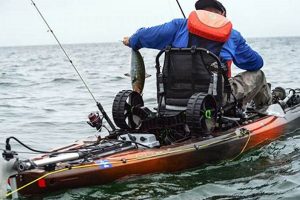
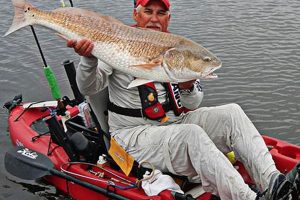
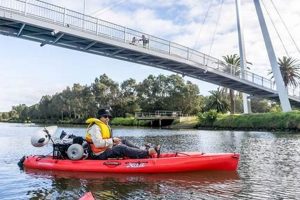
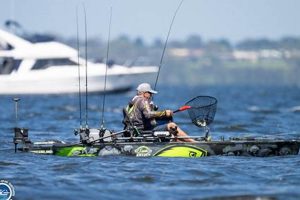
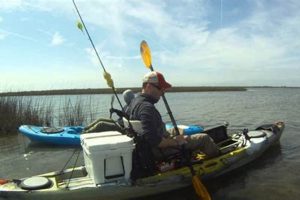
This activity involves angling from a small, human-powered watercraft within a specific shallow body of water situated near a larger body, often separated by a narrow strip of land. Such lagoons offer a unique environment, characterized by calmer waters and diverse ecosystems, making them ideal for this pursuit. For instance, sheltered waters provide an advantageous setting for anglers to target species that thrive in these calmer, shallower habitats.
The combination of a maneuverable vessel and a rich, accessible environment presents distinct advantages. Anglers gain access to areas often unreachable by larger boats, leading to potentially increased fishing success. Historically, small boats have been utilized for fishing in sheltered coastal waters, highlighting the longstanding practicality and effectiveness of this approach. The shallow nature of these environments allows for a closer connection to the natural world, enhancing the overall experience.
Further exploration of this topic will encompass suitable equipment, targeted species, conservation considerations, and techniques for maximizing success and safety while practicing this rewarding activity. This information aims to equip enthusiasts with the knowledge necessary for a fulfilling and responsible experience.
Tips for Lagoon Kayak Fishing
Careful planning and preparation contribute significantly to a successful and enjoyable outing. The following recommendations offer guidance for maximizing the experience.
Tip 1: Research Target Species: Understanding the habits and preferred habitats of target species informs lure selection and fishing location within the lagoon.
Tip 2: Utilize Appropriate Gear: Rods, reels, and lines should be scaled appropriately for the targeted species. Kayak-specific fishing gear enhances maneuverability and efficiency.
Tip 3: Prioritize Safety: Wearing a personal flotation device is paramount. Carrying a communication device and informing someone of the planned fishing location ensures preparedness for unforeseen circumstances.
Tip 4: Navigate with Stealth: Quiet paddling and minimizing noise within the kayak prevent startling fish, increasing the likelihood of successful catches. Approaching fishing spots slowly and deliberately proves beneficial.
Tip 5: Respect the Environment: Practicing catch-and-release principles helps preserve fish populations. Proper disposal of fishing line and other waste minimizes environmental impact.
Tip 6: Check Tide Charts: Understanding tidal influences allows anglers to anticipate changes in water depth and current flow, enabling more effective fishing strategies.
Tip 7: Consider Weather Conditions: Wind speed and direction significantly impact kayak control. Postponing trips during inclement weather prioritizes safety and enhances enjoyment.
Adhering to these guidelines promotes a rewarding experience while ensuring angler safety and environmental responsibility. Preparation, informed decision-making, and respect for the natural environment are crucial for a successful outing.
By incorporating these tips, anglers can enhance their skills and contribute to the long-term health of the lagoon ecosystem, ensuring its continued enjoyment for generations to come.
1. Quiet Approach

A quiet approach is paramount for successful kayak fishing in a little lagoon environment. These shallow, often enclosed bodies of water offer minimal cover for fish, making them particularly susceptible to noise disturbances. Kayaks, by their very nature, offer a significant advantage in this regard compared to motorized boats. Their non-motorized operation enables anglers to navigate silently, minimizing disruption to the underwater environment and increasing the likelihood of approaching fish undetected. This allows for closer proximity to target species, improving casting accuracy and ultimately, fishing success. For example, silently drifting into a shallow cove allows anglers to target redfish tailing in the shallows without spooking them.
The effectiveness of a quiet approach stems from the natural sensitivity of fish to vibrations and sound underwater. Loud noises, such as those produced by motor engines, can easily startle fish, causing them to flee and disperse. In the confined space of a little lagoon, such disturbances can rapidly impact fishing prospects across the entire area. By contrast, the quiet nature of a kayak allows for a more natural integration into the environment, minimizing stress on fish populations and maximizing opportunities for observation and interaction. This subtle approach fosters a more authentic and rewarding fishing experience, promoting a deeper connection with the natural world. Further, the quiet environment allows anglers to better hear natural cues, such as baitfish activity or wading birds, which can indicate the presence of game fish.
Minimizing noise pollution within the kayak itself also contributes to a successful quiet approach. Avoid sudden movements, dropping equipment, or engaging in loud conversations. These seemingly minor disturbances can ripple through the shallow water, alerting fish to the angler’s presence. Employing stealth tactics significantly enhances fishing effectiveness and contributes to a more harmonious interaction with the delicate lagoon ecosystem. The inherent quietness of kayak fishing contributes to the preservation of the natural environment and the long-term health of the lagoon’s fish populations.
2. Shallow Water Access

Shallow water access represents a defining characteristic of kayak fishing in little lagoons, differentiating it from other angling approaches. These environments, often inaccessible to larger, motorized vessels, become readily navigable with kayaks, opening a wealth of fishing opportunities. This unique accessibility shapes the overall experience and influences species targeting, tackle selection, and overall fishing strategy.
- Reaching Untouched Fishing Grounds
Kayaks excel in navigating extremely shallow areas, often mere inches deep, which typically remain beyond the reach of traditional fishing boats. This allows anglers to explore secluded coves, backwater channels, and shallow flats teeming with fish accustomed to minimal fishing pressure. For example, accessing shallow grass beds provides opportunities to target species like redfish and speckled trout that forage in these protected habitats.
- Stealth and Precision in Shallow Environments
The shallow draft of a kayak not only grants access but also facilitates a stealthy approach. Minimal disturbance to the water surface allows anglers to get closer to fish without detection. This advantage proves particularly valuable in clear, shallow lagoons where fish are easily spooked. Precise maneuvering within tight spaces further enhances angling effectiveness, enabling targeted casts to specific structures or pockets holding fish. This precision is crucial when sight-fishing for species such as flounder camouflaged on the seabed.
- Exploiting Unique Shallow-Water Ecosystems
Little lagoons possess unique ecosystems characterized by shallow-water habitats. Seagrass beds, oyster reefs, and mangrove shorelines thrive in these environments, attracting a diverse array of fish species. Kayak access unlocks these rich fishing grounds, allowing anglers to target species specifically adapted to these habitats. This specialization expands angling opportunities beyond those available in deeper, open waters, contributing to a diverse and rewarding experience. For instance, shallow mangrove roots become accessible fishing grounds for snook and other ambush predators.
- Adapting Tackle and Techniques
Shallow water access necessitates specific tackle and techniques. Lighter lines, shallow-diving lures, and weedless rigging become essential for effectively presenting baits and retrieving catches without snagging on submerged vegetation or bottom structure. Anglers adapt their casting techniques to account for reduced casting distances and the need for precision in tight quarters. The use of topwater lures becomes highly effective, as these attract fish from below in the shallows.
The ability to navigate shallow waters distinguishes kayak fishing in little lagoons. Reaching secluded areas, approaching fish stealthily, exploiting unique ecosystems, and adapting tackle and techniques collectively contribute to a fulfilling angling experience tailored to the specific challenges and rewards presented by these environments. This specialized approach emphasizes the interconnectedness between angler, equipment, and the natural environment, fostering a deeper appreciation for the delicate balance within the lagoon ecosystem.
3. Specialized Tackle

Specialized tackle plays a crucial role in successful kayak fishing within little lagoons. The unique characteristics of these environmentsshallow water, confined spaces, and specific target speciesnecessitate gear tailored for optimal performance and a minimized environmental footprint. Cause and effect relationships exist between tackle choices and fishing outcomes. For instance, selecting lighter lines and rods allows for greater sensitivity and precision when presenting lures to wary fish in clear, shallow water. This, in turn, directly impacts catch rates and minimizes potential disturbances, contributing to the preservation of the delicate lagoon ecosystem.
The importance of specialized tackle as a component of kayak fishing in little lagoons extends beyond mere effectiveness. It represents an adaptation to the specific constraints and opportunities presented by the environment. Kayak anglers often employ shorter rods designed for maneuverability within the confines of the kayak. Low-profile baitcasting reels and spinning reels minimize line tangling and facilitate accurate casts in tight spaces. Furthermore, lure selection becomes highly specialized, focusing on shallow-diving crankbaits, weedless soft plastics, and topwater lures designed to attract fish in the shallows without snagging on vegetation or bottom structure. A practical example lies in the use of weedless hooks and soft plastic lures when fishing near submerged grass beds, maximizing lure presentation while minimizing entanglement, thus increasing the likelihood of a successful hookup.
Understanding the practical significance of specialized tackle empowers anglers to make informed decisions that enhance their fishing experience while promoting responsible angling practices. Choosing appropriate gear reduces frustration caused by equipment limitations, allowing anglers to focus on the nuances of fishing in these unique environments. Furthermore, specialized tackle contributes to minimizing environmental impact. For instance, using lighter lines reduces the risk of entanglement and ghost fishing, protecting fish populations and preserving the integrity of the lagoon habitat. Ultimately, the selection and application of specialized tackle demonstrate a commitment to maximizing effectiveness while minimizing disturbance, embodying a core principle of sustainable and rewarding kayak fishing in little lagoons.
4. Species Knowledge

Species knowledge forms a cornerstone of successful kayak fishing in little lagoons. Understanding the target species’ behavior, habitat preferences, and feeding patterns directly influences angling strategies and maximizes catch rates. This knowledge enables anglers to select appropriate tackle, choose effective lures, and identify productive fishing locations within the lagoon environment. Possessing such insights contributes significantly to a more rewarding and efficient fishing experience.
- Habitat Preferences
Different fish species exhibit specific habitat preferences within a little lagoon. Some species, like redfish, often frequent shallow grass flats, while others, like speckled trout, might prefer deeper channels or areas around oyster bars. Understanding these preferences allows anglers to target specific areas within the lagoon, increasing the likelihood of encountering the desired species. For instance, targeting shallow mangrove shorelines during high tide increases the chance of encountering snook seeking prey in the flooded vegetation.
- Feeding Patterns
Knowledge of feeding patterns, including preferred prey and peak feeding times, informs lure selection and fishing strategies. Understanding that speckled trout often feed on small baitfish during dawn and dusk allows anglers to choose appropriate lures and focus their efforts during these prime periods. Similarly, knowing that flounder are ambush predators that lie in wait on the seabed informs the use of slow-moving lures presented near the bottom. Recognizing these patterns optimizes fishing effectiveness.
- Seasonal Movements and Behaviors
Fish behavior and distribution within a little lagoon often change seasonally. Some species might migrate to deeper waters during colder months, while others become more active in the shallows during warmer periods. Awareness of these seasonal shifts influences fishing location choices. For example, understanding that redfish tend to congregate in deeper holes during winter guides anglers to focus their efforts in these specific areas, enhancing fishing success throughout the year.
- Legal and Ethical Considerations
Species knowledge includes awareness of fishing regulations, including size limits, catch limits, and seasonal closures. Adhering to these regulations ensures the long-term sustainability of fish populations and the health of the lagoon ecosystem. Furthermore, ethical considerations, such as practicing catch-and-release whenever possible, contribute to conservation efforts. Understanding the vulnerability of certain species within the confined lagoon environment underscores the importance of responsible angling practices.
Species knowledge ultimately enhances the overall kayak fishing experience in little lagoons. By understanding the intricacies of target species’ behavior and ecology, anglers gain a deeper appreciation for the natural world and improve their ability to interact with it responsibly. This knowledge translates to increased fishing success, greater enjoyment, and a stronger commitment to preserving the unique lagoon ecosystem for future generations. It fosters a connection between the angler and the environment, promoting a more sustainable and fulfilling approach to fishing.
5. Safety Precautions
Safety precautions are paramount in kayak fishing within little lagoons. The environment presents specific challenges requiring careful consideration to ensure a safe and enjoyable experience. These precautions extend beyond general boating safety to address the unique aspects of fishing from a small, human-powered vessel in a shallow, often secluded, environment.
- Personal Flotation Device (PFD)
A properly fitted PFD is essential. Even in calm, shallow water, unforeseen circumstances like capsizing or unexpected weather changes can occur. A PFD provides essential buoyancy, increasing survival chances in such events. Selecting a PFD designed for paddling offers optimal comfort and mobility while fishing.
- Communication Device
Carrying a waterproof communication device, such as a VHF radio or a mobile phone in a waterproof case, enables contact in emergencies. Informing someone of the planned fishing location and estimated return time adds an extra layer of security. These measures facilitate swift assistance if needed, mitigating potential risks associated with fishing in often isolated lagoon environments.
- Weather Awareness
Checking weather forecasts before embarking on a kayak fishing trip is crucial. Wind, rain, and lightning pose significant threats in exposed lagoon environments. Postponing trips during inclement weather prioritizes safety and prevents potentially hazardous situations. Sudden weather changes can create challenging paddling conditions, increasing the risk of capsizing. Closely monitoring weather conditions throughout the outing allows for informed decisions regarding continued fishing or seeking safe harbor.
- Navigation and Awareness
Navigating shallow waters requires awareness of potential hazards such as submerged oyster beds, sandbars, and changing tides. A shallow-water anchor or stake-out pole provides stability while fishing and prevents drifting into hazardous areas. Carrying a nautical chart or utilizing GPS navigation aids in safe passage and reduces the risk of grounding or collision. Awareness of tidal currents and their influence on kayak positioning further enhances safety.
Implementing these safety precautions contributes significantly to a positive and secure kayak fishing experience in little lagoons. Preparation, awareness of potential hazards, and appropriate safety equipment mitigate risks inherent in this activity. Prioritizing safety enhances enjoyment, allowing anglers to fully appreciate the unique challenges and rewards of fishing in these environments. A proactive approach to safety fosters a responsible and sustainable angling practice, ensuring the well-being of anglers and the preservation of the lagoon ecosystem.
6. Tidal Awareness
Tidal awareness represents a crucial element of successful kayak fishing in little lagoons. These dynamic environments experience significant water level fluctuations and current shifts influenced by tidal cycles. Understanding these tidal influences directly impacts fishing success and angler safety. Cause and effect relationships exist between tidal stages and fish behavior, location, and accessibility. For instance, rising tides flood shallow flats and marshes, creating feeding opportunities for predatory species like redfish and speckled trout as they pursue prey into these newly accessible areas. Conversely, falling tides concentrate fish in deeper channels and pools, providing anglers with targeted fishing locations.
The importance of tidal awareness as a component of kayak fishing in little lagoons extends beyond simply predicting fish movement. Tidal currents play a significant role in kayak navigation, especially in narrow channels or inlets. Paddling against strong outgoing tides can prove challenging, requiring considerable effort and potentially impacting angler safety. Conversely, utilizing incoming tides can facilitate easier access to shallow areas and assist in navigating back to launch points. Practical applications of tidal awareness include planning fishing trips to coincide with optimal tidal stages for targeting specific species or accessing particular areas within the lagoon. Consulting tide charts and local knowledge enhances fishing effectiveness and ensures safe and efficient navigation.
In summary, tidal awareness is integral to successful and safe kayak fishing in little lagoons. Understanding tidal influences on fish behavior and water movement empowers anglers to make informed decisions regarding fishing location, timing, and navigation strategies. This knowledge enhances fishing success, minimizes potential challenges, and contributes to a more rewarding and responsible angling experience within these dynamic environments. Neglecting tidal considerations can lead to unproductive fishing trips and potentially hazardous situations, highlighting the practical significance of integrating tidal awareness into every aspect of kayak fishing in a little lagoon setting.
7. Conservation Practices
Conservation practices are integral to the sustainability of kayak fishing in little lagoons. These fragile ecosystems are particularly vulnerable to human impact, necessitating responsible angling practices to preserve their ecological integrity and ensure continued enjoyment for future generations. The direct interaction between anglers and the environment emphasizes the importance of minimizing negative impacts and actively contributing to conservation efforts. This connection underscores the ethical responsibility of kayak anglers to adopt sustainable practices that protect the very resources they enjoy.
- Catch-and-Release Fishing
Catch-and-release fishing represents a fundamental conservation practice in little lagoons. Returning caught fish to the water minimizes mortality rates and preserves fish populations. Employing proper handling techniques, such as minimizing air exposure and supporting the fish horizontally, reduces stress and increases the likelihood of successful release. This practice allows anglers to enjoy the thrill of the catch while safeguarding the long-term health of the fishery. For example, carefully removing hooks from a speckled trout and reviving it in the water before release ensures its survival and continued contribution to the lagoon ecosystem.
- Proper Waste Disposal
Proper waste disposal is essential for preserving water quality and minimizing pollution within the lagoon. Discarded fishing line, plastic lures, and other debris can entangle wildlife, pollute waterways, and disrupt the delicate ecological balance. Carrying a small trash bag and diligently collecting all waste, including discarded line and tackle, demonstrates a commitment to environmental stewardship. This simple act contributes significantly to maintaining the pristine nature of the lagoon and protecting its inhabitants. Disposing of waste properly prevents harm to birds, turtles, and other aquatic life that may ingest or become entangled in discarded materials.
- Respect for Wildlife and Habitat
Respect for wildlife and habitat encompasses avoiding disturbance to nesting birds, seagrass beds, and other sensitive ecological features. Paddling quietly and maintaining a safe distance from wildlife minimizes disruption to their natural behaviors. Avoiding anchoring or wading in seagrass beds prevents damage to these vital habitats that serve as nurseries and feeding grounds for many fish species. Such mindful practices demonstrate respect for the interconnectedness of the lagoon ecosystem. For instance, observing nesting birds from a distance with binoculars minimizes disturbance while allowing appreciation for their natural behavior.
- Habitat Restoration and Enhancement
Actively participating in habitat restoration and enhancement projects contributes directly to the long-term health of the lagoon. Volunteering for shoreline cleanups, mangrove planting initiatives, or oyster reef restoration projects directly benefits the lagoon environment. These actions improve water quality, enhance fish habitat, and strengthen the overall resilience of the ecosystem. Supporting local conservation organizations and advocating for policies that protect little lagoons further amplifies these efforts. Participating in a local mangrove planting project, for example, contributes to restoring vital nursery habitats and enhancing the overall health of the lagoon.
Integrating these conservation practices into kayak fishing routines ensures the long-term health and sustainability of little lagoon ecosystems. Responsible angling practices preserve fish populations, protect water quality, and maintain the delicate balance of these unique environments. By embracing conservation principles, kayak anglers contribute to the continued enjoyment of these special resources for generations to come. This commitment reinforces the interconnectedness between recreational fishing and environmental stewardship, fostering a deeper appreciation for the natural world and the importance of its preservation.
Frequently Asked Questions
This section addresses common inquiries regarding kayak fishing in little lagoons, providing concise and informative responses to enhance understanding and promote responsible angling practices.
Question 1: What are the primary advantages of using a kayak for fishing in a little lagoon?
Kayaks offer unparalleled access to shallow, secluded areas within little lagoons, often unreachable by larger boats. Their quiet operation minimizes disturbance to fish and allows for a stealthy approach. Maneuverability within confined spaces further enhances fishing effectiveness.
Question 2: What essential safety precautions should one take when kayak fishing in a little lagoon?
Wearing a personal flotation device (PFD) is paramount. Carrying a communication device and informing someone of the planned fishing location and return time are crucial safety measures. Checking weather forecasts and being aware of tidal influences further mitigate risks.
Question 3: What types of fish are commonly targeted in little lagoons?
Target species vary depending on the specific lagoon’s location and ecosystem. Common targets often include redfish, speckled trout, flounder, snook, and various panfish species. Researching the prevalent species in the target lagoon informs effective fishing strategies.
Question 4: How do tides affect fishing in a little lagoon?
Tides significantly influence fish behavior and movement within little lagoons. Rising tides flood shallow areas, creating feeding opportunities for predatory species. Falling tides concentrate fish in deeper channels and pools. Understanding tidal cycles optimizes fishing strategies and navigation.
Question 5: What specialized tackle is recommended for kayak fishing in a little lagoon?
Shorter rods designed for kayak fishing, low-profile baitcasting or spinning reels, and lighter lines enhance maneuverability and precision. Lure selection often includes shallow-diving crankbaits, weedless soft plastics, and topwater lures suited for shallow water environments.
Question 6: What conservation practices should anglers observe when fishing in little lagoons?
Practicing catch-and-release whenever possible helps preserve fish populations. Proper disposal of fishing line and other waste minimizes environmental impact. Respecting wildlife and avoiding disturbance to sensitive habitats contribute to the long-term health of the lagoon ecosystem.
Understanding these key aspects of kayak fishing in little lagoons promotes responsible angling practices and enhances the overall experience. Prioritizing safety, respecting the environment, and acquiring species knowledge ensures a rewarding and sustainable approach to enjoying this unique fishing environment.
For further exploration, the following sections will delve into specific techniques, recommended gear, and detailed species information.
Kayak Fishing Little Lagoon
Exploration of this specialized angling pursuit reveals a unique interplay between human activity and a delicate natural environment. Key elements highlighted include the advantages of shallow water access afforded by kayaks, the importance of specialized tackle and species knowledge, and the paramount role of safety precautions and conservation practices. The dynamic influence of tidal cycles on fish behavior and angler strategy underscores the need for careful planning and adaptation. Ultimately, success in this pursuit relies on a combination of skill, knowledge, and a deep respect for the environment.
The future of kayak fishing in little lagoons rests on the continued commitment to responsible angling practices. Preserving these unique ecosystems requires ongoing awareness of environmental impacts and active participation in conservation efforts. Sustainable practices, informed decision-making, and a dedication to minimizing disturbance ensure the continued viability and enjoyment of this rewarding pursuit for generations to come. The delicate balance within these environments necessitates a mindful approach, recognizing the interconnectedness between angler, equipment, and the natural world.