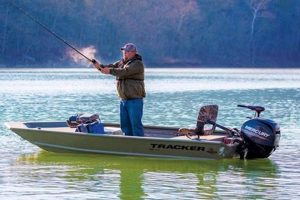
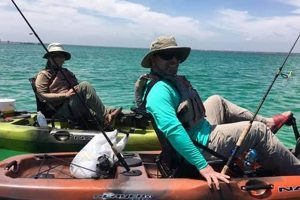
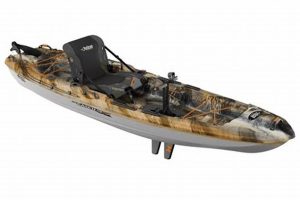
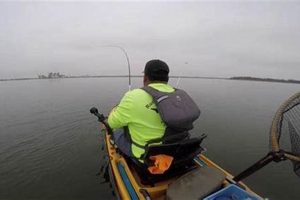
Retailer Dunham’s Sports offers a selection of kayaks suitable for angling. These watercraft are typically designed for stability, maneuverability, and often include features like rod holders, storage compartments, and comfortable seating tailored for fishing excursions. Specific models and availability may vary by location and season.
Acquiring a suitable vessel for angling can significantly enhance the fishing experience. A specialized watercraft allows anglers to access previously unreachable fishing spots, offering improved stability and the ability to carry essential gear. This improved access and mobility can lead to increased fishing success and overall enjoyment of the sport. Historically, fishing from small, human-powered craft has been a common practice. Modern advancements in materials and design have resulted in purpose-built fishing kayaks that enhance performance and comfort.
This article will further explore key considerations when selecting an appropriate fishing kayak, including factors such as hull design, material construction, and essential features. Understanding these aspects will enable informed purchase decisions tailored to individual angling needs and preferences.
Tips for Selecting a Fishing Kayak
Choosing the right fishing kayak requires careful consideration of various factors to ensure optimal performance, stability, and comfort on the water.
Tip 1: Consider Hull Design: Different hull designs offer varying degrees of stability and maneuverability. A wider, flatter hull provides greater initial stability, ideal for calmer waters and stand-up fishing. A longer, narrower hull offers better tracking and speed, suitable for covering larger distances and paddling in currents.
Tip 2: Evaluate Material Construction: Kayaks are typically constructed from polyethylene, fiberglass, or composites. Polyethylene kayaks are durable and affordable, while fiberglass and composite options offer lighter weight and enhanced performance but may be more expensive.
Tip 3: Prioritize Essential Features: Look for features like rod holders, paddle holders, storage compartments, and comfortable seating designed specifically for angling. An adjustable seat is crucial for long hours on the water.
Tip 4: Assess Weight Capacity: Ensure the kayak’s weight capacity accommodates the angler’s weight, along with all gear and equipment, to maintain stability and safety.
Tip 5: Test Before Purchasing (If Possible): Testing a kayak before purchase, either through a demo program or by renting, allows for firsthand experience with its stability, maneuverability, and features.
Tip 6: Research Local Regulations: Be aware of local regulations regarding kayak registration, required safety equipment, and permitted fishing areas.
Tip 7: Budget Accordingly: Fishing kayaks range in price depending on features, material, and brand. Establish a budget beforehand and prioritize essential features within that range.
By carefully considering these factors, anglers can select a fishing kayak that best suits their individual needs and preferences, leading to more enjoyable and successful fishing experiences.
Ultimately, the right fishing kayak contributes significantly to on-the-water comfort, efficiency, and safety, enabling anglers to focus on what matters most: the pursuit of their target species.
1. Variety

Variety within Dunham’s fishing kayak selection translates to a range of options catering to diverse angling styles, budgets, and physical needs. This breadth of choice allows anglers to select a kayak optimized for specific fishing environments, from calm lakes and ponds to flowing rivers and coastal waters. For instance, an angler targeting large game fish might opt for a longer, more stable sit-on-top kayak with ample storage for tackle and equipment. Conversely, an angler navigating narrow creeks might prioritize a shorter, more maneuverable kayak designed for shallower waters. This variety ensures each angler can find a suitable vessel, contributing significantly to the overall fishing experience. Without such variety, anglers might be forced to compromise on key features or settle for a less suitable kayak, potentially impacting fishing success and enjoyment.
Furthermore, variety extends beyond hull design and size. Dunham’s selection likely encompasses kayaks constructed from different materials, each with varying durability, weight, and price points. This range allows anglers to factor in their budget and transportation capabilities. Consider an angler with limited storage space; a lightweight, easily transportable kayak becomes a practical necessity. Variety also caters to physical limitations; kayaks with higher weight capacities or specialized seating systems accommodate larger individuals or those with mobility challenges. This inclusive approach ensures accessibility and promotes participation in the sport regardless of physical constraints.
In summary, the variety offered by Dunham’s in their fishing kayak selection is a critical factor enabling anglers to find the perfect vessel. By providing options tailored to specific fishing styles, budgets, and physical needs, Dunham’s empowers anglers to optimize their on-the-water experience. This ultimately contributes to increased fishing success, enhanced safety, and greater enjoyment of the sport.
2. Affordability

Affordability plays a crucial role in the selection of a fishing kayak, particularly within the context of Dunham’s product offerings. Access to reasonably priced options allows a wider range of individuals to participate in the sport, regardless of budget constraints. Examining the affordability of Dunham’s fishing kayaks requires consideration of several key facets.
- Price Range:
Dunham’s typically offers fishing kayaks across a spectrum of price points, catering to various budgets. Entry-level models provide a cost-effective entry point for beginners, while higher-end models incorporate advanced features and materials for experienced anglers. Understanding this range allows potential buyers to identify kayaks aligned with their financial capabilities. For example, a recreational angler might find a basic sit-on-top model within a lower price bracket suitable, whereas a tournament angler might invest in a feature-rich kayak at a higher price point. The availability of diverse price points democratizes access to the sport, enabling broader participation.
- Value Proposition:
Assessing affordability goes beyond simply comparing sticker prices. Evaluating the value proposition involves considering the features, durability, and overall quality of a kayak in relation to its cost. A slightly more expensive kayak might offer significantly better durability or include essential features like rod holders and storage compartments, ultimately representing better value over the long term. For example, a kayak constructed from higher-grade polyethylene might command a slightly higher price but offer increased resistance to impact and UV damage, extending its lifespan and justifying the initial investment.
- Financing Options:
The availability of financing options, such as installment plans or store credit cards, can significantly influence affordability. Such options distribute the cost of a kayak over time, making higher-priced models accessible to individuals who might not be able to afford a large upfront purchase. Understanding available financing options empowers potential buyers to make informed decisions based on their individual financial circumstances. This facilitates participation by removing immediate financial barriers.
- Sales and Promotions:
Seasonal sales, clearance events, and promotional discounts can significantly impact the affordability of fishing kayaks. Taking advantage of such opportunities can lead to substantial savings, particularly on higher-priced models. Staying informed about upcoming sales and promotions empowers budget-conscious anglers to acquire desirable kayaks at reduced costs.
By considering these facets of affordabilityprice range, value proposition, financing options, and sales/promotionspotential buyers can effectively evaluate the cost-effectiveness of Dunham’s fishing kayaks and make informed purchasing decisions aligned with both their angling needs and financial capabilities. This approach ensures accessibility to the sport while maximizing the value derived from the investment.
3. Durability
Durability stands as a critical factor when evaluating fishing kayaks, especially those offered by retailers like Dunham’s. A kayak’s ability to withstand the rigors of regular use, including impacts, UV exposure, and varying water conditions, directly impacts its lifespan and overall value. This discussion explores key facets of durability relevant to Dunham’s fishing kayaks.
- Material Construction
Kayak construction materials significantly influence durability. Dunham’s likely offers kayaks made from various materials, including high-density polyethylene (HDPE), fiberglass, and composites. HDPE kayaks are known for their impact resistance and affordability, while fiberglass and composite kayaks offer higher strength-to-weight ratios but often come at a premium. Understanding the properties of each material allows informed decisions based on anticipated usage and budget. For instance, an angler frequently navigating rocky rivers might prioritize the impact resistance of HDPE, while an angler focused on open-water fishing might opt for the lighter weight of fiberglass.
- Manufacturing Process
The manufacturing process contributes significantly to a kayak’s overall durability. Rotational molding, commonly used for HDPE kayaks, creates a seamless, highly durable hull. Fiberglass and composite kayaks often involve hand-laid construction techniques, potentially influencing strength and consistency. Examining manufacturing details, including seam construction and material layering, provides insights into a kayak’s ability to withstand long-term use. A well-constructed kayak, regardless of material, exhibits consistent quality and attention to detail, signifying greater potential longevity.
- UV Resistance
Exposure to ultraviolet radiation from sunlight can degrade kayak materials over time, causing fading, brittleness, and reduced structural integrity. UV-resistant coatings and additives incorporated during manufacturing mitigate these effects. Kayaks intended for extended outdoor use benefit significantly from robust UV protection. An angler frequently fishing in sunny conditions should prioritize UV resistance to ensure the kayak maintains its structural integrity and aesthetic appeal over time. This proactive approach minimizes the risk of premature degradation and extends the kayak’s functional lifespan.
- Hardware and Fittings
Hardware components, such as handles, latches, and seat fittings, contribute to overall durability. Corrosion-resistant materials, like stainless steel or high-quality plastics, ensure these components withstand exposure to water and the elements. Reinforced mounting points and robust construction prevent premature wear and tear. An angler relying on features like rod holders or anchor trolleys benefits from durable hardware that can withstand regular stress and strain. Investing in a kayak with quality hardware minimizes maintenance and replacement needs, ensuring long-term functionality and reliability.
Considering these durability facetsmaterial construction, manufacturing process, UV resistance, and hardwareequips potential buyers with the knowledge to make informed decisions when selecting a fishing kayak from Dunham’s or any other retailer. Prioritizing durability ensures long-term performance, minimizes maintenance requirements, and maximizes the return on investment, ultimately contributing to a more enjoyable and sustainable fishing experience.
4. Stability

Stability represents a critical performance attribute in fishing kayaks, directly influencing angler safety, comfort, and fishing effectiveness. A stable platform allows for comfortable casting, reeling, and landing fish, while minimizing the risk of capsizing, particularly in challenging conditions. Examining stability within the context of Dunham’s fishing kayak offerings requires analyzing several key facets.
- Hull Design
Hull design significantly impacts kayak stability. Wider, flatter hulls generally provide greater initial stability, making them suitable for calmer waters and activities like stand-up fishing. Conversely, narrower hulls, often found in touring kayaks, prioritize speed and tracking over primary stability. Dunham’s selection likely includes kayaks with varying hull designs, catering to diverse fishing styles and water conditions. Anglers targeting fish from a seated position in calm lakes might prioritize a wider hull, while those fishing in moving water might prefer a narrower, more maneuverable design.
- Center of Gravity
A lower center of gravity enhances stability. Kayak design, seating position, and weight distribution all influence the center of gravity. Sit-on-top kayaks generally have a higher center of gravity compared to sit-inside kayaks. Proper weight distribution within the kayak further optimizes stability. Anglers carrying heavier gear should distribute the weight evenly and low within the hull to maintain a balanced and stable platform. Understanding the impact of weight distribution allows anglers to maximize stability regardless of kayak design.
- Water Conditions
Prevailing water conditions significantly influence kayak stability. Calm lakes and ponds present fewer stability challenges compared to rivers with currents or coastal waters with waves. Wind also impacts stability, particularly for kayaks with higher profiles. Anglers should choose a kayak appropriate for the intended water conditions. A stable hull design becomes even more critical in challenging environments. Matching kayak stability to expected water conditions maximizes safety and fishing effectiveness. Ignoring this factor can lead to instability and potentially dangerous situations.
- Angler Skill Level
Angler experience and skill level also play a role in perceived stability. Experienced kayakers often exhibit better balance and control, allowing them to comfortably handle less stable kayaks. Beginners generally benefit from wider, more stable platforms that provide a greater margin for error. Dunham’s likely offers kayaks suitable for various skill levels. Matching kayak stability to angler experience enhances comfort and confidence on the water. Choosing a kayak beyond one’s skill level can lead to instability and discourage participation.
By considering these facets of stabilityhull design, center of gravity, water conditions, and angler skill levelpotential buyers can make informed decisions when selecting a fishing kayak from Dunham’s. Prioritizing stability ensures a safe, comfortable, and ultimately more productive fishing experience. A stable platform allows anglers to focus on fishing rather than constantly managing balance, leading to greater enjoyment and success on the water.
5. Features

Features differentiate fishing kayaks, impacting their functionality, angler comfort, and overall fishing experience. Analyzing features within the context of Dunham’s fishing kayak offerings requires examining specific components and their contribution to angling effectiveness. These features often cater to specific fishing styles and preferences, influencing purchasing decisions.
- Rod Holders
Rod holders secure fishing rods, freeing anglers’ hands for paddling, baiting hooks, or landing fish. Various rod holder types exist, including flush-mounted, adjustable, and rotating models. Dunham’s fishing kayak selection likely includes models with multiple rod holders, catering to different angling techniques. Dedicated rod holders enhance fishing efficiency and prevent rod loss, critical factors for any angler. The presence and type of rod holders often distinguish basic recreational kayaks from dedicated fishing platforms.
- Storage Compartments
Storage compartments accommodate tackle boxes, gear, and personal items, crucial for longer fishing trips. These compartments vary in size, location, and accessibility. Dunham’s kayaks likely offer various storage options, including dry hatches, tank wells, and under-seat storage. Ample, secure storage contributes significantly to organization and efficiency on the water. The availability and design of storage compartments directly influence the practicality and convenience of a fishing kayak, especially for extended outings.
- Seating Systems
Comfortable seating enhances endurance and enjoyment during long hours on the water. Adjustable seating systems accommodate various body types and preferences. Dunham’s kayaks might feature different seating options, including basic molded seats, padded seats with adjustable backrests, and higher-end models with enhanced lumbar support. Seat comfort directly impacts the overall fishing experience, reducing fatigue and allowing for extended fishing sessions. A comfortable and supportive seat is essential for maintaining focus and maximizing fishing enjoyment.
- Paddle Holders/Leashes
Paddle holders or leashes secure the paddle when not in use, preventing loss and allowing anglers to focus on fishing. These features vary in design and functionality. Dunham’s kayaks may include integrated paddle holders or offer options for aftermarket installation. Secure paddle storage prevents accidental loss and ensures the paddle remains readily accessible when needed. This seemingly minor feature contributes significantly to convenience and peace of mind on the water.
The aforementioned features, along with others like anchor trolleys, rudders, and mounting tracks for fish finders, distinguish dedicated fishing kayaks from recreational models. Evaluating these features within the context of Dunham’s offerings empowers anglers to select kayaks tailored to their specific needs and fishing styles. The presence, quality, and configuration of these features directly influence the functionality, comfort, and overall effectiveness of a fishing kayak, contributing significantly to the angler’s experience on the water.
Frequently Asked Questions
This section addresses common inquiries regarding the selection, use, and maintenance of fishing kayaks available at Dunham’s Sports. Understanding these aspects empowers informed purchase decisions and contributes to enhanced on-water experiences.
Question 1: What types of fishing kayaks does Dunham’s typically offer?
Dunham’s usually stocks a variety of fishing kayaks, including sit-on-top and sit-inside models, designed for various fishing styles and water conditions. Specific models and availability may vary by location.
Question 2: What factors should be considered when choosing a fishing kayak at Dunham’s?
Key considerations include hull design (stability vs. maneuverability), material construction (durability and weight), weight capacity, seating comfort, and integrated features like rod holders and storage compartments. Angling style and intended fishing environment also play a significant role in kayak selection.
Question 3: Are fishing kayaks at Dunham’s suitable for beginners?
Yes, Dunham’s typically offers entry-level fishing kayaks designed for beginners. These models often prioritize stability and ease of use. Seeking guidance from store staff can assist in selecting a suitable beginner-friendly kayak.
Question 4: What is the typical price range for fishing kayaks at Dunham’s?
Fishing kayak prices at Dunham’s vary depending on features, material, and brand. Entry-level models are generally more affordable, while higher-end kayaks with advanced features command higher prices. Checking current inventory and pricing online or in-store provides the most accurate information.
Question 5: Does Dunham’s offer accessories and safety gear for fishing kayaks?
Yes, Dunham’s typically stocks essential kayak accessories, including paddles, life vests, and storage solutions. Availability may vary by location. Inquiring with store staff confirms available accessories and safety gear options.
Question 6: What maintenance is required for a fishing kayak purchased at Dunham’s?
Regular maintenance includes rinsing the kayak with fresh water after each use, especially after exposure to saltwater. Proper storage, protected from sunlight and extreme temperatures, prolongs kayak lifespan. Periodic inspection of hardware and fittings ensures optimal functionality and safety.
By understanding these frequently asked questions, individuals interested in purchasing a fishing kayak from Dunham’s can make informed decisions tailored to individual needs and preferences. This knowledge contributes to enhanced safety, increased fishing enjoyment, and a greater appreciation of the sport.
This concludes the FAQ section. The next section will offer concluding remarks and summarize key takeaways regarding selecting a suitable fishing kayak.
Conclusion
Careful selection of a fishing kayak from Dunham’s Sports necessitates consideration of individual angling needs, encompassing factors such as hull design, material construction, desired features, and budget constraints. Prioritizing stability, durability, and appropriate features enhances on-the-water safety, comfort, and fishing effectiveness. Understanding the diverse range of options available at Dunham’s empowers informed purchasing decisions tailored to specific fishing styles and preferences.
Investing in a suitable fishing kayak unlocks enhanced angling opportunities, allowing access to previously inaccessible fishing grounds and promoting a deeper connection with the sport. A well-chosen vessel becomes an extension of the angler, facilitating improved fishing experiences and contributing to a greater appreciation for the natural world. Diligent research and informed decision-making transform the kayak selection process from a mere transaction into an investment in long-term angling enjoyment.