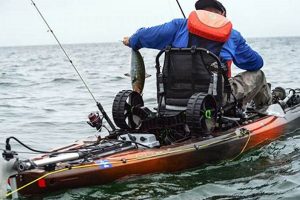
Cart systems designed for kayaks, especially those used for fishing, employ durable wheels and a frame to facilitate transport across various terrains. These systems typically feature scupper-mount, strap-on, or plug-in designs to accommodate different kayak hulls. A common example includes a set of two pneumatic tires mounted on a lightweight, corrosion-resistant frame, easily attached and detached from the kayak.
Transporting fishing kayaks, often laden with gear and heavier than recreational models, can be physically demanding. Wheel systems alleviate this burden, enabling anglers to access launch points more easily, regardless of terrain challenges like sand, gravel, or uneven surfaces. This reduces physical strain and potential damage to the kayak. Over time, these systems have evolved from rudimentary DIY solutions to specialized designs optimized for stability, durability, and ease of use, reflecting the growing popularity of kayak fishing.
Further exploration will cover various types of kayak cart systems, key features to consider when selecting a system, proper usage techniques, and maintenance recommendations to ensure longevity and optimal performance.
Tips for Kayak Cart Selection and Usage
Choosing and utilizing a suitable cart system is crucial for efficient and safe kayak transportation. Consider these recommendations to maximize the benefits and prolong the lifespan of the equipment.
Tip 1: Match the Cart to the Kayak’s Weight and Hull Design. Heavier fishing kayaks require robust carts with larger, wider wheels and sturdy frames. Consider hull shape when selecting attachment methods; scupper carts suit kayaks with scupper holes, while strap-on systems offer broader compatibility.
Tip 2: Prioritize Durable, Corrosion-Resistant Materials. Opt for carts constructed from marine-grade aluminum or stainless steel to withstand harsh saltwater environments. Choose wheels with puncture-resistant tires suitable for the intended terrain.
Tip 3: Evaluate Wheel Size and Type. Larger diameter wheels generally navigate obstacles more effectively, while wider tires provide better stability on soft surfaces like sand. Consider pneumatic tires for shock absorption and solid tires for puncture resistance.
Tip 4: Ensure Secure Attachment and Balanced Loading. Properly secure the kayak to the cart using provided straps or mechanisms. Distribute weight evenly to prevent tipping and ensure stable transport.
Tip 5: Practice Proper Launching and Loading Techniques. Avoid dragging the kayak over rough surfaces while attached to the cart. Utilize proper lifting techniques to minimize strain and prevent damage to both the kayak and the cart.
Tip 6: Regularly Inspect and Maintain the Cart. Check for signs of wear and tear, including tire pressure, frame integrity, and strap condition. Rinse the cart with fresh water after saltwater exposure and lubricate moving parts as needed.
Tip 7: Consider Terrain and Launch Point Accessibility. Choose a cart suitable for the typical terrain encountered during transport. Evaluate launch point accessibility and choose a cart that can maneuver the specific conditions.
Adhering to these guidelines ensures safe and efficient kayak transportation, minimizing physical strain and maximizing the enjoyment of fishing excursions.
By understanding these key factors, anglers can make informed decisions about cart selection and usage, contributing to a more enjoyable and productive fishing experience.
1. Terrain Adaptability

Effective kayak transport relies heavily on the ability of the cart system to navigate diverse terrains. Terrain adaptability directly influences accessibility to launch points and ease of transport, critical factors for a successful fishing excursion. The following facets illustrate the importance of terrain adaptability in fishing kayak wheels:
- Wheel Size and Width
Larger diameter wheels overcome obstacles more efficiently, while wider wheels distribute weight better on soft surfaces like sand. Smaller, narrower wheels might be suitable for paved surfaces but struggle on uneven terrain. For instance, a wide-profile, large-diameter wheel performs significantly better on a sandy beach compared to a small, narrow wheel, which could sink and become bogged down. This highlights the critical role of wheel dimensions in terrain adaptability.
- Tire Type
Pneumatic (air-filled) tires provide superior shock absorption and traction on uneven terrain, while solid tires offer puncture resistance but a harsher ride. Consider a rocky shoreline; pneumatic tires absorb impacts, protecting both the kayak and the cart, whereas solid tires might bounce, causing instability. This underscores the importance of tire selection for specific terrain challenges.
- Cart Frame Design
A robust frame design with a wide stance enhances stability, especially on uneven or sloping terrain. A narrow frame might be lighter but prone to tipping on uneven ground. Imagine launching from a sloping riverbank; a wide-stance frame provides superior stability compared to a narrow frame. This reinforces the importance of frame design in ensuring safe and stable transport across various terrains.
- Ground Clearance
Sufficient ground clearance prevents the cart frame from bottoming out on obstacles. Lower clearance restricts maneuverability over uneven terrain. Navigating a rocky path demonstrates the advantage of higher ground clearance; the cart glides smoothly over rocks, while a low-clearance cart might get stuck or damaged. This emphasizes the importance of adequate ground clearance for successful terrain navigation.
These facets demonstrate the crucial link between terrain adaptability and efficient kayak transport. The ability to navigate diverse terrains directly impacts accessibility to fishing locations, making it a crucial factor to consider when selecting a kayak cart system. Investing in a cart system with appropriate wheels, tires, frame design, and ground clearance ensures efficient and safe transport across various terrains, ultimately maximizing the enjoyment and productivity of fishing trips.
2. Weight Capacity
Weight capacity, a critical factor in fishing kayak wheel selection, directly impacts stability and safety during transport. Fishing kayaks, often heavier than recreational models due to added gear and equipment, necessitate carts with appropriate weight capacities. Insufficient capacity can lead to cart failure, instability, and potential damage to both the kayak and the cart. For example, a cart rated for 100 lbs. may buckle under the weight of a fully loaded fishing kayak weighing 150 lbs., creating a hazardous situation and potentially damaging the kayak’s hull. Conversely, selecting a cart with ample weight capacity ensures safe and stable transport, even over uneven terrain.
Understanding weight distribution further enhances the practical application of weight capacity. Evenly distributing weight across the cart prevents tipping and ensures optimal performance. Consider a scenario where gear is concentrated at the stern of the kayak; this uneven distribution could overload the rear of the cart, impacting stability and maneuverability. Therefore, proper weight distribution, combined with adequate weight capacity, is crucial for safe and efficient kayak transport. This understanding allows anglers to choose appropriate cart systems, maximizing safety and minimizing potential damage to equipment.
Matching cart weight capacity to the fully loaded weight of the kayak, including all gear and equipment, is essential. This requires accurately assessing the total weight and selecting a cart with a capacity exceeding that weight. This proactive approach safeguards against potential cart failure and ensures safe, stable transport, ultimately contributing to a more enjoyable and productive fishing experience. Failure to consider weight capacity can jeopardize both equipment and angler safety, underscoring its significance in kayak transport.
3. Durable Construction
Durable construction is paramount for fishing kayak wheels, directly influencing lifespan and performance, especially given the demanding conditions these systems face. Saltwater exposure, UV radiation, and impacts from rough terrain necessitate robust materials and construction techniques. A cart constructed from lightweight, corrosion-resistant materials, such as anodized aluminum or marine-grade stainless steel, withstands harsh environments far better than one made of standard steel, which is susceptible to rust and degradation. Durable construction ensures longevity and reliable performance, reducing the need for frequent replacements and minimizing disruptions during fishing excursions.
Consider the wheels themselves. Solid, puncture-proof tires might offer longevity but sacrifice shock absorption, while pneumatic tires offer a smoother ride but are vulnerable to punctures. High-quality pneumatic tires with reinforced sidewalls offer a balance of durability and performance. Similarly, the cart’s frame must withstand stress from both the kayak’s weight and terrain irregularities. Welded joints, reinforced stress points, and high-quality fasteners contribute to a more robust frame, capable of withstanding repeated use and challenging conditions. For example, a cart frame with reinforced axles handles heavier loads and uneven terrain more effectively than a frame with standard axles, which might bend or break under stress.
Ultimately, durable construction translates to a reliable and long-lasting kayak cart system. This reliability is crucial for anglers, ensuring they can transport their kayaks efficiently and safely, regardless of environmental challenges. Investing in a durably constructed cart minimizes downtime, reduces maintenance requirements, and ultimately enhances the overall fishing experience. The long-term benefits of durable construction outweigh any initial cost difference, making it a crucial factor to consider when selecting a fishing kayak wheel system.
4. Inflation (if applicable)
Pneumatic tires, when used in fishing kayak wheel systems, introduce the crucial factor of inflation. Proper inflation significantly impacts performance, affecting rolling resistance, shock absorption, and load-bearing capacity. Under-inflation increases rolling resistance, making the cart harder to pull and potentially damaging the tire through excessive flexing and heat buildup. Over-inflation, conversely, creates a harsh ride, reducing traction and increasing the risk of punctures from impacts. For example, navigating a rocky beach with under-inflated tires can strain the cart’s frame and make maneuvering difficult, while over-inflated tires might bounce and slip, compromising stability. Maintaining correct tire pressure, as specified by the manufacturer, optimizes performance and prolongs tire lifespan.
The practical implications of proper inflation extend beyond performance. Correct tire pressure directly influences the cart’s ability to handle the kayak’s weight. Under-inflated tires deform excessively under load, potentially leading to tire failure or damage to the cart’s frame. Consider transporting a heavily loaded kayak across soft sand; under-inflated tires might dig into the sand, increasing drag and potentially collapsing under the weight. Conversely, correctly inflated tires provide a larger contact patch, distributing the load more effectively and facilitating smoother movement across various terrains. This understanding underscores the importance of inflation as a crucial element in the safe and efficient operation of kayak cart systems.
Regularly checking and adjusting tire pressure is, therefore, essential for optimal performance and longevity of pneumatic kayak cart tires. A reliable pressure gauge and access to a suitable pump are essential components for maintaining proper inflation. Addressing inflation proactively minimizes potential issues during transport, contributing to a smoother, safer, and more efficient kayak launching and retrieval process. Neglecting tire inflation can lead to decreased performance, increased wear and tear, and potential safety hazards, highlighting its significance within the broader context of kayak transport.
5. Attachment Mechanisms

Secure and reliable attachment mechanisms are fundamental to the functionality of fishing kayak wheels. These mechanisms directly influence stability during transport, ease of use, and the overall safety of the kayak and the cart system. A poorly designed or improperly secured attachment can lead to instability, potentially causing the kayak to detach from the cart during transport, resulting in damage or injury. Understanding the various attachment methods and their suitability for different kayak hull designs is crucial for safe and efficient kayak transportation.
- Scupper-Mount Systems
Scupper-mount systems utilize the scupper holes present in many kayak hulls for attachment. These systems typically involve inserting pins or plugs into the scupper holes and securing the cart frame to these points. This method is generally quick and convenient but relies on properly sized and positioned scupper holes. For example, a kayak with widely spaced scupper holes might not be compatible with all scupper-mount carts. Scupper-mount systems are generally suitable for kayaks specifically designed for them.
- Strap-Based Systems
Strap-based systems use adjustable straps to secure the kayak to the cart frame. These systems offer greater versatility, accommodating various hull shapes and sizes. However, proper strap tension and positioning are crucial for stability. Imagine a kayak secured with loose straps; movement during transport could cause the kayak to shift or even detach. Strap-based systems require careful attention to strap placement and tension to ensure a secure connection.
- Plug-In Carts
Plug-in carts utilize specialized inserts that are permanently installed in the kayak’s hull. The cart then attaches directly to these inserts, offering a secure and convenient connection. However, this method requires modifications to the kayak and might not be suitable for all kayak designs. This system offers a robust connection but limits flexibility in terms of cart compatibility.
- Combination Systems
Some cart systems combine elements of different attachment methods, such as straps and scupper mounts, offering enhanced stability and versatility. These systems can provide a more secure connection while accommodating various hull designs. A combination system might utilize straps for primary support and scupper mounts for added stability, offering a balanced approach to secure attachment.
The choice of attachment mechanism depends on factors such as kayak hull design, weight, and personal preference. Selecting an appropriate and well-maintained attachment system ensures secure and stable transport, minimizing the risk of damage or injury and contributing to a more efficient and enjoyable kayaking experience. Understanding the nuances of each attachment mechanism empowers informed decisions, aligning the cart system with the specific needs and characteristics of the kayak and the user’s transport requirements. A secure connection forms the foundation of safe and efficient kayak transport, underscoring the importance of careful consideration when choosing and utilizing attachment mechanisms.
6. Portability and Storage

Portability and storage considerations are essential when selecting fishing kayak wheels. A cumbersome or difficult-to-store system negates the benefits of convenient kayak transport. Efficient storage and ease of portability directly influence the overall user experience, impacting both pre-fishing preparations and post-fishing storage procedures. Understanding these aspects allows for informed decisions, maximizing convenience and minimizing logistical challenges associated with kayak transport.
- Cart Weight and Size
The cart’s weight and size directly impact portability. A heavy, bulky cart is difficult to maneuver and transport, especially over longer distances or challenging terrain. For instance, a compact, lightweight cart easily fits in a vehicle’s trunk, while a larger, heavier cart might require a trailer or roof rack. Weight and size also affect storage; a compact cart occupies less space in a garage or storage area.
- Collapsibility and Disassembly
Collapsible or easily disassembled carts offer significant advantages in terms of portability and storage. A cart that folds or breaks down into smaller components takes up less space during transport and storage. For example, a cart with detachable wheels and a folding frame easily fits into a kayak’s hatch, maximizing storage space during transport. This feature is particularly beneficial for anglers with limited vehicle space or storage options.
- Carrying Mechanisms
Some carts incorporate features like integrated carrying handles or straps, facilitating transport to and from the launch point. A cart with a comfortable carrying handle reduces strain and simplifies movement across various terrains, particularly when navigating obstacles or uneven surfaces. This feature enhances the overall user experience, making transport less strenuous and more convenient.
- Storage Solutions
Dedicated storage solutions, such as bags or covers, protect the cart during transport and storage, preventing damage to both the cart and other equipment. A storage bag also keeps the cart’s components organized and prevents them from being misplaced. This level of organization simplifies storage and ensures the cart remains in good working condition, ready for the next fishing excursion.
These factors collectively influence the overall convenience and practicality of a fishing kayak wheel system. A portable and easily stored cart simplifies transport logistics, allowing anglers to focus on the fishing experience rather than the challenges of moving their equipment. Prioritizing portability and storage considerations during cart selection contributes to a more streamlined and enjoyable kayaking experience, maximizing convenience and minimizing logistical hurdles.
7. Maintenance Requirements
Regular maintenance directly impacts the lifespan and performance of fishing kayak wheels. Neglecting maintenance can lead to premature wear and tear, corrosion, and potential system failure, compromising safety and efficiency during transport. For instance, failing to rinse saltwater residue from the cart’s frame and wheels accelerates corrosion, weakening the structure and potentially leading to component failure. Conversely, routine cleaning and lubrication prevent such issues, ensuring the cart remains functional and reliable over extended periods. This proactive approach minimizes the risk of unexpected breakdowns and extends the usable life of the equipment, representing a cost-effective strategy in the long run.
Specific maintenance tasks vary depending on the cart’s design and materials. However, several key areas warrant regular attention. Wheel bearings, a critical component for smooth operation, benefit from periodic lubrication to minimize friction and prevent premature wear. Axles and fasteners should be inspected for signs of corrosion or damage, and replaced promptly if necessary. Tires, especially pneumatic ones, require regular pressure checks and inflation adjustments to maintain optimal performance and prevent excessive wear or punctures. For example, neglecting a slow leak in a pneumatic tire can lead to increased rolling resistance, impacting transport efficiency and potentially damaging the tire beyond repair. Addressing these issues proactively through routine maintenance ensures the cart remains in optimal working condition, maximizing its lifespan and reliability.
In conclusion, a well-maintained kayak cart contributes significantly to efficient and safe kayak transport. Routine maintenance, tailored to the specific cart design, mitigates potential issues, prolongs the system’s lifespan, and ensures reliable performance. Understanding the connection between maintenance requirements and the overall performance of fishing kayak wheels empowers informed decisions, leading to a more efficient, safer, and ultimately more enjoyable kayaking experience. This proactive approach to maintenance represents an investment in the longevity and reliability of the equipment, minimizing disruptions and maximizing the enjoyment of fishing excursions.
Frequently Asked Questions
This section addresses common inquiries regarding kayak cart systems designed for fishing applications. Understanding these aspects facilitates informed decisions and promotes optimal usage.
Question 1: What weight capacity is necessary for a fishing kayak cart?
Cart capacity should exceed the total combined weight of the kayak, fishing gear, and any additional accessories. Overestimating weight requirements ensures safe and stable transport.
Question 2: Are pneumatic tires preferable to solid tires for kayak carts?
Pneumatic tires generally offer superior shock absorption and traction on uneven terrain. Solid tires, while puncture-resistant, provide a less forgiving ride. The optimal choice depends on the typical terrain encountered.
Question 3: How does one determine the appropriate wheel size for a kayak cart?
Larger diameter wheels generally navigate obstacles more effectively. Consider the terrain typically encountered when selecting wheel size. Larger wheels handle rough terrain better, while smaller wheels suffice for smooth surfaces.
Question 4: What maintenance is recommended for kayak cart systems?
Regular maintenance includes rinsing the cart with fresh water after saltwater exposure, lubricating moving parts, checking tire pressure (if applicable), and inspecting the frame and straps for wear and tear.
Question 5: Are kayak carts suitable for all types of kayaks?
While many carts offer versatility, compatibility depends on factors like hull design and weight. Consider the specific kayak’s characteristics when selecting a cart system. Some kayaks may require specialized cart designs.
Question 6: How does one choose between scupper-mount and strap-on kayak carts?
Scupper-mount systems rely on the presence and placement of scupper holes, offering a quick and convenient attachment. Strap-on systems offer broader compatibility across various hull designs but require careful strap placement and tensioning.
Addressing these frequently asked questions provides a foundational understanding of key considerations related to fishing kayak wheels. This knowledge empowers informed decisions, ensuring safe and efficient kayak transport.
Beyond these frequently asked questions, further exploration of specific cart models and features can refine selection and optimize usage for individual needs and preferences.
Conclusion
Effective kayak transport systems are crucial for anglers. This exploration has highlighted the multifaceted nature of fishing kayak wheels, encompassing terrain adaptability, weight capacity, durable construction, inflation considerations, attachment mechanisms, portability, storage, and maintenance requirements. Each facet contributes to the overall performance and longevity of these systems. Understanding these elements empowers informed decisions, ensuring safe and efficient kayak transport across diverse environments.
Careful consideration of these factors optimizes kayak transport, enhancing accessibility to fishing locations and minimizing logistical challenges. Investing in a well-suited and properly maintained system contributes significantly to a more productive and enjoyable fishing experience. The efficiency and reliability afforded by optimized kayak transport ultimately translate to more time on the water and increased opportunities for angling success.