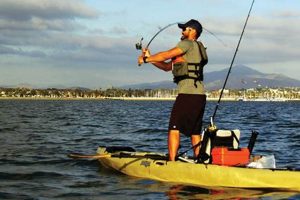
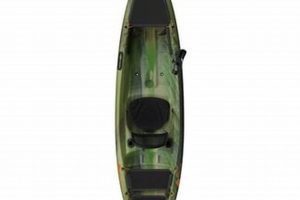
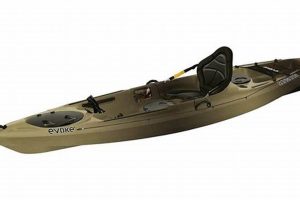
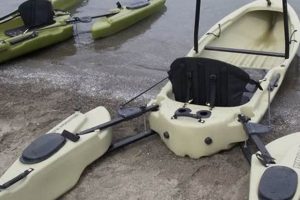
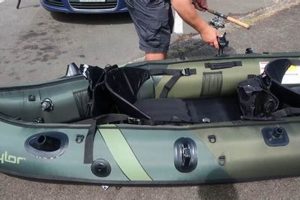
Evaluations of kayaks manufactured by Lifetime Products, specifically designed for fishing, provide consumers with valuable insights. These assessments typically cover aspects such as stability, durability, features, and overall performance on the water. An example would be an online article comparing different Lifetime fishing kayak models based on user experiences and expert testing.
Access to this information empowers potential buyers to make informed decisions, matching individual needs and budgets with suitable products. This contributes to customer satisfaction and promotes transparency within the recreational fishing market. Historically, information sharing relied on printed magazines and word-of-mouth. The internet has revolutionized access to comprehensive product evaluations, including those for specialized equipment like fishing kayaks, allowing broader dissemination of knowledge and diverse perspectives.
This understanding of the role and impact of such evaluations serves as a foundation for exploring specific kayak models, manufacturing processes, and the broader landscape of recreational fishing.
Tips for Utilizing Fishing Kayak Evaluations
Informed purchasing decisions benefit from careful consideration of available product evaluations. The following tips provide guidance for effectively using these resources.
Tip 1: Consider Fishing Style: Evaluate kayak features against specific fishing needs. Anglers targeting larger game fish offshore require different vessel characteristics than those fishing in calm, shallow waters.
Tip 2: Prioritize Stability and Comfort: Pay close attention to reviews addressing stability and comfort, particularly for extended fishing trips. Look for mentions of seat design, legroom, and platform stability.
Tip 3: Evaluate Storage Capacity: Adequate storage is essential for tackle, gear, and potential catches. Reviews often provide details on storage compartments, including size, location, and accessibility.
Tip 4: Assess Durability and Materials: Kayak longevity depends on material quality and construction. Reviews often highlight the robustness and resistance to wear and tear of different models.
Tip 5: Compare Price Points and Features: Balance desired features against budget constraints. Evaluations offer comparative analyses of different models across various price points.
Tip 6: Examine User Experiences: Seek out reviews from diverse users to gain a comprehensive understanding of real-world performance. Pay attention to recurring themes and issues raised across multiple evaluations.
Tip 7: Verify Reviewer Credibility: Consider the source and potential biases of reviews. Look for evaluations based on objective testing and transparent methodology.
By following these guidelines, consumers can leverage available information to select fishing kayaks optimally suited to their individual needs and maximize enjoyment on the water. This careful evaluation process leads to enhanced fishing experiences and long-term satisfaction with the chosen equipment.
Understanding these tips and applying them during product research contributes to a more informed purchasing process. This, in turn, prepares the consumer for a more fulfilling fishing experience.
1. Durability Assessments

Durability assessments constitute a critical component of lifetime fishing kayak reviews. These evaluations directly address the long-term viability of a kayak, impacting user satisfaction and overall value. A kayak’s ability to withstand regular use, including exposure to various environmental conditions and potential impacts, determines its lifespan. This factor is particularly relevant for fishing kayaks, which often encounter harsh conditions such as rocky shorelines, submerged debris, and transport-related wear and tear. For example, a kayak constructed from high-density polyethylene (HDPE) with reinforced hull design demonstrates greater resistance to impact and abrasion than a kayak made from less robust materials. This information, conveyed through reviews, empowers consumers to select kayaks built to endure demanding fishing environments.
The practical significance of durability assessments becomes evident when considering the financial investment involved in purchasing a fishing kayak. A durable kayak minimizes repair costs and replacement frequency, offering better long-term value. Reviews often highlight aspects like UV resistance, which impacts the kayak’s structural integrity over time, especially in sunny climates. Similarly, evaluations of hardware, such as hatch seals and attachment points, provide insight into the kayak’s resistance to water ingress and component failure. Understanding these aspects allows consumers to align their purchase with expected usage patterns and desired lifespan. For instance, an angler frequently fishing in saltwater environments benefits from choosing a kayak with corrosion-resistant hardware, as highlighted in durability-focused reviews.
In conclusion, durability assessments provide crucial information within lifetime fishing kayak reviews, guiding consumers towards robust and long-lasting equipment. This information directly correlates with the kayak’s overall value proposition and long-term cost-effectiveness. By understanding the materials, construction techniques, and potential wear points discussed in these reviews, prospective buyers can make informed decisions that maximize their investment and ensure a reliable fishing platform for years to come. This understanding underscores the importance of prioritizing durability as a key criterion in the kayak selection process.
2. Stability Evaluations

Stability evaluations form a cornerstone of comprehensive lifetime fishing kayak reviews. These assessments delve into a kayak’s resistance to capsizing and its ability to maintain balance under various conditions, directly impacting angler safety and fishing effectiveness. Cause and effect relationships exist between stability characteristics and on-the-water experiences. A kayak with a wider hull and lower center of gravity typically exhibits greater primary stability, resisting initial tipping. Conversely, a narrower, higher-seated kayak might offer superior secondary stability, recovering more readily from significant leans, but feeling less stable initially. Reviews often detail these nuances, providing crucial information for anglers of varying skill levels and fishing styles. For example, an angler frequently standing to cast benefits from a kayak with high primary and secondary stability, a characteristic highlighted in stability-focused reviews.
The practical significance of stability evaluations becomes clear when considering diverse fishing scenarios. Anglers fishing in calm lakes require different stability characteristics than those navigating choppy coastal waters or strong river currents. Reviews often include practical tests, such as simulated fishing movements and intentional leaning, to assess stability under realistic conditions. This information empowers consumers to choose kayaks suited to their intended environments and fishing styles. Consider an angler targeting large fish from a seated position. A kayak with pronounced primary stability ensures a secure platform during the fight, minimizing the risk of capsizing, a key factor often detailed within stability evaluations. Alternatively, an angler frequently standing to sight-fish might prioritize a kayak with high initial stability to enable confident casting and retrieval.
In summary, stability evaluations provide crucial insights within lifetime fishing kayak reviews. These analyses directly impact angler safety and fishing effectiveness by examining a kayak’s balance and resistance to capsizing under various conditions. Understanding these evaluations allows informed choices tailored to individual needs and fishing environments, promoting confident and enjoyable on-the-water experiences. This knowledge underscores the importance of prioritizing stability as a core element in the kayak selection process.
3. Feature Comparisons
Feature comparisons constitute a crucial element within lifetime fishing kayak reviews, providing a structured framework for evaluating diverse functionalities and their impact on the overall fishing experience. These comparisons facilitate direct assessment of how specific features, such as rod holders, storage compartments, seating systems, and rudder configurations, contribute to angling effectiveness and comfort. Cause and effect relationships exist between features and their practical utility. For example, adjustable foot braces directly influence paddling efficiency and comfort, while strategically placed rod holders enhance fishing ergonomics and line management. Multiple rod holders allow anglers to employ diverse fishing techniques simultaneously. Ample, well-designed storage facilitates organized tackle management and gear security, contributing to a more efficient and enjoyable fishing experience. Reviews that meticulously compare these features empower informed decisions aligned with individual fishing styles and preferences.
The practical significance of feature comparisons becomes readily apparent when considering diverse fishing scenarios. An angler targeting specific species might prioritize a kayak with specialized features, such as integrated fish finders or live wells. Similarly, kayak anglers fishing in remote locations benefit from features that enhance safety and self-sufficiency, including paddle clips, deck rigging, and watertight storage compartments. Reviews that analyze feature utility within specific contexts offer valuable insights. For instance, a kayak designed for river fishing might prioritize maneuverability and tracking features over raw storage capacity, reflecting the demands of navigating moving water. Comparatively, a kayak intended for stillwater fishing might emphasize stability and comfortable seating, prioritizing prolonged stationary fishing. Understanding these nuanced feature comparisons enables consumers to align kayak selection with specific fishing needs and maximize on-the-water effectiveness.
In conclusion, feature comparisons within lifetime fishing kayak reviews provide a structured approach to evaluating how diverse functionalities contribute to the overall angling experience. By understanding the cause-and-effect relationships between specific features and their practical utility, consumers can make informed decisions that optimize their fishing performance and enjoyment. This understanding highlights the importance of comprehensive feature comparisons in the kayak selection process, empowering anglers to choose equipment tailored to their individual needs and preferences. Such detailed comparisons enhance long-term satisfaction and ensure the selected kayak effectively supports diverse fishing pursuits.
4. Performance Analyses

Performance analyses constitute a critical component of lifetime fishing kayak reviews, providing objective assessments of on-the-water capabilities. These analyses explore how kayak design and features translate into practical performance characteristics, influencing fishing effectiveness and overall user experience. Understanding these performance attributes empowers informed purchasing decisions aligned with individual paddling styles, fishing techniques, and target environments.
- Tracking and Maneuverability
Tracking, a kayak’s ability to maintain a straight course, and maneuverability, its responsiveness to steering inputs, represent fundamental performance characteristics. A kayak designed for open-water fishing typically prioritizes tracking efficiency, minimizing paddling effort over long distances. Conversely, a kayak intended for navigating tight rivers or maneuvering around obstacles requires enhanced agility and responsiveness. Reviews often assess tracking and maneuverability through practical on-the-water tests, providing insights relevant to diverse fishing scenarios. For example, a kayak with a pronounced keel or tracking fin exhibits superior tracking performance, while a shorter, wider hull design enhances maneuverability in confined spaces.
- Speed and Glide
Speed and glide efficiency directly impact paddling effort and the ability to cover distances effectively. Kayaks with longer waterlines and streamlined hull designs generally exhibit greater speed and glide, reducing fatigue during extended paddling sessions. Reviews often compare speed and glide characteristics across different kayak models, considering factors such as hull shape, length, and width. This information proves particularly relevant for anglers covering substantial distances or fishing in areas with currents or prevailing winds. For instance, a kayak designed for traversing large lakes benefits from enhanced glide efficiency, conserving energy during long paddles to fishing grounds.
- Stability and Control in Various Water Conditions
Performance analyses also examine how kayaks handle diverse water conditions, including chop, currents, and wind. Kayaks designed for offshore fishing require greater stability and control in rough water than those intended for calm lakes or protected bays. Reviews often assess performance in simulated or real-world challenging conditions, providing valuable insights into a kayak’s seaworthiness and handling characteristics. A kayak with a higher initial stability provides a more secure platform for casting in choppy water, while a kayak with a rounded hull design might handle waves and currents more effectively than a flatter-bottomed design.
- Load Capacity and Weight Management
Load capacity and overall weight influence both performance and practicality. A kayak with a higher load capacity accommodates more gear and heavier anglers without compromising stability or performance. Reviews often assess load capacity and its impact on handling characteristics, providing valuable insights for anglers carrying substantial fishing gear or larger catches. Similarly, the kayak’s overall weight affects portability and ease of transport. Lightweight kayaks are easier to car-top, launch, and maneuver on land, a practical consideration for anglers without dedicated kayak trailers or launch assistance.
In conclusion, performance analyses within lifetime fishing kayak reviews provide crucial insights into on-the-water capabilities, bridging the gap between design specifications and practical experience. By understanding these performance attributes and their implications for diverse fishing scenarios, consumers can make informed decisions that optimize paddling efficiency, fishing effectiveness, and overall enjoyment on the water. This understanding reinforces the importance of considering performance characteristics as a key element in the kayak selection process.
5. User Experience Feedback

User experience feedback forms an integral component of comprehensive lifetime fishing kayak reviews, offering valuable insights derived from real-world usage. This feedback bridges the gap between manufacturer specifications and practical application, providing prospective buyers with firsthand perspectives on a kayak’s performance, features, and overall suitability for various fishing scenarios. Cause-and-effect relationships exist between user experiences and perceived kayak value. Positive user experiences, characterized by comfort, stability, and effective feature utilization, contribute to higher satisfaction ratings and positive brand perception. Conversely, recurring negative feedback regarding specific aspects, such as leaky hatches, uncomfortable seating, or inadequate stability, can significantly impact purchasing decisions. For example, an angler consistently reporting difficulty standing and casting in a particular kayak model provides valuable information for others prioritizing stand-up fishing techniques. Similarly, repeated praise for a kayak’s tracking performance in windy conditions reinforces its suitability for open-water fishing.
The practical significance of user experience feedback becomes evident when considering the diversity of fishing styles and environmental conditions. Anglers targeting different species in varying locations require specific kayak characteristics. User reviews often highlight nuances not readily apparent in manufacturer descriptions, such as the effectiveness of a rudder system in strong currents or the comfort of a seat during extended paddling sessions. These insights empower potential buyers to assess kayak suitability based on the experiences of others facing similar fishing challenges. For instance, an angler planning extended multi-day fishing trips benefits from user feedback regarding storage capacity, seat comfort, and overall kayak durability. Similarly, anglers fishing in cold climates gain valuable insights from user experiences related to cockpit design, insulation, and cold-water performance.
In summary, user experience feedback serves as a critical element within lifetime fishing kayak reviews, providing a practical lens through which to evaluate kayak performance and overall suitability. This feedback loop informs purchasing decisions by offering real-world perspectives, addressing specific fishing scenarios and highlighting potential advantages or disadvantages not captured in technical specifications. Understanding the value of user feedback contributes to informed choices, enhanced angler satisfaction, and a more effective matching of kayaks to individual fishing needs and preferences. This understanding reinforces the importance of incorporating user feedback into the overall kayak evaluation process.
Frequently Asked Questions
This FAQ section addresses common inquiries regarding Lifetime fishing kayak reviews, providing concise and informative responses.
Question 1: Where can reliable Lifetime fishing kayak reviews be found?
Reputable sources include specialized kayaking websites, outdoor gear publications, and established online retailers. Prioritizing reviews from experienced kayak anglers and established publications enhances reliability.
Question 2: What key features should be considered in Lifetime fishing kayak reviews?
Essential features include stability, durability, storage capacity, seating comfort, and specialized fishing features such as rod holders and transducer mounts. Individual fishing styles and target environments influence feature prioritization.
Question 3: How do Lifetime fishing kayaks compare to other brands in terms of price and performance?
Lifetime kayaks are generally recognized for their affordability and durability. Performance comparisons depend on specific models and intended usage. Reviews often offer comparative analyses against competitor kayaks within similar price ranges.
Question 4: What are common concerns raised in Lifetime fishing kayak reviews?
Recurring concerns occasionally mentioned include tracking performance in windy conditions and limited seating adjustability in certain models. However, overall user feedback generally reflects satisfaction with Lifetime kayaks, particularly considering their price point.
Question 5: How do different Lifetime fishing kayak models compare in terms of stability and maneuverability?
Hull design significantly influences stability and maneuverability. Wider, flatter hulls offer greater initial stability, while longer, narrower hulls enhance tracking and speed. Reviews often detail these characteristics for specific models, enabling informed choices based on individual needs.
Question 6: What role does user feedback play in comprehensive Lifetime fishing kayak evaluations?
User feedback provides crucial real-world insights into kayak performance, durability, and overall satisfaction. These firsthand accounts offer practical perspectives complementing manufacturer specifications, enabling a more comprehensive evaluation process.
Careful consideration of these frequently asked questions enhances understanding of Lifetime fishing kayak reviews and their role in informed purchasing decisions.
This concludes the FAQ section. The following section will offer a summary of key findings and recommendations.
Conclusion
Lifetime fishing kayak reviews provide essential information for informed purchasing decisions. Comprehensive evaluations consider durability, stability, features, performance, and user experiences. These reviews empower potential buyers to assess kayak suitability across diverse fishing scenarios, matching individual needs and preferences with appropriate models. Careful consideration of these reviews contributes to enhanced angler satisfaction and optimized on-the-water experiences.
The value of informed decision-making extends beyond individual purchases. Objective evaluations contribute to market transparency, driving product development and innovation within the fishing kayak industry. Continued emphasis on comprehensive reviews benefits both consumers and manufacturers, fostering a dynamic landscape of continuous improvement and enhanced fishing experiences.