Equipping a small watercraft with electronic equipment to locate fish involves several key considerations. This includes selecting appropriate hardware based on factors such as the fishing environment (freshwater or saltwater), the target species, and the user’s budget. A typical installation might involve mounting a transducer, connecting power sources, and configuring display settings. For example, a small skiff angler pursuing bottom-dwelling fish in a shallow lake would likely choose a different system configuration compared to an ocean kayaker targeting pelagic species.
Accurate and efficient fish location significantly enhances angling success. Historically, anglers relied solely on their knowledge of fish behavior and habitat, weather patterns, and personal experience. Modern electronics provide real-time underwater views, revealing bottom structure, water temperature gradients, and, crucially, fish locations. This technology democratizes the sport, allowing anglers of all skill levels to improve their catches and gain a deeper understanding of aquatic environments. This advancement also promotes conservation by allowing for more selective fishing practices and minimizing wasted effort.
The following sections delve deeper into the specific components of such systems, suitable installation methods, and best practices for optimal performance. Topics covered include transducer selection and mounting, power management strategies, display unit setup and interpretation, and tips for troubleshooting common issues.
Tips for Optimal Electronic Fish Finding System Installation on Kayaks
Careful planning and execution are crucial for maximizing the effectiveness of electronic fish finding systems on kayaks. These tips offer guidance for a successful installation.
Tip 1: Transducer Placement: Select a location that minimizes interference from the kayak’s hull and maximizes contact with the water. Avoid areas near through-hull fittings or other obstructions. Common mounting locations include the inside of the hull (for temporary installations or in-hull transducers), on the transom using a mounting bracket, or on a retractable arm.
Tip 2: Cable Management: Secure all cables to prevent tangling and damage. Use zip ties or adhesive clips to route cables along the kayak’s interior. Ensure adequate slack to allow for kayak flexing and movement.
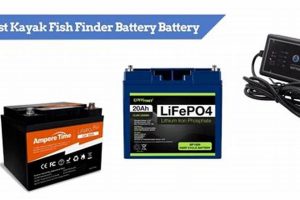
Tip 3: Power Source Considerations: Choose a reliable power source, typically a 12-volt marine battery. Consider battery capacity based on the fish finder’s power consumption and intended usage time. Utilize a properly fused circuit and waterproof connectors.
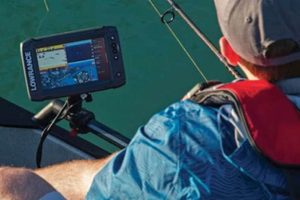
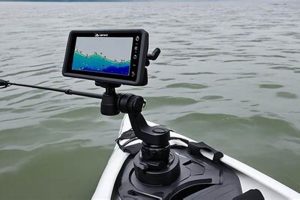
Tip 4: Display Unit Mounting: Secure the display unit within easy reach and clear view. Use a mounting bracket compatible with the kayak and the specific display unit. Consider glare and visibility in various lighting conditions.
Tip 5: Transducer Selection: Match the transducer frequency and cone angle to the target fishing environment and species. Higher frequencies provide greater detail but less depth penetration, while lower frequencies offer greater depth but less detail. Wider cone angles cover more area but offer less precision, while narrower cone angles provide greater precision but cover less area.
Tip 6: System Testing: Before venturing out, test the entire system on the water. Verify the transducer is functioning correctly and the display unit is receiving accurate readings. Adjust settings as needed.
Tip 7: Battery Maintenance: Regularly charge the battery and inspect connections for corrosion. Store the battery in a cool, dry place when not in use. Consider a battery box for added protection.
By adhering to these guidelines, anglers can ensure a reliable and effective electronic fish finding system setup, leading to improved angling success and a more enjoyable experience on the water.
This concludes the installation and optimization guide. The next section offers further resources for troubleshooting and continued learning.
1. Transducer Selection

Transducer selection is paramount in a kayak fish finder setup. The transducer acts as the system’s eyes, transmitting and receiving sonar signals. An inappropriate transducer can severely limit the system’s effectiveness, hindering accurate fish identification and bottom structure mapping. Choosing the correct transducer depends on several factors, including the fishing environment (freshwater or saltwater), target species’ depth, and the kayak’s hull characteristics. For instance, a high-frequency transducer excels in shallow freshwater environments for targeting specific fish species near the surface, whereas a lower-frequency transducer penetrates deeper, proving more suitable for offshore saltwater applications.
Compatibility between the transducer and the kayak hull is crucial. Different hull materials and shapes require specific transducer types. An incorrect pairing can lead to signal distortion and inaccurate readings. For example, a transom-mount transducer might be suitable for a sit-on-top kayak with a defined transom, while an in-hull or thru-hull transducer might be necessary for a sit-inside kayak or one with a complex hull shape. Careful consideration of these factors ensures optimal sonar performance. Ignoring these aspects can result in a poorly performing system, negating the advantages of having a fish finder.
Ultimately, effective transducer selection directly impacts the overall success of a kayak fish finder setup. Understanding the interplay between transducer characteristics, target fishing environment, and kayak hull design is essential for maximizing fish finding capabilities and achieving angling goals. Accurate data acquisition relies heavily on a well-chosen transducer, converting raw sonar data into actionable information that enhances angling success.
2. Power Source

Reliable power delivery is fundamental to a functional kayak fish finder setup. Without a consistent power source, the fish finder cannot operate, rendering the entire system useless. Understanding power requirements and selecting an appropriate power source is crucial for uninterrupted operation and maximizing time on the water. This section explores the critical facets of power provision for kayak fish finders.
- Battery Type and Capacity
The most common power source for kayak fish finders is a 12-volt deep-cycle marine battery. These batteries are designed to withstand repeated discharge and recharge cycles, providing a stable power supply over extended periods. Battery capacity, measured in ampere-hours (Ah), dictates how long the fish finder can operate before requiring a recharge. Higher capacity batteries offer longer run times, essential for longer fishing trips. Selecting the correct battery capacity involves balancing weight considerations with power demands. A larger battery provides more power but adds weight to the kayak, impacting maneuverability.
- Power Consumption and Management
Fish finders consume power at varying rates depending on the model, screen size, and features. Understanding the fish finder’s power consumption is essential for estimating battery life and selecting an appropriately sized battery. Power management techniques, such as dimming the screen brightness or reducing sonar output power when not needed, can extend battery life. Regularly monitoring battery voltage helps prevent unexpected shutdowns and ensures the fish finder remains operational throughout the fishing trip.
- Wiring and Connections
Proper wiring and secure connections are vital for safe and reliable operation. Using marine-grade wiring and waterproof connectors protects the system from corrosion and water damage. Fusing the power circuit protects the fish finder and battery from overloads and short circuits. Careful cable management prevents tangles and ensures easy access for maintenance or troubleshooting.
- Charging and Maintenance
Regular battery charging and maintenance are crucial for maximizing battery life and ensuring reliable performance. Using a dedicated marine battery charger designed for deep-cycle batteries ensures proper charging and prevents battery damage. Periodically inspecting battery terminals for corrosion and cleaning them as needed helps maintain optimal electrical conductivity. Storing the battery in a cool, dry place when not in use extends its lifespan.
These interconnected aspects of power provision are crucial for a dependable and efficient kayak fish finder setup. A well-chosen power source and properly configured wiring ensure uninterrupted operation, allowing anglers to focus on fishing rather than power-related issues. Careful attention to these details contributes significantly to a positive and productive on-the-water experience.
3. Display Mounting

Display mounting is integral to a successful kayak fish finder setup. Proper mounting ensures the display unit remains secure, visible, and accessible, allowing anglers to interpret data effectively without compromising safety or kayak stability. Incorrect mounting can lead to obscured views, difficulty in operating the unit, and potential damage to the display from water exposure or impacts. For example, a poorly mounted display unit may detach during paddling or become submerged in rough conditions, rendering it unusable and potentially creating a hazardous situation.
Several factors influence display mounting decisions. Kayak type, fishing style, and personal preferences dictate the optimal mounting location and method. Sit-on-top kayaks offer various mounting options, including track systems, flush mounts, and RAM mounts, allowing for flexible placement based on angler preference and fishing style. Sit-inside kayaks, due to their enclosed cockpits, may present more limited mounting options, often requiring specialized mounts or adapters. Furthermore, the angler’s fishing style influences mounting choices. A kayak angler frequently standing might prefer a higher mount for better visibility, while an angler primarily seated might prioritize a lower, more ergonomic position. Specific examples include utilizing RAM mounts for adjustable positioning or track-mounted systems for quick detachment and storage.
Effective display mounting directly contributes to a more productive and enjoyable fishing experience. A securely mounted and easily visible display unit allows anglers to focus on interpreting sonar data, identifying fish, and navigating their surroundings rather than struggling with a poorly positioned or unstable display. Careful consideration of kayak type, fishing style, and available mounting options, combined with proper installation techniques, ensures a stable, accessible, and user-friendly setup. This enhances both safety and the overall fishing experience by providing clear and readily available information, crucial for informed decision-making on the water.
4. Cable Management

Effective cable management is a critical, yet often overlooked, aspect of a successful kayak fish finder setup. A well-organized system not only contributes to a clean and aesthetically pleasing installation but, more importantly, prevents potential issues that can hinder performance and create safety hazards. Unsecured cables can become entangled, potentially interfering with kayak operation, damaging the cables themselves, or even disconnecting essential components like the transducer or power supply. For example, a loose cable snagged on fishing gear during a crucial moment can disrupt angling and lead to equipment damage or loss. Furthermore, exposed wiring can be subject to abrasion or damage from UV exposure, potentially leading to system malfunctions.
Several strategies facilitate effective cable management in a kayak fish finder setup. Using zip ties, adhesive clips, or specialized cable management solutions secures cables along the kayak’s gunwales, minimizing their exposure and preventing entanglement. Careful planning of cable routes before installation ensures efficient use of space and minimizes cable lengths. Leaving adequate slack in the cables allows for kayak flex and movement without stressing the connections. Additionally, employing waterproof connectors and sealant protects connections from corrosion and water damage, ensuring long-term reliability. Consider a scenario where cables are routed through a scupper hole without proper sealing; water intrusion could damage the electronics and compromise the entire system.
In summary, meticulous cable management is essential for a dependable and functional kayak fish finder setup. A well-executed cable management plan minimizes the risk of tangles, protects wiring from damage, and ensures the long-term reliability of the system. This proactive approach contributes to a safer and more enjoyable fishing experience by minimizing potential disruptions and maximizing the operational lifespan of the fish finder. Proper cable management reflects attention to detail and underscores a commitment to a safe and well-maintained kayak setup.
5. Kayak Compatibility
Kayak compatibility is a crucial factor influencing the effectiveness and practicality of a kayak fish finder setup. The kayak’s design, including hull material and shape, available mounting locations, and storage capacity, directly impacts transducer placement, display mounting options, and overall system integration. Ignoring compatibility issues can lead to suboptimal performance, installation difficulties, and potential damage to the kayak or the fish finder system itself. For example, attempting to install a transom-mount transducer on a kayak without a suitable transom requires significant modifications, potentially compromising the kayak’s structural integrity. Similarly, a kayak lacking sufficient storage for a battery may necessitate external mounting solutions, increasing the risk of water damage or loss.
Careful consideration of kayak compatibility streamlines the installation process and ensures optimal system performance. A kayak designed with integrated mounting points for transducers and display units simplifies installation and minimizes the need for drilling or modifications. Ample storage space within the kayak allows for safe and secure battery placement, protecting it from the elements and potential impacts. Furthermore, the kayak’s hull material influences transducer selection. Some hull materials, such as fiberglass or composite, may require specialized transducers or mounting methods to ensure proper signal transmission and reception. Consider a sit-in kayak with limited deck space; mounting a fish finder display might require a specialized arm or adapter to position it effectively without obstructing paddling or other essential gear. Conversely, a sit-on-top kayak with ample deck space and integrated track systems offers greater flexibility for mounting accessories.
In conclusion, kayak compatibility is an essential consideration in planning and executing a successful kayak fish finder setup. Assessing the kayak’s design features, including hull material, mounting options, and storage capacity, facilitates a seamless installation process and ensures optimal system performance. Addressing compatibility issues upfront avoids potential complications, maximizes the effectiveness of the fish finder, and enhances the overall kayaking experience. Failing to address these compatibilities can lead to frustration, wasted time and resources, and potentially a compromised fishing trip.
6. System Testing

System testing is a critical final step in a kayak fish finder setup, bridging the gap between installation and effective on-the-water performance. It verifies the integration and functionality of all components, ensuring they operate as intended before actual use in a fishing environment. Testing identifies potential issues early, preventing malfunctions and frustrations during fishing trips. A comprehensive test evaluates the transducer’s ability to send and receive sonar signals, the display unit’s accuracy in interpreting and displaying data, and the stability of the power supply. For instance, a system test might reveal a faulty transducer connection resulting in a weak or intermittent sonar signal, a problem easily rectified before deployment. Conversely, neglecting system testing risks discovering such malfunctions mid-trip, potentially jeopardizing valuable fishing time and creating safety concerns.
Practical system testing involves more than simply powering on the unit. It requires simulating real-world fishing conditions to the extent possible. This includes submerging the transducer in water, preferably in a controlled environment like a test tank or calm body of water, to verify signal quality and accuracy. Checking the display unit’s responsiveness to different settings and functionalities ensures accurate readings and user control. Monitoring battery voltage throughout the test confirms the power system’s stability and estimates real-world battery life. Consider a scenario where the system test reveals interference from the kayak’s trolling motor; this allows for preventative measures like installing a noise filter, optimizing cable routing, or adjusting the trolling motor’s grounding, actions difficult to implement on the water. System testing provides a controlled environment for identifying and addressing such issues.
Thorough system testing minimizes potential problems and maximizes the effectiveness of the kayak fish finder setup. Early identification of malfunctions allows for timely repairs or adjustments, ensuring reliable performance and a positive fishing experience. This proactive approach saves valuable time and resources, allowing anglers to focus on fishing rather than troubleshooting technical issues on the water. System testing is an investment in preparedness, reflecting a commitment to efficient and productive angling excursions. It transforms the kayak fish finder setup from a collection of components into a reliable tool, enhancing the angler’s ability to locate and catch fish.
Frequently Asked Questions
This section addresses common inquiries regarding the setup and optimization of fish finder systems on kayaks. Clear and concise answers aim to provide practical guidance for anglers seeking to enhance their understanding and improve their on-the-water experience.
Question 1: What type of transducer is most suitable for a kayak?
Transducer selection depends on kayak type, fishing environment, and target species. Transom-mount transducers are often suitable for kayaks with a defined transom. In-hull or thru-hull transducers might be necessary for kayaks with complex hull shapes or for those seeking minimized drag. Specific transducer characteristics, such as frequency and cone angle, depend on target fish depth and desired coverage area.
Question 2: How is a fish finder typically powered on a kayak?
Twelve-volt deep-cycle marine batteries are the standard power source. Battery capacity (ampere-hours) should be chosen based on the fish finder’s power consumption and anticipated usage time. Proper wiring, fusing, and waterproof connectors are essential for safety and reliability.
Question 3: Where should the display unit be mounted for optimal visibility and accessibility?
Display placement depends on angler preference, kayak layout, and fishing style. Common mounting locations include the kayak’s deck, near the angler’s seat, or on a specialized mounting arm. Ensuring clear visibility and convenient access to controls is crucial.
Question 4: What are the key considerations for cable management in a kayak fish finder setup?
Secure cable routing minimizes interference with paddling and fishing activities, prevents damage, and ensures system reliability. Using zip ties, adhesive clips, and protective tubing helps organize and safeguard wiring. Proper sealing prevents water intrusion and corrosion.
Question 5: How does kayak compatibility impact fish finder selection and installation?
Kayak design, hull material, and available mounting locations significantly influence system integration. Compatibility ensures proper transducer performance and simplifies installation. Consider kayak-specific mounting solutions and transducer types designed for optimal performance with different hull materials.
Question 6: Why is system testing important before deploying a kayak fish finder?
Testing verifies system functionality and identifies potential issues before embarking on a fishing trip. Testing should include checking transducer performance, display accuracy, and battery stability in a controlled environment. This proactive approach prevents malfunctions and ensures reliable operation on the water.
Addressing these frequently asked questions helps ensure a seamless and effective fish finder installation, optimizing on-the-water performance and enhancing the overall fishing experience. Careful consideration of these aspects contributes to successful angling endeavors.
The subsequent section offers a troubleshooting guide addressing common issues encountered with kayak fish finder setups.
Kayak Fish Finder Setup
Effective kayak fish finder setup requires careful consideration of several interconnected factors. From transducer selection and power management to display mounting and cable organization, each element contributes to the system’s overall performance and reliability. Kayak compatibility plays a crucial role, dictating mounting options and influencing transducer choices. Rigorous system testing prior to deployment is essential for identifying and resolving potential issues, ensuring optimal functionality on the water. Careful attention to these details transforms a collection of components into a powerful tool, enhancing angling success and promoting a deeper understanding of aquatic environments.
Ultimately, successful angling relies on a combination of skill, knowledge, and appropriate equipment. A properly configured kayak fish finder setup empowers anglers with real-time underwater insights, leveling the playing field and promoting informed decision-making. As technology continues to evolve, advancements in fish finding capabilities promise even greater precision and efficiency, further enhancing the angling experience and promoting sustainable fishing practices. Continuous learning and adaptation are key to maximizing the benefits of these evolving technologies.