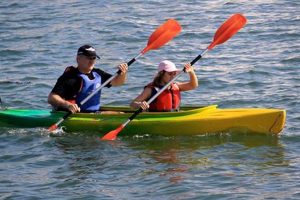
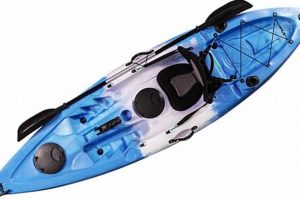
A small, narrow boat propelled by a double-bladed paddle, designed for a single occupant, finds application in diverse aquatic environments. These range from calm lakes and slow-moving rivers to challenging ocean waters, showcasing its adaptability and versatility. Different models cater to various skill levels and purposes, including recreational paddling, fishing, and whitewater navigation. The choice of vessel often depends on factors such as intended use, water conditions, and user experience.
The use of these vessels offers a low-impact approach to exercise, promoting physical fitness while minimizing stress on joints. It also provides an opportunity to connect with nature and explore otherwise inaccessible waterways. Historically, such boats were developed by indigenous peoples of the Arctic regions for hunting and transportation, demonstrating their enduring utility over centuries. Their modern evolution retains core design elements while incorporating advanced materials and construction techniques.
This exploration of small watercraft design and application will cover key topics including hull design considerations, material selection, paddling techniques, and safety precautions. Furthermore, discussions on responsible use and environmental awareness will highlight the importance of sustainable paddling practices.
Tips for Small Watercraft Paddling
Safe and efficient paddling requires understanding fundamental techniques and adhering to established safety guidelines. The following tips provide a framework for enhancing paddling performance and ensuring an enjoyable experience on the water.
Tip 1: Dress for the Water Temperature, Not the Air Temperature. Cold water immersion can lead to hypothermia rapidly. Appropriate attire, such as a wetsuit or drysuit, should be chosen based on water temperature, even on warm days.
Tip 2: Always Wear a Personal Flotation Device (PFD). A PFD is essential safety equipment and should be worn at all times while on the water, regardless of swimming ability.
Tip 3: Check Weather Conditions Before Heading Out. Unexpected changes in weather can create hazardous conditions. Checking forecasts and understanding potential weather impacts is crucial for safe paddling.
Tip 4: Inform Someone of Your Paddling Plans. Sharing your intended route and estimated return time with a friend or family member ensures someone is aware of your whereabouts in case of an emergency.
Tip 5: Learn Basic Paddling Strokes and Rescue Techniques. Proper paddling technique improves efficiency and reduces fatigue. Knowledge of self-rescue and assisted rescue techniques can be invaluable in unexpected situations.
Tip 6: Carry Essential Safety Gear. A signaling device (whistle or mirror), a bilge pump, and a first-aid kit are essential items to carry on every paddling trip.
Tip 7: Respect Wildlife and the Environment. Maintain a safe distance from wildlife and avoid disturbing natural habitats. Pack out all trash and adhere to Leave No Trace principles.
Adherence to these guidelines significantly enhances paddling safety and promotes responsible enjoyment of the waterways. These practices contribute to a positive and sustainable paddling experience, allowing individuals to connect with nature while minimizing environmental impact.
By understanding and implementing these strategies, paddlers can enjoy a rewarding and safe experience on the water, fostering a deeper appreciation for the natural environment.
1. Stability

Stability in a single-person kayak directly influences user confidence and safety, particularly for novices or those navigating challenging conditions. A stable hull design minimizes the likelihood of capsizing, allowing paddlers to focus on technique and navigation rather than maintaining balance. Hull shape, width, and length all contribute to stability. Wider kayaks generally offer greater initial stability, making them suitable for beginners or calm water paddling. Longer, narrower kayaks, while potentially faster, may feel less stable initially but offer superior secondary stability (resistance to tipping once tilted) which is crucial in rougher waters. Consider a recreational kayak’s wide, flat hull compared to a sea kayak’s longer, more rounded hull, reflecting their respective stability profiles and intended uses. The choice between initial and secondary stability depends heavily on the anticipated paddling environment and the paddler’s skill level.
Understanding the nuances of kayak stability facilitates informed decision-making regarding kayak selection. For instance, anglers often prioritize initial stability to facilitate casting and reeling, while whitewater kayakers require a balance of initial and secondary stability to navigate rapids effectively. Assessing stability characteristics also allows paddlers to adapt their technique accordingly. Maintaining a low center of gravity and using proper paddling strokes contribute to overall stability. Furthermore, awareness of environmental factors, such as wind and waves, allows paddlers to anticipate and mitigate potential stability challenges. A practical demonstration of stability’s importance can be seen in specialized kayak designs, like those used for fishing, which incorporate features like outriggers to further enhance stability, enabling anglers to stand and cast with confidence.
In summary, kayak stability is a crucial element impacting safety, performance, and paddling experience. Careful consideration of hull design, paddling environment, and individual skill level allows for informed kayak selection and facilitates confident and enjoyable time on the water. Addressing stability concerns proactively through informed choices and adapted techniques allows individuals to navigate diverse water conditions safely and effectively. The relationship between stability and intended use forms a cornerstone of successful kayak selection and overall paddling enjoyment.
2. Maneuverability

Maneuverability, a critical performance characteristic in single-person kayaks, dictates the ease and responsiveness with which the vessel changes direction. This attribute is particularly relevant in navigating complex waterways, such as narrow streams, rocky coastlines, or dynamic surf zones. Understanding the factors influencing maneuverability enables informed kayak selection and enhances paddling efficiency and safety.
- Hull Design and Length
Hull design significantly impacts maneuverability. Shorter kayaks generally turn more quickly than longer kayaks due to their reduced waterline length. A shorter waterline means less resistance to turning. For example, a short, playful whitewater kayak exhibits rapid turning capabilities, ideal for navigating dynamic river features, while a longer sea kayak prioritizes tracking and efficiency over rapid turning. The specific hull shape also plays a role; a kayak with a hard chine (a sharp edge where the hull sides meet the bottom) will typically turn more readily than one with a rounded hull.
- Rocker Profile
Rocker refers to the curvature of the hull from bow to stern. A kayak with significant rocker (more curvature) is more maneuverable, enabling tighter turns. Conversely, a flatter rocker profile enhances tracking for straight-line paddling. Consider the pronounced rocker of a whitewater kayak designed for navigating rapids versus the minimal rocker of a touring kayak intended for open water travel. Rocker choice reflects the balance between maneuverability and tracking performance.
- Paddle Characteristics
Paddle length and blade shape influence maneuverability. A shorter paddle provides quicker, more responsive strokes for enhanced turning, while a longer paddle delivers more power for straight-line speed. Similarly, asymmetrical paddle blades, designed with a curved surface, enhance stroke efficiency and control, contributing to improved maneuverability. The choice of paddle should align with the kayak’s design and the intended paddling environment.
- Paddling Technique
Effective paddling techniques significantly enhance maneuverability. Sweep strokes, bow rudders, and stern rudders are essential maneuvering skills that enable precise directional control. Developing proficiency in these techniques enhances a paddler’s ability to navigate complex waterways efficiently and safely. Practicing these skills in calm water allows for greater control and confidence when facing challenging conditions.
These interconnected factors demonstrate that maneuverability isn’t solely determined by kayak design but also encompasses paddling technique and equipment choices. Selecting a kayak with appropriate maneuverability characteristics for the intended paddling environment is crucial. Further refinement through skilled paddling technique and appropriate equipment selection optimizes performance and enhances overall paddling enjoyment and safety. The interplay between these elements underscores the multifaceted nature of kayak maneuverability.
3. Tracking

Tracking, the ability of a kayak to maintain a straight course with minimal corrective strokes, represents a critical performance attribute, especially for single-person kayaks (often abbreviated as “SE”) used in open water or long-distance paddling. Efficient tracking minimizes wasted energy and allows paddlers to cover greater distances with less effort. Several factors contribute to a kayak’s tracking performance, and understanding these influences allows for informed kayak selection and improved paddling efficiency.
Hull design plays a pivotal role in tracking. Longer kayaks generally track better than shorter kayaks due to their increased waterline length. A longer waterline provides more directional stability, reducing the tendency to yaw (deviate from a straight course). Furthermore, a kayak with minimal rocker (less curvature from bow to stern) exhibits superior tracking. Conversely, increased rocker, while enhancing maneuverability, can compromise tracking performance. Consider the sleek, straight profile of a touring kayak designed for efficient long-distance travel compared to the rockered hull of a whitewater kayak optimized for maneuverability in dynamic currents. The design reflects the prioritization of tracking versus maneuverability based on intended use. Skegs or rudders can also be employed to enhance tracking, especially in windy conditions. Skegs provide passive directional stability, while rudders offer active control over the kayak’s course. The addition of these features can compensate for inherent design limitations or adapt a kayak for specific paddling conditions.
Understanding the relationship between tracking and kayak design empowers paddlers to make informed decisions regarding kayak selection and accessory utilization. Choosing a kayak with appropriate tracking characteristics for the intended paddling environment optimizes performance and reduces paddling effort. Recognizing the influence of factors such as hull length, rocker profile, and the use of skegs or rudders allows paddlers to fine-tune their equipment and technique to achieve desired tracking performance. This knowledge translates directly to improved efficiency and enjoyment during longer paddling trips or open-water excursions where maintaining a consistent course is paramount.
4. Speed

Speed, a crucial performance characteristic in single-person kayaking (often shortened to “SE kayaking”), significantly impacts both efficiency and the range achievable during paddling excursions. Understanding the factors influencing kayak speed enables informed decision-making regarding kayak selection and paddling technique. Analyzing these elements allows paddlers to optimize their performance and enhance their overall experience on the water.
- Hull Design and Length
Hull design significantly influences a kayak’s speed potential. Longer kayaks generally exhibit higher top speeds due to their reduced frictional resistance in the water. A longer waterline allows the kayak to glide more efficiently. Narrower kayaks also contribute to increased speed by minimizing drag. However, the trade-off for increased speed in narrower hulls is often reduced stability. The hull shape, particularly the presence of a prominent keel or V-shaped hull, also contributes to efficient water displacement and reduced drag, ultimately enhancing speed. Consider the sleek, streamlined design of a racing kayak versus the wider, more stable hull of a recreational kayak. The contrasting designs reflect the prioritization of speed versus stability based on intended use.
- Waterline Length
The length of the kayak’s hull in contact with the water, known as the waterline length, directly correlates with speed potential. A longer waterline reduces frictional resistance, allowing the kayak to glide more efficiently and achieve higher speeds. This is why longer kayaks are generally faster, assuming other factors like hull shape remain constant. The dynamic nature of the waterline, changing with the kayak’s load and the paddler’s weight distribution, underscores the importance of proper trim for optimal speed.
- Paddling Technique and Efficiency
Efficient paddling technique plays a crucial role in maximizing kayak speed. Proper blade entry and exit, coupled with a strong core engagement and consistent stroke rate, significantly contribute to propulsive efficiency. Minimizing wasted energy through refined technique allows paddlers to maintain higher speeds over extended periods. Developing a smooth, powerful stroke maximizes the transfer of energy from the paddler to the kayak, resulting in increased speed and reduced fatigue.
- Water Conditions and Resistance
Water conditions, including currents, wind, and waves, significantly influence kayak speed. Paddling against a current or into a headwind creates resistance, reducing speed and requiring increased effort. Conversely, paddling with a following current or tailwind can significantly boost speed. Understanding and adapting to prevailing water conditions are essential for efficient paddling and accurate speed estimation. Consider the impact of paddling in calm, flat water versus navigating choppy waves or strong currents. The varying conditions necessitate adjustments in paddling technique and effort to maintain desired speed and course.
These interconnected factors illustrate that kayak speed isn’t solely determined by hull design but also encompasses paddling technique and environmental conditions. Selecting a kayak with appropriate speed characteristics for the intended paddling environment is essential. Further refinement through skilled paddling technique and awareness of prevailing water conditions optimizes performance and enhances the overall paddling experience. The interplay between these elements underscores the multifaceted nature of kayak speed in the context of SE kayaking.
5. Comfort
Comfort in a single-person kayak (commonly referred to as a “kayak for SE”) significantly impacts paddling enjoyment and endurance, especially during longer trips. Discomfort can lead to fatigue, reduced performance, and even potential injury. Several factors contribute to kayak comfort, and understanding these elements allows for informed kayak selection and a more enjoyable paddling experience. The interplay between these factors underscores the importance of prioritizing comfort in SE kayaking.
Seat design and adjustability play a crucial role in overall comfort. A well-designed seat provides adequate support and cushioning, minimizing pressure points and promoting proper posture. Adjustable features, such as backrest angle and seat height, allow paddlers to customize the fit to their individual body shape and preferences. A comfortable seat reduces fatigue and allows for extended paddling sessions without discomfort. Consider the difference between a basic molded plastic seat and an ergonomically designed, adjustable seat with padded back support and thigh braces. The latter significantly enhances comfort, particularly during long-distance paddling. Footrest positioning also contributes to comfort and efficient paddling. Adjustable footrests allow paddlers to maintain proper leg positioning and leverage, reducing strain and maximizing power transfer during each stroke. The ability to customize footrest placement accommodates varying leg lengths and paddling styles, ensuring a comfortable and efficient paddling position.
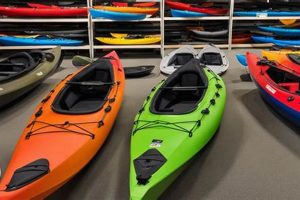
Cockpit dimensions, including width and length, influence comfort and ease of entry and exit. A cockpit that is too narrow can feel restrictive, while one that is too wide may compromise stability and control. The cockpit length affects legroom and comfort, especially for taller paddlers. Consider the differences in cockpit design between a recreational kayak intended for calm water and a sea kayak designed for open-water paddling. Recreational kayaks often feature larger, more open cockpits for easy entry and exit, while sea kayaks typically have smaller, more snug cockpits for enhanced control and protection from the elements. Cockpit dimensions should be considered in relation to the paddler’s body size and the intended paddling environment. Understanding these factors empowers paddlers to select a kayak that offers both comfort and performance based on individual needs and intended use. Prioritizing comfort in SE kayaking enhances the overall experience, allowing paddlers to focus on enjoying the journey and exploring the waterways with reduced fatigue and increased enjoyment.
6. Durability

Durability represents a critical factor in single-person kayak (SE kayak) selection, directly influencing the vessel’s lifespan and overall cost-effectiveness. A durable kayak withstands the rigors of regular use, including impacts, abrasion, and exposure to various environmental conditions. This resilience translates to a longer service life, reducing the need for frequent repairs or replacements. Durability considerations become especially pertinent in demanding environments such as rocky coastlines, whitewater rivers, or areas with frequent transport and storage challenges. Material selection plays a pivotal role in determining kayak durability. High-density polyethylene (HDPE) kayaks offer excellent impact resistance and affordability, making them suitable for recreational use and environments with potential obstacles. Thermoformed ABS plastic kayaks provide a balance of durability and lighter weight, while composite kayaks (fiberglass, carbon fiber, or Kevlar) offer superior strength and lighter weight but often at a higher cost. The choice of material depends on the intended use and budget constraints. Construction methods also influence durability. Rotational molding creates a seamless, highly durable hull in HDPE kayaks, while thermoforming offers precise shaping in ABS plastic kayaks. Composite construction, involving layers of reinforcement materials and resin, provides high strength and stiffness in lighter-weight kayaks. Evaluating construction techniques alongside material selection provides a comprehensive understanding of a kayak’s overall durability.
Real-world examples illustrate the practical significance of kayak durability. A recreational kayak used frequently in rocky shallows benefits from the impact resistance of HDPE. A sea kayak designed for expeditions requires the robust construction and lightweight nature of composite materials. A whitewater kayak navigating turbulent rivers necessitates the impact resistance and flexibility of thermoformed plastic or composite construction. Recognizing the specific demands of the intended paddling environment informs appropriate material and construction choices. Evaluating durability considers not only initial purchase cost but also long-term maintenance requirements. A more durable kayak may require fewer repairs, ultimately proving more cost-effective over its lifespan. Furthermore, durable construction enhances safety by minimizing the risk of structural failure in challenging conditions. Consider a kayak expedition in remote waters; a durable vessel provides essential reliability and peace of mind. The practical implications of durability directly impact the safety and enjoyment of paddling experiences.
In summary, durability forms a crucial element in SE kayak selection. Careful consideration of materials, construction techniques, and the intended paddling environment ensures a kayak withstands the demands of regular use and provides years of reliable service. Prioritizing durability not only safeguards against potential damage and costly repairs but also contributes to a safer and more enjoyable paddling experience. Understanding the nuances of kayak durability empowers informed decision-making, aligning kayak selection with individual paddling needs and maximizing long-term value.
7. Portability
Portability, a key consideration in single-person kayak (SE kayak) selection, directly influences ease of transport and storage. This factor becomes particularly relevant for individuals with limited storage space or those who frequently transport their kayaks to various paddling locations. The weight and dimensions of the kayak, along with available transportation methods, significantly impact portability. Lighter kayaks are easier to handle and load onto vehicles, reducing strain and simplifying the logistics of transporting the vessel to and from the water. Compact dimensions further enhance portability, allowing for easier storage in smaller spaces such as apartments or garages. Consider the difference between transporting a lightweight, compact recreational kayak versus a larger, heavier sea kayak. The former can often be easily loaded onto a car roof rack by a single person, while the latter may require assistance or specialized loading equipment.
Several factors contribute to a kayak’s portability. Material selection plays a significant role; lighter materials such as composite (fiberglass, carbon fiber, or Kevlar) or thermoformed ABS plastic contribute to reduced overall weight and enhanced portability. However, these materials often come at a higher cost compared to more durable but heavier materials like high-density polyethylene (HDPE). Kayak length and width also influence portability. Shorter, narrower kayaks are generally easier to handle and transport than longer, wider models. However, shorter kayaks may sacrifice tracking and stability, while narrower kayaks may compromise stability, particularly for beginners. The choice requires careful consideration of portability needs balanced against performance characteristics. Available transportation methods further influence portability considerations. A paddler with a dedicated kayak trailer faces fewer portability constraints than someone relying on a car roof rack or public transportation. Assessing available transportation options informs realistic portability expectations and guides appropriate kayak selection. For instance, an inflatable kayak offers exceptional portability due to its compact packed size, making it suitable for travel or situations where storage space is limited. However, inflatable kayaks require inflation and deflation before and after use, adding time and complexity to the paddling process. The trade-offs inherent in prioritizing portability must be weighed against other performance characteristics and individual preferences.
In summary, portability represents a crucial factor in SE kayak selection, particularly for those prioritizing ease of transport and storage. Careful consideration of material, dimensions, and available transportation methods allows for informed decision-making, balancing portability needs with desired performance characteristics. The practical implications of portability directly impact the accessibility and convenience of kayaking, influencing the frequency and enjoyment of paddling experiences. Understanding the nuances of kayak portability empowers individuals to select a kayak that aligns with their lifestyle and logistical constraints, promoting greater participation in and enjoyment of the sport.
Frequently Asked Questions about Single-Person Kayaks
This section addresses common inquiries regarding single-person kayaks, offering concise and informative responses to facilitate informed decision-making and enhance understanding of these versatile vessels.
Question 1: What are the primary advantages of a single-person kayak?
Single-person kayaks offer enhanced maneuverability, speed potential, and personalized paddling experiences compared to tandem or larger kayaks. Their compact size allows for exploration of narrower waterways and easier navigation in challenging conditions. Solo paddling promotes self-reliance and a deeper connection with the environment.
Question 2: How does one choose the right single-person kayak?
Kayak selection depends on intended use, paddling environment, and individual preferences. Factors such as hull design, length, width, and material construction influence stability, maneuverability, tracking, and speed. Consider anticipated water conditions, paddling experience, and desired features when selecting a kayak.
Question 3: What safety precautions should be taken when kayaking solo?
Always wear a personal flotation device (PFD), inform someone of paddling plans, including route and estimated return time, and check weather forecasts before embarking. Carry essential safety gear such as a signaling device, bilge pump, and first-aid kit. Knowledge of self-rescue techniques is highly recommended.
Question 4: What are the essential paddling techniques for beginners?
Fundamental paddling techniques include the forward stroke, reverse stroke, sweep stroke, and draw stroke. Mastering these strokes enables efficient propulsion, directional control, and maneuvering in various water conditions. Formal instruction or guided practice can significantly improve paddling technique and safety.
Question 5: How does one maintain and store a single-person kayak?
Regular cleaning and proper storage prolong kayak lifespan. Rinse the kayak with fresh water after each use to remove salt, sand, and other debris. Store the kayak in a shaded, dry location, protected from excessive sunlight and temperature fluctuations. Proper storage prevents material degradation and maintains kayak integrity.
Question 6: What are the environmental considerations for kayaking?
Responsible kayaking practices minimize environmental impact. Adhere to Leave No Trace principles, packing out all trash and avoiding disturbance of wildlife or natural habitats. Respect designated paddling areas and be mindful of sensitive ecosystems. Sustainable paddling practices preserve the natural beauty of waterways for future generations.
Understanding these fundamental aspects of single-person kayaking enhances both safety and enjoyment on the water. Informed decision-making regarding kayak selection, paddling technique, and responsible practices contributes to a rewarding and sustainable paddling experience.
The subsequent section will delve into advanced kayaking techniques, offering insights into refining paddling skills and navigating more challenging water conditions.
Conclusion
This exploration has provided a comprehensive overview of single-person kayaks, encompassing key aspects from fundamental design principles to advanced paddling techniques. Selection considerations, including stability, maneuverability, tracking, speed, comfort, durability, and portability, have been examined in detail, highlighting the importance of aligning kayak choice with individual needs and intended use. Furthermore, safety precautions, responsible paddling practices, and environmental considerations have been emphasized, underscoring the importance of sustainable and informed paddling practices.
The information presented equips individuals with the knowledge necessary to make informed decisions regarding single-person kayak selection, usage, and maintenance. Promoting informed participation fosters greater appreciation for the versatility and enjoyment these vessels offer. Continued exploration of paddling techniques and responsible engagement with the aquatic environment ensures enriching and sustainable kayaking experiences for years to come.