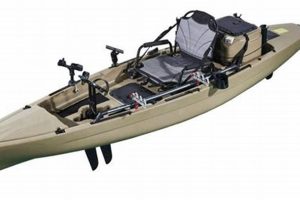
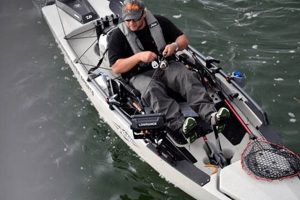
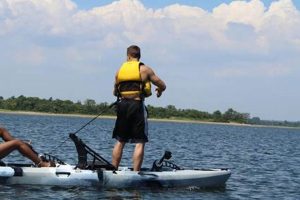
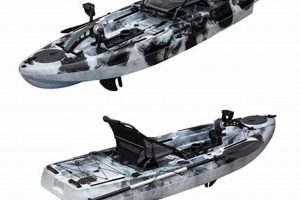
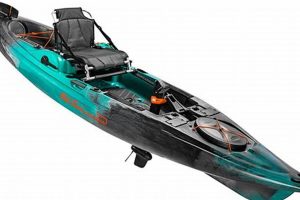
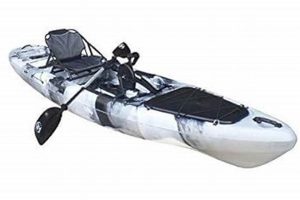
Human-powered kayaks utilizing a foot-pedal system for propulsion offer a distinct advantage over traditional paddle kayaks. This hands-free operation allows for greater upper body freedom, useful for fishing, photography, or simply enjoying the scenery. A rotating propeller, driven by the leg motion, provides efficient and continuous movement through the water.
This type of watercraft provides several benefits. The engaged leg muscles offer a full-body workout and can be less strenuous on the arms and shoulders over long periods. Stability is often enhanced due to the lower center of gravity provided by the seated pedaling position. This design has evolved from earlier iterations of foot-powered boats, gaining popularity due to advancements in materials and propeller design, resulting in a craft ideal for recreational use, fishing expeditions, and even fitness routines on the water.
Further exploration will delve into specific design variations, advantages and disadvantages compared to paddle kayaks, and considerations for selecting the appropriate watercraft for specific needs and environments.
Tips for Foot-Propelled Kayak Operation
Safe and efficient operation of human-powered, propeller-driven kayaks requires attention to several key factors. The following tips enhance performance and ensure an enjoyable experience.
Tip 1: Proper Seat Adjustment: Ensure the seat is adjusted to allow for comfortable leg extension throughout the full pedal rotation. This optimizes power transfer and reduces fatigue.
Tip 2: Rudder Control Familiarization: Practice maneuvering the rudder before venturing into open water. Understanding rudder response is crucial for efficient turning and maintaining course.
Tip 3: Awareness of Water Depth: Propeller-driven vessels are susceptible to damage in shallow water or areas with submerged obstacles. Maintain awareness of water depth and avoid navigation in these areas.
Tip 4: Forward and Reverse Practice: Develop proficiency in transitioning smoothly between forward and reverse pedaling. This maneuverability is essential for navigating tight spaces or avoiding obstacles.
Tip 5: Regular Propeller Maintenance: Inspect and clean the propeller regularly, removing any debris or fishing line that may become entangled. This maintains optimal performance and prolongs propeller lifespan.
Tip 6: Weather Awareness: Check weather conditions before embarking on any trip. Wind and currents can significantly impact navigation and require adjustments in paddling technique and route planning.
Tip 7: Safety Equipment: Carry essential safety equipment, including a personal flotation device, whistle, and signaling devices. Adhering to safety regulations ensures a safe and responsible experience on the water.
Adherence to these guidelines promotes efficient operation, enhances safety, and allows for a more enjoyable experience on the water.
This information provides a solid foundation for operating foot-propelled kayaks. The next section offers a comprehensive comparison with traditional paddle-powered kayaks.
1. Hands-free Propulsion

Hands-free propulsion represents a defining characteristic of pedal kayaks, distinguishing them from traditional paddle-powered counterparts. This core feature enables a range of functionalities and benefits, significantly impacting the kayaking experience. Understanding its components and implications provides a deeper appreciation for this innovative approach to watercraft navigation.
- Enhanced Fishing Opportunities
Unburdened hands allow anglers to focus on casting, reeling, and other fishing tasks without sacrificing boat control. This advantage facilitates techniques like trolling and fly fishing, significantly increasing angling versatility and efficiency.
- Improved Photography and Observation
Hands-free operation provides stability and control, enabling kayakers to capture steady photographs or videos of wildlife and scenery. This benefit extends to birdwatching, nature observation, and other activities requiring focused attention and stable viewing platforms.
- Increased Comfort and Reduced Fatigue
Eliminating the repetitive motion of paddling reduces strain on the upper body, particularly the shoulders and wrists. This advantage allows for longer excursions with reduced fatigue and increased comfort, making kayaking accessible to a wider range of individuals.
- Superior Maneuverability and Control
Integration of rudder systems with foot-pedal propulsion allows for precise steering and maneuverability. This facilitates navigation in challenging environments, such as narrow waterways or areas with currents, and enhances control for activities like fishing and photography.
These facets of hands-free propulsion underscore its integral role in the functionality and appeal of pedal kayaks. This innovative approach to kayak design opens up new possibilities for recreational use, specialized activities, and accessibility for individuals seeking alternative methods of watercraft propulsion.
2. Leg-powered Movement
Leg-powered movement forms the foundational principle of pedal kayaks, differentiating them from traditional paddle-driven vessels. This unique propulsion system utilizes a cycling-like motion to drive a propeller, generating thrust and facilitating movement through the water. The biomechanics of this system offer distinct advantages, leveraging the strength and endurance of leg muscles for efficient and sustained propulsion. This shift from upper body to lower body exertion alters the physical demands of kayaking, presenting both opportunities and challenges.
The utilization of larger muscle groups in the legs offers several practical advantages. It allows for sustained paddling over longer distances, reducing fatigue commonly associated with upper-body paddling. Furthermore, leg-powered propulsion frees the upper body for other activities, such as fishing, photography, or simply enjoying the surrounding environment. This division of labor enhances versatility and opens up new possibilities for kayak usage. For individuals with upper-body limitations or injuries, leg-powered kayaks offer an accessible and empowering means of enjoying water-based activities. Consider a fishing enthusiast: leg-powered propulsion allows for continuous trolling while maintaining precise boat control, enhancing fishing success. Similarly, a wildlife photographer can maintain a stable platform for capturing images without the disruptive movements associated with traditional paddling.
Understanding the biomechanics of leg-powered movement is crucial for maximizing efficiency and minimizing strain. Proper seat adjustment and pedaling technique ensure optimal power transfer and reduce the risk of injury. While offering numerous benefits, leg-powered propulsion requires adaptation and practice. Transitioning from traditional paddling may involve a learning curve as individuals acclimate to the different muscle groups and coordination required. However, the potential for increased endurance, reduced upper body fatigue, and enhanced versatility makes leg-powered movement a compelling innovation in kayak design. The resulting freedom and control offer unique advantages across a range of kayaking applications, from recreational touring to specialized pursuits like fishing and photography.
3. Increased Stability
Enhanced stability represents a significant advantage of pedal kayaks compared to traditional paddle-driven designs. This inherent stability stems from several key factors, primarily the lower center of gravity achieved by the seated pedaling position. Unlike paddlers who sit higher and engage in dynamic upper-body movements, pedal kayakers maintain a lower, more centralized body position. This lower center of gravity reduces the likelihood of capsizing, especially in challenging conditions such as choppy water or when encountering wakes. Furthermore, the wider hull design often incorporated in pedal kayaks contributes to increased primary stability resistance to initial tipping. This broader base provides a more stable platform, particularly beneficial for activities like fishing or photography, where stability is paramount. The combination of a low center of gravity and a wider hull creates a notably more stable craft, allowing users to feel more secure and confident on the water.
The practical implications of increased stability are numerous. Anglers benefit from a stable platform for casting and reeling, minimizing disruptions during the fishing process. Wildlife photographers can capture steady shots without the rocking motion often associated with paddle kayaks. For individuals new to kayaking or those with balance concerns, the enhanced stability offers greater confidence and reduces anxiety associated with potential capsizing. Consider a scenario where a kayaker encounters a powerboat’s wake. In a traditional kayak, the sudden rocking motion could lead to instability or even capsizing. However, the lower center of gravity and wider hull of a pedal kayak significantly mitigate this risk, allowing the kayaker to maintain balance and control. This enhanced stability not only contributes to safety but also expands the potential uses of kayaks, enabling activities that require a stable platform, such as fishing, photography, and even yoga or exercise routines on the water.
In summary, the increased stability of pedal kayaks, derived from a lower center of gravity and wider hull design, provides significant advantages in terms of safety, versatility, and user confidence. This characteristic expands the potential applications of kayaks, making them suitable for a broader range of activities and user demographics. While factors like water conditions and individual behavior still influence stability, the inherent design features of pedal kayaks contribute significantly to a more secure and stable on-water experience. This understanding is crucial for informed decision-making when selecting a kayak and for appreciating the unique advantages of pedal-powered propulsion.
4. Fishing Advantages
Pedal kayaks offer distinct advantages for anglers, stemming primarily from the hands-free nature of their propulsion system. This core feature allows anglers to focus on fishing techniques, manipulating rods and reels, and managing lines without the constant interruption of paddling. This enhanced focus translates to increased efficiency in various fishing styles, from casting and retrieving lures to trolling and fly fishing. The stability of pedal kayaks further amplifies these benefits, providing a secure platform for casting, fighting fish, and landing catches. Consider a scenario where an angler hooks a large fish. In a traditional kayak, maintaining balance and control while simultaneously handling the rod and reel can be challenging. The hands-free operation of a pedal kayak allows the angler to focus entirely on the fight, increasing the likelihood of a successful landing.
Practical applications of these advantages are readily apparent across various fishing scenarios. In trolling, the continuous and controlled propulsion of a pedal kayak allows for consistent lure presentation at the desired depth and speed. For sight fishing in shallow waters, the quiet operation of a pedal drive minimizes disturbance, increasing the chances of approaching fish undetected. The stability of the platform also proves invaluable in situations requiring precise boat control, such as fishing near structure or in currents. Furthermore, the ability to quickly and easily maneuver using the rudder system enhances efficiency when navigating to different fishing spots or following schools of fish. Specific examples include navigating tight mangrove tunnels for snook or maintaining position in a swift river while fly fishing for trout. These scenarios highlight the practical benefits of pedal kayaks in optimizing fishing success.
In summary, the combination of hands-free operation and enhanced stability offered by pedal kayaks presents significant advantages for anglers. These features contribute to increased efficiency, improved maneuverability, and a more focused fishing experience. While factors such as water conditions and individual fishing styles influence the overall effectiveness, the inherent design advantages of pedal kayaks provide a distinct edge in various fishing scenarios. Understanding these advantages allows anglers to make informed decisions about equipment selection and maximize their potential for success on the water. This translates to not only a more productive fishing experience but also enhanced enjoyment and appreciation of the sport.
5. Fitness Potential

Pedal kayaks offer a unique avenue for physical activity, transforming a recreational pursuit into a low-impact, full-body workout. The leg-powered propulsion system engages major muscle groups, including quadriceps, hamstrings, and glutes, providing a cardiovascular workout while simultaneously building strength and endurance. Unlike traditional paddling, which primarily focuses on upper body exertion, pedal kayaking distributes the physical effort more evenly, reducing strain on shoulders and arms while effectively exercising the lower body. This distribution of effort makes it a suitable activity for individuals with upper-body limitations or those seeking a lower-impact alternative to traditional paddling. The continuous, rhythmic motion of pedaling also contributes to improved cardiovascular health, similar to cycling or other aerobic exercises. Furthermore, the resistance of the water provides a dynamic workout, engaging muscles differently than land-based activities. Consider a scenario of paddling across a lake. The consistent pedaling action simulates a cycling workout, promoting calorie burning and cardiovascular improvement while enjoying the natural surroundings.
Real-world examples illustrate the fitness potential of pedal kayaks. Individuals seeking to improve leg strength and endurance can incorporate pedal kayaking into their fitness regimen. Those recovering from upper-body injuries can maintain physical activity without exacerbating existing conditions. Even leisurely paddling offers significant health benefits, improving circulation, boosting mood, and contributing to overall well-being. A practical example is an individual rehabilitating a shoulder injury. Pedal kayaking allows for continued engagement in an enjoyable outdoor activity while promoting lower-body fitness without stressing the injured shoulder. Another scenario involves an individual seeking a low-impact workout alternative to running or other high-impact activities. Pedal kayaking provides a cardiovascular workout with minimal stress on joints.
In summary, pedal kayaks offer a compelling blend of recreation and fitness. The leg-powered propulsion system engages major muscle groups, contributing to cardiovascular health, strength building, and endurance. This unique approach to water-based activity provides a low-impact workout suitable for a wide range of individuals, including those with physical limitations or those seeking a less strenuous alternative to traditional paddling. Understanding the fitness potential of pedal kayaks can encourage greater participation in outdoor activities while promoting physical well-being. This understanding also allows individuals to integrate pedal kayaking into existing fitness regimens, offering a dynamic and enjoyable way to achieve fitness goals.
6. Elevated Maneuverability
Maneuverability represents a critical performance aspect of any watercraft, particularly in dynamic environments. Pedal kayaks, by integrating rudder systems controlled by foot pedals, offer enhanced maneuverability compared to traditional paddle kayaks. This integration allows for precise directional control and efficient turning, facilitating navigation in challenging conditions and enhancing overall control. Understanding the components and implications of this elevated maneuverability is crucial for appreciating the distinct advantages offered by pedal kayaks.
- Precise Steering Control
Rudder systems, seamlessly integrated with the pedal drive mechanism, allow for precise steering adjustments without requiring hand-operated paddles. This enables subtle course corrections and maintains directional stability, particularly beneficial in windy conditions or currents. Consider navigating a narrow channel: rudder control allows for precise adjustments, keeping the kayak on course without the wide turning arcs often associated with paddle kayaks.
- Efficient Turning and Maneuvering
The coordinated use of foot pedals and rudder control facilitates efficient turning, enabling tight turns and quick changes in direction. This enhanced maneuverability proves invaluable when navigating around obstacles, such as submerged logs or rocks, or when maneuvering in close proximity to other vessels. For example, in a river environment, rapid directional changes are essential for navigating around rocks and avoiding shallow areas. Rudder-controlled pedal kayaks excel in such situations.
- Hands-Free Navigation
The integration of steering with the propulsion system allows for hands-free navigation. This is particularly advantageous for activities like fishing or photography, where maintaining precise boat control while simultaneously handling equipment is crucial. Imagine trolling a fishing line: rudder control allows for precise adjustments to the kayak’s path, maintaining the desired lure presentation without requiring constant paddle adjustments.
- Enhanced Responsiveness
Rudder systems provide immediate and responsive directional control. This responsiveness allows for quick adjustments to changing conditions, enhancing safety and control in dynamic environments. For instance, a sudden shift in wind direction can be readily countered with a quick rudder adjustment, maintaining the desired course and preventing unwanted drift.
The elevated maneuverability offered by pedal kayaks, stemming from the integrated rudder systems, represents a significant advantage over traditional paddle-powered kayaks. This enhanced control translates to increased efficiency in navigation, greater safety in challenging conditions, and enhanced versatility for specialized activities like fishing and photography. This understanding underscores the key role of maneuverability in optimizing the performance and functionality of pedal kayaks, distinguishing them as a compelling choice for various on-water pursuits.
Frequently Asked Questions about Pedal Kayaks
This section addresses common inquiries regarding pedal-powered kayaks, providing concise and informative responses to facilitate informed decision-making.
Question 1: How does the propulsion system in a pedal kayak function?
Propulsion is achieved through a pedal-driven propeller system. Rotating pedals, similar to cycling, turn a propeller beneath the waterline, generating thrust and propelling the kayak forward or backward.
Question 2: What are the primary advantages of a pedal kayak compared to a traditional paddle kayak?
Key advantages include hands-free operation, enhanced stability, increased fishing opportunities, a full-body workout, and improved maneuverability due to integrated rudder systems.
Question 3: Are pedal kayaks suitable for all water conditions?
While adaptable to various environments, pedal kayaks are best suited for calmer waters. Shallow water or areas with dense vegetation can pose challenges due to potential propeller entanglement. Open water and slow-moving rivers are ideal environments.
Question 4: What maintenance is required for a pedal kayak’s propulsion system?
Regular inspection and cleaning of the propeller system are essential. Removing debris, such as fishing line or aquatic vegetation, ensures optimal performance and prolongs the system’s lifespan. Periodic lubrication of moving parts may also be necessary, depending on the specific model.
Question 5: Are pedal kayaks more difficult to transport than traditional kayaks?
Transportation considerations are similar to traditional kayaks. Roof racks or trailers designed for kayaks accommodate most pedal kayak models. Weight and size considerations remain important factors when selecting a suitable transportation method.
Question 6: What is the typical price range for pedal kayaks?
Prices vary depending on features, materials, and brand. Generally, pedal kayaks are more expensive than traditional paddle kayaks due to the complexity of the propulsion system. Researching various models and comparing features is recommended before making a purchase.
Careful consideration of these frequently asked questions provides a foundational understanding of pedal kayaks. Consulting specialized retailers or experienced users can offer further insights.
The following section provides a detailed comparison between pedal kayaks and traditional paddle kayaks, highlighting the specific advantages and disadvantages of each.
Pedal Kayaks
This exploration has provided a comprehensive overview of pedal kayaks, encompassing design principles, functionality, advantages, and practical applications. Key features, including hands-free propulsion, enhanced stability, and integrated rudder systems, contribute to a unique kayaking experience distinct from traditional paddle-powered vessels. The benefits extend beyond recreation, encompassing fishing advantages, fitness potential, and accessibility for individuals with physical limitations. Understanding these facets allows for informed evaluation and selection based on individual needs and intended usage.
Pedal kayaks represent a significant evolution in kayak design, offering distinct advantages and expanding the possibilities of human-powered watercraft. As technology continues to advance, further refinements and innovations are likely to enhance performance, efficiency, and user experience. Continued exploration and evaluation of these advancements will further inform decision-making and contribute to a deeper appreciation of pedal kayaks’ unique capabilities within the broader context of water-based recreation and specialized pursuits.