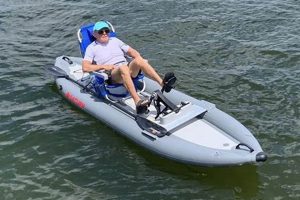
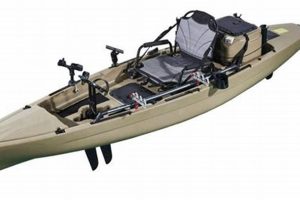
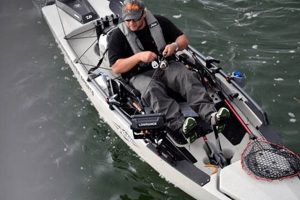
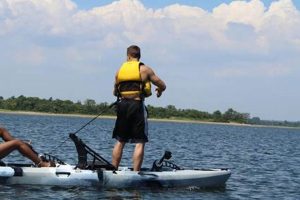
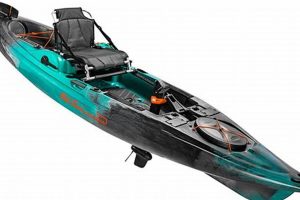
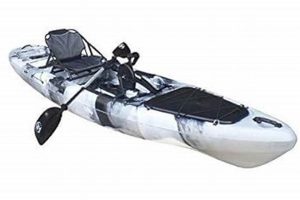
A compact, human-powered watercraft designed for individual anglers offers hands-free navigation through pedal propulsion. This type of vessel typically features specialized storage and mounting options for fishing gear, such as rod holders and tackle compartments. An example would be a small, sit-on-top vessel equipped with a foot-controlled propeller system, enabling the angler to maneuver and fish simultaneously.
Hands-free propulsion allows for continuous fishing, even in challenging conditions like currents or wind. This design promotes greater focus on angling techniques and improves casting accuracy. Historically, kayaks relied solely on paddles, requiring the angler to switch between paddling and fishing. Pedal-powered designs represent a significant advancement in fishing kayak technology, enhancing efficiency and the overall fishing experience. These vessels offer a notable advantage in stealth, allowing anglers to approach fish quietly without disturbing the water with paddling sounds.
The following sections will delve deeper into specific aspects of these specialized kayaks, including design variations, propulsion systems, popular features, and selection considerations. Further exploration will also cover maintenance, safety guidelines, and recommended accessories.
Tips for Pedal Kayak Fishing
Effective angling from a pedal-powered fishing kayak requires an understanding of specific techniques and considerations. These tips offer guidance for maximizing success and enjoyment on the water.
Tip 1: Practice Pedal Propulsion: Familiarization with the pedal system’s responsiveness and maneuvering capabilities is essential before venturing onto open water. Practicing in a controlled environment, such as a calm lake or pond, allows anglers to develop proficiency in steering, speed control, and turning radius.
Tip 2: Optimize Gear Placement: Strategic organization of fishing rods, tackle boxes, and other equipment ensures easy access and minimizes interference with paddling and casting. Utilizing designated storage compartments and mounting options maintains a clutter-free deck and enhances stability.
Tip 3: Plan Fishing Routes: Pre-planning fishing routes based on target species, water conditions, and potential hazards contributes to a more productive and safer experience. Utilizing mapping tools and considering factors like wind direction and current flow enhances efficiency.
Tip 4: Adjust Seat Position: Proper seat adjustment significantly impacts comfort and paddling efficiency. Finding a comfortable and supportive seating position promotes better posture and reduces fatigue during long fishing trips.
Tip 5: Master Casting Techniques: Adapting casting techniques to the seated position and the relatively low profile of a kayak is crucial. Practicing sidearm and underhand casts minimizes the risk of entanglement with the vessel’s structure.
Tip 6: Prioritize Safety Precautions: Adhering to essential safety measures, including wearing a personal flotation device (PFD), carrying a whistle, and informing someone of fishing plans, ensures a safe and responsible angling experience.
Tip 7: Regularly Maintain the Pedal Drive: Regular inspection and maintenance of the pedal drive system, including lubrication and cleaning, ensures optimal performance and prolongs its lifespan.
By implementing these strategies, anglers can enhance their fishing experience, improve efficiency, and prioritize safety while enjoying the benefits of pedal-powered propulsion.
These tips provide a foundational understanding of pedal kayak fishing. The concluding section will offer additional resources for further exploration and skill development.
1. Pedal Propulsion

Pedal propulsion forms the core differentiating feature of a 1-person fishing kayak equipped with pedals. This system replaces traditional paddle-based propulsion, offering anglers significant advantages in terms of efficiency and hands-free operation. The direct cause-and-effect relationship is straightforward: pedaling turns a propeller, generating thrust and propelling the kayak forward or backward. This frees the angler’s hands for fishing activities, such as casting, retrieving, and handling fish. Consider a scenario where an angler encounters a school of actively feeding fish. With a traditional paddle kayak, valuable time would be lost switching between paddling and fishing. Pedal propulsion allows immediate engagement with the fish, significantly increasing the chances of a successful catch.
As an integral component, the pedal drive system influences several key aspects of the fishing kayak experience. Propulsion efficiency directly impacts the angler’s ability to cover greater distances, navigate currents effectively, and position the kayak precisely for optimal fishing. Furthermore, the hands-free nature of pedal propulsion enhances fishing techniques. For example, trolling becomes considerably more manageable, allowing precise speed and depth control while simultaneously holding and manipulating a fishing rod. In windy conditions, maintaining position or navigating against the wind becomes easier and less tiring than with a paddle. Some advanced pedal systems even offer reverse functionality, enhancing maneuverability in tight spaces like shallows or near docks. The choice between propeller-based and fin-based pedal drives presents trade-offs, with propellers generally offering better speed and fins offering superior shallow-water performance.
Understanding the nuances of pedal propulsion as they apply to solo fishing kayaks is essential for informed decision-making. Factors like propulsion efficiency, maintenance requirements, and system durability should be carefully considered. While challenges exist, such as potential damage in shallow water or weed entanglement with propellers, the overall benefits of enhanced fishing capability and increased efficiency contribute significantly to the growing popularity and practicality of pedal-powered fishing kayaks. This technology expands angling opportunities, allowing individuals to explore new fishing grounds and techniques previously challenging or inaccessible with paddle-powered kayaks.
2. Solo Angler Design

Solo angler design represents a fundamental aspect of kayaks intended for individual pedal-powered fishing. This design philosophy prioritizes optimizing the vessel’s layout, features, and performance characteristics for a single occupant. A direct consequence of this focus is enhanced angler efficiency and comfort. Consider the deck layout: a solo design eliminates the need for tandem seating or shared storage compartments, maximizing space for individual gear organization and access. This allows strategic placement of rod holders, tackle boxes, and other fishing accessories within easy reach of the angler. The cause-and-effect relationship is clear: a dedicated solo design leads to improved ergonomics, reduced clutter, and increased fishing efficiency.
The importance of solo angler design as a component of a pedal-driven fishing kayak is further exemplified by considering stability and maneuverability. Kayaks designed for a single occupant often feature a narrower hull profile, reducing drag and enhancing responsiveness to pedal input. This translates to improved tracking, easier turning, and greater agility in navigating various water conditions. For instance, a solo angler targeting fish in a narrow creek benefits significantly from the enhanced maneuverability offered by a kayak specifically designed for individual use. Furthermore, the weight distribution and center of gravity in a solo kayak are optimized for a single occupant, contributing to increased stability, a critical factor when standing to cast or land fish.
A comprehensive understanding of the practical significance of solo angler design contributes to informed kayak selection and enhances on-the-water performance. While some anglers might occasionally fish with a passenger in a tandem kayak, the inherent compromises in design and performance underscore the advantages of a dedicated solo platform for serious anglers. Challenges such as limited storage capacity in some solo designs are often offset by the significant gains in efficiency, maneuverability, and overall fishing experience. This specialized design philosophy, coupled with the advantages of pedal propulsion, positions the solo angler fishing kayak as a powerful tool for individuals seeking to maximize their time and effectiveness on the water.
3. Fishing Features
Specialized fishing features represent a critical component of pedal-driven kayaks designed for individual anglers. These features directly enhance angling effectiveness and overall on-the-water experience. The cause-and-effect relationship is clear: integrated fishing features streamline angling processes, allowing for greater efficiency and focus on fishing itself. Consider built-in rod holders: they securely hold rods, freeing hands for other tasks like baiting hooks or operating fish finders. Similarly, dedicated tackle storage compartments keep essential gear organized and readily accessible, minimizing time spent searching for specific lures or tools. This streamlined organization directly translates into more time spent fishing and less time managing equipment. Imagine an angler needing to quickly switch lures. With readily accessible tackle storage, this transition is seamless. Without it, valuable fishing time is lost rummaging through bags or boxes.
The importance of fishing features as integral components of these specialized kayaks extends beyond mere convenience. Flush-mounted rod holders minimize line snags and facilitate trolling. Built-in livewells maintain baitfish health and viability. Specialized transducer mounts optimize fish finder performance by providing ideal transducer placement. These integrated features work synergistically to create a purpose-built fishing platform. Consider an angler targeting specific fish species in a challenging environment like heavy cover or fast-moving currents. The ability to quickly and efficiently manage rods, tackle, and other equipment becomes crucial for success. The integration of specialized features directly addresses these challenges, empowering anglers to focus on their technique and strategy.
A thorough understanding of fishing features’ practical significance empowers informed purchasing decisions and maximizes on-the-water effectiveness. While some anglers might add aftermarket accessories, the seamless integration and optimized design of factory-installed features often offer superior performance and convenience. Challenges like limited customization options with integrated features are generally outweighed by the benefits of enhanced efficiency and a clutter-free fishing experience. This focus on integrated fishing features reinforces the core design philosophy of these kayaks: to provide a dedicated and highly effective platform for individual anglers seeking to maximize their time and success on the water. This specialization contributes directly to a more productive and enjoyable fishing experience, enabling anglers to focus on the sport itself rather than logistical challenges.
4. Stability and Maneuverability
Stability and maneuverability represent critical performance characteristics of pedal-driven fishing kayaks designed for individual use. These attributes directly influence an angler’s safety, fishing effectiveness, and overall on-the-water experience. The cause-and-effect relationship is evident: a stable and maneuverable kayak allows anglers to confidently navigate various water conditions, access challenging fishing spots, and maintain balance while casting, fighting fish, or entering and exiting the vessel. Consider the scenario of an angler encountering windy conditions or choppy water. A stable kayak provides a secure platform, minimizing the risk of capsizing and ensuring angler safety. Conversely, a kayak lacking stability can create anxiety and hinder fishing effectiveness, particularly when standing to cast or retrieve fish.
The importance of stability and maneuverability as integral components of these specialized kayaks is further underscored by considering their impact on fishing techniques. A highly maneuverable kayak allows anglers to navigate tight spaces, approach fish stealthily, and adjust position quickly to changing currents or fish movement. For instance, an angler pursuing fish in a narrow, winding creek benefits significantly from a kayak’s responsive turning and precise tracking capabilities. Similarly, the ability to maintain stability while standing allows for sight fishing, improved casting accuracy, and greater leverage when fighting larger fish. Consider an angler hooking a large fish in open water. A stable platform enables the angler to effectively play and land the fish, minimizing the risk of losing balance or capsizing during the fight.
A comprehensive understanding of the practical significance of stability and maneuverability contributes significantly to informed kayak selection and enhanced on-the-water confidence. While some designs prioritize stability over maneuverability and vice versa, finding a balance between these attributes is crucial for maximizing overall fishing performance and safety. Challenges, such as reduced speed in extremely stable designs or decreased stability in highly maneuverable kayaks, must be considered in relation to individual fishing styles and target environments. This understanding, coupled with an appreciation for other essential features, empowers anglers to select the ideal kayak for their specific needs and fishing preferences, contributing directly to a safer, more productive, and ultimately more enjoyable fishing experience.
5. Transportation and Storage
Transportation and storage considerations are integral to the overall ownership experience of a pedal-driven fishing kayak designed for individual use. These practical aspects directly influence the ease and convenience with which the kayak can be transported to and from fishing locations and stored securely when not in use. The cause-and-effect relationship is straightforward: kayaks that are easily transported and stored are more likely to be used frequently, maximizing their value and contributing to a more enjoyable fishing experience. Consider an angler living in an apartment with limited storage space. A compact, easily disassembled kayak offers a significant advantage over a larger, more cumbersome model. Similarly, the availability of readily accessible transport options, such as roof racks or trailers, directly impacts an angler’s ability to reach desired fishing destinations.
The importance of transportation and storage as components of the overall kayak ownership experience is further underscored by considering factors such as weight, size, and design. Lighter kayaks are easier to load and unload from vehicles, reducing strain and minimizing the risk of damage. Compact designs and features like removable or foldable components simplify storage in confined spaces. For example, an angler with a small car benefits from a kayak designed for compact storage or easy disassembly. Similarly, the availability of specialized transportation accessories, like kayak carts or trailers, can significantly enhance the ease of transporting the vessel from vehicle to water’s edge, particularly over longer distances or uneven terrain. An angler frequently fishing remote locations with limited vehicle access benefits significantly from such portable solutions.
A comprehensive understanding of the practical significance of transportation and storage contributes to informed purchasing decisions and enhances long-term ownership satisfaction. While some designs prioritize performance characteristics over portability, finding a balance between these attributes is essential for maximizing overall utility and enjoyment. Challenges, such as the added cost of transportation accessories or the potential complexity of assembling and disassembling modular kayaks, must be weighed against the benefits of convenient transport and efficient storage. This understanding empowers anglers to select the ideal kayak for their specific needs and logistical constraints, ensuring that the practical aspects of ownership enhance rather than detract from the overall fishing experience.
Frequently Asked Questions
This section addresses common inquiries regarding pedal-powered fishing kayaks designed for individual use. Clear and concise answers aim to provide comprehensive information for prospective buyers and current owners.
Question 1: What are the primary advantages of pedal propulsion over traditional paddling?
Pedal propulsion offers hands-free fishing, enabling continuous angling while maneuvering. This enhances casting accuracy, trolling control, and overall fishing efficiency, particularly in challenging conditions like currents or wind. Furthermore, pedal power often allows for greater speed and range compared to paddling.
Question 2: How stable are pedal fishing kayaks designed for one person?
Stability varies depending on hull design. Wider, flatter hulls generally offer greater initial stability, while narrower hulls may feel less stable initially but provide superior secondary stability (resistance to tipping when leaned). Standing and fishing requires careful consideration of stability characteristics.
Question 3: What maintenance is required for a pedal drive system?
Regular rinsing with fresh water after each use, especially in saltwater environments, is essential. Periodic lubrication of moving parts and inspection for wear or damage ensures optimal performance and longevity. Manufacturer guidelines provide specific maintenance recommendations.
Question 4: Are pedal kayaks more difficult to transport than traditional kayaks?
Pedal kayaks tend to be slightly heavier and potentially bulkier than traditional kayaks due to the pedal drive system. However, specialized kayak carts and trailers facilitate transport. Some models offer removable drive systems for easier handling and storage.
Question 5: What are the typical weight capacities of these kayaks?
Weight capacity varies depending on the specific model and design. It is crucial to adhere to manufacturer-specified weight limits to ensure safe and optimal performance. Exceeding weight capacity can compromise stability and maneuverability.
Question 6: What safety precautions should be taken when using a pedal fishing kayak?
Always wear a personal flotation device (PFD). Inform someone of fishing plans, including location and expected return time. Carry a whistle for signaling in emergencies. Check weather conditions before embarking and be aware of potential hazards like currents, boat traffic, and changing weather patterns.
Understanding these key aspects of pedal-powered fishing kayaks contributes to informed decision-making and enhances the overall fishing experience. Thorough research and careful consideration of individual needs and preferences are essential for selecting the ideal vessel.
This FAQ section has provided answers to common queries. The next section will offer a comprehensive guide to choosing the right pedal fishing kayak based on individual fishing styles and preferences.
Conclusion
Pedal-powered fishing kayaks designed for individual use represent a significant advancement in angling technology. Exploration of key aspects, including pedal propulsion systems, solo angler design principles, specialized fishing features, stability and maneuverability considerations, and transportation and storage practicality, reveals the distinct advantages these vessels offer. Hands-free fishing, enhanced maneuverability, and purpose-built designs contribute to increased angling efficiency and an overall improved on-the-water experience. Understanding these core elements empowers informed decision-making, allowing anglers to select the ideal kayak based on individual needs and preferences.
Advancements in kayak design and propulsion technology continue to evolve, promising further enhancements to the fishing experience. Careful consideration of individual fishing styles, target species, and local water conditions remains crucial for maximizing the benefits offered by these specialized kayaks. The informed selection and responsible use of these vessels contribute not only to individual angling success but also to the continued enjoyment and preservation of aquatic environments for future generations.