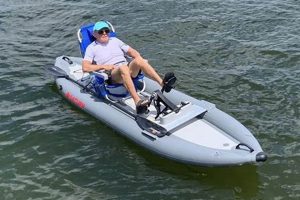
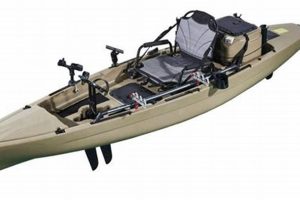
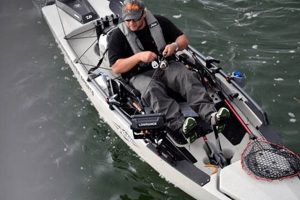
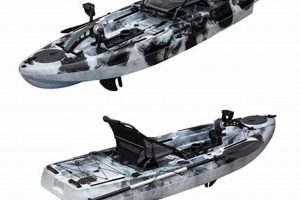
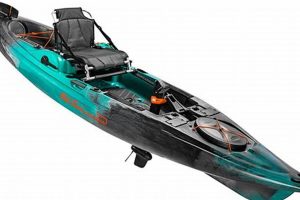
Hands-free propulsion kayaks manufactured by Wilderness Systems offer anglers a unique blend of stability, speed, and fishability. These watercraft employ either a propeller or fin-based system below the waterline, driven by pedaling, allowing anglers to maintain position and navigate challenging waters while keeping their hands free for fishing. This style of kayak is typically outfitted with features specifically designed for angling, such as rod holders, tackle storage, and often dedicated electronics mounts.
The hands-free nature of pedal-driven fishing kayaks presents significant advantages. Anglers can cover more water with less effort, maneuver quietly and efficiently in shallows or around structure, and focus on casting and retrieving rather than paddling. This design provides a more stable platform for standing and casting compared to traditional paddle kayaks, contributing to improved accuracy and overall fishing success. The evolution of these kayaks mirrors advancements in kayak design and fishing technology, leading to increasingly specialized vessels catering to diverse fishing styles and environments.
This exploration will delve further into the specific features, advantages, and considerations surrounding pedal-driven kayaks for fishing, examining topics such as propulsion system types, hull designs, and the factors influencing model selection.
Tips for Pedal Kayak Fishing
Maximizing the advantages of a pedal-driven fishing kayak involves understanding its operation and employing appropriate techniques. The following tips offer guidance for improved efficiency and safety on the water.
Tip 1: Adjust Pedal Drive Height: Proper pedal drive height ensures efficient power transfer and minimizes fatigue. The drive should be positioned so legs maintain a slight bend throughout the pedaling cycle.
Tip 2: Practice Maneuvering: Pedal kayaks respond differently than paddle kayaks. Practice turning, reversing, and maneuvering in open water before venturing into confined areas or challenging conditions.
Tip 3: Utilize Rudder Effectively: The rudder is crucial for maintaining course and making precise adjustments. Learn to coordinate pedaling and rudder control for optimal maneuverability.
Tip 4: Understand Wind and Current Effects: Wind and current can significantly impact kayak tracking. Anticipate these forces and adjust paddling cadence and rudder input accordingly.
Tip 5: Maintain Proper Weight Distribution: Even weight distribution enhances stability. Distribute gear and tackle evenly throughout the kayak, avoiding overloading one area.
Tip 6: Prioritize Safety Gear: Always wear a personal flotation device (PFD) and carry essential safety equipment, including a whistle, signaling device, and first-aid kit.
Tip 7: Plan Fishing Routes Strategically: Plan fishing routes considering water depth, structure, and potential hazards. Utilize mapping tools and charts to identify productive areas and navigate safely.
By adhering to these guidelines, anglers can enhance their pedal kayak fishing experience, improve efficiency on the water, and ensure a safe and productive outing.
These practical tips offer a starting point for mastering the nuances of pedal kayak fishing. Continued practice and experience will further refine technique and lead to increased success on the water.
1. Hands-Free Fishing

Hands-free fishing represents a significant advantage provided by pedal-driven kayaks, particularly those manufactured by Wilderness Systems. This capability allows anglers to dedicate their full attention to the fishing process, enhancing efficiency and increasing the likelihood of success. The following facets explore the implications of hands-free fishing in greater detail.
- Improved Lure Control:
Maintaining precise lure presentation is often crucial for attracting fish. Hands-free operation allows for continuous adjustments to retrieve speed and lure action, maximizing effectiveness. Subtle manipulations, impossible while paddling, become readily achievable, allowing anglers to mimic natural prey movements more convincingly. This refined control can be particularly critical in techniques like twitching jigs or imparting action to topwater lures.
- Enhanced Hookset Potential:
A firm hookset is often the difference between landing a fish and losing it. With hands consistently available, anglers can react instantaneously to strikes, ensuring solid hook penetration. This immediate response is particularly vital when targeting species known for quick bites or delicate takes. The elimination of the need to switch from paddle to rod significantly reduces the chance of missed opportunities.
- Increased Situational Awareness:
Maintaining awareness of surroundings is essential for both fishing success and safety. Hands-free operation allows anglers to constantly scan the water for signs of fish activity, observe changing conditions, and navigate potential hazards. This heightened awareness facilitates quicker adaptation to shifting circumstances and improves overall safety on the water.
- Facilitates Multi-Tasking:
Hands-free fishing enables anglers to manage multiple tasks simultaneously, such as adjusting fishing lines, preparing tackle, operating electronics, or even landing a fish while maintaining position and control of the kayak. This capability streamlines the fishing process, making it more efficient and enjoyable.
These combined advantages contribute significantly to the overall effectiveness and enjoyment of fishing from a Wilderness Systems pedal-driven kayak. The ability to focus entirely on the fishing process, without the distraction of paddling, allows for a more immersive and productive experience on the water.
2. Pedal-Powered Propulsion
Pedal-powered propulsion forms the core differentiating feature of Wilderness Systems pedal fishing kayaks, setting them apart from traditional paddle-powered designs. This propulsion system directly impacts performance, fishability, and the overall angling experience. The utilization of leg muscles, generally stronger than arm muscles, provides greater endurance and power, allowing anglers to cover greater distances and maintain position against currents or wind with reduced fatigue. This advantage becomes particularly significant during extended fishing trips or when navigating challenging waters. The inherent quiet operation of pedal drives, compared to paddling, minimizes disturbance to fish, increasing the likelihood of successful approaches in shallow water or around structure. Specific Wilderness Systems models offer varying propulsion systems, including propeller-based and fin-based drives, each with specific performance characteristics regarding speed, maneuverability, and draft.
Consider a scenario where an angler targets fish in a shallow, heavily vegetated area. A paddle kayak would require frequent paddling adjustments to maintain position and avoid entanglement, potentially spooking fish. However, a pedal-driven kayak allows the angler to maintain a stationary position effortlessly, freeing hands for fishing and minimizing disturbance. Similarly, when facing strong currents or winds, a pedal drive enables easier navigation and position holding compared to paddling, which can be physically demanding and less precise. The choice between propeller and fin drives depends on the angler’s priorities. Propeller drives generally offer higher speeds, while fin drives excel in shallow water and navigating through vegetation due to their reduced risk of entanglement.
Understanding the nuances of pedal-powered propulsion within the context of Wilderness Systems kayaks is crucial for maximizing fishing effectiveness. Factors such as propulsion system type, pedal drive maintenance, and efficient pedaling techniques influence boat control, stealth, and overall fishing success. Selecting the appropriate propulsion system tailored to the targeted fishing environment, considering factors like water depth, vegetation, and expected current conditions, is vital for optimizing on-the-water performance. This informed approach ensures anglers can fully leverage the advantages of pedal-powered propulsion offered by Wilderness Systems fishing kayaks.
3. Enhanced Stability

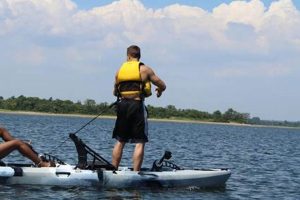
Enhanced stability represents a critical design element within Wilderness Systems pedal fishing kayaks, directly influencing angler safety, comfort, and fishing effectiveness. Several factors contribute to this stability, including hull design, kayak width, and center of gravity. Wider hulls generally provide greater initial stability, resisting tipping, while thoughtfully positioned seating and weight distribution contribute to a lower center of gravity, further enhancing overall stability. This characteristic is particularly crucial for activities like stand-up fishing, allowing anglers to cast with greater accuracy and control while minimizing the risk of capsizing. For example, anglers targeting sight-fishing species in shallow flats benefit significantly from the enhanced stability, as it enables standing for extended periods and precise casting without compromising balance.
The connection between enhanced stability and fishing success is undeniable. A stable platform allows anglers to focus on fishing techniques rather than constantly adjusting balance. This enhanced stability translates to more confident hooksets, smoother retrieves, and overall improved handling of fishing gear. Consider an angler battling a strong fish in challenging conditions; a stable kayak provides a secure platform to exert leverage and control during the fight, increasing the chances of a successful landing. Conversely, a less stable kayak might require the angler to prioritize balance over fighting the fish, potentially leading to a lost catch or even a capsize. Furthermore, enhanced stability contributes to angler comfort, particularly during long hours on the water. Reduced fatigue from constant balancing efforts allows for more focused fishing and a more enjoyable overall experience.
In summary, enhanced stability is not merely a desirable feature but a fundamental component of Wilderness Systems pedal fishing kayaks. This characteristic significantly contributes to angler safety, fishing effectiveness, and overall comfort. Understanding the factors contributing to stability, such as hull design and weight distribution, empowers anglers to select the most suitable kayak for their specific needs and fishing style. This informed approach maximizes on-the-water performance and ensures a safe and enjoyable fishing experience.
4. Targeted Fishing Design
Targeted fishing design distinguishes Wilderness Systems pedal fishing kayaks from recreational models. This design philosophy prioritizes features directly enhancing angling effectiveness and efficiency. Consider integrated rod holders, strategically positioned to keep rods readily accessible while minimizing interference during paddling or pedaling. Tackle storage compartments, often designed with specific dimensions to accommodate tackle boxes and other fishing essentials, contribute to organized and efficient gear management. Further enhancements, such as transducer scuppers for seamless fish finder installation and gear tracks for mounting accessories like cameras or rod holders, demonstrate the deliberate focus on optimizing the fishing experience. These integrated features minimize clutter and maximize usable space, allowing anglers to focus on fishing rather than managing gear.
The practical significance of targeted fishing design becomes evident on the water. An angler searching for specific underwater structures using a fish finder benefits from the pre-installed transducer scupper, eliminating the need for DIY modifications. Similarly, the ability to quickly switch between different rods, facilitated by strategically placed rod holders, allows anglers to adapt to changing fish behavior or target multiple species efficiently. Imagine an angler hooking a large fish; readily accessible pliers or a net, secured within easy reach, become critical for a successful landing. This targeted design translates directly to increased fishing success and a more streamlined, enjoyable experience. For example, an angler specializing in trolling can utilize rod holders positioned for optimal line spread and retrieval, while a fly fisherman benefits from strategically placed storage for fly boxes and other specialized gear.
In conclusion, targeted fishing design is not merely a collection of add-ons but a core principle driving the development of Wilderness Systems pedal fishing kayaks. This focus on angler-specific needs results in a highly functional and efficient platform, maximizing fishing potential. The thoughtful integration of features, from rod holders and tackle storage to transducer mounts and gear tracks, demonstrates a deep understanding of angling requirements, ultimately contributing to a more productive and rewarding experience on the water. This approach addresses the specific challenges faced by anglers, transforming the kayak from a simple mode of transportation into a dedicated fishing platform.
5. Increased Maneuverability

Increased maneuverability represents a significant advantage of Wilderness Systems pedal fishing kayaks, directly impacting anglers’ ability to navigate diverse water environments and access prime fishing locations. This enhanced control stems from the combination of pedal-powered propulsion and rudder steering, allowing for precise adjustments in direction and speed without requiring paddle strokes. This capability proves particularly valuable in challenging environments like shallow creeks, winding rivers, and areas with dense vegetation or submerged obstacles. The hands-free nature of pedal drives further enhances maneuverability by allowing anglers to maintain constant control of the kayak while simultaneously adjusting fishing lines or making other necessary adjustments. For example, navigating tight quarters around fallen trees or maneuvering through narrow channels becomes significantly easier with the precise control offered by pedal and rudder systems.
The practical implications of increased maneuverability extend beyond simply reaching desired fishing spots. Consider a scenario where an angler spots a school of fish near a submerged structure. A pedal-driven kayak allows for quick and precise adjustments to position the boat for an optimal casting angle, maximizing the chances of a successful presentation. Similarly, when fishing in moving water, precise maneuvering is essential for maintaining position relative to structure or current seams, keeping lures in the strike zone for extended periods. This enhanced control translates directly to increased fishing opportunities and improved catch rates. Furthermore, increased maneuverability contributes to overall safety by allowing anglers to navigate hazards efficiently and avoid potentially dangerous situations, such as shallow water or strong currents.
In summary, increased maneuverability constitutes a core advantage of Wilderness Systems pedal fishing kayaks. This capability enhances access to fishing locations, improves casting precision, facilitates fishing in challenging conditions, and contributes to overall safety. The integration of pedal-powered propulsion and rudder steering, combined with the hands-free operation, provides a level of control and responsiveness unavailable in traditional paddle kayaks. Understanding the practical significance of this increased maneuverability empowers anglers to fully leverage the capabilities of their kayaks and maximize their fishing success in diverse aquatic environments. This enhanced control translates to a more efficient, effective, and ultimately, more rewarding fishing experience.
6. Wilderness Systems Quality
Wilderness Systems’ reputation for quality directly influences the performance and longevity of their pedal fishing kayaks. This commitment to quality manifests in several key areas, including material selection, construction techniques, and rigorous testing procedures. Utilizing durable, UV-resistant plastics and advanced manufacturing processes results in kayaks capable of withstanding the rigors of regular use in harsh environments. Careful attention to detail, such as reinforced stress points and robust hardware, further contributes to the overall durability and longevity of these kayaks. For example, the use of high-grade polyethylene in hull construction ensures resistance to impacts and abrasion, while stainless steel hardware resists corrosion in saltwater environments. This focus on quality translates to a product built to endure years of use, providing a reliable platform for anglers.
The practical significance of Wilderness Systems’ quality becomes evident over time. A kayak subjected to repeated exposure to sun, saltwater, and impacts will inevitably show signs of wear. However, a kayak built with high-quality materials and construction techniques will resist degradation and maintain structural integrity far longer than a lesser-quality product. This durability translates to a lower total cost of ownership, as the kayak requires less frequent repairs or replacements. Furthermore, the reliability of a high-quality kayak provides peace of mind on the water, allowing anglers to focus on fishing rather than worrying about equipment failure. Consider a fishing trip in remote waters; a durable, reliable kayak becomes essential for safety and a successful outing. The confidence inspired by Wilderness Systems’ quality enhances the overall fishing experience.
In conclusion, Wilderness Systems’ commitment to quality is not merely a marketing strategy but a tangible characteristic reflected in the design and construction of their pedal fishing kayaks. This dedication to quality translates to increased durability, reliability, and longevity, ultimately enhancing the angler’s experience. The practical benefits of this quality, from reduced maintenance costs to increased on-the-water confidence, contribute significantly to the value and enjoyment derived from owning a Wilderness Systems pedal fishing kayak. This long-term perspective emphasizes the importance of quality as a key factor in selecting fishing equipment, ensuring a reliable and rewarding experience for years to come.
7. Variety of Models
Wilderness Systems offers a diverse range of pedal fishing kayak models, each tailored to specific fishing styles, body types, and water conditions. This variety allows anglers to select a kayak optimized for their individual needs and preferences, maximizing both comfort and fishing effectiveness. Understanding the nuances of each model is crucial for making an informed purchase decision.
- Hull Design Variations:
Different hull designs cater to specific water conditions and fishing styles. For example, a pontoon-style hull provides exceptional stability for stand-up fishing in calm waters, while a more streamlined hull design enhances speed and maneuverability in open water or rivers. Anglers frequently fishing in shallow, weedy areas might prioritize a hull design minimizing draft and maximizing maneuverability, whereas those fishing offshore might prefer a longer, more stable hull designed to handle rougher conditions.
- Propulsion System Options:
Wilderness Systems offers kayaks with various propulsion systems, including propeller-based and fin-based pedal drives. Propeller drives generally offer higher top speeds, making them suitable for covering larger distances or fishing in open water. Fin drives, on the other hand, excel in shallow water and areas with dense vegetation due to their lower profile and reduced risk of entanglement. Anglers fishing in diverse environments might prioritize a model offering both propulsion options for maximum versatility.
- Size and Capacity Considerations:
Kayak size and weight capacity influence both comfort and performance. Larger kayaks offer more stability and storage space but can be more challenging to transport and maneuver. Smaller kayaks are more nimble but may sacrifice stability and storage capacity. Anglers should consider their physical stature, anticipated gear load, and transportation logistics when selecting an appropriate kayak size. An angler planning extended trips with substantial gear would likely benefit from a larger kayak with ample storage, while a smaller angler fishing closer to shore might prefer a lighter, more maneuverable model.
- Feature and Accessory Integration:
Different Wilderness Systems models offer varying levels of feature integration, such as rod holders, tackle storage compartments, and mounting options for fish finders and other accessories. Anglers should consider their specific fishing style and desired level of customization when selecting a model. A dedicated bass angler might prioritize a kayak with numerous rod holders and integrated tackle storage, while a kayak angler focusing on simplicity might prefer a more streamlined model with fewer pre-installed features.
The extensive variety within the Wilderness Systems pedal fishing kayak lineup allows anglers to select a model precisely tailored to their individual needs and fishing style. Considering factors such as hull design, propulsion system, size, and feature integration empowers anglers to make informed decisions, ultimately maximizing their enjoyment and success on the water. This tailored approach ensures anglers can select a kayak that complements their fishing style, enhancing their overall experience and improving their chances of a successful outing.
Frequently Asked Questions
This section addresses common inquiries regarding Wilderness Systems pedal fishing kayaks, providing concise and informative responses to assist potential buyers and current owners.
Question 1: What are the primary advantages of a pedal-driven fishing kayak compared to a traditional paddle kayak?
Pedal kayaks offer hands-free propulsion, allowing anglers to focus on fishing while maintaining boat control and position. This design also enables greater endurance, especially in challenging conditions like currents or wind, and often provides a more stable platform for standing and casting.
Question 2: How do propeller-based and fin-based pedal drives differ, and which is better suited for specific fishing environments?
Propeller drives generally provide higher speeds, making them suitable for open water or covering larger distances. Fin drives excel in shallow water and areas with vegetation due to their lower profile and reduced risk of entanglement. Selection depends on the primary fishing environment.
Question 3: What maintenance is required for pedal drives, and how often should it be performed?
Maintenance requirements vary depending on the specific drive system and usage conditions. Regular rinsing with fresh water after each use is essential, particularly in saltwater environments. Periodic lubrication and inspection for wear and tear are also recommended. Consulting the owner’s manual for specific maintenance schedules and procedures is crucial.
Question 4: How stable are Wilderness Systems pedal fishing kayaks, and are they suitable for stand-up fishing?
Wilderness Systems kayaks are designed with stability as a priority, incorporating features like wider hulls and lower centers of gravity. Many models are specifically designed to accommodate stand-up fishing, though individual model specifications should be reviewed.
Question 5: What weight capacity and storage options are available in Wilderness Systems pedal fishing kayaks?
Weight capacity and storage options vary across different models. Specifications are detailed for each model and should be considered based on anticipated gear loads and angler size. Storage options range from integrated tackle compartments to larger open storage areas for coolers and other equipment.
Question 6: Where can replacement parts or accessories be purchased for Wilderness Systems kayaks?
Replacement parts and accessories can be purchased through authorized Wilderness Systems dealers or directly from the manufacturer’s website. Contacting customer support can assist in locating specific parts or accessories for individual kayak models.
Careful consideration of these frequently asked questions, alongside further research into specific models, will assist in making an informed purchase decision aligned with individual fishing needs and preferences. Understanding these aspects ensures anglers can select a Wilderness Systems pedal fishing kayak optimized for their targeted fishing style and preferred on-the-water experience.
Further information regarding specific models, features, and dealer locations can be found on the Wilderness Systems website.
Conclusion
Wilderness Systems pedal fishing kayaks represent a significant advancement in angling technology, offering distinct advantages over traditional paddle-powered kayaks. The synthesis of hands-free propulsion, enhanced stability, and targeted design features creates a specialized platform optimized for diverse fishing styles and environments. From increased maneuverability in challenging waters to the enhanced comfort and efficiency of pedal-powered propulsion, these kayaks empower anglers to pursue their passion with greater focus and effectiveness. The emphasis on quality construction and a diverse model range further solidifies their position as a leading choice for discerning anglers.
The evolution of fishing kayak design continues to progress, driven by angler demand for enhanced performance and specialized features. Wilderness Systems pedal fishing kayaks exemplify this trend, providing a compelling option for those seeking to elevate their on-the-water experience. Careful consideration of individual fishing styles, target species, and preferred environments remains crucial in selecting the ideal kayak. Informed decision-making empowers anglers to fully leverage the capabilities of these advanced fishing platforms, maximizing enjoyment and success on the water.