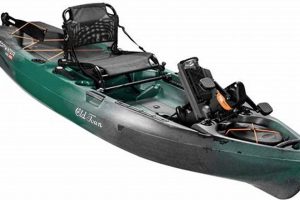
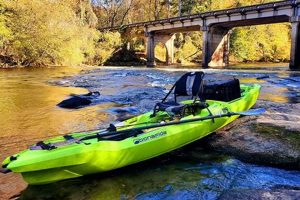
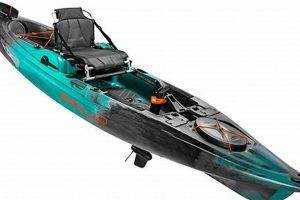
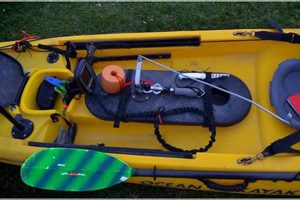
A high-quality electric propulsion system designed for kayaks specifically intended for fishing significantly enhances the angling experience. Such systems offer quiet operation, variable speed control, and hands-free navigation, allowing anglers to cover more water, access shallow or weedy areas, and conserve energy for fishing. An example would be a compact, transom-mount motor with a variable speed control and integrated battery level indicator.
Selecting an appropriate propulsion system can dramatically improve fishing success and overall enjoyment on the water. The ability to maintain precise positioning in currents or wind, quietly approach fish-holding areas, and troll at optimal speeds are key advantages. Historically, kayak anglers relied solely on paddles, which limited range and required significant physical exertion. The advent of compact, efficient electric motors has revolutionized kayak fishing, opening up new possibilities and improving accessibility for anglers of all skill levels.
Factors influencing the choice of a suitable motor include kayak size and weight, fishing style, desired runtime, and budget. Subsequent sections will explore these factors in greater detail, providing guidance on selecting, installing, and maintaining an electric motor for a fishing kayak.
Tips for Choosing a Kayak Fishing Motor
Selecting an appropriate electric motor for a fishing kayak requires careful consideration of several factors. These tips offer guidance to ensure optimal performance and compatibility.
Tip 1: Consider Kayak Compatibility: Verify motor compatibility with the kayak’s design and weight capacity. Check manufacturer specifications for recommended motor size and mounting options.
Tip 2: Evaluate Thrust Requirements: Higher thrust motors are necessary for larger kayaks, heavier loads, and strong currents or winds. Consider typical fishing conditions and choose a motor with sufficient power.
Tip 3: Prioritize Battery Life: Battery capacity directly impacts runtime. Larger batteries offer longer runtimes but increase weight. Balance runtime needs with portability considerations.
Tip 4: Assess Saltwater vs. Freshwater Use: Saltwater environments require motors with corrosion-resistant components. Choose a model specifically designed for saltwater use if applicable.
Tip 5: Examine Mounting Options: Transom-mount motors are common and easy to install. Bow-mount motors offer improved maneuverability and control, but may require specialized mounting brackets.
Tip 6: Consider GPS Integration: Some motors offer integrated GPS or compatibility with fish finders. These features enhance navigation and fish-finding capabilities.
Tip 7: Factor in Budget Constraints: Motor prices vary significantly based on features and power. Establish a budget and prioritize essential features within that range.
Careful consideration of these factors will ensure selection of a motor that enhances fishing experiences and provides years of reliable service.
By understanding these elements, anglers can make informed decisions and optimize their kayak fishing setup for improved success and enjoyment on the water.
1. Power/Thrust

Motor power, measured in pounds of thrust, is a critical factor in selecting a trolling motor for a fishing kayak. Sufficient thrust ensures efficient propulsion against wind, current, and the weight of the loaded kayak. Understanding thrust requirements enables informed decisions and optimal on-the-water performance.
- Kayak Size and Weight:
Larger, heavier kayaks require higher thrust motors for effective maneuverability. A lightweight kayak might perform adequately with a lower thrust motor, while a fully loaded tandem kayak necessitates considerably more power. For example, a 30 lb thrust motor might suffice for a solo angler in a small kayak, whereas a 55 lb thrust motor may be necessary for a larger, heavier kayak carrying two anglers and gear.
- Fishing Environment:
Strong currents and winds demand higher thrust motors to maintain position and control. Fishing in sheltered coves or slow-moving rivers allows for lower thrust options. Anglers frequently facing strong winds or tidal currents should prioritize higher thrust ratings.
- Desired Speed:
Higher thrust motors generally enable greater speeds, allowing anglers to cover more water quickly. While top speed isn’t always crucial for fishing, the ability to move efficiently between fishing spots can be advantageous. A higher thrust motor provides more flexibility in speed adjustment.
- Battery Consumption:
Higher thrust motors draw more power, impacting battery life. Balancing thrust requirements with desired runtime is essential. Anglers seeking longer fishing trips without recharging should consider higher capacity batteries in conjunction with higher thrust motors, or moderate their speed to conserve battery power.
Careful consideration of these factors, in conjunction with kayak specifications and typical fishing conditions, will enable anglers to select a trolling motor with appropriate power and optimize their on-the-water experience. Overpowering a kayak with excessive thrust can lead to decreased battery life and unnecessary expense, while underpowering can limit performance and maneuverability.
2. Battery Life/Runtime

Battery life and runtime are critical considerations when selecting a trolling motor for a fishing kayak. Extended runtime allows for longer fishing trips without the need for recharging, maximizing time on the water and access to distant fishing locations. Understanding the factors influencing battery performance is essential for informed decision-making.
- Battery Capacity (Amp-Hours):
Battery capacity, measured in amp-hours (Ah), directly correlates to potential runtime. Higher Ah ratings indicate larger battery capacity and longer potential runtime. However, larger batteries are typically heavier and more expensive. A 50 Ah battery, for example, offers significantly longer runtime than a 30 Ah battery, but comes with increased weight and cost.
- Motor Power Consumption:
Higher thrust motors draw more current, reducing runtime. Using a motor at maximum speed significantly decreases runtime compared to lower speed operation. Operating a 55 lb thrust motor at full throttle will deplete a battery much faster than a 30 lb thrust motor at half speed.
- Environmental Factors:
Factors such as wind, current, and weight of the loaded kayak influence power consumption and thus, runtime. Strong headwinds or heavy loads require more power, reducing battery life. Similarly, continuous operation in strong currents will deplete a battery faster than operation in calm water.
- Battery Type and Chemistry:
Different battery chemistries offer varying performance characteristics, including energy density and lifespan. Lithium-ion batteries, for example, generally offer higher energy density and longer lifespans compared to traditional lead-acid batteries, but often come at a premium price. Choosing the right battery chemistry requires balancing performance needs with budget constraints.
Optimizing battery life involves careful consideration of these factors. Matching battery capacity to motor power requirements and anticipated fishing conditions is crucial for maximizing time on the water. Calculating estimated runtime based on motor power consumption and battery capacity, while factoring in potential environmental influences, will allow anglers to select an appropriate battery and avoid premature depletion during fishing trips.
3. Saltwater/Freshwater Compatibility

The intended operating environmentsaltwater or freshwatersignificantly influences the choice of a suitable trolling motor for a fishing kayak. Saltwater’s corrosive properties necessitate specialized components and materials for long-term durability and reliable performance. Selecting a motor specifically designed for saltwater use is paramount for anglers frequenting marine environments. Failure to do so can lead to premature corrosion, motor malfunction, and reduced lifespan. For example, a motor intended solely for freshwater use deployed in saltwater will likely experience rapid corrosion of metal components, including the motor housing, propeller, and shaft, ultimately leading to failure. Conversely, a saltwater-specific motor utilizes corrosion-resistant materials such as stainless steel, anodized aluminum, and sealed electrical components, ensuring reliable performance and extended lifespan in harsh marine conditions. This distinction is critical for long-term value and consistent operation.
The primary difference between saltwater and freshwater trolling motors lies in the materials used in their construction. Saltwater motors feature sealed components, stainless steel hardware, and sacrificial anodes to protect against corrosion. These specialized features increase manufacturing costs, making saltwater-specific motors generally more expensive than their freshwater counterparts. However, this added investment is essential for anglers operating in saltwater environments to avoid costly repairs or premature motor replacement. While a freshwater motor might function temporarily in saltwater, the inevitable corrosion will ultimately compromise its performance and longevity. Furthermore, some manufacturers offer specific warranties covering saltwater use, further highlighting the importance of selecting the appropriate motor for the intended environment. Choosing a motor with the appropriate level of corrosion resistance is crucial for maintaining performance and maximizing the return on investment.
Understanding the distinction between saltwater and freshwater trolling motors is paramount for ensuring optimal performance, longevity, and overall value. Selecting the appropriate motor based on the intended operating environment avoids costly repairs and ensures reliable operation for years to come. Failure to consider saltwater compatibility can lead to rapid deterioration and ultimately necessitate premature replacement. Considering the long-term implications of corrosion and the specialized features required for saltwater operation underscores the importance of selecting a motor designed specifically for the intended environment, be it saltwater or freshwater. This careful selection process ensures reliable performance, maximized lifespan, and ultimately, a more enjoyable and productive fishing experience.
4. Mounting/Installation
Proper mounting and installation are crucial for maximizing the performance and longevity of a trolling motor on a fishing kayak. A secure and appropriately positioned motor ensures efficient propulsion, minimizes interference with paddling or fishing, and reduces strain on the kayak’s structure. Incorrect installation can lead to decreased performance, damage to the kayak, and potential safety hazards.
- Transom Mounting:
Transom mounting is the most common method for attaching a trolling motor to a fishing kayak. This involves clamping the motor to the stern (back) of the kayak. Advantages include ease of installation and removal. However, transom mounting can slightly reduce maneuverability and may interfere with fishing lines when casting from the stern. Compatibility with the kayak’s transom design is essential. Some kayaks require specific transom mounting plates or adapters for secure installation.
- Bow Mounting:
Bow mounting positions the motor at the front of the kayak, offering improved maneuverability and control, particularly in windy or current-prone conditions. This mounting style often requires specialized mounting brackets or plates and may involve more complex installation procedures compared to transom mounting. Bow-mounted motors are often integrated with GPS and anchor systems, enabling advanced features such as spot-lock and automated navigation.
- Wiring and Battery Placement:
Proper wiring and battery placement are essential for safety and efficient motor operation. Batteries should be securely fastened within the kayak and positioned to maintain balanced weight distribution. Wiring should be protected from water and abrasion. Using marine-grade wiring and connectors ensures reliable electrical connections and prevents corrosion. Incorrect wiring can lead to power loss, motor malfunction, and potential fire hazards. Following manufacturer recommendations for wiring and battery placement is paramount for safe and reliable operation.
- Considerations for Specific Kayak Designs:
Kayak design significantly influences mounting options and installation procedures. Inflatable kayaks, for example, may require specialized mounting brackets or inflatable transoms for motor compatibility. Sit-on-top kayaks often have designated areas for motor installation, while sit-inside kayaks may require custom modifications or mounting solutions. Checking manufacturer recommendations and consulting with experienced kayak anglers or outfitters can provide valuable guidance for specific kayak models. Adapting installation techniques to suit individual kayak designs ensures optimal performance and prevents damage to the kayak’s structure.
Careful consideration of these mounting and installation factors ensures optimal performance, safety, and longevity of the trolling motor and kayak. Selecting the appropriate mounting method and adhering to manufacturer guidelines contributes significantly to a positive and productive fishing experience.
5. Control/Steering

Precise and responsive control is paramount for effective kayak fishing. A trolling motor’s steering mechanism directly impacts boat positioning, navigation, and the ability to maintain desired headings in varying conditions. Effective control facilitates precise maneuvering in tight spaces, navigating challenging currents, and maintaining optimal presentation of lures or bait. Suboptimal steering can hinder fishing effectiveness and overall enjoyment on the water.
- Hand-Operated Tiller Steering:
Many trolling motors utilize a hand-operated tiller for directional control. This simple, direct-drive system provides immediate response and tactile feedback. Anglers manipulate the tiller to steer the kayak, offering intuitive control. Tiller steering is generally cost-effective and reliable but may require more continuous hand engagement compared to other steering methods.
- Foot-Controlled Pedal Steering:
Foot-pedal steering offers hands-free operation, allowing anglers to maintain focus on fishing. Pedals control motor direction and speed, providing convenient and responsive maneuverability. This system frees up hands for casting, retrieving lines, and handling fish. Foot-pedal steering often comes with a higher price tag and may require more complex installation procedures compared to tiller steering.
- GPS-Integrated Steering/Autopilot:
Advanced trolling motors integrate GPS technology, enabling features like autopilot and spot-lock. Autopilot maintains a set heading and speed, allowing anglers to focus on fishing rather than constant steering adjustments. Spot-lock utilizes GPS coordinates to maintain the kayak’s position, even in wind or current. These advanced features enhance fishing precision and efficiency but often come at a premium cost.
- Remote Control Steering:
Wireless remote control steering provides convenient and flexible boat control from any position within the kayak. Anglers can adjust speed and direction remotely, offering enhanced maneuverability and adaptability to changing fishing conditions. Remote control systems offer the benefits of hands-free operation with greater flexibility compared to foot-pedal steering. However, these systems typically require additional components and may introduce potential points of failure.
The selected steering method significantly impacts the overall fishing experience. Careful consideration of individual fishing styles, budget, and desired level of control will guide anglers towards the most appropriate steering mechanism for their specific needs. Balancing ease of use, precision, and cost is key to optimizing kayak control and maximizing fishing effectiveness. Choosing the optimal steering system contributes significantly to a more enjoyable and successful angling experience.
6. Noise/Vibration

Minimizing noise and vibration is a critical factor in selecting a high-performing trolling motor for fishing kayaks. Excessive noise can spook fish, limiting fishing success, particularly in shallow waters or when targeting wary species. Vibration can transmit through the kayak’s hull, further contributing to underwater noise and potentially impacting fish behavior. A quiet, smooth-running motor is essential for stealthy approach and maximizing angling opportunities.
- Motor Design and Construction:
Motor design significantly influences noise and vibration levels. High-quality motors often incorporate components designed to minimize operational noise, such as precision-machined gears and vibration-dampening mounts. Brushless motors generally operate more quietly and smoothly than brushed motors due to their lack of physical brushes and commutators, which are common sources of noise and vibration. Construction materials and manufacturing tolerances also play a role in overall motor noise and vibration characteristics.
- Propeller Design and Performance:
Propeller design contributes significantly to noise and vibration. Weedless propellers, designed to minimize entanglement in vegetation, can sometimes generate more noise than standard propellers due to their complex shapes and increased surface area. Propeller balance and pitch also influence noise and vibration levels. A poorly balanced propeller can create excessive vibration, while an incorrectly pitched propeller can induce cavitation, resulting in increased noise and reduced efficiency.
- Motor Speed and Load:
Operating a motor at higher speeds generally increases both noise and vibration. Similarly, heavier loads on the motor, such as navigating against strong currents or winds, can lead to increased noise and vibration. Operating the motor within its optimal speed and load range minimizes noise output and promotes efficient operation. Matching motor thrust to kayak size and anticipated operating conditions ensures optimal performance and minimizes strain on the motor, reducing noise and vibration.
- Mounting and Installation:
Secure and proper mounting of the trolling motor plays a crucial role in minimizing noise and vibration transfer to the kayak hull. Loose or improperly installed motors can vibrate excessively, transmitting noise and potentially damaging the kayak’s structure. Using vibration-dampening mounts and ensuring tight, secure connections between the motor and the kayak minimize noise transmission and contribute to a quieter, smoother operation.
Careful consideration of these factors during motor selection contributes significantly to a quieter, more stealthy fishing experience. Minimizing noise and vibration enhances angling success by reducing the likelihood of spooking fish, especially in shallow water environments or when targeting species sensitive to noise disturbances. A quiet and smooth-running trolling motor is a key component of a well-equipped fishing kayak and contributes significantly to overall angling success.
7. Budget/Value

Budget considerations play a significant role in selecting a trolling motor for a fishing kayak. Determining a realistic budget before evaluating available options helps narrow the field and prevents overspending. However, focusing solely on price can lead to compromises in performance, features, and longevity. Value represents the balance between cost and performancea higher-priced motor offering superior features, durability, and efficiency may represent greater value in the long run compared to a cheaper model requiring frequent repairs or offering limited functionality. For example, investing in a higher-quality motor with corrosion-resistant materials offers better long-term value for saltwater anglers, preventing premature failure due to corrosion. Conversely, a budget-focused angler fishing exclusively in freshwater might prioritize a less expensive motor without saltwater protection.
Evaluating value involves considering the motor’s intended use, required features, and expected lifespan. A higher initial investment in a durable, feature-rich motor might offer greater long-term value compared to repeated expenditures on less expensive, lower-quality motors requiring frequent replacement. Furthermore, factors such as warranty coverage, availability of replacement parts, and manufacturer reputation contribute to overall value. A reputable manufacturer offering comprehensive warranty coverage and readily available replacement parts enhances the long-term value proposition, mitigating potential risks associated with unexpected repairs or component failures. Considering these factors beyond initial purchase price contributes to a more informed purchasing decision.
Balancing budget constraints with performance requirements is crucial for selecting the optimal trolling motor. While a limited budget might necessitate compromises on certain features, prioritizing essential performance characteristics within the allocated budget range ensures a suitable motor for the intended fishing applications. Ultimately, the “best” trolling motor isn’t necessarily the most expensive, but rather the one offering the best combination of features, performance, and longevity within the angler’s budget constraints. Careful consideration of value, encompassing both initial cost and long-term ownership implications, leads to informed purchasing decisions and a satisfying fishing experience.
Frequently Asked Questions
This section addresses common inquiries regarding the selection and use of trolling motors for fishing kayaks.
Question 1: What thrust level is recommended for a typical fishing kayak?
Thrust requirements depend on kayak size, anticipated load, and typical fishing conditions. A 30-55 lb thrust motor generally suffices for most fishing kayaks in calm to moderate conditions. Larger kayaks, heavier loads, or strong currents may necessitate higher thrust.
Question 2: How long does a trolling motor battery typically last?
Runtime depends on battery capacity (amp-hours), motor power consumption, and usage patterns. Higher amp-hour batteries provide longer runtimes. Continuous high-speed operation significantly reduces runtime. Careful battery management and moderate speed extend usage duration.
Question 3: Can a freshwater trolling motor be used in saltwater?
While possible for brief periods, using a freshwater motor in saltwater is not recommended. Saltwater’s corrosive properties necessitate specialized components found in saltwater-specific motors. Long-term saltwater exposure corrodes freshwater motors, reducing lifespan and performance.
Question 4: What are the advantages of bow-mounted trolling motors?
Bow-mounted motors offer improved maneuverability and control, especially in windy or current-prone conditions. They often integrate with advanced features like GPS-guided autopilot and spot-lock, enhancing fishing precision and efficiency.
Question 5: How noisy are trolling motors, and will they spook fish?
Modern trolling motors operate relatively quietly, particularly at lower speeds. Brushless motors generally produce less noise than brushed motors. While some noise is inevitable, it’s unlikely to significantly spook fish, especially in deeper water or with moderate motor use. Minimizing speed and avoiding sudden starts and stops reduces noise output.
Question 6: What maintenance is required for a trolling motor?
Regular maintenance includes rinsing the motor with fresh water after each use, especially in saltwater environments. Periodic lubrication of moving parts and inspection of wiring and connections are essential. Proper battery charging and storage practices maximize battery lifespan.
Careful consideration of these frequently asked questions, combined with thorough product research and consideration of individual fishing needs, facilitates informed purchasing decisions and a positive kayak fishing experience.
The next section will cover recommended accessories.
Optimal Kayak Fishing Propulsion
Careful selection of a high-quality electric propulsion system significantly enhances the kayak fishing experience. Factors such as kayak compatibility, thrust requirements, battery life, saltwater/freshwater operation, mounting options, control mechanisms, noise levels, and budget constraints all influence the choice of an appropriate system. Understanding these factors and their interplay is crucial for maximizing on-the-water performance and enjoyment. Proper installation and maintenance further contribute to long-term reliability and efficient operation. Prioritizing these elements ensures a well-equipped fishing kayak and contributes significantly to angling success.
Effective kayak fishing requires a balanced approach, considering both vessel and propulsion system as integrated components of a complete angling platform. Technological advancements continue to refine electric propulsion systems, offering improved efficiency, enhanced features, and quieter operation. Embracing these advancements, while prioritizing responsible environmental stewardship, promises continued enhancement of the kayak fishing experience and access to new angling opportunities. Investing in a well-suited propulsion system empowers anglers to explore new waters, target diverse species, and further connect with the natural world.