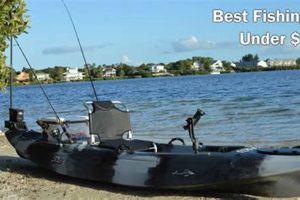
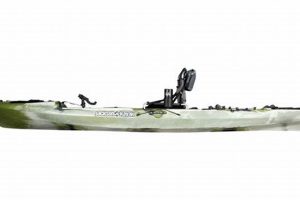
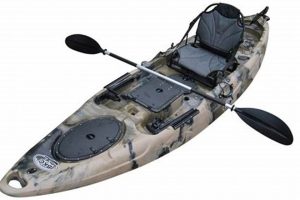
A top-tier, budget-friendly fishing kayak offers anglers the opportunity to explore waters inaccessible from shore, enhancing their fishing experience without a significant financial investment. This type of watercraft typically balances affordability with essential features like stability, storage for tackle, and comfort for longer trips. For example, a sit-on-top model constructed from durable, lightweight materials, equipped with rod holders and a storage hatch, can provide excellent value.
Affordable, high-quality fishing kayaks democratize the sport, allowing more individuals to participate. They provide a stable platform for casting and reeling, often incorporating specialized design elements such as adjustable seating and footrests for improved comfort and control. Historically, kayak fishing was limited by the cost of specialized equipment. The emergence of cost-effective options has broadened access, contributing to the growing popularity of this angling method.
This article will explore various factors to consider when selecting a suitable option, including hull design, materials, essential features, and recommended models within a specific budget range. Further sections will delve into maintenance, safety precautions, and recommended accessories to enhance the fishing experience.
Tips for Selecting a Top-Tier Budget-Friendly Fishing Kayak
Choosing a suitable fishing kayak within a budget requires careful consideration of several factors. The following tips offer guidance for making an informed decision.
Tip 1: Prioritize Stability: A stable hull is crucial, especially for anglers standing to cast. Wider kayaks and those with a flatter hull design generally offer greater stability. Consider the intended fishing environment; calmer waters may allow for a narrower hull.
Tip 2: Evaluate Storage Capacity: Adequate storage is essential for tackle, gear, and personal items. Look for kayaks with dry storage hatches, bungee cords, and recessed areas to keep equipment secure and organized. Consider the typical duration of fishing trips and pack accordingly.
Tip 3: Consider Weight and Portability: Transporting the kayak to and from the water requires consideration of its weight and dimensions. Lighter kayaks are easier to handle, particularly for solo anglers. Consider the availability of transportation assistance and the distance from parking to launch areas.
Tip 4: Assess Comfort and Adjustability: Long hours on the water necessitate a comfortable seating arrangement. Look for adjustable seating and footrests to accommodate individual preferences and ensure proper paddling posture. Padding and back support contribute significantly to comfort during extended trips.
Tip 5: Research Durable Materials: Kayaks constructed from robust materials like high-density polyethylene (HDPE) offer durability and resistance to impacts. Consider the expected usage and environmental conditions. Rotomolded construction generally provides greater strength and longevity.
Tip 6: Examine Essential Features: Features like rod holders, paddle clips, and anchor trolleys enhance the fishing experience. Evaluate the placement and functionality of these features to ensure they align with individual fishing styles and preferences.
Tip 7: Set a Realistic Budget: Determine a budget before beginning the search. This helps narrow down options and prevents overspending. Research various brands and models within the budget range to compare features and value.
By considering these factors, anglers can select a high-quality fishing kayak that meets their specific needs and budget, ultimately enhancing their fishing experience.
The next section will delve into specific kayak models and provide recommendations based on various budget ranges and fishing styles.
1. Stability

Stability is a paramount consideration when selecting a budget-friendly fishing kayak. A stable platform is essential for casting effectively, reeling in catches, and remaining safe on the water, particularly in challenging conditions. Compromised stability can lead to difficulty maneuvering, angler fatigue, and potentially capsizing, impacting both fishing success and personal safety. A stable kayak allows anglers to focus on fishing rather than constantly correcting balance. For instance, a wider, flatter hull design typically offers superior stability compared to a narrower, V-shaped hull, although maneuverability might be slightly reduced. Shorter kayaks also tend to be more stable than longer ones, making them suitable for calmer waters.
The importance of stability in a fishing kayak is further underscored when considering additional factors like gear storage and angler movement. Shifting weight to access tackle or repositioning for a cast can compromise stability in a less stable kayak. A stable hull design minimizes the impact of these movements, allowing for smoother transitions and reducing the risk of tipping. Practical examples include standing to cast, landing a fish, and navigating shallow water or areas with mild currents. In each scenario, a stable kayak provides a secure platform for the angler to maintain balance and control. Anglers should also consider their individual balance and experience levels when assessing stability requirements. Beginners may benefit from a wider, more stable hull, while experienced anglers might prioritize maneuverability over ultimate stability.
In summary, prioritizing stability within a limited budget ensures a safe and enjoyable fishing experience. While cost remains a factor, understanding the impact of stability on performance allows for informed decision-making. Evaluating hull design, kayak length, and width alongside anticipated fishing conditions empowers anglers to choose the optimal balance between stability, maneuverability, and affordability. Neglecting stability can lead to compromised performance and potential safety hazards, making it a crucial aspect to consider when selecting a fishing kayak.
2. Storage Capacity

Storage capacity directly influences the practicality and effectiveness of a budget-friendly fishing kayak. Adequate storage facilitates organized transport of essential fishing gear, including tackle boxes, rods, reels, and safety equipment. Insufficient storage can lead to cluttered decks, hindering movement and potentially compromising safety. Conversely, ample, well-designed storage allows anglers to maintain a clear deck, promoting efficient casting, retrieval, and overall maneuverability. For instance, a kayak with dedicated rod holders, dry storage compartments, and bungee cord tie-downs enables anglers to secure equipment, protecting it from water damage and loss while maintaining easy access. A lack of these features might necessitate leaving essential gear behind or resorting to less secure storage methods, impacting fishing effectiveness.
The relationship between storage capacity and kayak selection becomes increasingly critical during longer fishing trips or excursions involving diverse fishing techniques. Carrying multiple rods, lures, bait, and other specialized gear requires sufficient storage to avoid compromising stability or maneuverability. Consider an angler targeting different species requiring various rod and reel setups; ample storage facilitates smooth transitions between techniques without requiring returns to shore. Similarly, carrying essential safety equipment, such as a first-aid kit, spare paddle, and bilge pump, necessitates dedicated storage space, often integrated into the kayak’s design. Evaluating storage capacity based on anticipated fishing needs and trip duration allows for informed decision-making, ensuring the selected kayak provides the necessary functionality without exceeding budget constraints.
In conclusion, optimizing storage capacity in an inexpensive fishing kayak significantly enhances its utility and value. Balancing cost with storage features allows anglers to maximize their time on the water, focusing on fishing rather than managing equipment. Evaluating storage needs based on fishing style, trip duration, and anticipated gear requirements empowers anglers to make informed decisions, ensuring the selected kayak aligns with their specific needs and budgetary limitations. Prioritizing storage capacity, even within a restricted budget, ultimately contributes to a more efficient, organized, and enjoyable fishing experience.
3. Portability
Portability represents a critical factor influencing the practicality and overall user experience of a budget-conscious fishing kayak selection. Ease of transport directly impacts accessibility to various fishing locations, especially those requiring carrying the kayak over distances or maneuvering through challenging terrain. Kayaks perceived as cumbersome or difficult to transport often limit fishing opportunities, confining anglers to easily accessible launch points and potentially hindering exploration of more remote or productive waters. For example, a lightweight, compact kayak simplifies transport on roof racks, in truck beds, or even by hand over short distances, expanding fishing possibilities compared to a heavier, bulkier model requiring specialized trailers or assistance.
The interplay between portability and affordability further underscores its significance in selecting a suitable fishing kayak. While larger, feature-rich kayaks might offer advantages in stability and storage, their increased weight and size often necessitate investment in additional transportation equipment, adding to the overall cost. Conversely, prioritizing portability by selecting a lighter, more compact design eliminates the need for such investments, aligning with budget constraints while facilitating access to diverse fishing environments. Consider an angler fishing from a small car; a portable kayak easily secured to a roof rack expands their fishing range significantly compared to a larger kayak requiring a trailer, potentially exceeding both budgetary and logistical limitations.
In summary, portability significantly influences the practicality and accessibility of a fishing kayak, particularly within a budget-conscious context. Selecting a kayak optimized for transport based on individual circumstances, such as vehicle type and typical fishing location accessibility, enhances the overall fishing experience. Prioritizing portability expands fishing opportunities, simplifies logistics, and often aligns with budget constraints, making it a key consideration in the selection process. Balancing portability with other essential factors like stability and storage capacity empowers anglers to make informed decisions, maximizing both fishing effectiveness and overall enjoyment.
4. Durability

Durability stands as a critical factor in determining the long-term value and overall suitability of an inexpensive fishing kayak. A kayak’s ability to withstand the rigors of regular use, including impacts, abrasion, and exposure to various environmental conditions, directly influences its lifespan and overall cost-effectiveness. Selecting a durable kayak minimizes repair costs and ensures extended usability, maximizing the return on investment. For example, a kayak constructed from high-density polyethylene (HDPE) or another robust material better withstands impacts from rocks, submerged debris, and accidental collisions compared to a less durable material, reducing the likelihood of cracks, punctures, and other damage that can curtail its lifespan.
The connection between durability and affordability becomes particularly relevant when considering the long-term implications of kayak ownership. While a less durable kayak might offer a lower initial purchase price, its susceptibility to damage can lead to increased maintenance and repair expenses over time, potentially exceeding the initial cost savings. A durable kayak, even with a slightly higher upfront cost, often proves more economical in the long run due to its extended lifespan and reduced maintenance requirements. Consider an angler frequently fishing in rocky or shallow waters; a durable kayak withstands the inevitable scrapes and bumps, preserving its structural integrity and minimizing repair frequency, ultimately proving a more cost-effective choice compared to a less durable kayak requiring frequent repairs or replacement.
In summary, durability is a crucial factor influencing the long-term value and practicality of a budget-friendly fishing kayak. Prioritizing durable construction and materials, even at a slightly higher initial cost, often translates to greater long-term savings and extended usability. Evaluating materials, construction methods, and manufacturer warranties empowers anglers to make informed decisions, selecting kayaks that balance affordability with robust performance and longevity. Understanding the relationship between durability and cost-effectiveness allows anglers to maximize their investment, ensuring a reliable and enjoyable fishing experience for years to come. Neglecting durability can lead to premature wear and tear, impacting both performance and budget, making it a crucial factor in the selection process.
5. Fishing Features

Specialized features distinguish fishing kayaks from recreational models, enhancing angling effectiveness and overall experience. These features, while potentially increasing cost, contribute significantly to functionality and convenience on the water. Careful consideration of these features within a budget context allows anglers to select a kayak optimized for their specific fishing needs and preferences.
- Rod Holders
Rod holders, integral to fishing kayaks, provide secure storage and convenient access to fishing rods. Multiple rod holders, including flush-mounted and adjustable varieties, allow anglers to troll multiple lines or switch between different rod setups quickly. For example, a kayak with two flush-mounted rod holders behind the seat and two adjustable rod holders near the cockpit allows for diverse fishing techniques and organized gear management. Without adequate rod holders, anglers risk tangling lines, losing rods overboard, or experiencing difficulty managing multiple rods simultaneously, hindering fishing effectiveness.
- Tackle Storage
Dedicated tackle storage compartments, often integrated into the kayak’s hull, offer organized storage for lures, hooks, weights, and other essential fishing accessories. Dry storage compartments protect sensitive items from water damage, while readily accessible storage areas facilitate efficient tackle changes and lure retrieval. Consider a kayak with a sealed hatch near the angler’s seat providing quick access to frequently used lures, minimizing disruptions during active fishing. Inadequate tackle storage can lead to disorganization, lost gear, and wasted time searching for specific items, impacting fishing efficiency.
- Paddle Holders/Clips
Paddle holders or clips secure the paddle when not in use, freeing the angler’s hands for casting, reeling, and other fishing tasks. Secure paddle storage prevents accidental paddle loss and minimizes interference with fishing activities. For instance, a kayak with integrated paddle clips near the cockpit allows for quick and easy paddle stowage and retrieval, streamlining transitions between paddling and fishing. Without dedicated paddle storage, anglers must improvise, potentially leading to lost paddles or interference with fishing lines and equipment.
- Anchor System
Anchor systems, including anchor trolleys and integrated anchor mounts, provide the ability to maintain position in specific fishing locations, particularly in currents or windy conditions. Controlling drift allows anglers to target specific areas, maximizing fishing effectiveness. A kayak equipped with an anchor trolley system allows for precise anchor positioning and controlled drift, enhancing fishing success in challenging environments. Without an anchor system, anglers may struggle to maintain position, impacting their ability to effectively target specific fishing spots.
Selecting a budget-friendly fishing kayak equipped with appropriate fishing features directly impacts angling success and overall enjoyment. Balancing cost with essential features like rod holders, tackle storage, paddle management solutions, and anchor systems enhances functionality, organization, and efficiency on the water. Prioritizing these features within a budget context allows anglers to optimize their kayak selection, ensuring a productive and enjoyable fishing experience without overspending.
6. Affordable Price

Affordability plays a crucial role in the definition of a “best inexpensive kayak for fishing.” The term “inexpensive” inherently implies a focus on cost-effectiveness, indicating that the kayak offers desirable features and performance without exceeding a reasonable budget. This balance between price and performance is essential, as it opens up the sport of kayak fishing to a wider range of participants. A high price tag can be a barrier to entry, limiting access for individuals with limited financial resources. An affordable price point democratizes the activity, allowing more people to experience the enjoyment and rewards of kayak fishing. For example, an angler on a limited budget might find a basic sit-on-top kayak with essential features perfectly adequate for their needs, while a seasoned angler with more disposable income might opt for a higher-end model with advanced features. The availability of kayaks across various price points ensures accessibility for diverse budgets and experience levels.
The practical significance of an affordable price becomes evident when considering the overall investment required for kayak fishing. Beyond the kayak itself, additional expenses include paddles, personal flotation devices (PFDs), fishing rods, reels, tackle, and potentially transportation equipment. A lower initial cost for the kayak allows for allocation of funds towards these other essential items, ensuring a safe and well-equipped fishing experience without exceeding budgetary constraints. Furthermore, an affordable kayak can serve as an entry point into the sport, allowing individuals to explore their interest in kayak fishing before committing to more expensive equipment. This tiered approach to investment minimizes financial risk and allows for gradual upgrades as skills and experience develop. For instance, a beginner might start with an inexpensive sit-on-top kayak and gradually invest in higher-quality rods, reels, and other accessories as their fishing skills progress.
In conclusion, affordability is a cornerstone of the “best inexpensive kayak for fishing” concept. It directly impacts accessibility, allowing a wider range of individuals to participate in the sport. Balancing cost with performance and features ensures that anglers can find suitable kayaks that meet their needs and budgetary limitations. Understanding the importance of affordability in this context allows for informed decision-making, maximizing value and enjoyment while minimizing financial barriers to entry. While features and performance remain important considerations, affordability ultimately determines whether a kayak truly fits the “best inexpensive” designation, making it a crucial element in the selection process.
Frequently Asked Questions
This section addresses common inquiries regarding the selection and use of budget-friendly fishing kayaks.
Question 1: What is the typical price range for a good inexpensive fishing kayak?
Prices can vary based on features and materials, but generally, suitable options can be found between $300 and $800. Researching various brands and models within this range often reveals kayaks offering excellent value for the price.
Question 2: Are inexpensive fishing kayaks less durable than more expensive models?
Not necessarily. Many budget-friendly kayaks utilize durable materials like high-density polyethylene (HDPE), offering comparable durability to higher-priced options. Focus on construction quality and material choice rather than solely on price.
Question 3: What essential features should one look for in a budget fishing kayak?
Prioritize stability, sufficient storage for tackle and gear, comfortable seating, and essential fishing features like rod holders and paddle clips. These features enhance functionality without significantly increasing cost.
Question 4: Is it possible to stand and fish in an inexpensive kayak?
Some inexpensive kayaks offer sufficient stability for stand-up fishing. Look for wider, flatter hull designs specifically engineered for stability. However, always exercise caution and prioritize safety when standing in any kayak.
Question 5: How does one transport an inexpensive fishing kayak?
Many inexpensive kayaks are lightweight and easily transportable on roof racks or in truck beds. Consider the kayak’s weight and dimensions relative to available transportation methods before purchase.
Question 6: What safety precautions should be taken when using an inexpensive fishing kayak?
Always wear a personal flotation device (PFD), inform someone of your fishing plans, and check weather conditions before heading out. Carry essential safety equipment like a whistle, signaling device, and bilge pump. Adhering to standard water safety practices ensures a safe and enjoyable experience regardless of kayak cost.
By addressing these common questions, potential buyers can gain valuable insights into the world of budget-friendly fishing kayaks, enabling informed decisions that align with individual needs and budgetary constraints.
The subsequent sections of this article will delve into specific kayak recommendations and provide further guidance on enhancing the fishing experience.
Conclusion
Optimal selection hinges on a careful balance of affordability, performance, and fishing-specific features. Prioritizing stability, storage capacity, portability, durability, and essential features like rod holders and paddle clips ensures a functional and enjoyable fishing experience without exceeding budgetary constraints. Careful consideration of these aspects empowers anglers to identify the most suitable kayak for their individual needs and financial resources, maximizing value and on-the-water performance.
The pursuit of a “best inexpensive kayak for fishing” represents a quest for accessible adventure and angling opportunity. By understanding the key considerations outlined in this article, prospective buyers can navigate the market effectively, making informed decisions that enhance fishing experiences without compromising financial responsibility. Ultimately, a well-chosen kayak unlocks new waters and angling possibilities, fostering a deeper connection with nature and the rewarding pursuit of fishing.