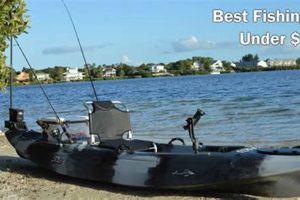
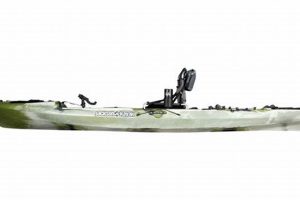
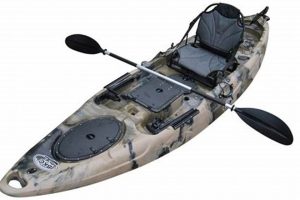
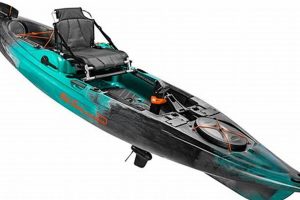
Finding a top-quality kayak designed for fishing that also represents excellent value is a common goal for anglers. This involves considering various factors, including features like rod holders, stability, storage capacity, and the overall build quality, while remaining within a reasonable budget. A hypothetical example might be an angler seeking a stable platform for lake fishing, prioritizing ample storage for tackle and equipment, but aiming to stay under a specific dollar amount.
Selecting a fishing kayak based on value offers numerous advantages. It allows anglers to access the sport without overspending, opening up fishing opportunities to a wider audience. Historically, specialized fishing kayaks could be prohibitively expensive, limiting participation. The development of more affordable, feature-rich kayaks has made the sport more accessible, leading to increased popularity. This shift has also driven innovation, resulting in kayaks designed specifically for diverse fishing styles and budgets.
The following sections will delve deeper into key selection criteria, highlighting features to consider and offering recommendations for various budgets and fishing styles. Topics will include hull design, propulsion systems, essential accessories, and top-rated models currently available.
Tips for Selecting a Value-Oriented Fishing Kayak
Acquiring a suitable fishing kayak requires careful evaluation of various factors to balance performance, features, and cost. The following tips offer guidance for making informed purchasing decisions.
Tip 1: Define Fishing Needs: Clarifying the intended fishing environment (rivers, lakes, oceans) and target species influences kayak choice. River fishing necessitates maneuverability, while offshore fishing requires stability and storage.
Tip 2: Prioritize Stability and Hull Design: A stable platform is crucial for casting and reeling. Wider kayaks generally offer better stability, while longer kayaks track better in open water. Consider hull types: sit-on-top kayaks offer greater stability and ease of entry/exit, while sit-inside kayaks offer better protection from the elements.
Tip 3: Evaluate Storage Capacity and Features: Sufficient storage for tackle, gear, and catches is essential. Evaluate built-in rod holders, storage compartments, and mounting options for fish finders and other accessories.
Tip 4: Consider Propulsion Systems: Paddle kayaks offer affordability and exercise. Pedal kayaks provide hands-free fishing and increased speed, but come at a higher cost. Motorized kayaks offer the greatest range but require additional maintenance and battery management.
Tip 5: Set a Realistic Budget: Determine a comfortable price range and explore available options within that range. Research various brands and models to compare features and value.
Tip 6: Research and Compare: Read reviews, compare specifications, and watch videos to gather information on different models. Consulting with experienced anglers can provide valuable insights.
Tip 7: Consider Used Kayaks: Used kayaks can offer significant cost savings. Inspect used kayaks thoroughly for damage and wear before purchasing.
By carefully considering these factors, anglers can select a fishing kayak that meets their specific needs and budget, maximizing their on-the-water experience.
This information provides a solid foundation for making an informed decision. The following section offers concluding remarks and further resources.
1. Stability

Stability stands as a critical factor in evaluating fishing kayaks, significantly influencing overall performance and value. A stable platform is essential for casting, reeling, and landing fish, impacting both fishing success and angler safety. This section explores the multifaceted nature of stability in relation to finding the best value fishing kayak.
- Primary Stability
Primary stability refers to a kayak’s initial resistance to tipping. A wider hull typically provides greater primary stability, making it ideal for calm waters and stationary fishing. Wider kayaks offer a secure feeling for less experienced paddlers or anglers who prioritize standing while casting. However, increased primary stability can come at the cost of maneuverability, potentially impacting performance in moving water or when navigating tight spaces. This trade-off must be considered when evaluating value, as a highly stable but less maneuverable kayak might not be the best choice for all fishing environments.
- Secondary Stability
Secondary stability describes a kayak’s ability to resist capsizing when leaned or tilted. Kayaks with rounded hulls often exhibit greater secondary stability. This allows experienced anglers to lean into turns and navigate challenging conditions. While less immediately apparent than primary stability, secondary stability is crucial for safety and performance in dynamic environments. Understanding secondary stability helps anglers choose a kayak suitable for their skill level and the intended waters, thus maximizing value through performance and safety.
- Impact of Kayak Design
Hull design, length, and width significantly influence stability. Shorter, wider kayaks offer greater primary stability, while longer, narrower kayaks prioritize speed and tracking. Features like pontoon hulls and outriggers enhance stability but may add cost and complexity. Evaluating the interplay of these design features is essential for discerning value. A well-designed kayak balances stability with other performance characteristics, offering optimal performance for the intended use and maximizing value within a given budget.
- Influence of Angler Behavior and Gear
Angler movement and gear distribution also impact stability. Standing, shifting weight, and adding accessories like fish finders or coolers can affect the kayak’s center of gravity. Understanding how these factors influence stability allows anglers to choose a kayak with the necessary capacity and to practice safe kayaking techniques, enhancing both performance and value. For example, a kayak with ample storage and weight capacity allows for even gear distribution, contributing to overall stability and representing better value for anglers carrying substantial equipment.
Considering these aspects of stability provides a comprehensive understanding of its role in selecting a fishing kayak. Evaluating stability alongside other features like storage, maneuverability, and price ultimately allows anglers to determine the best value kayak for their specific needs and fishing style.
2. Storage Capacity

Storage capacity is a crucial factor influencing a fishing kayak’s overall value. Adequate storage directly impacts fishing success and overall enjoyment by ensuring essential gear, tackle, and personal items remain organized, accessible, and protected. This section explores the various facets of storage capacity and their connection to finding a high-value fishing kayak.
- Types of Storage
Fishing kayaks offer diverse storage solutions, each with its own advantages. These include open rear wells for larger items, sealed hatches for protecting valuables from water, and smaller compartments for organizing tackle and tools. Anglers benefit from evaluating their specific needs and the types of storage offered. A kayak with a variety of storage options caters to diverse fishing styles and enhances overall value by accommodating a wider range of gear and equipment.
- Capacity and Weight Limits
The overall capacity and weight limits of a kayak directly impact storage potential. Kayaks designed for longer expeditions or larger catches require greater storage capacity. Exceeding weight limits can compromise stability and performance, highlighting the importance of matching capacity to intended use. A kayak with appropriate capacity enhances value by allowing anglers to carry necessary gear safely and efficiently, contributing to a more successful and enjoyable fishing experience.
- Accessibility and Organization
Easy access to stored items is essential for maintaining efficient workflows while fishing. Well-designed storage compartments, strategically placed hatches, and integrated organization systems improve accessibility and minimize disruptions. Features like bungee cords, gear tracks, and tackle box holders enhance organization and contribute to overall value by streamlining the fishing experience and maximizing on-the-water efficiency.
- Durability and Water Resistance
Storage compartments must withstand the rigors of the fishing environment. Durable materials, watertight seals, and robust construction protect gear from water damage and ensure long-term functionality. Evaluating the durability of storage compartments is vital for ensuring long-term value and protecting essential equipment from the elements, contributing to a more reliable and cost-effective fishing platform.
By carefully considering these facets of storage capacity, anglers can select a fishing kayak that offers both functionality and value. Adequate and well-designed storage contributes significantly to fishing success and enjoyment, making it a key element in the overall assessment of a fishing kayak’s value proposition. Balancing storage capacity with other essential factors such as stability, maneuverability, and price ensures anglers acquire a kayak perfectly suited to their individual needs and budget.
3. Durability

Durability is a critical factor influencing long-term value in fishing kayaks. A durable kayak withstands regular use, minimizing repair costs and extending its lifespan, ultimately maximizing return on investment. This section explores the multifaceted nature of durability and its connection to finding a cost-effective, long-lasting fishing kayak.
- Material Selection
Kayak construction materials directly impact durability. High-density polyethylene (HDPE) offers excellent impact resistance and UV protection, making it a popular choice for fishing kayaks. Other materials, like fiberglass and composites, offer higher performance but may require more careful handling and maintenance. Understanding material properties allows for informed decisions aligned with budget and intended use. Selecting a durable material contributes to long-term value by reducing the likelihood of damage and extending the kayak’s usable life.
- Construction Quality
Manufacturing processes and construction techniques influence a kayak’s ability to withstand stress and impacts. Properly welded seams, reinforced hulls, and quality hardware contribute to overall durability. Examining construction details, such as seam integrity and fitting quality, can indicate a kayak’s resilience. Investing in a well-constructed kayak, even at a slightly higher initial cost, often represents better long-term value due to reduced maintenance and replacement needs.
- UV Resistance
Exposure to sunlight can degrade kayak materials over time. UV-resistant coatings and additives protect against sun damage, preserving the kayak’s structural integrity and appearance. Considering UV resistance is particularly important for kayaks stored outdoors. Choosing a UV-resistant kayak safeguards its long-term value, minimizing fading, cracking, and other sun-related damage, ultimately extending its lifespan.
- Impact and Abrasion Resistance
Fishing kayaks frequently encounter rocks, logs, and other obstacles. Impact and abrasion-resistant materials and designs minimize damage from these encounters. Features like skid plates and reinforced keels offer added protection in high-impact areas. Evaluating a kayak’s resistance to impacts and abrasion contributes to assessing its long-term value. A kayak capable of withstanding typical fishing conditions reduces repair costs and ensures continued functionality over time, representing a smarter investment.
By carefully considering these facets of durability, anglers can select a fishing kayak that offers lasting performance and value. A durable kayak withstands the demands of regular fishing, minimizing maintenance and replacement costs. Prioritizing durability during the selection process ensures long-term enjoyment and represents a cost-effective approach to kayak ownership, aligning with the goal of finding the best fishing kayak for the price.
4. Comfort
Comfort significantly impacts the overall value proposition of a fishing kayak. Extended fishing trips necessitate a comfortable seating arrangement and ergonomic design. Discomfort can curtail fishing time, diminishing the return on investment. A comfortable kayak allows anglers to focus on fishing, maximizing enjoyment and effectiveness. Consider a scenario where an angler experiences back pain due to a poorly designed seat. This discomfort can shorten the fishing trip and lead to frustration, effectively reducing the kayak’s value despite other positive features. Conversely, a comfortable kayak enhances the overall fishing experience, extending usable time on the water and maximizing the enjoyment derived from the investment.
Several factors contribute to kayak comfort. Seat design, including cushioning, adjustability, and back support, plays a crucial role. Legroom and footrests influence posture and long-term comfort. Kayak width and hull design affect stability, indirectly impacting comfort by reducing fatigue and enhancing angler confidence. Practical examples include adjustable seats with lumbar support, ample legroom for taller individuals, and footrests that accommodate different leg lengths. These features contribute to a more comfortable and enjoyable fishing experience, ultimately enhancing the kayak’s perceived value.
Prioritizing comfort requires careful evaluation and consideration of individual needs. Anglers should consider factors like body type, fishing style, and typical trip duration. Testing different kayak models and seat designs before purchase can significantly improve decision-making. Understanding the interplay between comfort, performance, and price allows anglers to select a kayak that maximizes value and enhances the overall fishing experience. While a higher price point may sometimes correlate with increased comfort features, careful research can identify value-oriented kayaks that prioritize comfort without excessive cost, achieving the optimal balance for a satisfying and productive fishing experience.
5. Maneuverability

Maneuverability represents a crucial factor in assessing a fishing kayak’s value, directly influencing its effectiveness and suitability for specific fishing environments. A highly maneuverable kayak allows anglers to navigate tight spaces, swiftly change directions, and efficiently position themselves for optimal casting. This characteristic becomes particularly important in environments like rivers, creeks, and mangrove forests, where obstacles and changing currents demand precise boat control. Maneuverability contributes significantly to fishing success and overall enjoyment, thereby impacting a kayak’s perceived value.
- Hull Design and Length
Hull design significantly impacts maneuverability. Shorter kayaks generally turn more quickly, while longer kayaks track better in open water. A shorter kayak excels in tight quarters, enabling quick turns and precise adjustments, proving advantageous in confined spaces. Conversely, a longer kayak maintains course more effectively in open water or against currents, benefiting anglers covering larger distances. Consider a kayak designed for river fishing; its shorter length and maneuverability become crucial for navigating around rocks and fallen trees, directly impacting fishing effectiveness and thus influencing its value proposition. Conversely, a longer, less maneuverable kayak might be more suitable and valuable for open-water lake fishing.
- Width and Stability
Kayak width influences both stability and maneuverability. Wider kayaks offer greater stability but often sacrifice maneuverability. Increased stability benefits anglers who prioritize standing or require a secure platform for casting, while decreased maneuverability might hinder navigation in complex environments. A wider, more stable kayak might be ideal for still-water fishing, offering a valuable trade-off for stability over maneuverability. However, in dynamic environments like rivers, a narrower kayak might be more valuable due to its increased agility.
- Waterline Length and Tracking
The length of the kayak’s waterlinethe portion of the hull in contact with the wateraffects tracking, which influences maneuverability. A longer waterline typically leads to better tracking, meaning the kayak maintains its course more efficiently. This can be advantageous in open water but may hinder turning performance. Understanding the interplay between waterline length and tracking helps anglers select a kayak with maneuverability characteristics suited to their specific fishing environment, thus optimizing value for intended use. A kayak designed for ocean fishing might prioritize tracking for efficient paddling over sharp turning, representing a different value proposition compared to a highly maneuverable river kayak.
- Rudder and Skeg Systems
Rudders and skegs enhance tracking and maneuverability, particularly in windy conditions or strong currents. A rudder provides directional control, while a skeg improves directional stability. These features can be valuable additions for anglers fishing in challenging environments, enhancing control and efficiency on the water. While potentially adding to the overall cost, these features can significantly increase a kayak’s value in specific situations by improving performance and safety.
Selecting a fishing kayak requires careful consideration of maneuverability in relation to the intended fishing environment and personal preferences. Balancing maneuverability with stability, tracking, and other key factors like price ultimately determines a kayak’s overall value and suitability for a given angler’s needs. A kayak optimized for maneuverability might be invaluable for river fishing but less suitable for open-water applications, highlighting the importance of aligning kayak characteristics with specific fishing styles and maximizing value within a defined budget.
6. Features (rod holders, etc.)
Features play a crucial role in determining a fishing kayak’s overall value. While a lower price point might be attractive, the absence of essential features can hinder fishing effectiveness and overall enjoyment. Conversely, an abundance of specialized features, while potentially beneficial, can inflate the price beyond a reasonable value proposition. Finding the optimal balance between essential features and cost is key to selecting the best fishing kayak for the price.
- Rod Holders
Rod holders are fundamental features in fishing kayaks, providing secure storage and easy access to fishing rods. Different types of rod holders exist, including flush-mounted, adjustable, and rotating models. Flush-mounted holders offer a streamlined profile but limit adjustability. Adjustable holders provide flexibility for different fishing techniques but may protrude, potentially snagging lines. Rotating holders offer the greatest versatility but can be more expensive. Selecting the appropriate rod holder type contributes significantly to a kayak’s value by enhancing fishing efficiency and convenience without unnecessary cost.
- Storage and Organization
Storage compartments, hatches, and integrated organization systems contribute to a kayak’s fishing-specific functionality. Dry storage protects essential gear from water damage, while readily accessible compartments keep tackle and tools within easy reach. Features like tackle box holders and bungee cords further enhance organization, maximizing efficiency on the water. The presence and design of these features influence a kayak’s overall value by impacting both fishing effectiveness and long-term usability.
- Paddle Holders and Leash Points
Dedicated paddle holders secure paddles when not in use, preventing loss and minimizing interference while fishing. Leash points provide attachment points for essential gear, ensuring items remain secure in rough conditions. These seemingly small features contribute significantly to a kayak’s value by enhancing safety and convenience, preventing equipment loss and streamlining the fishing experience.
- Other Specialized Features
Additional features, such as anchor trolleys, fish finders, livewells, and mounting tracks for accessories, cater to specific fishing styles and preferences. While these features can enhance fishing performance, they also contribute to the overall cost. Carefully evaluating the necessity and value of these specialized features ensures an optimal balance between functionality and price, aligning with the goal of finding the best value fishing kayak. An angler focused on trolling might prioritize an anchor trolley, while a bass angler might value a livewell. Choosing features aligned with individual fishing styles maximizes value by avoiding unnecessary expenses.
The selection of features directly impacts a fishing kayak’s value proposition. Essential features enhance functionality and enjoyment, while superfluous features inflate cost without necessarily adding commensurate value. Careful consideration of individual fishing needs and preferences, balanced against budget constraints, allows anglers to select a kayak equipped with the optimal set of features, thereby maximizing value and ensuring a satisfying and productive fishing experience. Prioritizing essential features over less critical additions often yields the best fishing kayak for the price.
7. Price Point
Price point plays a pivotal role in the pursuit of the best fishing kayak for the price. It serves as a crucial filter, narrowing down the vast array of available options to those within a specific budget. This filtering process necessitates careful consideration of the relationship between price and features, ensuring optimal value. A higher price point doesn’t inherently guarantee superior quality or fishing performance. Conversely, a lower price doesn’t always equate to a compromise on essential features. Understanding this dynamic allows for informed decision-making, balancing desired features with budgetary constraints.
Consider the example of an angler with a limited budget. Focusing solely on the lowest price point might lead to a kayak lacking essential features like rod holders or adequate storage. However, by carefully evaluating kayaks within a slightly higher price bracket, the angler might discover options offering these essential features without significant compromise on quality. Conversely, an angler with a larger budget might be tempted by kayaks featuring advanced electronics and premium materials. However, these additions may not significantly enhance the fishing experience, particularly for a novice angler. Understanding the relationship between price point and desired features empowers informed decision-making, optimizing value regardless of budget.
The optimal price point emerges from a comprehensive evaluation of individual needs, fishing style, and desired features. Researching various brands and models within different price ranges reveals potential compromises and highlights opportunities for maximizing value. Recognizing that price doesn’t always dictate performance underscores the importance of prioritizing essential features over superficial additions. Ultimately, aligning price point with individual requirements ensures selection of a fishing kayak that delivers optimal performance and enjoyment without exceeding budgetary limitations. This nuanced understanding of price point’s role in value optimization empowers informed purchasing decisions, leading to a satisfying and rewarding fishing experience.
Frequently Asked Questions
This section addresses common inquiries regarding the selection of a fishing kayak based on value, providing concise and informative responses.
Question 1: What constitutes a reasonable price range for a value-oriented fishing kayak?
Reasonable price ranges vary depending on desired features, materials, and intended use. Generally, well-equipped fishing kayaks offering excellent value can be found between $500 and $1500. However, less feature-rich options suitable for casual fishing are available at lower price points, while premium models with advanced features can exceed $2000.
Question 2: How does hull design influence the overall value of a fishing kayak?
Hull design significantly impacts stability, maneuverability, and tracking, all of which contribute to a kayak’s value. Wider hulls offer increased stability, while longer hulls enhance tracking. Specialized hull designs, like pontoon hulls, provide exceptional stability but may compromise maneuverability. Selecting a hull design appropriate for intended fishing environments and styles maximizes value.
Question 3: Do higher-priced kayaks always offer better value for fishing?
Not necessarily. Higher prices often reflect advanced features, premium materials, or specialized designs. However, these additions may not be essential for all anglers. A moderately priced kayak with essential features can offer superior value compared to a high-priced kayak with unnecessary bells and whistles, especially for anglers with specific needs and budget constraints.
Question 4: What are the key features to prioritize when seeking a balance between price and performance?
Prioritize stability, storage capacity, comfortable seating, and essential features like rod holders and paddle holders. These features directly impact fishing effectiveness and enjoyment. Advanced features like fish finders or rudder systems can enhance performance but may not be essential for all anglers, especially those seeking optimal value.
Question 5: How does the intended fishing environment (rivers, lakes, oceans) influence kayak selection based on value?
The fishing environment significantly impacts kayak selection. Rivers require maneuverable kayaks, while lakes prioritize stability. Ocean fishing demands durability and seaworthiness. Aligning kayak characteristics with the intended environment maximizes value by ensuring optimal performance and safety without unnecessary features or expenses.
Question 6: Can used kayaks offer good value for money?
Used kayaks can offer excellent value, provided they are thoroughly inspected for damage or excessive wear. Purchasing a used kayak allows access to higher-end models at a lower price point. However, carefully assess the kayak’s condition to ensure it meets safety and performance requirements.
Careful consideration of these factors ensures informed purchasing decisions, aligning individual needs and budgetary constraints with the best fishing kayak for the price.
This concludes the FAQ section. The next section offers concluding remarks and additional resources.
Conclusion
Selecting a fishing kayak involves navigating a complex landscape of features, performance characteristics, and price points. This exploration has highlighted the crucial factors influencing value, including stability, storage, durability, comfort, maneuverability, essential features, and budget considerations. Prioritizing essential features aligned with individual fishing styles and intended environments allows for informed decision-making. Understanding the interplay between these factors empowers consumers to distinguish true value from superficial additions, optimizing their investment for long-term satisfaction and fishing success. Recognizing that price is not the sole determinant of value, focusing on functionality, durability, and suitability leads to informed choices.
The pursuit of the best fishing kayak for the price represents a continuous evolution, influenced by technological advancements, material innovations, and evolving fishing techniques. Careful research, thoughtful consideration of individual needs, and a commitment to balancing performance with cost will continue to guide anglers toward rewarding and sustainable kayak fishing experiences. By prioritizing informed decision-making, anglers ensure not only a wise investment but also a deeper connection with the sport and the natural world.