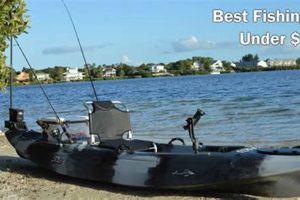
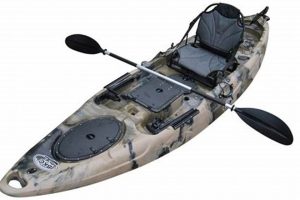
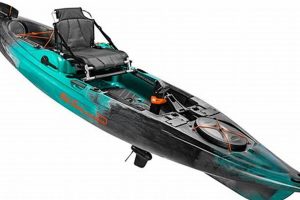
Selecting appropriate fishing rod dimensions for kayak angling involves careful consideration of the kayak’s size and stability, the targeted fish species, and the fishing techniques employed. A shorter rod, typically between six and seven feet, offers maneuverability within the confined space of a kayak, while a longer rod, perhaps seven to eight feet, provides greater casting distance and leverage for larger fish. Rod power and action also play a significant role; lighter power rods are suited for smaller species, while heavier power rods handle larger fish. Fast action rods offer greater sensitivity and hook-setting power, while slower action rods provide more casting distance and a gentler presentation.
Optimized rod selection significantly impacts angling success from a kayak. A properly sized rod enhances casting accuracy and control, minimizes tangling issues, and improves fish-fighting capabilities. This allows anglers to target specific species effectively and enjoy a more comfortable and productive fishing experience. Historically, kayak fishing involved adapting existing fishing equipment; however, the growing popularity of the sport has led to the development of specialized rods designed specifically for kayak angling, reflecting a deeper understanding of ergonomic and practical requirements.
The following sections will explore the factors influencing optimal rod choice for kayak fishing in more detail, covering topics such as specific rod lengths, power and action ratings, materials, and recommended models for various fishing styles and target species.
Tips for Selecting the Optimal Kayak Fishing Rod
Choosing the right fishing rod for kayak angling can significantly impact fishing success and overall enjoyment. The following tips offer guidance on selecting the most suitable rod for specific needs and target species.
Tip 1: Consider Kayak Dimensions: Smaller kayaks require shorter rods for maneuverability, while larger, more stable kayaks can accommodate longer rods. Rod length should complement the available space and prevent entanglement.
Tip 2: Match Rod Power to Target Species: Lighter power rods are ideal for smaller fish like panfish and trout, while heavier power rods are necessary for larger species like bass or saltwater fish.
Tip 3: Select Appropriate Rod Action: Fast action rods provide greater sensitivity and quicker hooksets, beneficial for techniques like jigging or topwater fishing. Slower action rods offer increased casting distance and a softer presentation, suitable for techniques like crankbait fishing or live bait fishing.
Tip 4: Prioritize Two-Piece Rods: Two-piece rods offer convenient storage and transport, essential for kayak anglers. They break down for easy stowage and reassemble quickly on the water.
Tip 5: Evaluate Rod Material: Graphite rods are lightweight and sensitive, while fiberglass rods are more durable and affordable. Composite rods combine the benefits of both materials, offering a balance of sensitivity, durability, and cost-effectiveness.
Tip 6: Consider Specialized Kayak Rods: Rods specifically designed for kayak fishing often feature shorter lengths, specialized handles, and increased durability to withstand the rigors of kayak angling.
Tip 7: Test Before Purchasing (If Possible): Holding and simulating casting motions with a rod can provide valuable insight into its balance, feel, and suitability for individual preferences and fishing styles.
By considering these tips, anglers can select a rod that optimizes their kayak fishing experience, improving casting accuracy, fish-fighting capabilities, and overall enjoyment on the water.
The concluding section will summarize key considerations and offer final recommendations for choosing the ideal kayak fishing rod.
1. Length
Rod length significantly influences kayak fishing effectiveness. A 6-7 foot rod offers optimal balance between castability and maneuverability within the confined space of a kayak. Longer rods, while offering increased casting distance, become cumbersome and difficult to manage in a kayak’s limited area, increasing the risk of tangling lines and snagging on equipment. Shorter rods, conversely, sacrifice casting distance but excel in close-quarters combat with fish, essential for techniques like vertical jigging or working lures near the kayak. For instance, when targeting bass in dense cover near a riverbank, a 7-foot rod allows precise casts beneath overhanging branches while providing sufficient leverage for extracting fish from heavy vegetation. An 8-foot rod, in this scenario, would likely prove unwieldy and hinder accurate lure placement.
The 6-7 foot range represents a compromise, offering sufficient casting distance for most kayak fishing applications while maintaining manageable handling characteristics. This length facilitates single-handed casting and retrieval, crucial when balancing a rod and paddle. Consider fishing for redfish in shallow flats; a 7-foot rod allows long casts to reach schooling fish while maintaining the control necessary to work a topwater lure effectively. A significantly shorter rod might limit casting range, reducing the number of fish encountered, while a longer rod would complicate lure manipulation and potentially lead to line tangles in the wind.
Ultimately, selecting the ideal rod length requires careful consideration of target species, fishing environment, and personal preferences. However, the 6-7 foot range provides a versatile starting point for most kayak anglers, balancing casting performance with the practical constraints imposed by the kayak environment. This length facilitates accurate casting, efficient fish fighting, and overall ease of use, contributing significantly to a successful and enjoyable kayak fishing experience. Addressing potential challenges like wind or current may necessitate slight adjustments within this range, underscoring the importance of understanding the interplay between rod length and kayak fishing dynamics.
2. Power
Rod power, denoting a rod’s lifting strength and backbone, plays a crucial role in effective kayak fishing. Light to medium power rods generally prove most suitable for this fishing style, offering a balance between finesse and strength necessary for common kayak fishing targets and techniques. Selecting an appropriate power range ensures successful hooksets, manageable fish fights, and minimizes the risk of line breakage.
- Lifting Strength and Backbone
Rod power directly correlates to the amount of weight required to bend the rod. Lighter power rods bend with less weight, offering sensitivity for detecting subtle bites and delicate presentations for smaller fish or finesse techniques. Medium power rods possess greater backbone, handling heavier lures and providing the strength required to battle larger fish. For example, a light power rod excels when fishing for panfish with small jigs, while a medium power rod performs better when targeting bass with heavier crankbaits.
- Target Species Considerations
The target species significantly influences the appropriate rod power. Smaller fish, like trout or panfish, require lighter power rods to avoid overpowering the fish and pulling the hook. Larger, more powerful fish, like bass or walleye, necessitate medium power rods to handle their strength and weight. Matching rod power to the target species ensures a balanced and effective fishing setup.
- Lure and Bait Compatibility
Rod power must align with the size and weight of the lures or bait used. Lighter power rods struggle to cast and effectively present heavier lures, while heavier power rods can make lighter lures feel unresponsive and difficult to manipulate. For instance, using a light power rod with a heavy swimbait results in poor casting distance and reduced lure action, while using a medium power rod with a small dry fly diminishes sensitivity and hinders accurate presentations.
- Kayak Fishing Applications
The confined space and unique challenges of kayak fishing generally favor lighter to medium power rods. These rods offer maneuverability in tight quarters and provide adequate strength for common kayak targets without being overly cumbersome. A medium-heavy or heavy power rod, typically used for larger offshore species, proves impractical and unwieldy within a kayak’s limited confines.
Selecting a light to medium power rod provides versatility and effectiveness in most kayak fishing scenarios. This range allows anglers to target a variety of species with diverse techniques while maintaining the balance and control essential for successful kayak angling. Careful consideration of target species, lure choices, and fishing environment helps refine rod power selection within this optimal range, ultimately maximizing angling success and enjoyment on the water.
3. Action

Rod action, describing the rod’s bending profile under load, significantly influences fishing performance, particularly in specialized environments like kayak fishing. Fast or moderate action rods generally prove most suitable for this application, offering distinct advantages for various techniques and target species. Understanding the nuances of rod action facilitates informed decisions regarding lure presentation, hook setting, and overall fish-fighting effectiveness from a kayak.
Fast action rods bend primarily in the top third, providing increased sensitivity, quicker hooksets, and greater control over aggressive fish. This responsiveness proves advantageous when fishing topwater lures or jigs, requiring immediate reaction to strikes and precise lure manipulation. For example, when targeting bass with a topwater frog near thick vegetation, a fast action rod allows anglers to detect subtle takes and quickly set the hook before the fish retreats into cover. Conversely, moderate action rods bend throughout the middle section, offering a more gradual power curve, increased casting distance, and a forgiving presentation that benefits techniques like crankbait fishing or live bait fishing. When drifting a live minnow for walleye in open water, a moderate action rod absorbs the initial strike, preventing pulled hooks and providing a smoother fight, particularly crucial in a kayak’s less stable environment.
Selecting between fast and moderate action depends on the specific fishing style and target species pursued from the kayak. Fast action excels in situations requiring quick reactions and precise lure control, while moderate action benefits techniques demanding greater casting distance and a softer presentation. Understanding the impact of rod action on lure presentation, hook setting power, and fish-fighting dynamics enables anglers to optimize their kayak fishing setup, increasing catch rates and overall enjoyment. Balancing rod action with other factors like length and power ultimately equips kayak anglers with the tools necessary to navigate diverse fishing scenarios effectively.
4. Material

Rod material significantly influences performance characteristics crucial for kayak angling. Graphite and composite materials dominate the market, each offering distinct advantages relevant to the specific demands of fishing from a kayak. Evaluating material properties alongside other rod characteristics ensures optimal selection for a balanced and effective setup.
- Graphite
Graphite rods offer exceptional sensitivity, transmitting subtle vibrations and bites effectively to the angler’s hand. This sensitivity proves invaluable in kayak fishing, where limited mobility can hinder visual detection of strikes. Furthermore, graphite’s lightweight nature reduces fatigue during long fishing sessions and enhances responsiveness during lure retrieval and hooksets. However, graphite rods can be more brittle than other materials, requiring careful handling to prevent breakage, a critical consideration in the often challenging environment of a kayak. A high-modulus graphite rod provides superior sensitivity for detecting light bites from panfish, yet its increased brittleness necessitates careful handling when maneuvering in tight quarters or landing fish alongside the kayak.
- Composite
Composite rods, blending graphite with other materials like fiberglass or Kevlar, offer a balance of sensitivity, durability, and affordability. The inclusion of fiberglass enhances durability, making composite rods more resistant to impacts and stress common in kayak fishing. While sacrificing some sensitivity compared to pure graphite, composites provide a robust and cost-effective solution suitable for anglers seeking a balance between performance and resilience. For instance, a composite rod constructed with a graphite backbone and fiberglass tip provides adequate sensitivity for detecting bites while maintaining the durability necessary to withstand accidental bumps against the kayak or surrounding structure.
- Weight and Balance
Material choice directly impacts rod weight and balance, crucial factors in kayak fishing. Lightweight rods reduce fatigue and enhance maneuverability, especially during long hours on the water. Proper balance ensures comfortable handling and precise casting, contributing to overall fishing efficiency. A well-balanced graphite rod allows for single-handed casting and retrieval, essential in a kayak where one hand often manages the paddle or other equipment. Conversely, a heavier composite rod, while more durable, might require two-handed casting, potentially compromising stability and maneuverability.
- Cost Considerations
Material influences rod cost, an important factor for anglers on a budget. Graphite rods generally command higher prices due to their advanced material properties and manufacturing processes. Composite rods offer a more affordable alternative without significantly compromising performance and durability. Choosing a cost-effective composite rod allows anglers to allocate budget towards other essential kayak fishing gear without sacrificing essential rod functionality.
Selecting the appropriate rod material involves balancing sensitivity, durability, weight, and cost. Graphite provides superior sensitivity and lightweight performance, while composites offer enhanced durability and affordability. Considering these factors in conjunction with the target species, fishing techniques employed, and overall budget constraints ensures optimal rod selection for a successful and enjoyable kayak fishing experience. Understanding the nuances of rod materials empowers anglers to make informed decisions, equipping them with the right tools for their specific kayak fishing needs.
5. Pieces
Two-piece rod construction offers significant advantages for kayak anglers, directly addressing the challenges of transporting and storing fishing gear within the confined space of a kayak. Longer, one-piece rods prove cumbersome and difficult to manage in a kayak’s limited confines, increasing the risk of damage during transport and hindering maneuverability on the water. Two-piece rods, conversely, break down into smaller, more manageable sections, facilitating safe and convenient storage within a kayak’s hull or dedicated rod holders. This portability proves invaluable when navigating tight spaces, launching and landing a kayak, or traversing portages between fishing locations. Consider transporting fishing gear to a remote mountain lake via kayak; a two-piece rod easily stows within the kayak, while a longer, one-piece rod risks breakage during transport or becomes an unwieldy obstacle during portages.
Beyond transport and storage, two-piece design enhances on-the-water practicality. The ability to quickly assemble and disassemble the rod simplifies transitions between paddling and fishing, maximizing fishing time and minimizing disruption. Furthermore, two-piece construction often incorporates reinforced ferrules and robust joining mechanisms, ensuring comparable performance to one-piece rods while maintaining the crucial benefit of portability. For instance, an angler targeting striped bass in coastal waters benefits from a two-piece rod’s ease of transport during launch and retrieval, while the rod’s robust construction maintains the strength and sensitivity necessary to battle powerful fish in challenging conditions.
While some anglers perceive a performance compromise in two-piece rods, modern manufacturing techniques minimize any discernible difference in action or sensitivity compared to their one-piece counterparts. The advantages of portability and convenience, particularly crucial in kayak fishing, significantly outweigh any perceived performance trade-offs. Selecting a high-quality two-piece rod ensures optimal performance while addressing the specific logistical challenges inherent in kayak angling, ultimately contributing to a more efficient, enjoyable, and successful fishing experience.
6. Handles

Shortened handles contribute significantly to optimized rod management in the confined environment of a kayak. Standard rod handles, designed for casting from shore or larger boats, often prove cumbersome and unwieldy within a kayak’s limited space. Shortened handles, typically found on rods specifically designed for kayak fishing, enhance maneuverability, reduce interference with paddling strokes, and minimize the risk of entanglement with other equipment. This adaptation proves crucial for maintaining efficient casting, retrieval, and fish-fighting capabilities while operating within the kayak’s restricted confines.
- Improved Ergonomics
Shorter handles improve ergonomics and control, particularly crucial in a kayak’s dynamic environment. Reduced handle length allows for comfortable one-handed casting and retrieval, even in challenging conditions or when fighting strong fish. This enhanced control minimizes fatigue during long fishing sessions and allows for quick adjustments in rod position, essential for precise lure presentation and effective hooksets. For example, a shortened handle allows an angler to maintain a secure grip on the rod while simultaneously maneuvering the kayak through tight channels or around obstacles.
- Enhanced Maneuverability
Shortened handles significantly enhance maneuverability within a kayak’s limited space. The reduced length minimizes interference with paddling strokes, facilitating seamless transitions between paddling and fishing. This improved maneuverability proves particularly beneficial when navigating tight quarters, such as narrow creeks or dense vegetation, where longer handles could hinder movement and obstruct casting angles. Consider an angler targeting largemouth bass in a densely vegetated cove; a shortened handle allows for precise casts beneath overhanging branches without the rod handle colliding with the kayak’s gunwales or surrounding foliage.
- Reduced Interference
Shortened handles minimize interference with other kayak fishing equipment, reducing tangles and snags. The compact design prevents the handle from catching on fishing lines, nets, or other gear stored within the kayak, maintaining a streamlined and efficient fishing setup. This reduced interference proves particularly valuable in challenging conditions, such as strong winds or currents, where tangled lines can quickly lead to lost fish and frustration. For instance, a shortened handle minimizes the risk of the rod becoming entangled with anchor lines or drift socks, maintaining fishing readiness and preventing disruptions during critical moments.
- Specialized Kayak Rod Designs
Many rods designed specifically for kayak fishing incorporate shortened handles as a standard feature, recognizing the unique demands of this fishing style. These specialized rods often feature other adaptations, such as reinforced construction and shorter overall lengths, further optimizing performance and durability in the kayak fishing environment. Investing in a kayak-specific rod with a shortened handle ensures a balanced and efficient setup tailored to the specific challenges and opportunities of fishing from a kayak.
Shortened handles, though seemingly a minor detail, significantly contribute to optimized rod management and overall fishing effectiveness in a kayak. By improving ergonomics, enhancing maneuverability, and minimizing interference, shortened handles allow anglers to maximize their fishing potential within the kayak’s unique environment. This adaptation, coupled with other design considerations like rod length, power, and action, collectively equips kayak anglers with the tools necessary for a successful and enjoyable fishing experience.
7. Guides

Corrosion-resistant guides constitute a critical component of fishing rods intended for kayak use, particularly in saltwater environments. Guide durability directly impacts line management, casting performance, and overall rod longevity. Inferior guides corrode rapidly in saltwater, compromising line integrity and potentially leading to breakage during critical moments. Selecting rods equipped with corrosion-resistant guides safeguards against these issues, ensuring consistent performance and extending the lifespan of the fishing rod, a crucial consideration given the investment involved and the challenging conditions often encountered in kayak fishing.
- Material Selection
Corrosion-resistant guides typically employ materials like stainless steel, titanium, or specialized alloys designed to withstand the harsh effects of saltwater exposure. These materials resist oxidation and pitting, maintaining smooth line flow and preventing abrasive damage to fishing lines. For example, stainless steel guides, a common choice in mid-priced rods, offer good corrosion resistance and durability, while titanium guides, found in higher-end rods, provide exceptional strength and corrosion resistance, albeit at a higher cost. Selecting guides constructed from these materials safeguards against premature wear and ensures consistent performance throughout the rod’s lifespan.
- Construction Quality
Guide construction quality significantly influences corrosion resistance. Precisely manufactured guides with smooth finishes minimize friction and reduce the potential for saltwater intrusion and subsequent corrosion. Inferiorly constructed guides, often featuring rough edges or imperfections, can trap saltwater, accelerating corrosion and compromising line integrity. Double-footed guides, commonly used on heavier rods, provide added strength and stability, further enhancing durability in demanding kayak fishing environments.
- Maintenance and Care
Even corrosion-resistant guides benefit from regular maintenance to maximize lifespan and performance. Rinsing the rod with fresh water after each use removes residual saltwater and minimizes the potential for corrosion. Periodically inspecting guides for signs of wear or damage allows for timely replacement, preventing catastrophic line failure during critical moments. Proper maintenance ensures optimal performance and extends the lifespan of the guides, maximizing the value of the investment.
- Impact on Fishing Performance
Corrosion-resistant guides directly contribute to enhanced fishing performance in kayak angling. Smooth, corrosion-free guides minimize friction, allowing for longer casts and smoother line retrieval. This enhanced performance proves crucial when targeting species from a kayak, where casting distance and accuracy often determine success. Furthermore, durable guides maintain line integrity, minimizing the risk of breakage during the fight, a critical consideration when battling strong fish from a relatively unstable platform.
In the context of “best size rod for kayak fishing,” corrosion-resistant guides represent a crucial component contributing to long-term performance and durability. Selecting a rod equipped with high-quality, corrosion-resistant guides safeguards against equipment failure, ensures consistent performance in challenging saltwater environments, and maximizes the lifespan of the investment, ultimately enhancing the overall kayak fishing experience.
Frequently Asked Questions
This section addresses common inquiries regarding optimal rod selection for kayak fishing, providing concise and informative responses to facilitate informed decision-making.
Question 1: What rod length is best suited for kayak fishing?
Rod length recommendations for kayak fishing typically fall within the 6-7 foot range. This length balances castability and maneuverability within a kayak’s confined space. Shorter rods enhance control in close quarters, while longer rods offer increased casting distance. Optimal length depends on individual kayak dimensions, target species, and fishing techniques employed.
Question 2: Does rod power significantly impact kayak fishing success?
Rod power significantly influences kayak fishing outcomes. Lighter power rods excel with smaller species and lighter lures, offering increased sensitivity for detecting subtle bites. Medium power rods handle larger fish and heavier lures, providing the backbone necessary for successful hooksets and fish fights. Matching rod power to target species and lure selection optimizes performance.
Question 3: What rod action is recommended for kayak anglers?
Fast action rods offer increased sensitivity and responsiveness, advantageous for techniques requiring quick hooksets, such as topwater or jig fishing. Moderate action rods provide greater casting distance and a more forgiving presentation, beneficial for crankbait fishing or live bait presentations. Selecting appropriate rod action depends on specific fishing techniques and target species behavior.
Question 4: Are two-piece rods suitable for kayak fishing?
Two-piece rods are highly recommended for kayak fishing due to their portability and ease of storage. They break down into smaller sections for convenient transport and storage within a kayak’s limited space. Modern two-piece rods utilize robust construction techniques, minimizing performance differences compared to one-piece rods while maximizing portability benefits.
Question 5: What materials are commonly used in kayak fishing rods?
Graphite and composite materials are commonly used in kayak fishing rods. Graphite offers exceptional sensitivity and light weight, while composites provide a balance of sensitivity, durability, and affordability. Material selection depends on individual preferences, target species, and budget considerations. Each material presents distinct performance characteristics relevant to specific fishing techniques and target species.
Question 6: Why are corrosion-resistant guides important for kayak fishing rods?
Corrosion-resistant guides are essential for kayak fishing rods, especially in saltwater environments. Corrosion compromises guide integrity, impacting line management, casting performance, and overall rod longevity. Guides constructed from materials like stainless steel or titanium withstand saltwater exposure, ensuring smooth line flow and preventing premature wear, crucial factors for maintaining optimal fishing performance and maximizing rod lifespan.
Careful consideration of these factors ensures optimal rod selection, enhancing kayak fishing effectiveness and overall enjoyment.
The next section provides concluding remarks and summarizes key takeaways for selecting the best rod for individual kayak fishing needs.
Best Size Rod for Kayak Fishing
Optimal rod selection significantly impacts kayak angling success. Factors influencing this choice include kayak dimensions, target species, fishing techniques, and environmental conditions. Shorter rods, typically between 6 and 7 feet, offer enhanced maneuverability within a kayak’s limited space. Rod power should align with target species size and fighting strength, with lighter power for smaller fish and medium power for larger species. Fast action provides sensitivity for lure fishing, while moderate action suits bait fishing or scenarios requiring longer casts. Durable materials like graphite or composites, coupled with corrosion-resistant guides, ensure longevity and reliable performance, particularly in saltwater environments. Two-piece construction enhances portability and storage convenience, crucial aspects of kayak angling logistics. Shortened handles further optimize ergonomics and control within the kayak’s confines.
Careful consideration of these factors empowers anglers to select the most suitable rod for individual needs and maximize kayak fishing effectiveness. An appropriate rod enhances casting accuracy, improves fish-fighting capabilities, and contributes significantly to overall enjoyment on the water. As kayak fishing continues to evolve, ongoing exploration of rod design and material advancements promises further refinement in specialized equipment, ultimately benefiting anglers pursuing this dynamic and rewarding fishing style.