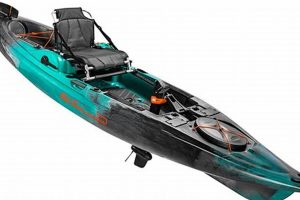
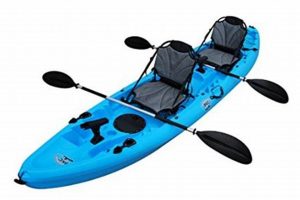
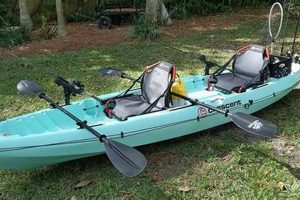
Individuals with larger body types require watercraft offering enhanced stability, capacity, and comfort. A suitable kayak must accommodate increased weight and size without compromising performance or safety. This involves considering factors like maximum weight capacity, cockpit dimensions, and hull design. For example, a wider, longer kayak with a higher weight limit offers superior stability compared to a narrow, shorter model designed for smaller individuals.
Selecting an appropriate vessel is crucial for safety and enjoyment on the water. A kayak with insufficient capacity can become unstable, increasing the risk of capsizing. Furthermore, a cramped cockpit can make paddling uncomfortable and difficult, diminishing the recreational experience. Historically, kayak designs often catered to a narrower range of body types. However, increasing demand and awareness have led to a wider selection of kayaks specifically designed for larger paddlers, making the sport more accessible and inclusive.
The following sections will delve deeper into the key factors to consider when choosing a kayak suited for individuals with larger body frames. These include a detailed discussion of weight capacity, cockpit dimensions, hull types, and specific kayak recommendations for different paddling styles and environments.
Tips for Selecting a Kayak for Larger Individuals
Choosing a kayak requires careful consideration of several factors to ensure safety, comfort, and optimal performance on the water. The following tips offer guidance for individuals with larger body types.
Tip 1: Prioritize Weight Capacity: Never exceed a kayak’s maximum weight capacity. This includes the paddler’s weight, plus any gear, and provisions. Exceeding this limit compromises stability and increases the risk of capsizing.
Tip 2: Evaluate Cockpit Dimensions: A roomy cockpit is essential for comfort and ease of entry and exit. Look for kayaks with ample legroom and a wider opening. Consider cockpit dimensions alongside personal measurements to ensure a comfortable fit.
Tip 3: Consider Kayak Length and Width: Longer kayaks generally track better in a straight line, while wider kayaks offer increased stability. Individuals seeking stability may prioritize width over length.
Tip 4: Explore Sit-on-Top vs. Sit-Inside Kayaks: Sit-on-top kayaks are often easier to enter and exit and offer more freedom of movement. Sit-inside kayaks provide greater protection from the elements and can be more efficient for longer paddles.
Tip 5: Research Hull Designs: Different hull designs affect stability and performance. Flat hulls offer excellent initial stability, while rounded or V-shaped hulls provide better tracking and speed.
Tip 6: Test Before Purchasing: Whenever possible, test paddle different kayak models before making a purchase. This allows for assessment of comfort, stability, and overall handling characteristics.
Tip 7: Don’t Overlook Paddle Length: Correct paddle length is crucial for efficient paddling. Consider factors like torso height, kayak width, and paddling style when selecting a paddle.
By carefully considering these factors, individuals can select a kayak that provides optimal comfort, stability, and performance, ensuring a safe and enjoyable experience on the water.
With a proper understanding of these key elements, selecting the right kayak becomes a straightforward process. The concluding section will offer final recommendations and reiterate the importance of prioritizing safety and comfort.
1. Weight Capacity

Weight capacity stands as a critical factor in kayak selection, particularly for larger individuals. A kayak’s weight capacity dictates the total weight it can safely support, encompassing the paddler’s weight, gear, and any additional equipment. Choosing a kayak with inadequate weight capacity compromises stability and increases the risk of capsizing, making this a primary concern for larger paddlers.
- Maximum Load Limit
This specifies the absolute maximum weight a kayak can safely carry. Exceeding this limit significantly jeopardizes stability and can lead to submersion. Manufacturers determine this limit through rigorous testing, and it should never be exceeded. Real-world scenarios, such as adding fishing gear or encountering unexpected waves, further emphasize the importance of respecting this limit.
- Performance Impact
Even within the safe weight limit, the total load affects a kayak’s performance. A heavily loaded kayak sits lower in the water, increasing drag and reducing maneuverability. Understanding this impact allows paddlers to select a kayak with ample capacity to maintain desired performance characteristics. A kayak nearing its maximum capacity will handle differently than one with a lighter load.
- Stability Considerations
Weight distribution also plays a crucial role in kayak stability. Evenly distributing weight throughout the kayak enhances stability, while uneven loading can create instability. Larger paddlers should be mindful of weight distribution, especially when carrying additional gear. This awareness contributes to a safer and more controlled paddling experience.
- Kayak Design and Capacity
Kayak design directly influences weight capacity. Wider, longer kayaks generally have higher weight capacities than narrower, shorter models. Understanding the relationship between design and capacity allows individuals to choose a kayak appropriate for their size and intended use. A recreational kayak designed for calm waters will have a different capacity than a touring kayak built for expeditions.
Therefore, careful consideration of weight capacity is paramount when selecting a kayak, especially for larger individuals. Prioritizing a kayak with ample weight capacity ensures both safety and optimal performance on the water. Neglecting this critical factor can lead to hazardous situations and diminished paddling enjoyment.
2. Cockpit Size

Cockpit size plays a crucial role in determining kayak suitability for larger individuals. A sufficiently spacious cockpit allows comfortable entry and exit, accommodating larger frames and facilitating easier movement within the kayak. Restricted cockpit dimensions can create challenges for larger paddlers, hindering access and potentially causing discomfort during longer paddling sessions. The relationship between cockpit size and paddler comfort directly impacts the overall kayaking experience. A cramped cockpit can lead to restricted leg movement, discomfort, and difficulty entering or exiting the kayak, particularly in emergency situations. Conversely, a spacious cockpit promotes comfort, freedom of movement, and ease of access, contributing to a more enjoyable and safer paddling experience. For example, a larger cockpit opening allows for easier entry and exit for individuals with limited mobility or larger body types. This ease of access is crucial not only for comfort but also for safety in situations requiring quick exits.
Furthermore, cockpit dimensions influence paddling posture and efficiency. A kayak with a cockpit tailored to the paddler’s size promotes proper posture and biomechanics, allowing for efficient paddle strokes and reduced strain. An improperly sized cockpit can force awkward postures, hindering paddling efficiency and potentially leading to discomfort or injury over time. Consider, for instance, a paddler with long legs in a kayak with a short cockpit. The restricted legroom might force the paddler into a cramped position, impacting paddling efficiency and potentially causing discomfort. In contrast, a kayak with ample legroom allows the paddler to maintain a comfortable and efficient paddling posture.
In summary, cockpit size represents a critical factor influencing kayak suitability for larger individuals. Adequate cockpit dimensions ensure comfortable entry and exit, promote proper paddling posture, and contribute to a more enjoyable and safer paddling experience. Prioritizing cockpit size during kayak selection enhances both comfort and performance on the water, directly addressing the needs of larger paddlers. Selecting a kayak with appropriate cockpit dimensions is essential for maximizing comfort and ensuring a positive paddling experience for all individuals, particularly those with larger body types.
3. Hull Design

Hull design significantly influences kayak performance and stability, a crucial consideration for larger individuals. Selecting an appropriate hull design enhances stability, maneuverability, and overall paddling experience. Different hull types cater to various paddling styles and water conditions, making informed selection essential for larger paddlers seeking optimal performance and safety.
- Flat Hull
Flat hulls provide excellent initial stability, making them ideal for beginners or those prioritizing stability over speed. Their wide, flat bottom creates a stable platform, minimizing rocking and tipping. This design excels in calm waters, providing a secure and comfortable experience for larger paddlers. However, flat hulls tend to be slower and less maneuverable than other designs.
- Rounded Hull
Rounded hulls offer a balance between stability and maneuverability. Their curved shape allows for efficient tracking and smoother turning. While not as stable as flat hulls, rounded hulls provide sufficient stability for larger paddlers in moderate water conditions. They are a versatile option suitable for various paddling environments and styles.
- V-Shaped Hull
V-shaped hulls excel in tracking and speed, cutting through the water efficiently. Their pointed shape minimizes drag and enhances performance in open water or choppy conditions. However, V-shaped hulls offer less initial stability than flat or rounded hulls, potentially presenting challenges for larger paddlers in calm water. They are better suited for experienced paddlers seeking speed and efficiency.
- Pontoon Hull
Pontoon hulls offer exceptional stability due to their multiple contact points with the water. This design provides a stable platform, making them suitable for fishing or recreational paddling. Pontoon hulls are particularly beneficial for larger paddlers seeking maximum stability and a secure feeling on the water, often found in specialized fishing kayaks or recreational models. They offer increased load-bearing capacity and a stable platform, enhancing safety and comfort.
Understanding the characteristics of different hull designs empowers larger individuals to select a kayak optimized for their needs and paddling style. Prioritizing stability, maneuverability, and intended use ensures a safe and enjoyable experience on the water. For larger paddlers, considering hull design alongside weight capacity and cockpit size contributes significantly to overall comfort and performance.
4. Kayak Length

Kayak length directly correlates with volume and subsequently, weight capacity. Longer kayaks generally possess greater volume, allowing them to support more weight. This factor becomes particularly relevant when considering kayaks suitable for larger individuals. A longer kayak provides the necessary buoyancy to accommodate higher weight limits, ensuring safe and stable performance. For example, a 12-foot kayak typically has a higher weight capacity than a 10-foot kayak of similar design, making it a more suitable option for larger paddlers. Conversely, shorter kayaks, while potentially more maneuverable, often have lower weight limits, making them less suitable for individuals with larger body frames.
Beyond weight capacity, kayak length also influences paddling efficiency and tracking. Longer kayaks tend to track straighter and glide more efficiently, requiring less effort to maintain a straight course. This characteristic benefits larger paddlers, as it reduces fatigue during longer journeys. For instance, a longer touring kayak excels at covering long distances with minimal course correction, while a shorter recreational kayak may require more frequent adjustments to maintain direction. This difference becomes particularly noticeable in open water or when paddling against currents. Shorter kayaks, while more agile in tight spaces, can feel less stable and require more effort to maintain a desired course, potentially increasing fatigue for larger paddlers.
Therefore, kayak length represents a crucial consideration when selecting a kayak for larger individuals. Finding the optimal balance between length, weight capacity, and paddling efficiency ensures both comfort and performance. While shorter kayaks offer maneuverability, their lower weight capacity may present limitations. Conversely, longer kayaks provide increased stability and tracking, making them a preferable choice for larger individuals, especially for longer paddling trips or open-water excursions. The choice ultimately depends on individual needs and paddling preferences, balancing maneuverability with stability and load-bearing capacity.
5. Seat Comfort

Seat comfort directly impacts the kayaking experience, particularly for larger individuals. Extended periods on the water necessitate adequate support and cushioning to mitigate discomfort and fatigue. A well-designed seat accommodates larger frames, distributing weight evenly and minimizing pressure points. Conversely, an ill-fitting or poorly designed seat can lead to discomfort, back pain, and a diminished overall experience. For instance, a kayak seat lacking sufficient padding can become uncomfortable after a short period, especially for larger paddlers. This discomfort can detract from the enjoyment of the activity and potentially lead to premature fatigue.
Several factors contribute to seat comfort, including seat material, adjustability, and back support. Durable, weather-resistant materials provide long-lasting comfort and resilience. Adjustable features, such as backrest angle and seat height, allow paddlers to customize their position for optimal comfort and support. Robust back support is crucial for maintaining proper posture and preventing back pain, especially during longer paddling sessions. Consider a fishing kayak designed with a high-back seat offering lumbar support. This design caters to the specific needs of anglers who often spend extended periods seated in their kayaks. The enhanced support contributes to a more comfortable and enjoyable fishing experience.
Therefore, seat comfort represents a crucial aspect of kayak selection for larger individuals. Prioritizing a kayak with a comfortable and supportive seat enhances the overall paddling experience, allowing for extended periods on the water without discomfort or fatigue. This factor, combined with appropriate weight capacity, cockpit size, and hull design, contributes significantly to a positive and enjoyable kayaking experience for individuals of all sizes. Investing in a kayak with a high-quality, adjustable seat ultimately enhances long-term comfort and enjoyment on the water.
Frequently Asked Questions
This section addresses common inquiries regarding kayak selection for individuals with larger body types. Clear and concise responses aim to provide comprehensive information and dispel potential misconceptions.
Question 1: How is “big people” defined in the context of kayak selection?
The term encompasses individuals exceeding average weight or height, requiring kayaks with higher weight capacities and larger cockpits. Specific measurements vary depending on kayak design and manufacturer specifications.
Question 2: Does a higher weight capacity automatically guarantee stability?
While weight capacity is crucial, stability also depends on hull design, kayak width, and weight distribution. A kayak with a high weight capacity but a narrow hull might feel less stable than a wider kayak with a slightly lower capacity.
Question 3: Are inflatable kayaks suitable for larger individuals?
Some inflatable kayaks are designed with higher weight capacities and can be suitable. However, it’s essential to carefully examine specifications and ensure the inflatable kayak meets individual needs regarding stability and comfort.
Question 4: What type of hull design is best for larger paddlers?
Wider, flatter hulls generally offer greater initial stability, making them suitable for beginners or those prioritizing stability. More experienced paddlers might consider rounded or pontoon hulls, balancing stability with maneuverability.
Question 5: Besides weight capacity, what other factors should larger individuals consider?
Cockpit dimensions are essential for comfortable entry and exit. Seat design, backrest adjustability, and overall kayak length also contribute significantly to comfort and paddling efficiency.
Question 6: Where can one find kayaks specifically designed for larger paddlers?
Specialty kayak retailers, online outfitters, and some larger sporting goods stores often carry kayaks designed for larger individuals. Consulting with experienced retailers can assist in finding a suitable kayak.
Selecting a kayak involves careful consideration of individual needs and preferences. Consulting manufacturer specifications and seeking expert advice ensures informed decisions promoting safety and enjoyment on the water.
The subsequent section will provide specific kayak recommendations based on various paddling styles and preferences.
Finding the Best Kayak for Larger Individuals
Selecting a kayak appropriate for larger body types requires careful consideration of several interconnected factors. Weight capacity, cockpit dimensions, hull design, kayak length, and seat comfort all play crucial roles in ensuring a safe, comfortable, and enjoyable paddling experience. Prioritizing these elements allows individuals to choose a kayak that meets their specific needs and supports their intended paddling activities. Neglecting these factors can compromise both safety and enjoyment on the water.
Ultimately, informed decision-making empowers larger individuals to fully participate in the rewarding sport of kayaking. Thorough research, careful consideration of individual needs, and consultation with experienced retailers contribute to selecting the optimal kayak. This proactive approach unlocks the full potential of kayaking, fostering safe and enjoyable experiences on the water for all.