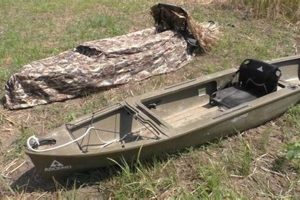
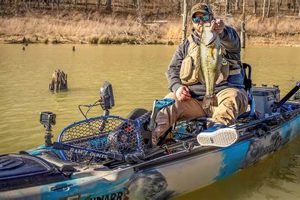
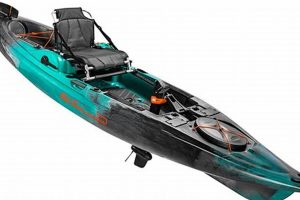
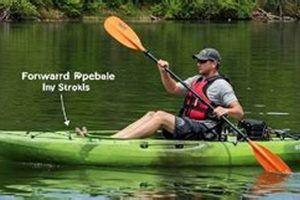
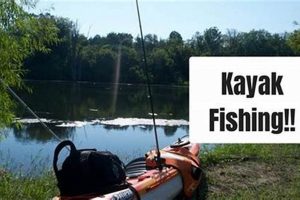
A high-quality, purpose-built watercraft designed for both multi-day excursions and angling presents a unique blend of features. Such vessels typically offer ample storage for camping gear, stability for fishing activities, and durability to withstand varied water conditions. Consider a kayak with a streamlined hull for efficient paddling across long distances, along with features like rod holders and anchor trolleys specifically for anglers.
Choosing the right watercraft for combined camping and fishing trips significantly enhances the overall outdoor experience. Appropriate features minimize the challenges posed by transporting gear and navigating waterways, allowing adventurers to focus on enjoying nature and pursuing their sport. Historically, anglers and outdoor enthusiasts relied on less specialized craft, but advancements in kayak design now provide dedicated vessels tailored to these specific needs. This evolution reflects the growing popularity of multi-day paddling and fishing excursions.
The following sections will explore key factors to consider when selecting a suitable vessel for combined camping and fishing trips, including hull design, storage capacity, weight limits, material construction, and essential features for anglers.
Tips for Selecting a Kayak for Camping and Fishing
Choosing the right kayak for combined camping and fishing trips requires careful consideration of several factors. These tips offer guidance for selecting a suitable vessel.
Tip 1: Prioritize Stability: A stable hull is crucial, especially when fishing. Look for wider kayaks or those with outriggers for enhanced stability.
Tip 2: Evaluate Storage Capacity: Ample storage is essential for camping gear. Consider kayaks with large hatches, bungee systems, and dry storage compartments.
Tip 3: Consider Weight Capacity: Factor in the combined weight of the paddler, gear, and potential catch. Exceeding the weight capacity can compromise stability and performance.
Tip 4: Choose Durable Materials: Opt for robust materials like polyethylene or composite construction to withstand the rigors of extended trips and varied water conditions.
Tip 5: Look for Fishing-Specific Features: Rod holders, anchor trolleys, and tackle storage compartments enhance the fishing experience.
Tip 6: Assess Hull Design: Consider a sit-on-top design for easier entry and exit, especially when fishing. Longer kayaks offer better tracking for longer distances, while shorter kayaks provide better maneuverability in tight spaces.
Tip 7: Think About Transportation and Storage: Consider the kayak’s length and weight concerning transport and storage limitations.
Careful consideration of these factors contributes significantly to a successful and enjoyable combined camping and fishing excursion. Selecting the right vessel enhances safety, comfort, and overall performance on the water.
By understanding these elements, individuals can make informed decisions, leading to enhanced enjoyment on the water.
1. Stability

Stability forms a cornerstone of a successful combined camping and fishing kayak experience. A stable platform is essential not only for casting lines and reeling in fish but also for general paddling comfort, especially when loaded with camping gear. Compromised stability can lead to capsizing, jeopardizing both equipment and safety. Consider the scenario of an angler hooking a large fish; a stable kayak allows for the controlled maneuvering necessary to land the catch, while an unstable one could easily result in an overturned vessel. Furthermore, entering and exiting a kayak, often performed in shallow water or near uneven shorelines, demands a stable platform to prevent accidental submersion.
The degree of stability required depends on the intended fishing environment. Calm lakes and slow-moving rivers demand less inherent stability than open ocean conditions or fast-flowing currents. Factors influencing stability include kayak width, hull design, and the presence of stabilizing features like outriggers or chines. Wider kayaks generally provide more initial stability, while longer, narrower kayaks tend to offer greater secondary stabilityresistance to tipping once tilted. Specialized hull designs, such as pontoon hulls, offer enhanced stability at the expense of maneuverability and speed. Understanding these design elements enables informed decisions tailored to specific needs and water conditions. For example, an angler frequently fishing in sheltered bays might prioritize maneuverability over extreme stability, while someone fishing in exposed coastal waters would likely prioritize stability above all else.
In summary, prioritizing stability represents a crucial step in selecting a kayak for combined camping and fishing excursions. Evaluating individual needs, anticipated water conditions, and the inherent stability characteristics of various kayak designs allows for the selection of a vessel that optimizes safety, comfort, and fishing success. Neglecting stability compromises safety and diminishes the overall enjoyment of the outdoor experience.
2. Storage Capacity

Storage capacity represents a critical factor when selecting a kayak for combined camping and fishing trips. Adequate storage space directly impacts the duration and comfort of multi-day excursions. Insufficient storage necessitates difficult choices regarding essential gear, potentially compromising safety and comfort. Understanding the nuances of kayak storage and its impact on combined camping and fishing trips is crucial for informed decision-making.
- Types of Storage
Kayaks offer various storage solutions, including hatches, tank wells, and deck rigging. Hatches provide sealed compartments for protecting sensitive items from water damage, suitable for electronics, sleeping bags, and extra clothing. Tank wells, typically located at the bow and stern, offer readily accessible storage for frequently used items, such as water bottles and rain gear. Deck rigging utilizes bungee cords to secure larger items on the deck, ideal for dry bags and spare paddles. The optimal combination of storage types depends on individual needs and trip duration.
- Capacity Considerations
The required storage capacity depends on the length of the camping trip and the volume of gear. Longer trips necessitate greater storage for additional food, water, and clothing. Bulkier items, like tents and sleeping bags, require larger compartments or effective utilization of deck rigging. Overpacking compromises stability and paddling efficiency, highlighting the importance of careful gear selection and efficient packing strategies.
- Accessibility and Organization
Convenient access to stored gear simplifies camp setup and minimizes on-water disruptions. Well-organized storage facilitates quick retrieval of essential items without unloading the entire kayak. Dry bags and packing cubes aid in compartmentalizing gear, protecting against water damage and simplifying organization. Prioritizing accessibility and organization streamlines the camping experience and maximizes on-water efficiency.
- Weight Distribution
Proper weight distribution within the kayak maintains balance and paddling performance. Distributing heavier items evenly throughout the kayak, rather than concentrating weight at the bow or stern, enhances stability and tracking. Even weight distribution minimizes the risk of capsizing and optimizes paddling efficiency, contributing to a safer and more enjoyable experience.
In conclusion, adequate storage capacity is paramount for successful combined camping and fishing kayak excursions. Careful consideration of storage types, required capacity, accessibility, organization, and weight distribution contributes significantly to comfort, safety, and overall trip enjoyment. Investing time in evaluating these elements enables informed decisions aligned with individual needs and trip parameters, ultimately leading to a more fulfilling outdoor experience.
3. Weight Capacity

Weight capacity represents a critical factor in kayak selection, particularly for combined camping and fishing excursions. A kayak’s weight capacity dictates the maximum combined weight of the paddler, gear, and any potential catch it can safely support. Exceeding this limit compromises stability, maneuverability, and ultimately, safety. Understanding the nuances of weight capacity is essential for informed decision-making and ensuring a successful trip.
- Understanding Listed Capacity
Manufacturers provide a listed weight capacity for each kayak model. This figure represents the maximum safe load, accounting for factors such as hull design and material strength. It is crucial to interpret this number accurately; it signifies the total weight the kayak can carry, not just the weight of the paddler. Careful calculation of anticipated gear weight, including camping equipment, fishing gear, and personal items, is essential to avoid exceeding the limit.
- Impact on Performance
Operating a kayak near or exceeding its weight capacity significantly impacts performance. Reduced freeboardthe distance between the waterline and the deckdiminishes the kayak’s ability to handle waves and chop, increasing the risk of swamping. Maneuverability suffers, making paddling more strenuous and less efficient. Additionally, exceeding the weight capacity can stress the hull, potentially leading to structural damage.
- Calculating Total Weight
Accurately estimating the total weight placed on the kayak requires careful consideration of all components. This includes not only the paddler’s weight but also the weight of camping gear (tent, sleeping bag, cooking equipment, food, water), fishing gear (rods, reels, tackle, bait), and personal items (clothing, electronics, safety equipment). Using a luggage scale to weigh each item individually ensures accurate calculation and prevents underestimation.
- Safety Implications
Exceeding the weight capacity poses significant safety risks. A heavily loaded kayak sits lower in the water, increasing the likelihood of capsizing, especially in rough conditions. Reduced maneuverability hinders the ability to navigate challenging currents or avoid obstacles. Furthermore, a compromised hull due to overloading can fail unexpectedly, leading to a dangerous situation. Adhering to the manufacturer’s specified weight capacity is paramount for ensuring a safe and enjoyable paddling experience.
In conclusion, careful consideration of weight capacity is crucial when selecting a kayak for combined camping and fishing trips. Accurately calculating total weight, understanding the impact on performance, and prioritizing safety by adhering to manufacturer specifications ensures a successful and enjoyable experience on the water. Neglecting this critical factor compromises stability, maneuverability, and safety, potentially jeopardizing the entire excursion.
4. Durability

Durability stands as a pivotal attribute when evaluating kayaks designed for combined camping and fishing expeditions. These activities often expose vessels to demanding conditions, including rocky shorelines, submerged debris, and fluctuating temperatures. A durable kayak withstands such rigors, minimizing the risk of damage and ensuring longevity. A kayak’s construction material directly influences its durability. Polyethylene kayaks offer excellent impact resistance and affordability, making them suitable for navigating rocky rivers or shallow coastal waters. Composite kayaks, constructed from materials like fiberglass or Kevlar, provide superior strength and lighter weight but often come at a higher price point. Thermoformed kayaks, utilizing ABS or ASA plastics, offer a balance of durability and affordability. Selecting a material aligned with anticipated usage scenarios ensures long-term performance and value.
Consider the scenario of landing a kayak on a rocky beach after a day of fishing. A durable hull shrugs off minor scrapes and impacts, while a less robust one might sustain cracks or punctures, potentially jeopardizing the vessel’s watertight integrity. Similarly, transporting a kayak on a vehicle’s roof rack exposes it to wind, vibration, and UV radiation. A durable kayak resists these environmental stressors, maintaining its structural integrity and aesthetic appeal over time. Regular maintenance, such as cleaning and UV protection, further enhances a kayak’s lifespan and preserves its performance characteristics. Addressing minor scratches and abrasions promptly prevents them from developing into more significant structural issues. Storing the kayak properly, protected from extreme temperatures and direct sunlight, further contributes to its long-term durability.
In conclusion, durability constitutes a crucial element in selecting a suitable kayak for combined camping and fishing adventures. Prioritizing durable construction materials, implementing appropriate maintenance practices, and employing proper storage techniques safeguard the investment and ensure years of reliable performance. A durable kayak withstands the rigors of extended use in challenging environments, providing a reliable platform for pursuing outdoor passions. Neglecting durability compromises the kayak’s longevity and potentially jeopardizes safety and enjoyment on the water.
5. Fishing Features

Specialized features designed for angling significantly enhance the functionality of a kayak intended for combined camping and fishing trips. These features streamline fishing activities, improve efficiency, and contribute to a more productive and enjoyable experience on the water. Integrating these features directly addresses the needs of anglers, optimizing the kayak’s suitability for this specific purpose.
- Rod Holders
Rod holders provide secure storage and convenient access to fishing rods, freeing hands for paddling, maneuvering, and other essential tasks. Flush-mounted rod holders offer a streamlined profile for paddling and trolling, while adjustable rod holders allow for customized positioning based on fishing techniques and target species. For example, a kayak angler trolling for trout might prefer flush-mounted rod holders to minimize drag, while someone jigging for bass might opt for adjustable rod holders to facilitate vertical presentations. The presence and type of rod holders directly impact fishing efficiency and overall enjoyment.
- Anchor Trolleys
Anchor trolleys allow for precise anchor positioning, enabling anglers to maintain optimal boat position in relation to current or structure. This feature proves invaluable in scenarios such as river fishing, where controlling drift is essential for targeting specific areas. An angler fishing near a submerged log, for instance, can utilize an anchor trolley to hold the kayak upstream of the structure, allowing for repeated presentations to the target zone. Precise anchor control enhances fishing effectiveness and reduces the need for constant paddling adjustments.
- Tackle Storage
Dedicated tackle storage compartments keep lures, hooks, and other essential fishing accessories organized and readily accessible. Well-designed tackle storage minimizes time spent searching for specific items, maximizing fishing time and efficiency. Consider a scenario where an angler needs to quickly switch lures based on changing fish behavior; readily accessible tackle storage facilitates a swift transition, potentially increasing the chances of a successful catch. The presence and design of tackle storage solutions directly impact an angler’s ability to adapt to changing conditions and maintain fishing momentum.
- Fish Finders and Electronics Mounts
Integrating fish finders and other electronic devices enhances angling success by providing real-time information about water depth, bottom structure, and fish location. Secure mounting points for these devices, often integrated into the kayak’s design, ensure stability and convenient viewing. An angler seeking to locate schools of baitfish, for instance, can utilize a fish finder to identify areas of concentrated activity, increasing the likelihood of finding game fish. The ability to seamlessly integrate electronics expands fishing capabilities and provides a strategic advantage.
In summary, specialized fishing features play a crucial role in determining a kayak’s suitability for combined camping and fishing excursions. These features, ranging from rod holders and anchor trolleys to dedicated tackle storage and electronics mounts, enhance fishing efficiency, improve catch rates, and elevate the overall angling experience. Careful consideration of these features allows anglers to select a kayak that aligns precisely with their individual needs and fishing style, optimizing their time on the water and maximizing their enjoyment of the sport.
Frequently Asked Questions
This section addresses common inquiries regarding kayaks suitable for both camping and fishing, providing concise and informative responses.
Question 1: What hull design best suits combined camping and fishing?
Stable hull designs, such as pontoon or wide, flat-bottom hulls, are generally preferred for fishing stability. Longer hulls offer better tracking for covering distances when camping, while shorter hulls enhance maneuverability in tight spaces. A compromise between these characteristics often proves optimal.
Question 2: How much storage capacity is typically required for multi-day camping trips?
Storage needs vary depending on trip duration and individual gear requirements. However, a minimum of 60-80 liters of storage is often recommended for overnight trips, with larger capacities preferred for longer expeditions. Consider how much gear one anticipates bringing.
Question 3: What materials provide the best balance of durability and weight for these kayaks?
High-density polyethylene offers excellent durability and impact resistance, while composite materials like fiberglass or Kevlar provide lighter weight but often come at a higher cost. Thermoformed plastics offer a compromise between durability and affordability.
Question 4: Are sit-on-top or sit-inside kayaks better suited for this combined use?
Sit-on-top kayaks generally offer better stability and easier access for fishing, along with self-bailing capabilities. Sit-inside kayaks provide better protection from the elements and often track better for longer paddling distances.
Question 5: What fishing-specific features should one prioritize?
Essential fishing features include rod holders, an anchor trolley system, and dedicated tackle storage compartments. Other desirable features might include a fish finder mount, paddle parks, and gear tracks for accessory customization.
Question 6: How does weight capacity influence kayak selection?
Weight capacity dictates the maximum combined weight of the paddler, gear, and potential catch. Exceeding this limit compromises stability and performance. Careful consideration of weight capacity is paramount for safety and efficient paddling.
Careful consideration of these frequently asked questions empowers informed decisions regarding kayak selection, ensuring a vessel well-suited to the demands of combined camping and fishing adventures.
For further guidance and specific product recommendations, consult expert resources and specialized retailers.
Best Kayak for Camping and Fishing
Selecting the optimal kayak for combined camping and fishing excursions requires careful evaluation of various factors. Prioritizing stability ensures a safe and comfortable platform for both paddling and angling. Adequate storage capacity accommodates essential gear for multi-day trips, while adherence to weight limits maintains performance and safety. Durable construction withstands the rigors of diverse environments, and specialized fishing features enhance angling efficiency. A balanced approach to these elements yields a versatile vessel capable of delivering rewarding experiences in the outdoors.
Investing time in researching and selecting the appropriate kayak significantly enhances the overall camping and fishing experience. A well-chosen vessel expands access to remote locations, fosters deeper connections with nature, and provides a platform for creating lasting memories. The synergy of a thoughtfully selected kayak and the pursuit of outdoor passions unlocks a world of adventure and enriches one’s appreciation for the natural world.