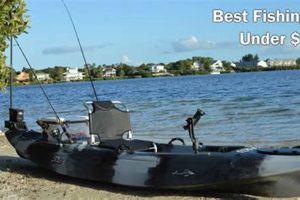
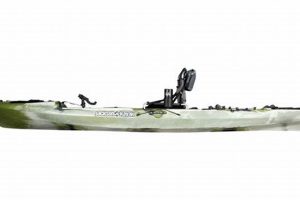
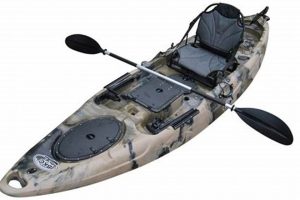
A high-quality, age-appropriate watercraft designed for angling offers young anglers stability, maneuverability, and features tailored to their needs. Such vessels often include rod holders, storage compartments for tackle, and comfortable seating designed for smaller frames. They prioritize safety with features like bright colors for visibility and inherent stability to prevent capsizing.
Providing children with properly sized and equipped watercraft enhances their fishing experience, fostering a love for the outdoors and promoting valuable skills like patience and coordination. Historically, youth fishing often involved adapting adult equipment, which could be cumbersome and unsafe. The development of specialized youth kayaks has significantly improved safety and enjoyment for young anglers, allowing them to participate more fully in the sport.
This article will explore key factors to consider when selecting an appropriate vessel for a young angler, including size, stability, features, and cost. It will also delve into essential safety considerations and offer recommendations for enhancing the youth fishing experience.
Tips for Selecting a Youth Fishing Kayak
Choosing appropriate equipment is crucial for a safe and enjoyable fishing experience for young anglers. These tips offer guidance on selecting the optimal watercraft.
Tip 1: Consider the Child’s Age and Size: Kayak dimensions should correspond to the child’s physical attributes. A kayak that is too large will be difficult to maneuver, while one that is too small may be unstable. Weight capacity is also a critical factor.
Tip 2: Prioritize Stability: Wider, flatter hulls offer greater stability than narrower designs. This is especially important for beginners. Look for features like a stable platform or pontoon-style designs.
Tip 3: Evaluate Features for Fishing: Rod holders, storage compartments, and adjustable seating enhance the fishing experience. Consider models specifically designed for angling.
Tip 4: Choose Bright Colors for Visibility: Brightly colored kayaks enhance visibility on the water, improving safety. This is especially important in areas with boat traffic.
Tip 5: Consider Portability and Storage: Lightweight and compact kayaks are easier to transport and store. Inflatable kayaks are a convenient option for those with limited storage space.
Tip 6: Set a Budget: Kayaks range in price, so establish a budget before beginning the selection process. Consider the features and quality offered at different price points.
Tip 7: Test Before Buying (If Possible): Allowing the child to sit in or briefly paddle a kayak before purchasing can ensure a comfortable and appropriate fit.
Careful consideration of these factors will help ensure a positive and productive fishing experience for young anglers. These tips empower caregivers and mentors to equip young people with appropriate and safe vessels.
By focusing on these key elements, individuals can select the optimal kayak to foster a lifelong love for fishing in the next generation.
1. Stability

Stability is a paramount consideration when selecting a youth fishing kayak. A stable platform ensures safety and comfort, allowing young anglers to focus on fishing rather than constantly battling to stay upright. This is especially crucial for beginners who are still developing their paddling and balance skills. A stable kayak promotes confidence and allows for a more enjoyable and productive fishing experience.
- Hull Design:
The hull design significantly influences stability. Wider, flatter hulls offer greater primary stability (initial resistance to tipping), making them ideal for beginners. Pontoon-style hulls provide exceptional stability, while narrower hulls sacrifice stability for speed and maneuverability. A wider base provides a more secure platform, especially in calm waters, while a narrower hull might be better suited for experienced young anglers navigating open water.
- Center of Gravity:
A lower center of gravity enhances stability. Kayaks designed for children often have lower seats and wider bases, contributing to a lower center of gravity. Adding weight low in the kayak, such as tackle boxes stored beneath the seat, further enhances stability. Conversely, placing heavy items high in the kayak can raise the center of gravity and increase the risk of capsizing.
- Water Conditions:
Calm, flat water requires less inherent stability than choppy water or moving currents. While a narrower hull might be suitable for calm lakes, a wider, more stable hull is essential for navigating rivers or coastal areas. Understanding the intended fishing environment is critical when assessing stability requirements.
- Child’s Experience Level:
Beginners require greater stability than experienced paddlers. A highly stable kayak allows novice anglers to develop their skills and confidence without constantly worrying about tipping. As skills progress, the need for extreme stability may decrease, allowing for consideration of kayaks with different hull designs that prioritize other performance characteristics.
By prioritizing stability when choosing a youth fishing kayak, caregivers can ensure a safe and enjoyable experience for young anglers. A stable kayak fosters confidence, allowing children to focus on the joys of fishing and develop a lifelong appreciation for the sport. The interplay between hull design, center of gravity, water conditions, and the child’s skill level ultimately determines the optimal level of stability required for a safe and enjoyable experience.
2. Size and Weight

Appropriate size and weight are critical factors in selecting the best youth fishing kayak. A kayak that is too large will be difficult for a child to maneuver and control, while a kayak that is too small may be unstable and lack sufficient capacity. Properly matching the kayak’s dimensions and weight capacity to the young angler’s physique ensures safety, comfort, and efficient paddling.
- Kayak Length:
Shorter kayaks (typically under 10 feet) are generally more maneuverable and easier for children to handle. Longer kayaks (over 10 feet) offer more speed and tracking but require greater strength and skill to control. For example, a shorter kayak is ideal for navigating narrow creeks or maneuvering around obstacles, while a longer kayak might be preferred for open water paddling. The child’s physical strength and paddling experience should guide length selection. A kayak that is too long can be cumbersome and tiring, while one that is too short may be difficult to keep on course.
- Kayak Width:
Wider kayaks offer greater stability, which is especially important for beginners. Narrower kayaks are faster and more efficient for experienced paddlers but sacrifice stability. A wider beam (width) provides a more stable platform for casting and reeling, while a narrower beam allows for faster paddling and easier turning. Consider the child’s balance and experience when selecting the appropriate width. A wider kayak might be preferable for calm water fishing, while a narrower kayak could be suitable for more experienced young anglers in open water.
- Weight Capacity:
The kayak’s weight capacity must exceed the combined weight of the child, any gear, and potential catches. Exceeding the weight capacity compromises stability and can lead to swamping or capsizing. Manufacturers specify weight limits, and it’s crucial to adhere to these recommendations. For instance, a kayak with a higher weight capacity can accommodate additional gear, such as tackle boxes, fishing rods, and even a small cooler. Ensuring the kayak can handle the intended load is crucial for safety and performance.
- Kayak Weight:
The kayak’s weight itself impacts portability and transportation. Lighter kayaks are easier for children to carry and load onto vehicles. Heavier kayaks offer greater stability but may require assistance for transport. Consider the child’s strength and the logistics of transporting the kayak to and from the water. Lightweight kayaks, especially inflatable models, are easier to store and transport, making them ideal for families with limited storage space or those who frequently travel to different fishing locations.
Choosing the right size and weight is fundamental to a positive kayaking experience. A properly sized kayak ensures efficient paddling, maneuverability, and stability, allowing young anglers to focus on fishing and enjoy their time on the water. Carefully considering these factors ensures a safe and rewarding experience, promoting a lifelong love of fishing.
3. Fishing Features
Specialized fishing features distinguish a standard youth kayak from one optimized for angling. These features directly impact a young angler’s efficiency, enjoyment, and overall success on the water. They contribute to a more organized, convenient, and productive fishing experience. Flush-mounted rod holders, for instance, secure rods while paddling or landing fish, preventing loss or damage. Integrated tackle storage compartments keep essential gear organized and readily accessible, eliminating the need to fumble through bags or boxes. These purpose-built features enhance both the practicality and enjoyment of kayak fishing for young enthusiasts.
Consider the practical significance of these features. A child fishing from a kayak without rod holders must constantly juggle the rod and paddle, increasing the risk of dropping the rod or losing balance. Dedicated storage for tackle and bait prevents spills and keeps essential items within easy reach, minimizing distractions and maximizing fishing time. Features like anchor trolleys or adjustable footrests further enhance the fishing experience by providing stability and control. Investing in a kayak equipped with these specialized features significantly improves the overall fishing experience for young anglers. For example, an adjustable foot brace system allows the child to maintain a comfortable and stable paddling position, reducing fatigue and improving control, particularly important during long fishing trips. Similarly, strategically placed D-rings or bungee cords offer secure storage for extra paddles, dry bags, or other essential gear.
A best youth fishing kayak prioritizes features designed specifically for angling. These features translate directly into improved safety, efficiency, and enjoyment. While a basic kayak might suffice for recreational paddling, the inclusion of fishing-specific features elevates the experience for young anglers. Understanding the importance of these features empowers informed purchasing decisions, ensuring the selection of equipment that maximizes the potential for a positive and productive youth fishing experience. The absence of these features can lead to frustration, inconvenience, and potentially compromised safety. Therefore, prioritizing these elements during the selection process is paramount for fostering a positive and productive introduction to the sport of fishing.
4. Durability and Safety

Durability and safety are paramount when selecting a best youth fishing kayak. A kayak’s construction and safety features directly impact its longevity and the well-being of the young angler. Investing in a durable and safe kayak ensures long-term usability and provides peace of mind for parents and guardians. A kayak’s ability to withstand impacts, resist punctures, and provide stable flotation are crucial considerations. These factors contribute directly to the overall quality and value of the kayak, ensuring a safe and enjoyable experience for young anglers.
- Construction Material:
Durable materials like high-density polyethylene (HDPE) or rotomolded plastic offer excellent impact resistance and UV protection. These materials can withstand bumps, scrapes, and exposure to the elements, ensuring the kayak remains functional for years. Inflatable kayaks constructed from durable PVC or reinforced fabrics provide an alternative, offering portability and ease of storage. Material selection directly impacts the kayak’s resistance to wear and tear, ensuring long-term value and minimizing the risk of damage from rocks, logs, or other potential hazards in the water.
- Stability Features:
Features like a wide hull, a low center of gravity, and multiple flotation chambers enhance stability and reduce the risk of capsizing. These design elements contribute to a secure and predictable paddling experience, particularly for beginners. Stability features are crucial for building confidence and ensuring a safe environment for young anglers to develop their skills. Enhanced stability minimizes the likelihood of tipping, particularly in challenging conditions such as wind or choppy water.
- Safety Accessories:
Essential safety accessories include a properly fitted personal flotation device (PFD), a whistle, and a paddle leash. A PFD is a non-negotiable safety requirement for all kayakers, regardless of age or experience level. A whistle allows for signaling in emergencies, and a paddle leash prevents losing the paddle in case of a capsize. These readily available accessories contribute significantly to on-the-water safety, mitigating potential risks and enhancing preparedness in unforeseen circumstances. For example, a bright-colored PFD increases visibility in the water, while a whistle can attract attention in case of distress.
- Maintenance and Care:
Proper maintenance, including regular cleaning, inspection, and storage, extends the lifespan of a kayak. Rinsing the kayak after each use removes salt, sand, and other debris that can degrade the material over time. Inspecting the hull for cracks or damage ensures any potential issues are addressed promptly. Proper storage, away from direct sunlight and extreme temperatures, protects the kayak from UV damage and warping. Consistent maintenance practices contribute significantly to the long-term durability and performance of the kayak, maximizing its lifespan and ensuring safe operation.
Prioritizing durability and safety ensures not only the longevity of the kayak but also the well-being of the young angler. Selecting a kayak built from robust materials and equipped with appropriate safety features establishes a foundation for a positive and secure kayaking experience. Investing in a durable and safe kayak provides long-term value and promotes responsible enjoyment of the sport. By emphasizing these essential elements, parents and guardians can foster a safe and rewarding environment for young anglers to develop their skills and passion for fishing.
5. Price and Value

The “best” youth fishing kayak isn’t necessarily the most expensive. Value, in this context, represents the optimal balance between cost, features, durability, and safety. A less expensive kayak might suffice for occasional recreational use in calm waters, while a higher-priced model could be a worthwhile investment for frequent fishing trips in more challenging environments. Understanding this balance is crucial for making informed purchasing decisions. For instance, a basic, stable kayak without specialized fishing features might be perfectly adequate for a child just beginning to explore the sport. However, a more experienced young angler who regularly fishes in varied conditions might benefit from a higher-priced kayak with features like rod holders, adjustable seating, and enhanced storage. The “best” choice depends on individual needs and priorities.
Several factors influence the price of a youth fishing kayak. Material choice, construction methods, features, and brand reputation all contribute to the overall cost. Rotomolded kayaks, known for their durability, typically command higher prices than inflatable or less robustly constructed models. Similarly, kayaks with integrated fishing features and premium seating systems often come with a higher price tag. Recognizing the relationship between these factors and price allows for informed evaluation of value. For example, a parent prioritizing long-term durability might justify the higher cost of a rotomolded kayak, while a family seeking a portable option for occasional use might find greater value in a less expensive inflatable model. Ultimately, understanding the interplay between price and features empowers consumers to make choices aligned with their individual needs and budget.
Selecting a best youth fishing kayak requires careful evaluation of price and value. The “best” option isn’t always the most expensive but rather the one that best meets the child’s needs and intended use while staying within budget constraints. Prioritizing long-term value ensures a worthwhile investment that provides years of enjoyment and fosters a lifelong appreciation for fishing. Focusing on the balance between cost and features empowers informed decisions that optimize both enjoyment and financial responsibility. Ultimately, the goal is to select a kayak that provides a safe, enjoyable, and productive fishing experience without exceeding budgetary limitations. This understanding allows for targeted selection, focusing on features relevant to the individual’s needs and avoiding unnecessary expenses on features that offer limited practical benefit.
Frequently Asked Questions
This section addresses common inquiries regarding the selection and use of youth fishing kayaks. Clear and concise answers provide practical guidance for caregivers and mentors seeking to provide young anglers with safe and enjoyable on-the-water experiences.
Question 1: What age is appropriate for kayak fishing?
Children as young as five or six can enjoy kayak fishing with proper supervision and appropriately sized equipment. Adult supervision is crucial, especially for younger children. Introducing the activity progressively, starting in calm, shallow water, allows children to develop comfort and confidence.
Question 2: What safety precautions should be taken when kayak fishing with children?
A properly fitted personal flotation device (PFD) is essential for any child on the water. Adult supervision is paramount, particularly for younger or less experienced children. Choosing calm water conditions and staying close to shore enhances safety. Teaching basic paddling and safety skills before venturing out is highly recommended. Carrying a whistle for signaling and a first-aid kit is also advisable.
Question 3: What are the key features to look for in a youth fishing kayak?
Key features include stability, appropriate size and weight, fishing-specific features like rod holders and storage, and durable construction. Bright colors enhance visibility, improving safety. Comfort features like adjustable seating contribute to a more enjoyable experience.
Question 4: What is the average cost of a good youth fishing kayak?
Prices vary based on features, construction, and brand. Entry-level models can start around $200, while higher-end kayaks with specialized features can exceed $500. Inflatable kayaks often provide a more budget-friendly option. Prioritizing essential features over non-essential add-ons can help manage costs.
Question 5: What are the benefits of using a kayak specifically designed for fishing?
Fishing-specific kayaks offer features like rod holders, tackle storage, and anchor trolleys, which enhance convenience and efficiency. These features allow young anglers to focus on fishing rather than managing gear or maintaining balance. Specialized kayaks often incorporate design elements that promote stability and maneuverability in fishing environments.
Question 6: How do I maintain a youth fishing kayak?
Regular rinsing with fresh water removes salt and grime, prolonging the kayak’s lifespan. Storing the kayak out of direct sunlight and extreme temperatures prevents material degradation. Regularly inspecting the hull for damage ensures timely repairs and prevents further deterioration. Proper maintenance practices preserve the kayak’s integrity and value over time.
Selecting a best youth fishing kayak involves careful consideration of various factors to ensure safety, enjoyment, and functionality. Prioritizing these elements creates a foundation for a rewarding and enriching experience for young anglers.
The subsequent sections will offer specific product recommendations and further guidance on equipping young anglers for success.
Conclusion
Optimal youth fishing kayaks prioritize safety, stability, and features tailored to young anglers’ needs. Careful consideration of size, weight capacity, fishing-specific features, durability, and price ensures a balanced selection. Prioritizing these factors contributes significantly to a positive and productive on-the-water experience. Appropriate equipment empowers young anglers to develop essential skills, foster a connection with nature, and cultivate a lifelong appreciation for the sport.
Equipping young people with appropriate vessels unlocks opportunities for skill development, outdoor exploration, and connection with the natural world. Investing in appropriate equipment fosters future generations of responsible anglers and environmental stewards. Thoughtful selection ensures not only immediate enjoyment but also cultivates a lifelong passion for fishing and promotes responsible engagement with aquatic ecosystems.