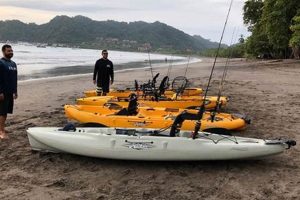
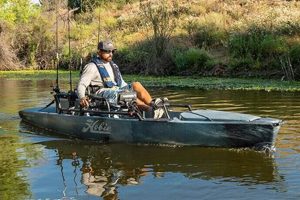
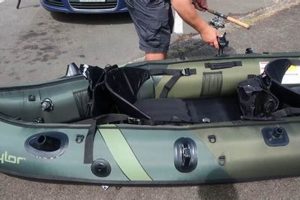
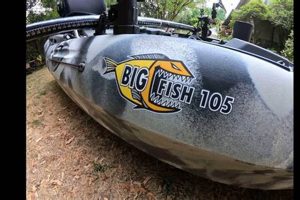
This specific model of recreational watercraft is designed for angling, offering stability and features tailored to the needs of fishermen. It typically includes specialized storage for rods, tackle, and often other gear like fish finders or livewells. Its compact size and portability make it suitable for various bodies of water, from lakes and ponds to slow-moving rivers.
A small, stable vessel designed for angling provides significant advantages to the sport fisherman. The portability of such watercraft opens access to locations often unreachable by larger boats, expanding fishing opportunities. Dedicated features such as rod holders, gear tracks, and livewells improve efficiency and enhance the overall angling experience. The relatively low cost and ease of maintenance compared to larger motorized boats make this type of vessel a popular choice for many. The growing popularity of kayak fishing reflects a broader trend towards more accessible and environmentally conscious approaches to outdoor recreation.
The following sections delve deeper into specific aspects of this type of watercraft, exploring topics such as design features, performance characteristics, maintenance requirements, and popular fishing techniques employed from these versatile platforms.
Tips for Kayak Fishing
Effective angling from a kayak requires specific techniques and considerations. These tips offer guidance for maximizing success and safety on the water.
Tip 1: Prioritize Stability: Weight distribution is crucial. Keep a low center of gravity and avoid sudden movements that could compromise balance. Consider using stabilizers or outriggers for added security, especially in rougher conditions.
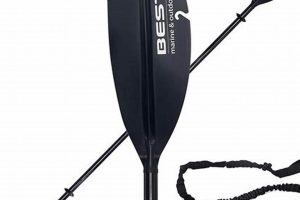
Tip 2: Master Paddle Techniques: Efficient paddling conserves energy and allows for precise maneuvering. Practice different strokes for navigating currents, wind, and tight spaces. A rudder can enhance control and tracking.
Tip 3: Utilize Anchor Systems: A well-placed anchor maintains position in desired fishing areas. Choose an anchor appropriate for the bottom conditions and water depth. Learn proper anchoring techniques to prevent entanglement or drifting.
Tip 4: Organize Gear Strategically: Keep essential equipment within easy reach. Utilize rod holders, tackle boxes, and gear tracks to maximize space and efficiency. A dry bag or waterproof containers protect valuables from splashes and submersion.
Tip 5: Practice Catch and Release Techniques: Proper handling minimizes stress on fish and ensures their survival upon release. Use appropriate hooks and tools, handle fish gently, and revive them if necessary before returning them to the water.
Tip 6: Prioritize Safety Precautions: Always wear a personal flotation device (PFD). Carry a whistle, signaling device, and first-aid kit. Inform someone of your fishing plans and estimated return time.
Tip 7: Understand Local Regulations: Familiarize oneself with fishing licenses, catch limits, and any specific rules for the intended body of water. Adhering to these regulations contributes to sustainable fisheries management.
By following these guidelines, anglers can optimize their kayak fishing experience, ensuring safety, efficiency, and respect for the aquatic environment.
The insights shared in this article contribute to a more informed and successful approach to kayak angling, allowing enthusiasts to enjoy the sport responsibly.
1. Stability
Stability is a paramount consideration in kayak fishing, directly influencing angler safety, casting accuracy, and overall confidence on the water. For the Tamarack 120 fishing kayak, stability is a crucial design element that contributes significantly to its performance and suitability for diverse angling scenarios.
- Hull Design and Stability
The Tamarack 120’s hull design plays a pivotal role in its stability. Wider hulls generally offer greater initial stability, resisting tipping when at rest or during slow movements. The specific shape of the hull, including features like chines and a flat bottom, further contributes to its stability profile. This allows anglers to confidently stand and cast, retrieve fish, and navigate varying water conditions.
- Center of Gravity and Weight Distribution
Maintaining a low center of gravity is essential for kayak stability. The Tamarack 120’s design, combined with proper weight distribution within the kayak, enhances stability. Positioning heavier items lower in the hull and distributing weight evenly contributes to a more stable and predictable platform. Anglers should be mindful of their own movements and avoid sudden shifts in weight that could compromise balance.
- Impact of Water Conditions
While the Tamarack 120 offers inherent stability, external factors like wind, waves, and currents can impact its performance. Understanding how these factors affect stability is crucial for safe operation. In challenging conditions, anglers may choose to adjust their positioning, utilize anchoring systems, or employ techniques like bracing to maintain balance and control.
- Stability Enhancements and Accessories
Various accessories can further enhance the Tamarack 120’s stability. Stabilizers or outriggers provide additional support, especially beneficial for anglers seeking increased confidence or fishing in rougher waters. These additions broaden the kayak’s versatility and allow it to be used in a wider range of environments and conditions.
The stability of the Tamarack 120, influenced by hull design, weight distribution, and environmental factors, is a defining characteristic contributing to its popularity as a fishing platform. Understanding these elements allows anglers to maximize their safety, comfort, and overall fishing success.
2. Portability

Portability significantly influences the accessibility and overall usability of a fishing kayak, dictating the ease with which it can be transported to and from various fishing locations. For the Tamarack 120 fishing kayak, portability is a key feature that contributes to its versatility and appeal among anglers.
- Weight and Dimensions
The Tamarack 120’s weight and dimensions directly impact its portability. A lighter kayak is easier to carry and load onto vehicles, especially for individuals without assistance. Compact dimensions further simplify transport and storage, making it suitable for users with limited space or smaller vehicles. Information on the kayak’s specific weight and dimensions allows potential buyers to assess its compatibility with their transport capabilities.
- Transport Options
Various transport options exist for the Tamarack 120, including roof racks, trailers, and even carrying by hand for shorter distances. The kayak’s design may incorporate features like integrated handles or molded-in side handles that facilitate carrying and loading. Understanding the available transport options and their respective requirements aids in efficient and safe transportation of the kayak.
- Impact on Fishing Location Accessibility
The portability of the Tamarack 120 expands fishing opportunities by enabling access to a wider range of locations. Smaller, more portable kayaks can be launched from diverse shorelines, including those inaccessible to larger boats. This allows anglers to explore remote ponds, smaller rivers, and secluded coves, enhancing the overall fishing experience.
- Storage Considerations
Storage requirements are an important aspect of portability. The Tamarack 120’s compact size allows for storage in garages, sheds, or even apartments. Understanding the kayak’s storage dimensions helps users plan and allocate appropriate space, ensuring its protection and longevity.
The portability of the Tamarack 120, influenced by its weight, dimensions, and available transport options, significantly enhances its usability and appeal to anglers seeking access to diverse fishing locations. Careful consideration of these factors allows individuals to make informed decisions about transportation, storage, and ultimately, their overall fishing experience.
3. Storage Capacity

Storage capacity directly impacts the functionality and practicality of a fishing kayak, dictating the amount of gear and equipment that can be carried onboard. For the Tamarack 120 fishing kayak, storage solutions play a crucial role in its suitability for angling excursions. Adequate storage enables anglers to bring essential items such as tackle boxes, rods, reels, safety gear, and personal belongings, contributing to a more organized and efficient fishing experience. Conversely, insufficient storage can limit the duration and scope of fishing trips, requiring anglers to make difficult choices about what gear to bring. The Tamarack 120 addresses these considerations with strategically designed storage compartments, including front and rear tank wells, dedicated rod holders, and side storage areas. These features provide designated spaces for different types of gear, maximizing space utilization and minimizing clutter. The capacity of these compartments directly influences the types of fishing expeditions possible, whether short day trips or multi-day adventures.
Practical examples illustrate the significance of storage capacity. A larger rear tank well can accommodate a cooler for storing food and drinks, extending the duration of fishing trips. Dedicated rod holders secure fishing rods while paddling or during transport, preventing damage and maximizing deck space. Side storage compartments offer convenient access to frequently used items like pliers, line cutters, and sunscreen. Furthermore, the presence of dry storage hatches protects sensitive electronics and personal items from water damage, essential for maintaining functionality and preserving valuable equipment. The thoughtful integration of these storage solutions enhances the Tamarack 120’s versatility and adaptability to diverse fishing scenarios.
In summary, the storage capacity of the Tamarack 120 fishing kayak is a defining characteristic that influences its practicality and overall effectiveness as a fishing platform. Sufficient and well-designed storage compartments allow anglers to carry essential gear, maximizing their preparedness and comfort on the water. Understanding the storage capabilities and limitations of this kayak informs purchasing decisions and contributes to a more successful and enjoyable fishing experience. By carefully considering storage needs and utilizing the available storage solutions effectively, anglers can optimize their time on the water and focus on what matters most: the pursuit of fish.
4. Fishing Features
Specialized features distinguish a fishing kayak from recreational models. The Tamarack 120 integrates several such features, directly impacting angling effectiveness and overall experience. These features represent a core component of the kayak’s design, influencing its suitability for targeted fishing applications. Understanding these features and their practical implications enables informed purchase decisions and maximizes on-the-water performance.
Examples of fishing-specific features often found on the Tamarack 120 include integrated rod holders, strategically positioned to keep rods secure and readily accessible while paddling or fighting fish. Flush-mounted rod holders minimize interference with paddling strokes and reduce the risk of line entanglement. Gear tracks or mounting points allow for customization and the addition of accessories such as fish finders, GPS units, or camera mounts. These additions enhance angling capabilities and provide valuable information for locating fish and navigating waterways. Some models may also include built-in livewells or storage compartments specifically designed for holding caught fish, crucial for anglers practicing catch-and-release or targeting species requiring live bait. These features contribute directly to angling success and enhance the overall fishing experience.
The integration of these fishing features demonstrates a focus on functionality and user needs. The practical significance of these features is evident in their ability to streamline fishing processes, improve catch rates, and enhance angler comfort and safety. Challenges associated with limited space and the need for stability are addressed through thoughtful design and strategic placement of these features. The Tamarack 120’s fishing features contribute significantly to its value proposition within the fishing kayak market, differentiating it from general-purpose recreational kayaks. Understanding these features empowers anglers to make informed choices based on their specific fishing styles and target species, ultimately leading to a more rewarding and productive on-the-water experience.
5. Durability

Durability is a critical factor influencing the lifespan and overall value of a fishing kayak, especially given the demanding conditions these vessels often endure. For the Tamarack 120 fishing kayak, durability directly impacts its long-term performance and resistance to wear and tear from various environmental factors and usage patterns. Understanding the factors contributing to the Tamarack 120’s durability is essential for prospective buyers and current owners alike.
- Construction Materials and Manufacturing Processes
The materials used in the Tamarack 120’s construction play a pivotal role in its durability. High-density polyethylene (HDPE) is a common choice due to its impact resistance, UV stability, and overall robustness. Rotational molding, a common manufacturing process for kayaks, creates a seamless, one-piece hull that enhances strength and eliminates potential leak points. The quality of materials and manufacturing directly influences the kayak’s ability to withstand impacts, abrasion, and prolonged exposure to the elements.
- UV Resistance and Protection Against Sun Damage
Exposure to sunlight can degrade kayak materials over time, causing fading, cracking, and weakening of the hull. UV-resistant additives incorporated into the plastic during manufacturing enhance the Tamarack 120’s resistance to sun damage, prolonging its lifespan and maintaining its structural integrity. Proper storage and maintenance practices, such as covering the kayak when not in use, further mitigate the effects of UV exposure.
- Impact Resistance and Protection Against Collisions
Kayaks inevitably encounter obstacles and impacts during use, ranging from minor bumps against rocks and logs to more significant collisions. The Tamarack 120’s hull design and material composition influence its ability to withstand these impacts without sustaining damage. HDPE’s inherent impact resistance helps prevent cracks and punctures, ensuring the kayak remains watertight and functional even after encountering obstacles.
- Maintenance and Care Practices for Extended Lifespan
Proper maintenance and care practices contribute significantly to the long-term durability of the Tamarack 120. Regular cleaning removes dirt, grime, and saltwater residue that can degrade the kayak’s materials over time. Storing the kayak properly, away from excessive heat and direct sunlight, further protects it from damage. Following manufacturer recommendations for maintenance and care ensures the kayak remains in optimal condition, maximizing its lifespan and preserving its value.
The durability of the Tamarack 120, a product of its construction, materials, and ongoing maintenance, directly influences its long-term performance and overall value. Understanding these factors empowers owners to make informed decisions about usage, care, and storage, ultimately maximizing the kayak’s lifespan and ensuring years of reliable service on the water.
6. Maneuverability
Maneuverability is a critical performance attribute influencing a fishing kayak’s effectiveness in navigating diverse water conditions and accessing prime fishing spots. For the Tamarack 120 fishing kayak, maneuverability directly impacts its ability to respond efficiently to changing currents, wind conditions, and navigate tight spaces such as narrow creeks or weed-choked areas. This characteristic contributes significantly to the angler’s ability to position the kayak effectively for casting, retrieving lures, and fighting fish. The Tamarack 120’s maneuverability stems from a combination of design elements, including hull shape, length, and the presence of features like a rudder or skeg.
The relationship between hull design and maneuverability is significant. A shorter kayak generally turns more quickly than a longer one, allowing for agile navigation in confined areas. The Tamarack 120’s hull design, often featuring a moderate rocker profile (the curvature of the hull from bow to stern), balances maneuverability with tracking performance (the ability to maintain a straight course). A moderate rocker facilitates turning while retaining sufficient tracking to cover distances efficiently. The inclusion of a rudder or skeg further enhances maneuverability by improving directional control and minimizing the impact of wind and currents. Real-world examples illustrate this connection: navigating through tight mangrove tunnels or precisely positioning the kayak in a fast-flowing river require a highly maneuverable vessel. Conversely, paddling across open water benefits from a kayak that tracks well, a characteristic balanced against maneuverability in the Tamarack 120’s design.
Understanding the Tamarack 120’s maneuverability characteristics enables anglers to choose appropriate paddling techniques and accessories. Efficient paddle strokes, such as sweep strokes and draws, maximize turning efficiency, while a rudder or skeg enhances control in challenging conditions. Practical applications of this understanding include navigating complex shorelines, approaching fish-holding structures stealthily, and maintaining position in windy or current-prone areas. The interplay between maneuverability and other performance characteristics, such as stability and speed, influences the overall suitability of the Tamarack 120 for specific fishing environments and angler preferences. Recognizing these interconnected factors allows for informed decision-making and maximizes on-the-water effectiveness and enjoyment.
Frequently Asked Questions
This section addresses common inquiries regarding the Tamarack 120 fishing kayak, providing concise and informative responses to facilitate informed decision-making.
Question 1: What is the weight capacity of the Tamarack 120?
The weight capacity typically ranges between 300-400 lbs, but consulting the manufacturer’s specifications for the specific model year is recommended.
Question 2: Is the Tamarack 120 suitable for ocean fishing?
While designed primarily for calm waters, its stability allows for use in sheltered coastal areas or bays with minimal wave action. Open ocean use is generally not recommended.
Question 3: What is the warranty coverage for the Tamarack 120?
Warranty details vary depending on the manufacturer and retailer. Reviewing the specific warranty terms provided at the point of purchase is essential.
Question 4: Can the Tamarack 120 accommodate a trolling motor?
Some models offer pre-installed motor mounts or the option for aftermarket installation. Verifying compatibility with specific trolling motor models is crucial before purchase.
Question 5: What maintenance is required for the Tamarack 120?
Regular rinsing with fresh water after each use, especially in saltwater environments, helps prevent corrosion and material degradation. Periodic inspections for damage and proper storage are also recommended.
Question 6: What safety equipment should be used with the Tamarack 120?
A personal flotation device (PFD) is essential. Additional safety equipment, such as a whistle, signaling device, and first-aid kit, enhances safety precautions.
Understanding these key aspects contributes to a safe and informed approach to kayak fishing with the Tamarack 120. Thorough research and adherence to safety guidelines are crucial for maximizing the enjoyment and longevity of this versatile fishing platform.
The following section explores popular accessories and modifications for the Tamarack 120, further enhancing its functionality and performance.
Conclusion
Exploration of the Tamarack 120 fishing kayak reveals a compelling blend of stability, portability, and specialized features tailored for angling pursuits. Its design prioritizes functionality and user needs, offering ample storage, integrated rod holders, and opportunities for customization. Durability considerations, encompassing material selection and manufacturing processes, underscore its resilience and potential for extended lifespan. Maneuverability characteristics, influenced by hull design and potential rudder integration, contribute to its adaptability across diverse fishing environments.
The Tamarack 120 represents a notable option within the fishing kayak market. Its attributes cater to diverse angler preferences and skill levels, facilitating access to a range of fishing experiences. Further exploration of specific model variations and user reviews is recommended to align individual requirements with the Tamarack 120’s capabilities. Such informed decision-making empowers anglers to maximize on-the-water effectiveness, safety, and enjoyment.