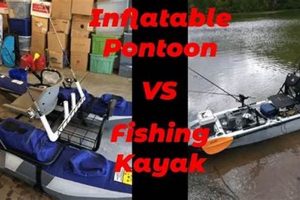
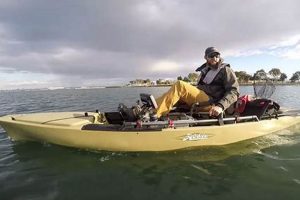
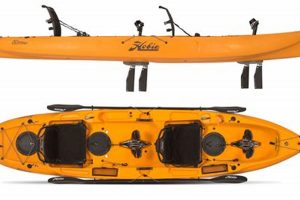
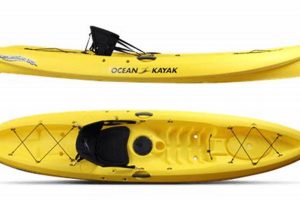
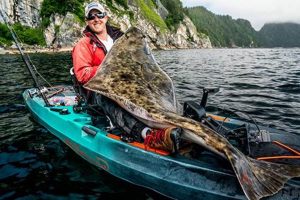
These vessels represent a specialized category within recreational watercraft, blending design elements of canoes and kayaks to create stable, versatile platforms ideal for angling. Typically featuring open or partially open decks, ample storage for fishing gear, and specialized seating arrangements designed for comfort during long hours on the water, these hybrids offer anglers enhanced stability and maneuverability compared to traditional canoes or kayaks. They are often constructed from durable materials like polyethylene or composite blends for resilience against impacts and the elements.
The popularity of such craft stems from their ability to access shallow, calm waters often favored by game fish, while providing a stable platform for casting and reeling. The enhanced stability contributes to safety, especially important when handling fishing equipment and maneuvering in varying water conditions. Historically, fishing from small, human-powered watercraft has been a common practice across cultures, but the development of specialized hybrid designs reflects a more recent focus on optimizing these vessels for angling. This evolution has provided anglers with more efficient and enjoyable means of pursuing their sport.
Further exploration of this topic could include discussions on different hull designs, propulsion methods (paddles, motors), material choices, and the various features that contribute to a successful fishing experience from these specialized watercraft. Anglers can consider factors like water conditions, target species, and storage needs when selecting the appropriate vessel for their specific fishing style.
Tips for Enhanced Fishing Kayak Experiences
Optimizing the use of a fishing kayak contributes significantly to angling success and overall enjoyment on the water. Careful consideration of these tips can improve safety, efficiency, and comfort.
Tip 1: Prioritize Stability: Vessel stability is paramount, especially when fishing. A wider hull or outrigger system can enhance balance, particularly important when standing to cast or reel. Weight distribution within the kayak also significantly influences stability.
Tip 2: Master Paddle Techniques: Efficient paddling reduces fatigue and allows for precise maneuvering. Learning basic paddle strokes and practicing proper technique contributes to a more enjoyable and effective fishing experience.
Tip 3: Plan and Organize Gear: Careful gear organization ensures quick access to essential equipment while minimizing clutter. Utilize storage compartments and consider using tackle boxes designed for kayak fishing.
Tip 4: Prioritize Safety Equipment: Wearing a personal flotation device (PFD) is crucial. Carrying a whistle, signaling devices, and a first-aid kit are also essential safety precautions.
Tip 5: Respect the Environment: Practice Leave No Trace principles. Pack out all trash, avoid disturbing wildlife, and respect other anglers and boaters sharing the waterway.
Tip 6: Check Weather Conditions: Before embarking on any fishing trip, check the weather forecast. Avoid venturing out in inclement weather or strong winds that could pose safety risks.
Tip 7: Choose Appropriate Apparel: Dress in layers to accommodate changing weather conditions. Wear quick-drying clothing and consider waterproof gear for protection from rain or splashes.
Adherence to these guidelines promotes a safer, more efficient, and ultimately more rewarding fishing experience from a specialized kayak. Preparation and mindful practices contribute significantly to successful angling excursions.
By considering these tips, anglers can enhance their time on the water and focus on the enjoyment of the sport.
1. Stability

Stability represents a critical performance characteristic in fishing kayaks, directly influencing angler safety and fishing efficacy. Old Town canoes designed for fishing recognize this importance and incorporate design elements aimed at maximizing stability. A stable platform allows anglers to confidently cast and retrieve, stand to sight fish, and manage gear without compromising balance. This enhanced stability is particularly crucial in challenging conditions such as windy days, moving water, or when landing a fish. The inherent design features that contribute to stability, such as hull shape and width, significantly impact the angler’s experience and ability to perform effectively. For example, the broader, flatter hull of the Old Town Topwater series provides exceptional initial stability, allowing anglers to stand comfortably while casting. Conversely, the more streamlined hull of the Predator series, while offering slightly less initial stability, prioritizes speed and maneuverability for covering larger bodies of water.
The connection between stability and fishing kayak performance extends beyond simply preventing capsizing. Enhanced stability directly translates to improved casting accuracy and more effective fish fighting. A stable platform allows anglers to focus on the nuances of their technique rather than maintaining balance, resulting in more precise casts and better control during retrieves. Furthermore, the ability to confidently maneuver and shift weight within the kayak aids in landing larger fish, reducing the risk of line breakage or losing control. The variety of hull designs available within the Old Town lineup caters to diverse fishing styles and water conditions, demonstrating a clear understanding of the importance of stability for specific angling applications. An angler fishing in calm, shallow waters might prioritize the exceptional stability of a wider hull, while someone fishing in open water with wind and chop might opt for a design that balances stability with maneuverability.
Understanding the nuances of stability within the context of Old Town fishing kayak design is essential for optimizing performance and safety on the water. Selecting a kayak with the appropriate level of stability for the intended fishing style and environment allows anglers to confidently maximize their time on the water. This mindful selection process often involves evaluating trade-offs between stability, maneuverability, and speed, ensuring a balanced and enjoyable angling experience. While the broader, flatter hulls offer maximum stability, they may sacrifice some speed and agility compared to more streamlined designs. Recognizing these performance differences and aligning them with individual needs is crucial for angler satisfaction and safety.
2. Hull Design

Hull design significantly influences the performance characteristics of an Old Town canoe fishing kayak, impacting stability, maneuverability, speed, and tracking. Various hull designs cater to diverse fishing styles and water conditions. Understanding these design variations allows anglers to select the optimal craft for their specific needs.
For instance, a wider, flatter hull, like that found in the Old Town Topwater series, provides enhanced primary stability, making it ideal for stand-up fishing in calm waters. This design prioritizes stability over speed, catering to anglers who value a secure platform for casting and reeling. Conversely, a narrower, V-shaped hull, such as that of the Old Town Predator series, sacrifices some initial stability for increased speed and efficient tracking in open water. This design suits anglers who prioritize covering distance and maneuvering quickly in currents or wind. The design trade-offs inherent in each hull type underscore the importance of aligning hull characteristics with the intended fishing environment and style.
Selecting the appropriate hull design directly impacts the angler’s experience and success on the water. Consideration of factors such as target fishing locations, prevailing water conditions, and individual fishing styles informs the decision-making process. Recognizing the influence of hull design on performance empowers anglers to make informed choices, optimizing their fishing experience within the Old Town canoe fishing kayak lineup. Choosing a hull design aligned with specific needs enhances efficiency, safety, and overall enjoyment on the water.
3. Storage Capacity

Storage capacity represents a critical factor influencing the practicality and effectiveness of an Old Town canoe fishing kayak. Adequate storage facilitates organized gear management, enabling anglers to carry essential equipment, tackle, safety gear, and personal items comfortably and efficiently. The impact of storage capacity extends beyond mere convenience; it directly influences fishing success by allowing anglers to adapt to changing conditions and pursue diverse fishing techniques. For example, sufficient storage enables anglers to carry a wider array of lures and tackle, increasing their ability to target different species or adjust to varying water conditions. Similarly, ample storage accommodates essential safety equipment, such as extra life jackets, signaling devices, and first-aid kits, enhancing overall safety on the water. Dedicated storage compartments within Old Town fishing kayaks often cater to specific gear types, such as rod holders, tackle organizers, and dry storage for electronics or personal belongings. This specialized organization minimizes clutter and maximizes access to essential equipment, contributing to a more efficient and enjoyable angling experience. The availability of ample and well-designed storage solutions reflects a clear understanding of the practical needs of anglers and the importance of efficient gear management.
The relationship between storage capacity and effective angling practices becomes particularly apparent during longer fishing trips or excursions into remote areas. The ability to carry sufficient supplies, including food, water, and emergency gear, enhances safety and self-sufficiency. Furthermore, ample storage allows anglers to transport their catch comfortably and responsibly. The practical implications of storage capacity extend beyond individual trips; sufficient storage simplifies transport and storage of the kayak itself, contributing to overall convenience and ease of use. For example, models like the Old Town Predator XL offer substantial storage capacity, allowing anglers to pack for multi-day trips or carry larger amounts of gear. This capability expands the range of fishing opportunities and enhances preparedness for diverse angling scenarios.
In summary, storage capacity plays a pivotal role in the overall utility and effectiveness of an Old Town canoe fishing kayak. Adequate storage facilitates organized gear management, promotes safety, and expands fishing possibilities. The thoughtful integration of storage solutions within Old Town designs reflects a commitment to practicality and a deep understanding of angler needs. Evaluating storage capacity based on individual fishing styles, trip duration, and target locations allows anglers to select the optimal kayak configuration and maximize their time on the water.
4. Propulsion Options
Propulsion systems significantly influence the performance and versatility of Old Town canoe fishing kayaks, impacting speed, maneuverability, and access to diverse fishing locations. Selecting an appropriate propulsion method depends on factors such as fishing style, target water bodies, and personal preferences. Understanding the advantages and limitations of each propulsion option empowers anglers to optimize their fishing experience.
- Paddle Power:
Traditional paddle propulsion offers excellent control, maneuverability in tight spaces, and quiet operation, minimizing disturbance to fish. This method allows for precise positioning and efficient navigation in shallow waters, vegetated areas, and other environments where motor use might be restricted or impractical. The physical engagement of paddling provides a connection to the water and offers a low-impact form of exercise. Old Town canoe fishing kayaks are designed for efficient paddling, often featuring comfortable seating positions and ergonomic hull designs that minimize paddling effort and maximize efficiency.
- Motorized Propulsion:
Outboard motors offer increased speed and range, allowing anglers to cover larger distances and access remote fishing spots. This motorized approach reduces physical exertion, conserving energy for fishing. Old Town offers kayak models compatible with motor mounts and designed to accommodate the added weight and thrust of a motor. However, motor use may be subject to regulations depending on the waterway and can introduce noise and potential environmental impact.
- Pedal-Powered Kayaks:
Pedal-driven systems provide a hands-free propulsion method, allowing anglers to maintain constant speed and maneuver while keeping their hands free for fishing. This system offers a blend of efficiency and convenience, particularly beneficial for techniques like trolling or sight fishing. Certain Old Town models offer compatibility with pedal drive systems, providing anglers with alternative propulsion options.
- Electric Motors:
Electric trolling motors offer a quieter and more environmentally friendly alternative to gasoline-powered outboards. They provide precise speed control and excellent maneuverability, making them suitable for a variety of fishing environments. Old Town fishing kayaks often incorporate features like pre-wired transducer mounts and battery compartments that facilitate the integration of electric trolling motors. This integration streamlines the setup process and optimizes performance.
Careful consideration of these propulsion options alongside the intended fishing environment and personal preferences empowers anglers to select the optimal configuration for their Old Town canoe fishing kayak. Matching propulsion to specific needs enhances fishing effectiveness, efficiency, and overall enjoyment on the water. Choosing the right propulsion system allows anglers to prioritize certain aspects of the fishing experience, whether it’s the quiet immersion of paddling, the speed and range of a motor, or the hands-free convenience of a pedal drive. This careful selection process contributes to a more tailored and fulfilling angling experience.
5. Material Durability
Material durability significantly influences the lifespan, performance, and overall value of an Old Town canoe fishing kayak. These kayaks are frequently subjected to harsh conditions, including impacts with rocks, submerged debris, and exposure to UV radiation. The material composition directly affects resistance to abrasion, cracking, and other forms of wear and tear. Selecting a kayak constructed from durable materials ensures long-term performance and minimizes the need for frequent repairs or replacements. Three-layer polyethylene construction, for example, provides superior impact resistance compared to single-layer designs, enhancing longevity in demanding environments. Similarly, the use of UV-resistant additives in the construction process protects against fading and material degradation caused by prolonged sun exposure. This resistance to environmental factors contributes to the kayak’s long-term aesthetic appeal and structural integrity. Selecting durable materials represents a crucial investment in the kayak’s longevity and overall performance.
The practical implications of material durability extend beyond the immediate lifespan of the kayak. Choosing a durable material contributes to sustainability by reducing the frequency of replacements, minimizing waste generation, and conserving resources. Furthermore, a robust material composition enhances safety on the water by providing a more reliable and resilient platform in challenging conditions. The ability to withstand impacts and resist punctures offers crucial protection in unexpected situations, enhancing angler safety. For example, the use of rotomolded polyethylene in Old Town kayaks provides exceptional durability and impact resistance, contributing to a safer and more dependable on-the-water experience. The choice of materials reflects a balance between performance, durability, and environmental responsibility.
In summary, material durability represents a critical factor influencing the long-term value, performance, and safety of an Old Town canoe fishing kayak. Investing in a kayak constructed from durable materials ensures resistance to wear and tear, enhances longevity, and promotes sustainability. Understanding the properties of various construction materials, such as polyethylene and its layered variations, allows informed decision-making aligned with individual needs and priorities. The connection between material durability and long-term performance underscores the importance of considering material composition as a key factor in the kayak selection process.
6. Specialized Features

Specialized features distinguish Old Town canoe fishing kayaks from standard recreational kayaks, optimizing them for angling effectiveness and enhancing the overall fishing experience. These features reflect a deep understanding of angler needs and prioritize functionality, efficiency, and convenience on the water. They contribute directly to improved fishing performance, enhanced comfort, and increased safety. For example, integrated rod holders secure fishing rods, freeing hands for paddling, baiting hooks, or landing fish. Similarly, adjustable foot braces provide crucial leverage for paddling and enhance stability while casting. These seemingly small details significantly impact the overall fishing experience.
Examples of specialized features commonly found in Old Town canoe fishing kayaks include rod holders, tackle storage compartments, anchor trolleys, paddle parks, and comfortable seating designed for extended periods on the water. These features are strategically integrated into the kayak’s design, maximizing their utility and minimizing interference with other fishing activities. An anchor trolley, for instance, allows controlled drifting and precise positioning in current, while a paddle park secures the paddle during fishing, preventing loss or interference with lines. The practical application of these specialized features directly translates to improved fishing success and a more enjoyable experience. Consider the impact of a well-designed tackle storage system on lure retrieval speed or the advantage of a comfortable seat during long hours on the water. These features, while seemingly minor, contribute significantly to the overall functionality and enjoyment of the kayak.
Understanding the purpose and effective utilization of these specialized features is essential for maximizing the performance of an Old Town canoe fishing kayak. Recognizing how these features contribute to efficiency, comfort, and safety empowers anglers to make informed choices and optimize their fishing experience. The thoughtful integration of these features within Old Town’s designs reflects a commitment to providing anglers with the tools they need to succeed on the water. While the core hull design influences fundamental performance characteristics, these specialized features enhance the kayak’s fishing-specific capabilities, transforming a standard recreational vessel into a dedicated angling platform.
Frequently Asked Questions
This section addresses common inquiries regarding Old Town canoe fishing kayaks, providing concise and informative responses to facilitate informed decision-making and optimal product utilization.
Question 1: What differentiates Old Town canoe fishing kayaks from standard recreational kayaks?
Old Town canoe fishing kayaks incorporate specialized features designed for angling, including rod holders, tackle storage, anchor trolleys, and stable hull designs optimized for casting and reeling. These features enhance fishing functionality compared to standard recreational kayaks.
Question 2: How does one choose the appropriate hull design for specific fishing needs?
Hull design selection depends on factors such as intended fishing environment (calm lakes versus rivers or open water) and fishing style (stand-up fishing, trolling, etc.). Wider, flatter hulls offer enhanced stability, while narrower, V-shaped hulls prioritize speed and tracking.
Question 3: What materials are typically used in Old Town canoe fishing kayak construction?
Old Town commonly utilizes durable, UV-resistant polyethylene in single, double, or triple-layer configurations. These materials offer impact resistance, durability, and protection against environmental factors, contributing to the kayak’s longevity.
Question 4: What propulsion methods are available for Old Town canoe fishing kayaks?
Options include traditional paddles, electric trolling motors, and compatibility with pedal-drive systems. The choice depends on factors such as desired speed, range, fishing style, and applicable waterway regulations.
Question 5: What safety precautions should one consider when using a fishing kayak?
Always wear a personal flotation device (PFD). Check weather conditions before embarking, carry essential safety gear (whistle, signaling devices, first-aid kit), and be aware of other vessels and potential hazards on the waterway.
Question 6: How does one maintain and care for an Old Town canoe fishing kayak?
Regular rinsing with fresh water after each use helps prevent salt and dirt buildup. Storing the kayak out of direct sunlight when not in use prolongs the lifespan of the materials. Periodic inspections for damage and timely repairs contribute to long-term performance.
Addressing these common inquiries provides a foundation for understanding key aspects of Old Town canoe fishing kayaks. Careful consideration of individual needs, fishing styles, and intended usage environments informs the selection and optimal utilization of these specialized watercraft.
Further exploration of specific models and features within the Old Town lineup is recommended for a comprehensive understanding of available options. Consulting with authorized dealers or experienced anglers can provide additional insights and personalized guidance.
Conclusion
Specialized fishing kayaks represent a significant advancement in angling technology, offering optimized platforms for diverse fishing styles and environments. Careful consideration of factors like hull design, propulsion options, storage capacity, material durability, and specialized features empowers anglers to select the ideal vessel for their specific needs. An informed selection process ensures not only fishing effectiveness but also safety, comfort, and long-term enjoyment on the water. The evolution of these specialized watercraft reflects a growing appreciation for the unique demands of angling and a commitment to providing anglers with the tools they need to succeed.
The ongoing development of fishing kayak technology promises further advancements in design and functionality, enhancing the angling experience and promoting responsible engagement with aquatic environments. Continued exploration of innovative materials, propulsion systems, and integrated features will further refine the performance and versatility of these specialized vessels. As angling techniques evolve and environmental awareness grows, the role of specialized fishing kayaks in providing sustainable and effective access to waterways will likely become even more pronounced.