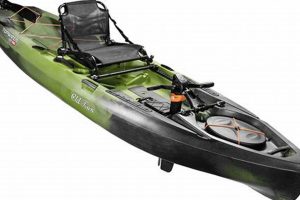
This specific model is an inflatable watercraft designed for angling. It combines portability with stability and features specialized components like rod holders and gear mounts. This type of vessel offers anglers access to a variety of fishing locations, from calm lakes to slow-moving rivers.
Inflatable fishing kayaks provide several advantages. Their compact, deflated size allows for easy transport and storage, eliminating the need for roof racks or trailers. Durable materials and construction ensure they can withstand the rigors of fishing environments. Features such as adjustable seats, multiple air chambers, and integrated storage enhance comfort and functionality on the water. The evolution of inflatable kayak design has led to increasingly robust and specialized models, catering to the specific needs of anglers.
Further exploration will cover topics such as materials, construction, performance characteristics, accessories, and maintenance requirements for this category of watercraft.
Tips for Inflatable Fishing Kayak Use
Proper preparation and handling ensure optimal performance and longevity of inflatable fishing kayaks. The following tips offer guidance for safe and enjoyable on-water experiences.
Tip 1: Inflate to the Recommended Pressure: Consistent inflation to the manufacturer’s specified pressure ensures proper hull shape and performance. Underinflation can lead to instability and decreased tracking, while overinflation risks damage.
Tip 2: Utilize Appropriate Safety Gear: A personal flotation device (PFD) should always be worn. Carrying a whistle, signaling device, and first-aid kit enhances safety in unforeseen circumstances.
Tip 3: Protect from Sharp Objects: Avoid dragging the kayak over rough surfaces or sharp objects. Inspect launch and landing sites for potential hazards. Carrying a repair kit allows for quick fixes in the event of a puncture.
Tip 4: Distribute Weight Evenly: Proper weight distribution enhances stability and tracking. Distribute gear evenly within the kayak, avoiding excessive weight at either end.
Tip 5: Practice Proper Paddling Technique: Efficient paddling technique minimizes fatigue and maximizes speed. Utilize proper posture and engage core muscles for effective strokes.
Tip 6: Be Mindful of Weather Conditions: Check weather forecasts before heading out. Avoid paddling in strong winds, lightning, or other hazardous conditions.
Tip 7: Clean and Dry After Each Use: Rinsing the kayak with fresh water and allowing it to dry completely before storage prevents mold and mildew growth and prolongs its lifespan.
Adhering to these guidelines contributes significantly to a safe, efficient, and enjoyable kayaking experience, maximizing the lifespan of the vessel.
By incorporating these practices, anglers can confidently explore various waterways, benefiting from the portability and performance offered by this type of watercraft.
1. Inflatable Design

The inflatable design of the NRS Pike 126 differentiates it significantly from traditional hard-shell kayaks, impacting portability, storage, and overall user experience. This design choice utilizes durable, puncture-resistant materials, typically PVC or drop-stitch construction, allowing the kayak to be inflated and deflated as needed. This eliminates the need for specialized storage solutions like roof racks or large garages, making transport and storage significantly more convenient. For example, the deflated kayak can be easily packed into a trunk or closet, increasing accessibility for users with limited storage space or smaller vehicles. This portability expands fishing location possibilities; anglers can hike into remote lakes or travel by plane with their kayak.
The inflatable design also influences the kayak’s on-water performance. While some perceive inflatable kayaks as less durable, advancements in materials and construction techniques, such as multiple air chambers and reinforced seams, provide substantial rigidity and stability. This allows the NRS Pike 126 to handle moderate water conditions and provide a stable platform for fishing. The inflatable design often incorporates features like drop-stitch floors, creating a rigid platform for standing and casting, essential for angling. However, inflatable kayaks may not track as efficiently as hard-shell kayaks, requiring more effort to maintain a straight course, especially in windy conditions. The flexibility inherent in the inflatable design can also influence its speed and maneuverability, requiring adjustments in paddling technique compared to hard-shell kayaks.
Ultimately, the inflatable design of the NRS Pike 126 offers a significant advantage in portability and storage without substantial compromise on performance or durability, making it a practical choice for anglers seeking convenience and access to diverse fishing locations. Continued advancements in materials and construction techniques further enhance the performance and durability of inflatable kayaks, bridging the gap between convenience and performance for serious anglers.
2. Fishing-Specific Features

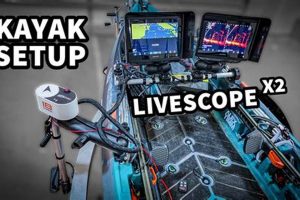
The NRS Pike 126 inflatable fishing kayak distinguishes itself through integrated features explicitly designed for angling. These features move beyond basic kayak design, catering specifically to the needs and demands of fishing activities. Such specialized features typically include strategically placed rod holders, allowing anglers to keep multiple rods readily accessible and secure. Integrated gear tracks provide mounting points for fish finders, GPS units, and other accessories, enhancing navigational and fish-finding capabilities. Often, dedicated storage compartments offer ample space for tackle boxes, dry bags, and other essential fishing gear, keeping equipment organized and within easy reach. These features contribute directly to the angler’s efficiency and comfort on the water.
For instance, the ability to quickly switch between different rods pre-rigged with various lures or bait significantly increases fishing versatility. Securely mounting a fish finder allows anglers to locate fish-holding structures and track fish movement, maximizing their chances of success. Efficient storage solutions eliminate the need to rummage through loose gear, minimizing distractions and maximizing fishing time. Consider a scenario where an angler is targeting different species in varying depths. The rod holders enable easy access to a variety of rods, each equipped for a specific fishing technique. Simultaneously, the fish finder aids in locating underwater structures and schools of fish, while the integrated storage keeps tackle organized and readily available. This combination of specialized features optimizes the fishing experience, allowing anglers to focus on their technique and the task at hand.
Understanding these fishing-specific features is crucial for appreciating the NRS Pike 126’s intended purpose and functionality. These features are not mere add-ons but integral components designed to enhance the overall fishing experience. They demonstrate a deliberate design focus on optimizing functionality and performance for angling, differentiating this model from standard recreational kayaks. This specialization underscores the kayak’s value proposition for serious anglers seeking a dedicated fishing platform that seamlessly integrates the essential tools and capabilities required for a successful and enjoyable fishing experience.
3. Portability and Storage

The portability and storage convenience of the NRS Pike 126 inflatable fishing kayak are defining features, directly influencing its appeal to anglers. Unlike rigid kayaks requiring dedicated storage and transportation solutions, the Pike 126’s inflatable design allows for compact storage and easier transport, broadening its usability and accessibility.
- Deflated Dimensions and Weight
The deflated dimensions and weight of the Pike 126 significantly reduce storage requirements. When deflated and packed, it occupies considerably less space than a traditional kayak, easily fitting into a car trunk, closet, or even under a bed. This compact form eliminates the need for roof racks or trailers, reducing transportation constraints and associated costs. For example, an angler living in an apartment without dedicated storage can easily store the deflated kayak, eliminating a significant barrier to kayak ownership.
- Inflation and Deflation Process
The inflation and deflation process contributes significantly to the kayak’s overall portability. While requiring a pump and some time, the process remains relatively straightforward. High-quality pumps and valves minimize inflation time, allowing for quick setup and deployment at the water’s edge. The deflation process, similarly straightforward, enables rapid packing and departure after a fishing trip. This ease of setup and pack-down enhances the overall user experience, making spontaneous fishing trips more feasible.
- Transportation Options
The compact, deflated size opens up a variety of transportation options beyond vehicle transport. The packed kayak can be checked as luggage on airlines, enabling anglers to travel with their kayak to distant fishing destinations. Furthermore, the lightweight nature of inflatable kayaks makes them suitable for hiking into remote lakes or rivers inaccessible by vehicle, expanding fishing location possibilities beyond easily accessible areas. This significantly broadens the scope of fishing adventures for the angler.
- Storage Considerations
While storage requirements are minimal, proper storage practices ensure the kayak’s longevity. Storing the kayak in a cool, dry place away from direct sunlight prevents material degradation and extends its lifespan. Avoiding sharp objects and extreme temperatures during storage further protects the kayak from damage. Proper storage practices contribute directly to the long-term value and usability of the kayak.
The portability and storage advantages of the NRS Pike 126 directly address key challenges associated with traditional kayak ownership, making it a practical and versatile choice for anglers seeking a convenient and readily deployable fishing platform. These advantages significantly expand accessibility and usability, allowing anglers to pursue fishing opportunities in diverse locations without the constraints of cumbersome storage and transportation logistics.
4. Durability and Stability
Durability and stability are critical performance characteristics of the NRS Pike 126 inflatable fishing kayak, directly influencing its suitability for diverse fishing environments. Durability ensures the kayak withstands the rigors of on-water use, including exposure to varying water conditions, potential abrasion from rocks or other obstacles, and the general wear and tear associated with fishing activities. Stability, on the other hand, dictates the kayak’s resistance to tipping or capsizing, crucial for maintaining a safe and balanced fishing platform, especially when casting, reeling, or landing fish.
The NRS Pike 126 achieves durability through material selection and construction techniques. Utilizing heavy-duty PVC or drop-stitch construction, often reinforced with multiple layers and robust seams, provides resistance to punctures, tears, and UV degradation. Multiple air chambers enhance safety and buoyancy, even in the event of a puncture. Stability is achieved through design features like a wide beam, a flat bottom, and potentially drop-stitch flooring. These elements contribute to a lower center of gravity and increased resistance to tipping, providing a stable platform even in choppy water or when standing to cast. For example, an angler navigating a rocky river requires a durable kayak capable of withstanding potential impacts. Similarly, standing to cast in a lake requires a stable platform to prevent capsizing. The Pike 126’s design addresses both these needs.
The interplay between durability and stability directly impacts the angler’s experience and safety. A durable kayak instills confidence, allowing anglers to explore diverse waterways without fear of damage or failure. Stability enhances comfort and safety, allowing anglers to focus on fishing rather than maintaining balance. These combined attributes extend the kayak’s usability, enabling access to a wider range of fishing environments and contributing to a more enjoyable and productive fishing experience. Compromised durability or stability would significantly limit the kayak’s practical application in demanding fishing scenarios, underscoring the importance of these performance characteristics in the context of the NRS Pike 126’s design and intended purpose.
5. Targeted user

The NRS Pike 126 inflatable fishing kayak is purposefully designed with the angler in mind. Every aspect, from its construction to its features, caters to the specific needs and demands of fishing, distinguishing it from recreational kayaks. Understanding this targeted user focus is crucial for appreciating the kayak’s design choices and overall value proposition.
- Fishing-Specific Features
The integration of fishing-specific features underscores the angler-centric design. Rod holders, gear tracks, and specialized storage compartments directly address the angler’s need for efficient tackle management and access. For instance, a fly fisherman can utilize the rod holders to securely store multiple rods rigged with different flies, while a bass angler can mount a fish finder to locate underwater structures. These features enhance functionality and contribute to a more productive and enjoyable fishing experience.
- Stability and Performance
Stability is paramount for anglers, particularly when casting, reeling, or landing fish. The Pike 126’s design prioritizes stability through features like a wide beam and a flat bottom, allowing anglers to maintain balance even in challenging conditions. This stability enhances safety and allows for comfortable fishing, even when standing to cast. Consider an angler fishing in choppy water; the enhanced stability minimizes the risk of capsizing, allowing for a more secure and confident fishing experience.
- Portability and Accessibility
The inflatable design caters to the angler’s need for portability and accessibility. The ability to deflate and pack the kayak facilitates transport and storage, eliminating the limitations imposed by rigid kayaks. This allows anglers to access remote fishing locations, whether hiking into a mountain lake or traveling by plane to a distant river. This portability expands fishing opportunities and caters to the adventurous nature of many anglers.
- Durability and Reliability
Anglers often navigate challenging environments, requiring a durable and reliable kayak. The Pike 126’s robust construction, utilizing durable materials and reinforced seams, ensures it can withstand the rigors of fishing, from navigating rocky rivers to encountering submerged obstacles. This durability translates to long-term value and dependability, essential for serious anglers who demand reliable performance in diverse conditions. Imagine an angler navigating a shallow, rocky river; the durable construction provides peace of mind, allowing them to focus on fishing without worrying about damaging the kayak.
The NRS Pike 126’s design and features consistently reflect its focus on the angler as the targeted user. By prioritizing features relevant to fishing activities, the kayak enhances functionality, performance, and overall user experience. This targeted approach differentiates the Pike 126 from recreational kayaks, solidifying its position as a dedicated fishing platform designed to meet the specific needs and demands of the serious angler.
Frequently Asked Questions
This section addresses common inquiries regarding the NRS Pike 126 inflatable fishing kayak, providing concise and informative responses to clarify key aspects and address potential concerns.
Question 1: How durable is an inflatable kayak like the NRS Pike 126 compared to a traditional hard-shell kayak?
Modern inflatable kayaks utilize advanced materials and construction techniques, resulting in surprising durability. While not impervious to damage, they withstand typical fishing conditions, including encounters with rocks and submerged obstacles. Proper care and maintenance significantly extend their lifespan.
Question 2: How stable is the NRS Pike 126 for fishing activities, especially standing and casting?
The Pike 126s wide beam and flat bottom contribute significantly to its stability. While individual balance plays a role, the kayak’s design provides a stable platform for standing and casting, enhancing fishing effectiveness and safety.
Question 3: How long does it take to inflate and deflate the NRS Pike 126?
Inflation and deflation times vary depending on the pump used. High-quality pumps typically inflate the kayak within 5-10 minutes. Deflation is generally faster. Practicing the process streamlines setup and pack-down.
Question 4: What type of fishing is the NRS Pike 126 best suited for?
The Pike 126 excels in calm to moderate water conditions, making it suitable for lakes, ponds, slow-moving rivers, and protected coastal areas. Its specialized features cater to various fishing styles, from fly fishing to trolling.
Question 5: How does the NRS Pike 126 perform in windy conditions?
Like all inflatable kayaks, the Pike 126 can be affected by strong winds. While manageable in moderate breezes, strong winds can impact tracking and speed. Use caution and avoid paddling in adverse weather conditions.
Question 6: What maintenance is required for the NRS Pike 126 inflatable fishing kayak?
Routine maintenance involves rinsing with fresh water after each use and ensuring complete drying before storage. Regular inspections for damage and prompt repairs, if needed, contribute to the kayak’s longevity.
Addressing these common questions provides a comprehensive understanding of the NRS Pike 126’s characteristics and capabilities, enabling informed decisions regarding its suitability for individual angling needs. Thorough consideration of these factors contributes to a satisfying and productive fishing experience.
Further information regarding specific technical specifications, warranty details, and user reviews can be found in subsequent sections.
Conclusion
The NRS Pike 126 inflatable fishing kayak presents a compelling option for anglers seeking a balance of portability, performance, and specialized functionality. Its inflatable design addresses storage and transport challenges, while integrated features like rod holders and gear tracks cater specifically to angling needs. Durability and stability considerations, coupled with an understanding of the target user, underscore its suitability for diverse fishing environments and angling styles. Exploration of key aspects, including design, features, portability, and performance characteristics, provides a comprehensive overview of this specialized watercraft.
Careful consideration of individual needs and preferences remains crucial in determining the suitability of any fishing kayak. Thorough research, including product specifications, user reviews, and comparisons with alternative options, empowers informed purchasing decisions. The evolution of inflatable kayak technology continues to refine design and enhance performance, promising further advancements in portability, durability, and angler-specific features in the future.