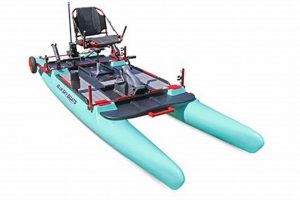
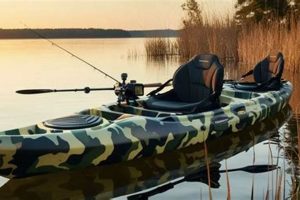
Essential gear for angling from a kayak enhances safety, comfort, and fishing success. This equipment ranges from fundamental safety devices like personal flotation devices and signaling whistles to specialized fishing tools such as rod holders and fish finders. A well-chosen collection of equipment can transform a basic kayak into a stable and efficient fishing platform.
Appropriate equipment contributes significantly to a successful and enjoyable kayak fishing experience. Enhanced safety allows anglers to focus on fishing, while specialized gear improves efficiency and catch rates. The evolution of kayak fishing, from basic adaptations to purpose-built fishing kayaks, has driven innovation in dedicated equipment, resulting in a wide range of options for anglers of all skill levels.
The following sections will explore these essential items in detail, categorizing them by function and providing guidance on selection and usage. This information will assist anglers in making informed decisions to optimize their kayak fishing setup.
Essential Kayak Fishing Equipment Tips
Careful selection of equipment significantly impacts safety and fishing success. The following tips offer guidance on choosing appropriate gear.
Tip 1: Prioritize Safety Gear: A personal flotation device (PFD) is paramount. Choose a comfortable, well-fitting model designed for paddling. A whistle, signaling mirror, and waterproof flashlight are also crucial for emergencies.
Tip 2: Select a Suitable Paddle: Opt for a lightweight, efficient paddle designed for kayaking. Consider adjustable-length paddles for optimal ergonomics and performance.
Tip 3: Choose Appropriate Rod Holders: Rod holders free hands for paddling and other tasks. Flush-mount or adjustable rod holders offer flexibility and convenience.
Tip 4: Utilize a Fish Finder: Fish finders provide valuable underwater insights, aiding in locating fish and identifying suitable fishing spots. Portable models are ideal for kayaks.
Tip 5: Invest in a Dry Bag or Box: Protecting essential items from water is crucial. Dry bags or boxes safeguard electronics, wallets, and other valuables.
Tip 6: Consider an Anchor Trolley System: Anchor trolleys allow for controlled anchoring and positioning in various fishing locations, especially in currents or windy conditions.
Tip 7: Carry Essential Tools and Tackle: A basic toolkit, including pliers, line cutters, and spare hooks, is vital for addressing common fishing challenges. Organize tackle in waterproof containers for easy access.
Tip 8: Dress Appropriately: Weather conditions can change rapidly on the water. Dressing in layers and utilizing waterproof or water-resistant clothing ensures comfort and safety.
Implementing these tips ensures preparedness and enhances the overall kayak fishing experience. Appropriate gear allows anglers to focus on fishing while maintaining safety and comfort.
By considering these equipment choices, anglers can create a customized kayak fishing setup tailored to their specific needs and fishing style.
1. Personal Flotation Device (PFD)

A Personal Flotation Device (PFD), commonly known as a life jacket, is paramount among essential kayak fishing equipment. Its primary function is to ensure angler safety by providing buoyancy and preventing drowning in the event of capsizing or accidental immersion. Selecting and properly using a PFD is crucial for a safe and responsible kayak fishing experience.
- Types and Selection
PFDs are categorized by buoyancy and intended use. Inherent buoyancy refers to the floatation provided by the device’s construction, while inflatable PFDs require manual or automatic inflation. For kayak fishing, Type III PFDs are generally recommended. These offer comfort and flexibility for paddling while providing sufficient flotation. Anglers should consider factors such as fit, comfort, and the presence of fishing-specific features, such as pockets and attachment points, when selecting a PFD.
- Legal Requirements and Regulations
Most jurisdictions mandate the carriage of approved PFDs on kayaks. Regulations vary, so anglers should consult local boating laws. Using a properly sized and certified PFD is essential for compliance and, more importantly, personal safety.
- Proper Use and Maintenance
A PFD must be worn correctly to function effectively. It should be snugly fitted, with all straps and buckles secured. Regular inspection for wear and tear is essential, as is ensuring proper inflation for inflatable models. Understanding how to activate an inflatable PFD is crucial.
- Importance in Kayak Fishing
The inherent risks of kayak fishing, including unstable water conditions and potential for capsizing, underscore the critical role of PFDs. A PFD provides a vital safety net, increasing the chances of survival in an emergency. It allows anglers to focus on fishing with the confidence of knowing they have essential safety equipment.
A properly selected and maintained PFD is an indispensable component of safe kayak fishing practices. Understanding the different types of PFDs, adhering to legal requirements, and consistently wearing the device contribute significantly to angler safety and responsible enjoyment of the sport.
2. Paddle
A paddle constitutes a fundamental component of kayak fishing equipment, directly influencing maneuverability, efficiency, and overall fishing success. Effective paddle selection and utilization are crucial for navigating waterways, reaching fishing spots, and maintaining control of the kayak in diverse conditions. The paddle serves as the primary means of propulsion and plays a vital role in achieving precise boat positioning for optimal angling.
Paddle characteristics, including length, blade shape, and material construction, significantly impact performance. Longer paddles generate greater power per stroke, while shorter paddles offer increased cadence and maneuverability in tight spaces. Blade shape influences water displacement and efficiency, with asymmetrical blades designed to reduce flutter and maximize power transfer. Lightweight materials, such as carbon fiber or fiberglass, minimize fatigue during extended paddling sessions. Choosing a paddle appropriate for individual physique, kayak type, and fishing style is essential for maximizing efficiency and comfort.
Proficient paddling technique further enhances kayak control and reduces physical exertion. Proper blade angle, stroke depth, and body rotation contribute to efficient power transfer and minimize wasted energy. Mastering fundamental paddling strokes, such as forward strokes, reverse strokes, and sweep strokes, allows anglers to navigate effectively, maintain desired positions, and execute precise maneuvers while fishing. The interplay between paddle selection and paddling technique directly impacts kayak control, influencing the angler’s ability to reach target fishing areas, maintain stability in challenging conditions, and ultimately optimize fishing success.
3. Rod Holders

Rod holders constitute an integral component of a well-equipped kayak fishing setup, directly influencing angling efficiency and safety. They provide secure storage for fishing rods, freeing hands for paddling, maneuvering, and other essential tasks. Properly chosen and installed rod holders contribute significantly to a streamlined and productive kayak fishing experience.
- Types and Mounting Options
Rod holders are available in various designs, each catering to specific fishing styles and kayak configurations. Flush-mount rod holders integrate seamlessly with the kayak’s deck, offering a low-profile solution for trolling or still-fishing. Adjustable rod holders provide flexibility in rod positioning, allowing anglers to adjust angles for different fishing techniques. Rail-mounted rod holders attach to kayak tracks, offering versatility in placement and customization. Selecting appropriate rod holders depends on the angler’s preferred fishing methods and the layout of their kayak.
- Material and Construction
Durability and corrosion resistance are critical factors in rod holder selection. Rod holders constructed from marine-grade materials, such as stainless steel or high-impact plastic, withstand the harsh marine environment. Robust construction ensures secure rod storage, even during challenging fishing conditions. Evaluating material quality and build contributes to long-term performance and reliability.
- Placement and Ergonomics
Strategic placement of rod holders optimizes accessibility and minimizes interference with paddling and other activities. Positioning rod holders within easy reach allows for efficient rod retrieval and management. Consideration of paddling ergonomics and casting mechanics ensures a comfortable and efficient fishing experience. Proper placement contributes to a streamlined and organized cockpit environment.
- Safety Considerations
Securely storing rods in rod holders prevents entanglement and potential hazards while paddling or maneuvering the kayak. Rod holders minimize the risk of losing rods overboard and contribute to a safer fishing environment. Proper rod holder usage enhances overall safety on the water.
Careful consideration of rod holder types, mounting options, material construction, and placement enhances kayak fishing efficiency and safety. Selecting appropriate rod holders tailored to individual fishing styles and kayak configurations contributes significantly to a more organized, productive, and enjoyable angling experience.
4. Fish Finder

Fish finders have become integral to modern kayak fishing, transitioning from optional accessories to essential tools for locating fish and understanding underwater environments. Effective utilization of a fish finder significantly enhances angling success by providing real-time data on water depth, bottom structure, and fish presence. This information allows anglers to make informed decisions about lure selection, retrieval techniques, and fishing location, ultimately maximizing their chances of a successful catch.
- Locating Fish and Structure
Fish finders utilize sonar technology to transmit sound waves into the water, which then bounce back from objects and create an image on the display. This allows anglers to identify fish, underwater structures like reefs or submerged vegetation, and changes in bottom topography. Understanding the location of these elements is crucial for targeting specific species and optimizing fishing strategies. For instance, locating a school of baitfish near a drop-off can indicate the presence of larger predatory fish, prompting the angler to focus efforts in that specific area.
- Determining Water Depth and Temperature
Accurate depth readings are essential for selecting appropriate lures and fishing techniques. Different species inhabit specific depth ranges, and understanding water depth allows anglers to present lures at the correct level. Water temperature also plays a significant role in fish behavior, and fish finders provide this crucial data, helping anglers identify areas where fish are more likely to be active. For example, knowing the thermocline depth allows anglers to target species that prefer specific temperature zones.
- Improving Efficiency and Reducing Search Time
Fish finders eliminate much of the guesswork associated with traditional fishing methods. By providing real-time information on fish location and underwater features, they allow anglers to focus their efforts on productive areas, significantly reducing search time and maximizing fishing efficiency. This is particularly valuable in larger bodies of water or unfamiliar fishing grounds. Anglers can quickly identify promising spots and concentrate their efforts accordingly.
- Types and Features for Kayak Fishing
Portable fish finders with transducer mounting options suitable for kayaks are readily available. These units often include GPS functionality for marking waypoints, tracking routes, and navigating to productive fishing spots. Features such as down-imaging and side-imaging provide detailed views of the underwater environment, further enhancing the angler’s understanding of fish behavior and habitat. Choosing a fish finder with features appropriate for kayak fishing significantly enhances its effectiveness and utility.
Integrating a fish finder into a kayak fishing setup significantly enhances angling effectiveness. By providing crucial insights into underwater environments and fish behavior, fish finders empower anglers to make informed decisions, optimize fishing strategies, and ultimately increase their chances of success on the water. The ability to locate fish, understand underwater structure, and determine water depth and temperature transforms the kayak fishing experience, shifting from reliance on intuition to data-driven angling.
5. Dry Storage
Maintaining dry gear and essential items is paramount in kayak fishing, directly impacting safety, comfort, and the longevity of valuable equipment. Dry storage solutions, therefore, constitute a critical component of essential kayak fishing equipment. Exposure to water, whether from rain, splashing, or accidental submersion, poses a significant threat to electronic devices, communication tools, extra clothing, and other necessities. Dry storage safeguards these items, ensuring functionality and preventing damage. For example, protecting a mobile phone in a waterproof case or storing extra layers in a dry bag maintains their usability in unpredictable weather conditions, contributing to both comfort and safety. The practical implication of inadequate dry storage extends beyond mere inconvenience; a malfunctioning communication device in an emergency situation could have severe consequences.
Various dry storage options cater to different needs and kayak configurations. Dry bags offer versatile and portable solutions for storing clothing, food, and other non-electronic items. Hard-shell cases provide robust protection for sensitive electronics like phones, GPS units, and cameras. Built-in storage compartments in some kayaks offer convenient, readily accessible dry storage options. Selection depends on individual needs, the specific items requiring protection, and the available storage space within the kayak. Anglers carrying sensitive electronic equipment, for instance, benefit significantly from investing in dedicated waterproof cases, while those prioritizing lightweight portability might opt for flexible dry bags. Understanding the range of available options allows anglers to tailor their dry storage strategies to their specific requirements.
Effective implementation of dry storage solutions contributes significantly to a safe, comfortable, and productive kayak fishing experience. Protecting essential gear from water damage ensures functionality when needed, preserves the lifespan of valuable equipment, and enhances overall safety. The practical significance of dry storage underscores its role as an indispensable component within the broader context of essential kayak fishing equipment. Failure to adequately protect gear can compromise safety, disrupt fishing activities, and incur unnecessary costs associated with equipment replacement. Prioritizing dry storage is an investment in preparedness and contributes to a more enjoyable and successful outing on the water.
6. Anchor Trolley
An anchor trolley system significantly enhances kayak fishing effectiveness by enabling precise boat positioning and control, solidifying its place among essential equipment. This system, comprising a line running the length of the kayak and a pulley or ring, allows anglers to adjust anchor position easily, optimizing boat orientation relative to current, wind, and fishing targets. Without an anchor trolley, maintaining desired position in moving water or wind becomes challenging, potentially disrupting lure presentation and fishing effectiveness. For instance, when fishing a river channel, an angler can utilize the trolley to position the kayak slightly upstream, allowing the current to carry the lure naturally through the target zone. Alternatively, in windy conditions on a lake, the trolley facilitates positioning the kayak broadside to the wind, maximizing stability and casting accuracy.
The practical benefits of an anchor trolley system extend beyond basic positioning. It allows anglers to fish various depths and cover effectively by simply adjusting the anchor line. This adaptability proves particularly valuable when targeting specific structures or fish holding areas. Consider a scenario where fish are concentrated along a weed bed edge. An anchor trolley allows the angler to position the kayak parallel to the weed bed, maintaining ideal casting distance and lure presentation throughout its length. Without the trolley, achieving this level of control and precision becomes significantly more difficult. Furthermore, an anchor trolley system contributes to safety by enabling quick anchor adjustments in changing conditions or emergencies. The ability to rapidly reposition the kayak can prove crucial in navigating unexpected currents, wind gusts, or approaching boat traffic.
In summary, an anchor trolley system represents a relatively simple yet highly effective tool for enhancing kayak fishing control and precision. Its ability to optimize boat positioning relative to environmental conditions and fishing targets significantly improves angling effectiveness and overall safety. Understanding and utilizing this essential piece of equipment unlocks the full potential of kayak fishing, transforming a potentially challenging experience into a controlled and productive pursuit. The practical advantages of an anchor trolley, from precise lure presentation to enhanced safety, solidify its position as a must-have for any serious kayak angler.
7. Safety Gear (whistle, light)
Safety gear, encompassing signaling devices like whistles and lights, represents a non-negotiable component of essential kayak fishing equipment. While the pursuit of angling success often drives equipment choices, prioritizing safety ensures the enjoyment of the sport remains possible. Overlooking these seemingly small items can have significant consequences, particularly in emergencies. A whistle and light transition from optional accessories to critical lifelines when unforeseen circumstances arise.
- Signaling for Assistance
Kayak fishing often takes anglers to remote locations, far from immediate assistance. In situations requiring help, a whistle provides a crucial means of attracting attention over long distances. Its high-pitched sound carries further than shouting, especially in windy conditions or across open water. A whistle can signal distress to other boaters, individuals on shore, or search and rescue teams. Consider a scenario where an angler experiences equipment failure or a medical emergency miles from the launch point; a whistle becomes the primary means of summoning help.
- Enhancing Visibility
A light serves a dual purpose in kayak fishing safety: enhancing visibility to others and illuminating the immediate surroundings. Navigating in low-light conditions, whether during early morning outings, late evening returns, or unexpected fog, necessitates a bright, waterproof light. Visibility to other boaters is paramount for preventing collisions, especially in congested waterways or areas with limited visibility. A light affixed to the kayak or worn by the angler significantly increases visibility, reducing the risk of accidents. Additionally, a light aids in navigating close to shore, avoiding obstacles, and performing tasks like landing fish or re-entering the kayak after a swim.
- Legal Requirements and Recommendations
Many boating regulations mandate carrying specific safety equipment, often including a whistle and light. Compliance with these regulations is not only legally required but also demonstrates responsible boating practices. Adhering to safety recommendations, even beyond legal requirements, contributes to a safer environment for all water users. Checking local boating regulations before embarking on a fishing trip ensures compliance and reinforces safety consciousness.
- Integration with Other Safety Gear
A whistle and light complement other essential safety items, such as a personal flotation device (PFD), first-aid kit, and communication devices. A comprehensive safety approach considers all potential hazards and equips anglers to respond effectively in emergencies. For example, while a PFD provides flotation, a whistle and light increase the chances of being located by rescuers. Integrating these elements into a cohesive safety plan maximizes preparedness and enhances overall safety on the water.
Safety gear, including a whistle and light, constitutes an indispensable part of the essential kayak fishing equipment list. These seemingly simple tools can have life-saving implications in emergency situations. Prioritizing safety, even over angling considerations, ensures that the pursuit of fishing remains an enjoyable and safe activity. A comprehensive approach to safety, encompassing signaling devices, visibility aids, and adherence to regulations, contributes significantly to responsible kayak fishing practices and mitigates potential risks on the water.
Frequently Asked Questions about Essential Kayak Fishing Equipment
Addressing common queries regarding essential kayak fishing equipment clarifies selection, usage, and overall importance in ensuring safe and successful angling experiences. This section aims to provide concise, informative responses to frequently raised questions.
Question 1: What type of PFD is most suitable for kayak fishing?
Type III PFDs are generally recommended for kayak fishing, offering a balance of comfort, flexibility, and sufficient buoyancy. Anglers should select a PFD specifically designed for paddling, ensuring a snug fit and freedom of movement.
Question 2: How does one choose the correct paddle length for kayak fishing?
Paddle length depends on factors such as angler height, kayak width, and paddling style. Retailers and manufacturers often provide sizing charts, or consultations with experienced paddlers can offer personalized guidance. An appropriately sized paddle maximizes efficiency and minimizes fatigue.
Question 3: Are rod holders essential for kayak fishing?
Rod holders significantly enhance safety and efficiency by securing rods while paddling, maneuvering, or landing fish. They prevent rod loss and free hands for essential tasks, contributing to a more organized and productive fishing experience.
Question 4: What features should one consider when selecting a fish finder for a kayak?
Portability, transducer mounting options suitable for kayaks, and features such as GPS functionality, down-imaging, and side-imaging should be considered. These features enhance the fish finder’s effectiveness in a kayak fishing environment.
Question 5: What are the primary benefits of using an anchor trolley system?
Anchor trolleys provide precise boat positioning and control, optimizing fishing presentations relative to current, wind, and target areas. They allow anglers to fish various depths and cover effectively, enhancing overall angling success.
Question 6: Beyond a PFD, what other safety gear is essential for kayak fishing?
A whistle, waterproof light, first-aid kit, and communication device (e.g., VHF radio or charged mobile phone in a waterproof case) are crucial safety items. These tools enhance visibility, enable signaling for assistance, and facilitate communication in emergencies.
Prioritizing safety and selecting appropriate equipment tailored to individual needs and fishing styles are key takeaways from these FAQs. Informed decision-making enhances both safety and the overall kayak fishing experience.
This information equips anglers to make informed choices regarding essential kayak fishing gear. The subsequent section delves further into specific equipment recommendations tailored to various fishing styles and kayak types.
Essential Kayak Fishing Equipment
Appropriate gear selection significantly impacts kayak fishing safety and success. This exploration has highlighted essential equipment categories, from fundamental safety devices like PFDs and signaling tools to specialized fishing enhancements such as rod holders, fish finders, and anchor trolleys. The importance of dry storage for preserving valuable equipment and personal items has also been emphasized. Each element contributes to a more organized, efficient, and productive fishing experience while prioritizing angler safety.
Careful consideration of these essential items empowers anglers to create customized kayak fishing setups tailored to individual needs and fishing styles. Prioritizing safety and investing in appropriate equipment contribute not only to immediate fishing success but also to the long-term enjoyment and sustainability of the sport. Equipped with knowledge and the right gear, anglers can confidently explore the exciting world of kayak fishing, maximizing both safety and the thrill of the catch.