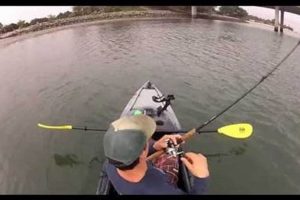
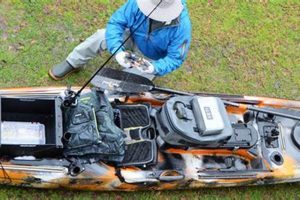
A customized storage and organization system implemented on fishing kayaks, typically using plastic milk crates as a foundation, offers anglers a practical and affordable solution for carrying equipment. These systems often involve attaching crates to the kayak deck with hardware and straps, and customizing them with rod holders, tackle boxes, and other accessories. This allows for a modular and adaptable setup tailored to individual fishing needs and kayak layouts.
Organized gear storage is crucial for kayak anglers, enhancing both safety and efficiency. Having essential tools and tackle readily accessible streamlines fishing practices, minimizes time spent searching for items, and reduces clutter on the kayak deck. This promotes better balance and maneuverability, crucial aspects of kayak fishing safety. Furthermore, the affordability and adaptability of crate-based systems make them a popular choice among anglers of varying experience levels. From basic setups to elaborate configurations, these systems represent a practical evolution of traditional tackle storage methods.
This article will explore the various components, construction methods, and customization options available for optimizing storage solutions on fishing kayaks. Discussions will encompass popular accessories, safety considerations, and examples of effective crate-based systems.
Tips for Optimizing Kayak Crate Systems
Effective crate systems enhance fishing experiences. Careful planning and execution are crucial for maximizing their utility and ensuring safety on the water.
Tip 1: Prioritize Stability: Low centers of gravity contribute to kayak stability. Heavier items should be placed lower in the crate system, closer to the kayak’s center.
Tip 2: Secure All Components: Thoroughly secure crates and accessories to the kayak using appropriate hardware and marine-grade rope or straps. Movement during paddling or reeling can compromise stability and damage equipment.
Tip 3: Customize for Accessibility: Frequently used items should be within easy reach. Rod holders, pliers, and essential tackle should be positioned for efficient access while maintaining balance.
Tip 4: Consider Weight Capacity: Kayak weight capacities include angler weight and all gear. Overloading compromises stability and safety. Select crate systems and equipment accordingly.
Tip 5: Plan for Specific Fishing Styles: Crate configurations should complement the angler’s targeted species and techniques. Trolling setups differ from those optimized for casting or fly fishing.
Tip 6: Regularly Inspect and Maintain: Hardware, straps, and crates can degrade over time, especially in saltwater environments. Regular inspections and maintenance are essential for ensuring system integrity.
Tip 7: Balance Weight Distribution: Distributing weight evenly across the kayak enhances stability and maneuverability. Avoid concentrating weight on one side.
Implementing these tips contributes significantly to a safer and more efficient kayak fishing experience. Well-organized gear facilitates quicker access to essential tools and reduces on-the-water adjustments, allowing for more focused fishing.
By understanding the principles of crate system design and incorporating these practical tips, anglers can maximize their enjoyment and success on the water.
1. Customization

Customization lies at the heart of milk crate systems’ effectiveness for kayak fishing. The ability to tailor these rigs to individual needs and preferences transforms a simple storage solution into a personalized fishing platform. This adaptability stems from the crate’s inherent modularity, allowing anglers to attach various accessories rod holders, tackle trays, fish finders, cutting boards, and even cup holders in configurations that optimize workflow and efficiency. For example, a bass angler might prioritize readily accessible lure trays and rod holders, while a fly fisherman might configure a system for quick fly changes and line management. This tailored approach minimizes wasted time and motion, crucial factors in successful kayak fishing.
Customization extends beyond accessory placement. Crate systems can be adapted to different kayak types and fishing styles. Anglers fishing in tight quarters might prioritize compact, vertically oriented setups, while those in open water could opt for broader, horizontally arranged systems. The choice of mounting hardware also contributes to customization, allowing for secure attachment to various kayak surfaces. Further personalization can involve adding custom paint, labels, or even lighting systems. This level of adaptability ensures each rig complements both the angler’s individual style and the specific demands of the chosen fishing environment.
Understanding the potential for customization unlocks the true value of milk crate systems in kayak fishing. While pre-configured options exist, the ability to personalize a rig significantly improves functionality and efficiency. This empowers anglers to create optimized fishing platforms, directly influencing their comfort, organization, and ultimately, their success on the water. Careful planning and execution of these customizations, however, remain crucial for maintaining stability and balance on the kayak.
2. Stability

Stability forms a cornerstone of safe and effective kayak fishing, significantly influenced by the design and implementation of milk crate rigs. These rigs, while offering valuable storage and organization, introduce added weight and potential changes to the kayak’s center of gravity. Careful consideration of weight distribution within the crate system is paramount. Concentrating heavier items low in the crate and centrally on the kayak minimizes the risk of tipping. Securing the crate system firmly to the kayak deck using appropriate hardware and sturdy straps is crucial. Movement of an unsecured crate can shift the center of gravity unexpectedly, compromising stability. Understanding the impact of wind and water conditions is equally important. Higher crate systems can increase wind resistance, affecting stability, particularly in challenging conditions. Practical experience demonstrates that improperly balanced or secured rigs contribute directly to instability, hindering maneuverability and posing safety risks.
The interplay between stability and crate system design involves several factors. Crate size and material selection impact overall weight. Larger crates offer greater storage but require more careful weight management. Heavier-duty crates contribute more significantly to the total load, influencing stability considerations. The choice of accessories also plays a role. Heavier rod holders or fish finders mounted high on the crate system can raise the center of gravity, potentially reducing stability. Rigging techniques, including the use of bungee cords or tie-down straps, must prioritize secure attachment while minimizing interference with paddling and fishing activities. For example, loose straps can become entangled, leading to instability during critical moments. Practical testing and adjustments in calm water prior to fishing trips allow anglers to assess stability characteristics and make necessary refinements. This proactive approach helps ensure a safe and balanced fishing experience.
Maintaining stability represents a continuous process requiring attention to detail and adaptation to changing conditions. Regular inspection of the crate system for loose hardware or wear and tear is essential. Adjusting the weight distribution within the crate system as needed throughout the fishing trip further optimizes stability. Recognizing the direct correlation between stability and safety underscores the importance of a well-designed and properly implemented milk crate rig. This understanding empowers anglers to create efficient and secure kayak fishing platforms, maximizing both enjoyment and safety on the water.
3. Accessibility

Efficient kayak fishing hinges on readily available tools and equipment. Milk crate rigs, when properly configured, significantly enhance accessibility, streamlining fishing processes and maximizing time on the water. Strategic placement of essential gear minimizes disruptive searches and improves overall safety by reducing clutter and unnecessary movement. Understanding the factors influencing accessibility in these systems is crucial for optimizing their effectiveness.
- Reach and Positioning:
Frequently used items, such as pliers, line cutters, and lures, benefit from placement within easy reach. Positioning these items on the crate’s top or sides facilitates quick access without requiring awkward reaching or shifting body weight, which can compromise kayak stability. For example, placing pliers in a readily accessible holster on the crate’s side allows for efficient line management while maintaining balance.
- Organization and Layout:
A well-organized crate system promotes efficient retrieval of specific items. Utilizing tackle boxes, trays, and dedicated compartments within the crate keeps gear separated and prevents tangled lines or lost lures. This systematic approach reduces time spent searching and contributes to a more focused fishing experience. Labeling compartments further enhances organization and retrieval speed, particularly in low-light conditions.
- Customization for Specific Techniques:
Accessibility needs vary based on fishing techniques. Trolling setups might prioritize easy access to different rods and planer boards, while fly fishing requires readily available fly boxes and tippet material. Customizing crate systems to accommodate these specific needs improves workflow and allows anglers to focus on the task at hand. For instance, dedicated compartments for different fly sizes or leader lengths streamline the fly fishing experience.
- Integration with Kayak Layout:
Crate systems should integrate seamlessly with the kayak’s overall layout. Positioning the crate to avoid interference with paddling strokes or other onboard equipment is crucial. Balancing accessibility with maneuverability ensures efficient use of space and prevents unintended obstructions. For example, a poorly positioned crate might hinder access to rod holders or impede comfortable paddling.
Prioritizing accessibility in milk crate rig design directly influences fishing efficiency and safety. Strategic placement, thoughtful organization, technique-specific customization, and seamless integration with the kayak layout collectively contribute to a more streamlined and productive fishing experience. By optimizing accessibility, anglers can reduce wasted time and effort, allowing for increased focus on the pursuit of their target species and a more enjoyable time on the water.
4. Durability
Durability is a critical factor in the effectiveness of kayak fishing milk crate rigs. These systems are exposed to harsh conditions, including saltwater, UV radiation, and physical impacts. Rig components, including the crates themselves, mounting hardware, and accessories, must withstand these stresses to ensure long-term functionality and safety. Crates constructed from high-density polyethylene (HDPE) offer superior durability compared to lower-grade plastics, resisting cracking and weathering. Marine-grade stainless steel hardware resists corrosion, maintaining structural integrity in saltwater environments. Durable, UV-resistant straps and tie-downs secure the system, preventing shifting and potential damage during transport and use. A failure in any of these components can compromise the entire rig, leading to lost gear, instability, and potential safety hazards. For instance, a broken strap can cause a crate to shift unexpectedly, affecting the kayak’s balance, while corroded hardware can fail under stress, leading to complete system collapse.
Selecting durable components represents an upfront investment that minimizes long-term maintenance and replacement costs. While less expensive alternatives may be tempting, their shorter lifespan often necessitates frequent repairs or replacements, ultimately increasing overall expenses. Durability also contributes to safety. A robust crate system provides a secure platform for essential gear, reducing the risk of equipment loss or damage. This stability is especially critical in challenging conditions, where a reliable rig can contribute significantly to angler safety. Practical applications demonstrate that durable systems withstand repeated use and exposure to the elements, maintaining their structural integrity and functionality over extended periods. Choosing materials specifically designed for marine environments, such as UV-resistant plastics and corrosion-resistant metals, directly impacts the system’s longevity and resistance to wear and tear. For example, using stainless steel fasteners instead of standard steel screws significantly reduces the risk of corrosion and hardware failure.
Prioritizing durability in the selection and construction of kayak fishing milk crate rigs ensures long-term reliability, minimizes maintenance requirements, and enhances safety on the water. Understanding the specific demands of the kayak fishing environment, including exposure to saltwater, UV radiation, and physical impacts, informs material choices and construction techniques. This proactive approach to durability contributes to a more efficient, secure, and ultimately, more enjoyable kayak fishing experience. Neglecting this aspect can lead to equipment failures, posing safety risks and compromising the overall effectiveness of the fishing platform. Investing in durable components upfront often proves more economical and safer in the long run.
5. Affordability

Affordability often influences decisions regarding kayak fishing equipment. Milk crate rigs offer a cost-effective approach to storage and organization compared to commercially available kayak-specific accessories. Understanding the financial implications of these systems helps anglers maximize value while equipping their kayaks effectively.
- Repurposing Existing Materials:
Milk crates, readily available at low cost or even free through recycling, form the foundation of these systems. Repurposing existing materials significantly reduces initial expenses. This allows anglers to allocate budget towards other essential equipment, like rods, reels, or safety gear. Examples include using readily available milk crates, repurposing plastic containers for tackle storage, and utilizing scrap wood or PVC pipe for rod holders.
- DIY Construction and Customization:
Constructing and customizing milk crate rigs often involves readily available and inexpensive materials like PVC pipe, zip ties, and basic hardware. DIY approaches minimize reliance on expensive, pre-fabricated accessories. Anglers can tailor their rigs to specific needs and preferences without significant financial investment. For example, building a custom rod holder from PVC pipe offers a considerable cost saving compared to purchasing a commercially manufactured equivalent.
- Modular Expansion and Upgrades:
The modular nature of milk crate systems allows for gradual expansion and upgrades. Anglers can start with a basic setup and add components as needed, distributing costs over time. This flexibility avoids the immediate expense of a fully equipped system, allowing for incremental investments aligned with evolving fishing styles and preferences. For instance, adding a fish finder mount or additional rod holders can be deferred until the angler’s budget allows.
- Accessibility for Budget-Conscious Anglers:
The affordability of milk crate rigs makes kayak fishing accessible to a wider range of anglers. Lowering the financial barrier to entry encourages participation in the sport and allows individuals to experience kayak fishing without significant upfront investment. This accessibility promotes inclusivity within the angling community and facilitates growth in the sport. For example, a beginner can start with a basic milk crate setup and gradually upgrade their equipment as their skills and budget allow.
The affordability of milk crate systems contributes significantly to their popularity within the kayak fishing community. By repurposing materials, embracing DIY approaches, enabling modular expansion, and enhancing accessibility, these rigs offer a practical and budget-friendly solution for organizing and transporting fishing gear. This cost-effectiveness allows anglers to allocate resources strategically, maximizing their investment in essential equipment and enhancing the overall kayak fishing experience. While affordability is a key advantage, careful planning and execution remain crucial to ensure system stability, durability, and safety. Balancing cost-effectiveness with these essential factors guarantees a reliable and enjoyable fishing platform.
6. Security

Secure storage of equipment is paramount in kayak fishing. Milk crate rigs, while offering versatile organization, require careful consideration regarding the security of both the system itself and the gear stored within. Loss of equipment due to inadequate security can disrupt fishing trips, incur financial setbacks, and potentially create safety hazards. A well-secured system contributes to peace of mind, allowing anglers to focus on fishing rather than managing precarious gear.
- Securing the Crate to the Kayak:
Proper attachment of the milk crate to the kayak deck is fundamental to overall system security. High-quality, marine-grade straps or hardware, resistant to corrosion and UV degradation, should be utilized. Multiple attachment points distribute stress and minimize the risk of detachment in rough conditions or during unexpected impacts. Loose or improperly secured crates can shift during paddling or maneuvering, creating instability and potentially ejecting gear. For example, using stainless steel bolts and locknuts provides a more secure attachment than plastic zip ties, which can degrade over time.
- Securing Gear within the Crate:
Items stored within the crate should be secured against movement, loss, or damage. Bungee cords, tie-down straps, or dedicated compartments within the crate can prevent gear from shifting or being ejected during transport or while on the water. Loose items can create noise, interfere with fishing activities, and potentially cause damage to the kayak or other equipment. For example, securing rods with rod holders and reels with straps prevents them from being dislodged during travel or unexpected rocking. Smaller items like tackle boxes and tools can be secured within the crate using bungee netting or foam inserts.
- Protection from Theft:
While theft is less of a concern during active fishing, kayaks left unattended require security measures to deter opportunistic theft. Crate systems can be secured to the kayak using locking mechanisms or cables, making it more difficult to remove. Valuable items, such as rods and reels, should be removed from the crate and stored securely when the kayak is unattended. Visible deterrents, such as cable locks or security stickers, can discourage theft. Kayaks stored on vehicle roof racks also benefit from additional security measures, such as locking straps or cable locks through the kayak and around the roof rack crossbars.
- Weather Protection:
Protecting gear from the elements is an essential aspect of security. Waterproof bags or containers within the crate safeguard sensitive electronics, tackle, and other items susceptible to water damage. Crate covers or lids prevent rainwater from accumulating within the crate, keeping gear dry and minimizing the risk of mildew or corrosion. These measures are particularly important during extended trips or when kayaks are stored outdoors. For example, storing electronic devices and important documents in waterproof bags or cases within the crate provides an additional layer of protection against rain, splashes, and accidental submersion.
Implementing robust security measures for milk crate rigs and their contents contributes significantly to a positive kayak fishing experience. A secure system minimizes the risk of equipment loss or damage, reduces distractions caused by shifting gear, and enhances safety by preventing instability. These precautions allow anglers to focus on fishing, knowing their equipment is well-protected and readily available. A secure and organized system also simplifies packing and unpacking, reducing preparation time and streamlining the overall fishing process.
7. Modularity
Modularity significantly enhances the versatility and adaptability of kayak fishing milk crate rigs. This inherent flexibility allows anglers to tailor their setups to specific needs and preferences, optimizing organization and accessibility on the water. Examining the facets of modularity reveals its practical benefits in kayak fishing applications.
- Configuration Adaptability
Modular systems accommodate various crate sizes, configurations, and accessory combinations. Anglers can arrange crates in vertical or horizontal orientations, adapting to available kayak space and individual preferences. This adaptability extends to accessory placement, allowing customization for specific fishing styles. For example, a trolling angler might prioritize rod holders and planer board mounts, while a fly fisherman might favor fly box storage and tippet dispensers. The ability to reconfigure the system with ease allows for adjustments based on evolving needs or changing fishing techniques.
- Scalability and Expansion
Modularity allows for system expansion over time. Anglers can start with a basic setup and gradually add components like rod holders, fish finder mounts, or additional crates as needed. This scalability eliminates the need for complete system overhauls when expanding storage capacity or incorporating new accessories. For example, as an angler explores different fishing techniques, they can easily add specialized components without replacing the entire crate system. This gradual expansion minimizes upfront investment and allows for cost-effective customization.
- Interchangeability and Replacement
Damaged or outdated components can be easily replaced within a modular system. This interchangeability simplifies maintenance and repairs, extending the system’s lifespan. Standard crate sizes and readily available hardware further enhance this aspect. For example, if a crate cracks or a rod holder breaks, the damaged component can be easily replaced without affecting the rest of the system. This ease of maintenance reduces downtime and minimizes repair costs.
- Portability and Storage
The modular nature of these rigs facilitates easy disassembly and storage. Crates and accessories can be detached and stored compactly, optimizing space during transport and off-season storage. This portability is particularly beneficial for anglers with limited storage space or those who frequently transport their kayaks. For example, detaching crates and accessories allows for easier loading and unloading of kayaks onto vehicle roof racks and simplifies storage in garages or sheds.
The modularity of milk crate rigs significantly contributes to their effectiveness and adaptability in kayak fishing. This inherent flexibility enables anglers to create personalized systems tailored to individual needs, fishing styles, and kayak configurations. From initial setup to ongoing customization and maintenance, modularity streamlines the process and maximizes the value of these versatile and cost-effective fishing platforms. The ability to adapt, expand, and easily maintain the system ensures long-term utility and contributes to a more enjoyable and productive fishing experience.
Frequently Asked Questions
Addressing common inquiries regarding kayak fishing milk crate rigs clarifies potential misconceptions and provides practical guidance for anglers considering these systems.
Question 1: How much weight can a milk crate rig safely support on a kayak?
Weight capacity depends on crate construction, kayak specifications, and mounting methods. While crates themselves can hold significant weight, the limiting factor is often the kayak’s overall weight capacity and the strength of the attachment points. Exceeding these limits compromises stability and safety. Consulting the kayak manufacturer’s specifications and carefully evaluating attachment methods are essential.
Question 2: What materials are recommended for constructing durable and long-lasting milk crate rigs?
High-density polyethylene (HDPE) crates offer superior durability and resistance to weathering. Marine-grade stainless steel hardware is crucial for corrosion resistance, especially in saltwater environments. UV-resistant straps and tie-downs ensure secure attachment and longevity. Selecting quality materials upfront minimizes long-term maintenance and replacement needs.
Question 3: How can crate systems be secured to prevent movement and maintain kayak stability?
Multiple attachment points using high-quality straps or hardware are essential. Distributing the load and securing the crate firmly to the kayak deck minimize shifting during paddling or maneuvering. Regular inspection of attachment points for wear and tear is crucial for maintaining system integrity. Prioritizing secure attachment contributes directly to stability and safety.
Question 4: Are milk crate rigs suitable for all types of kayaks and fishing styles?
Crate system design should complement kayak type and fishing style. Compact, vertically oriented setups might suit smaller kayaks or those used in tight spaces. Larger kayaks or open-water fishing might benefit from broader, horizontally arranged systems. Customization allows for adaptation to specific needs and preferences.
Question 5: How can gear be organized effectively within a milk crate system to maximize accessibility?
Utilizing tackle boxes, trays, and dedicated compartments within the crate promotes organization and prevents tangles. Positioning frequently used items within easy reach minimizes disruptive searches. Labeling compartments enhances retrieval speed, especially in low-light conditions. Prioritizing organization streamlines fishing processes and enhances efficiency.
Question 6: What safety precautions should be considered when using milk crate rigs on fishing kayaks?
Maintaining a low center of gravity by placing heavier items lower in the crate is crucial for stability. Ensuring adequate freeboard prevents swamping. Regularly inspecting the crate system for wear and tear identifies potential hazards. Understanding kayak weight capacity limitations prevents overloading. Adhering to established safety practices enhances overall safety.
Careful consideration of these frequently asked questions helps anglers understand the practical implications of incorporating milk crate rigs into their kayak fishing setups. Addressing these common concerns promotes informed decisions, optimizing both safety and functionality on the water.
Exploring specific examples of milk crate rig configurations provides further practical insights and inspiration for anglers looking to customize their own systems. The following section showcases various effective and adaptable designs.
Kayak Fishing Milk Crate Rigs
Kayak fishing milk crate rigs offer anglers a practical, adaptable, and cost-effective solution for gear organization and accessibility. From initial setup to long-term use, these systems present distinct advantages, including customizable configurations, modular expansion, and enhanced stability when implemented correctly. Material selection, secure attachment methods, and thoughtful weight distribution contribute significantly to system durability, safety, and overall performance. Addressing key considerations, such as stability, accessibility, durability, affordability, security, and modularity, empowers anglers to maximize the benefits of these versatile systems.
Careful planning and execution are essential for maximizing the potential of kayak fishing milk crate rigs. Understanding the interplay between these systems and overall kayak stability, angler safety, and fishing efficiency underscores the importance of informed decision-making in their design and implementation. Strategic customization and adherence to established safety practices enhance the kayak fishing experience, promoting organization, accessibility, and ultimately, a more productive and enjoyable time on the water. Continued exploration of innovative design and implementation techniques promises further advancements in the utility and effectiveness of kayak fishing milk crate rigs.