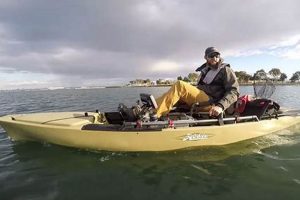
Specialized storage containers designed for anglers using kayaks provide a secure and organized method for carrying essential equipment like tackle boxes, rods, and other fishing gear. These containers are typically constructed from durable, weather-resistant materials and often feature specialized compartments and attachment points compatible with kayak rigging systems.
Organized storage solutions are crucial for maximizing space efficiency and maintaining a safe, uncluttered fishing environment in the limited confines of a kayak. A well-planned system facilitates quick access to necessary equipment, minimizing disruptions during the fishing process and contributing to a more enjoyable and productive experience. Historically, anglers adapted various existing containers for use on kayaks. However, the increasing popularity of kayak fishing has spurred the development of purpose-built solutions that offer improved functionality, durability, and integration with kayak designs.
This article will explore various aspects of choosing, using, and maintaining appropriate storage for kayak angling, covering topics such as material selection, mounting options, organization strategies, and recommended accessories.
Tips for Optimized Kayak Angling Storage
Effective storage is paramount for a successful kayak fishing excursion. These tips offer guidance on maximizing space and efficiency.
Tip 1: Prioritize essential gear. Carefully consider necessary equipment for the specific fishing trip and avoid carrying unnecessary items that occupy valuable space.
Tip 2: Utilize specialized containers. Purpose-built containers offer superior organization and protection compared to generic storage options.
Tip 3: Secure all equipment. Implement appropriate tie-down straps or bungee cords to prevent gear shifting or loss, especially in rough water conditions.
Tip 4: Consider weight distribution. Distribute weight evenly within the kayak to maintain stability and prevent tipping. Heavier items should be placed low and centrally.
Tip 5: Employ dry bags for sensitive items. Electronics, wallets, and other valuables should be stored in waterproof bags for protection against splashes and submersion.
Tip 6: Optimize access to frequently used items. Position frequently accessed gear, such as pliers and lures, within easy reach to minimize disruption during fishing.
Tip 7: Regularly inspect and maintain storage solutions. Periodically check containers for wear and tear, ensuring latches, hinges, and straps are functioning correctly.
By implementing these strategies, anglers can enhance safety, efficiency, and overall enjoyment on the water.
These tips offer a starting point for optimizing storage solutions. Further research and experimentation will help anglers refine their individual setups for maximum effectiveness.
1. Durability

Durability is a critical factor in selecting appropriate storage solutions for kayak fishing. Exposure to harsh marine environments, including saltwater, UV radiation, and physical impacts, necessitates robust construction to ensure long-term functionality and protect valuable equipment.
- Material Selection
The primary material of the crate significantly influences its durability. High-density polyethylene (HDPE) is a popular choice due to its impact resistance, UV stability, and resistance to saltwater corrosion. Other suitable materials include polypropylene and ABS plastic, each offering a balance of strength, weight, and cost-effectiveness. Inferior materials may crack, fade, or become brittle over time, compromising the integrity of the storage system.
- Construction Quality
Beyond material choice, construction quality plays a vital role in overall durability. Reinforced corners, robust hinges and latches, and UV-resistant coatings contribute to a longer lifespan. Poorly constructed crates, even those made from durable materials, may fail prematurely due to weak points in the design or assembly.
- Hardware and Fasteners
Stainless steel or other corrosion-resistant hardware is essential for maintaining functionality in saltwater environments. Rusting hinges, latches, and screws can compromise the structural integrity of the crate and lead to failures. High-quality fasteners also contribute to a more secure and reliable storage solution.
- Maintenance and Care
Even the most durable crate benefits from proper maintenance. Regularly rinsing with freshwater after saltwater exposure, inspecting for damage, and replacing worn hardware can significantly extend the lifespan of the storage system. Neglecting routine maintenance can accelerate wear and tear, leading to premature failure.
Selecting a durable storage solution minimizes the risk of equipment loss or damage, contributing to a safer and more enjoyable kayak fishing experience. Prioritizing durability also reduces the long-term cost of ownership by minimizing the need for frequent replacements.
2. Size and Capacity

Appropriate size and capacity are crucial factors when selecting storage solutions for kayak fishing. Kayaks offer limited space, necessitating careful consideration of storage dimensions to avoid clutter and maintain stability. Oversized containers can restrict movement and impede paddling, while undersized options limit the amount of gear that can be carried. The ideal size and capacity depend on individual fishing styles, target species, and the duration of trips. For example, an angler targeting large pelagic species may require more robust tackle and thus a larger storage capacity compared to someone fishing for panfish in a small pond. Careful evaluation of gear requirements and available kayak space is essential for selecting the optimal storage solution.
Capacity considerations extend beyond overall volume to encompass the specific organization and accessibility of stored items. A large crate with inadequate internal organization can become cluttered and inefficient, making it difficult to locate specific items quickly. Features such as dividers, trays, and specialized compartments enhance organization and maximize usable capacity. For instance, a crate designed for tackle boxes might include adjustable dividers to accommodate various sizes and configurations, while a crate intended for rods could feature dedicated slots or tubes to prevent tangling and damage. Selecting crates with appropriate organizational features contributes significantly to efficient gear management and a more productive fishing experience.
The interplay between size, capacity, and kayak stability is a critical consideration. Overloading a kayak, even within its stated weight capacity, can compromise stability, especially in rough conditions. Proper weight distribution is essential for maintaining balance and preventing capsizing. Larger crates tend to hold more weight, increasing the importance of careful packing and distribution. Distributing heavier items low and centrally within the kayak improves stability. Understanding the relationship between crate size, capacity, and weight distribution is crucial for ensuring a safe and enjoyable kayak fishing experience.
3. Secure Mounting
Secure mounting of storage solutions is paramount in kayak fishing, ensuring equipment remains stable and accessible despite the dynamic nature of the on-water environment. Properly secured crates prevent shifting and potential loss of gear due to waves, wakes, or sudden maneuvers. Stability contributes significantly to both angler safety and efficient fishing practices.
- Mounting Location
Strategic crate placement maximizes both stability and accessibility. Positioning crates within easy reach minimizes disruption during fishing, while avoiding interference with paddling strokes. Locations behind the seat or in front of the angler’s legs often provide a good balance of accessibility and stability. Evaluating the kayak’s layout and individual fishing style is crucial for determining optimal placement.
- Mounting Hardware
Utilizing appropriate hardware ensures secure attachment to the kayak. Heavy-duty straps, stainless steel D-rings, and specialized mounting tracks provide robust and reliable anchoring points. Hardware should be compatible with the crate’s design and the kayak’s mounting system. Compromising on hardware quality increases the risk of crate dislodgement, potentially leading to gear loss or damage.
- Securing Techniques
Proper securing techniques maximize stability and prevent movement during use. Straps should be tightened firmly and evenly, avoiding excessive tension that could damage the crate or the kayak. Employing multiple attachment points distributes forces effectively and enhances overall security. Regular inspection and adjustment of straps are essential for maintaining a secure and reliable system.
- Integration with Kayak Design
Crate selection should consider integration with the kayak’s design. Some kayaks offer integrated mounting systems or dedicated areas for crate placement, simplifying installation and enhancing stability. Ignoring design considerations can lead to awkward placement, compromised stability, or interference with other kayak features.
A securely mounted crate system enhances safety by preventing gear from shifting during movement, minimizing the risk of entanglement or tripping. It also contributes to a more efficient and enjoyable fishing experience by keeping essential gear organized and readily accessible, allowing anglers to focus on the task at hand.
4. Accessibility

Efficient access to gear is paramount in kayak fishing, directly impacting both angler safety and fishing success. Reaching for equipment necessitates shifting body weight, potentially compromising kayak stability. A well-designed storage system minimizes the need for excessive movement, contributing to a safer and more efficient fishing experience. Easy access to essential tools and tackle also allows anglers to react quickly to changing fishing conditions, maximizing opportunities for success.
- Reach and Positioning
Crate placement significantly influences accessibility. Positioning crates within easy reach minimizes the need for stretching or twisting, reducing the risk of losing balance. Ideal placement allows anglers to retrieve frequently used items with minimal effort, maintaining a stable and comfortable fishing posture. Positioning a crate too far forward or behind the angler can create an imbalance and necessitate awkward reaching, potentially leading to instability. Optimal placement depends on individual kayak configuration and angler preferences.
- Lid Design and Opening Mechanisms
Crate lids and opening mechanisms impact how easily contents can be accessed. Secure latches prevent accidental opening while ensuring quick access when needed. One-handed operation is desirable, allowing anglers to maintain paddle control while retrieving gear. A poorly designed lid or latch can be cumbersome, requiring two hands to open and increasing the risk of dropping items or losing balance. Latches should be robust and resistant to accidental opening, yet easy to operate even with wet hands or in challenging conditions.
- Internal Organization
Internal organization significantly influences accessibility. Dividers, trays, and specialized compartments allow for logical arrangement of gear, facilitating quick retrieval of specific items. Without proper organization, crates can become cluttered and inefficient, requiring anglers to rummage through contents, increasing the risk of tangling lines or losing small items. A well-organized crate allows anglers to quickly locate and retrieve the necessary gear, minimizing disruption and maximizing fishing time.
- Visibility
Clear lids or internal compartments improve visibility, allowing anglers to quickly identify and locate items without having to open the crate. This is particularly beneficial in low-light conditions or when searching for specific lures or tools. Enhanced visibility reduces the time spent searching for gear and minimizes disruption to the fishing process.
Prioritizing accessibility in crate selection and organization enhances both safety and fishing effectiveness. Reduced reaching and efficient retrieval contribute to a more stable and comfortable fishing experience, allowing anglers to focus on the task at hand and maximize their chances of success. Well-designed and strategically placed crates provide a seamless and efficient workflow, contributing to a more enjoyable and productive time on the water.
5. Weather Resistance

Weather resistance is a critical factor for kayak fishing crates, given their constant exposure to the elements. These crates safeguard essential fishing gear from rain, splashes, and even occasional submersion. A lack of weather resistance can lead to corrosion of tackle, damage to electronics, and spoilage of bait or food. For example, a poorly sealed crate might allow rainwater to seep in, rusting hooks and damaging sensitive electronic fish finders. Conversely, a well-sealed crate maintains the integrity of its contents, ensuring equipment remains functional and ready for use.
Several factors contribute to a crate’s weather resistance. The material itself plays a significant role. High-density polyethylene (HDPE) and other similar plastics offer inherent water resistance. Construction quality, including tight seals and gaskets around lids and closures, further enhances protection. Well-designed drainage systems prevent water accumulation within the crate, even if some leakage occurs. For example, a crate with strategically placed drain holes allows water to escape, preventing prolonged exposure to sensitive equipment. Durable latches and hinges resist corrosion and maintain a tight seal even after repeated exposure to saltwater.
Understanding the importance of weather resistance allows anglers to make informed decisions when selecting kayak fishing crates. Prioritizing weather-resistant features contributes to the longevity of equipment and the overall success of fishing trips. A weather-resistant crate safeguards valuable gear, ensuring functionality and preventing costly replacements. This knowledge empowers anglers to select appropriate storage solutions that meet the specific demands of the kayak fishing environment.
6. Customization Options

Customization options significantly enhance the utility of kayak fishing crates, enabling anglers to tailor storage solutions to individual needs and preferences. Modular designs, adjustable components, and compatibility with aftermarket accessories allow for personalized configurations that optimize gear organization and access. This adaptability contributes to a more efficient and enjoyable fishing experience by streamlining workflows and maximizing available space within the limited confines of a kayak. For example, adjustable dividers within a crate can be repositioned to accommodate various tackle box sizes, while external mounting points allow for the attachment of rod holders, fish finders, or other accessories. Anglers specializing in fly fishing might prioritize compartments designed for fly boxes and tools, while those focused on trolling might opt for configurations that secure larger tackle boxes and planer boards.
The ability to customize crate systems extends beyond simple organization to encompass integration with specific fishing techniques and environments. Kayak anglers frequently modify crates to accommodate specialized equipment, such as anchor trolleys, livewells, or camera mounts. These modifications often involve drilling holes, attaching custom brackets, or integrating aftermarket accessories. The availability of customization options empowers anglers to adapt their storage solutions to diverse fishing styles and environments. An angler fishing in shallow saltwater flats might configure a crate with rod holders and a shallow-water anchor system, while someone fishing in deeper lakes might prioritize a setup with downrigger mounts and a fish finder transducer arm. Furthermore, customization allows anglers to adapt to evolving needs and preferences over time, extending the lifespan and utility of their equipment. A crate initially configured for bass fishing can be easily reconfigured for crappie fishing by changing the internal dividers and adding specialized storage for smaller jigs and lures.
Customization options contribute significantly to the versatility and long-term value of kayak fishing crates. The ability to tailor storage solutions to individual needs and preferences enhances efficiency, comfort, and overall fishing success. While pre-configured crates offer a convenient starting point, the ability to customize and adapt these systems to evolving needs ultimately empowers anglers to create truly personalized and optimized on-the-water experiences. This adaptability also contributes to sustainability by reducing the need for frequent replacements as fishing styles or target species change. Careful consideration of customization options during crate selection empowers anglers to invest in adaptable solutions that provide long-term value and support a diverse range of fishing pursuits.
Frequently Asked Questions
This section addresses common inquiries regarding optimized storage solutions for kayak angling.
Question 1: What materials are most suitable for kayak fishing storage containers?
Durable, weather-resistant materials are essential. High-density polyethylene (HDPE) is a popular choice due to its strength, UV resistance, and ability to withstand harsh marine environments. Other suitable options include polypropylene and ABS plastic.
Question 2: How does one determine the appropriate size and capacity for a kayak fishing crate?
Appropriate size depends on individual fishing styles, target species, and kayak capacity. Careful consideration of necessary gear and available space is crucial. Oversized containers can compromise stability and impede paddling, while undersized options limit storage capacity.
Question 3: What are the most effective methods for securing crates to a kayak?
Secure mounting prevents shifting and potential gear loss. Heavy-duty straps, stainless steel D-rings, and specialized mounting tracks offer robust attachment points. Proper securing techniques, including even strap tension and multiple attachment points, maximize stability.
Question 4: How can accessibility be optimized in kayak fishing storage solutions?
Strategic crate placement within easy reach minimizes disruptive movements. Efficient lid designs and internal organization facilitate quick retrieval of necessary gear. Clear lids or compartments enhance visibility, aiding in quick identification of stored items.
Question 5: Why is weather resistance important for kayak fishing crates?
Weather resistance protects gear from the elements, preventing corrosion, damage, and spoilage. Tight seals, gaskets, and drainage systems contribute to effective weatherproofing. Durable latches and hinges maintain a secure seal even after repeated exposure to saltwater.
Question 6: What customization options enhance the utility of kayak fishing crates?
Modular designs, adjustable dividers, and compatibility with aftermarket accessories allow for personalized configurations. Customization enables anglers to tailor storage solutions to specific needs and fishing styles, maximizing efficiency and organization.
Careful consideration of these frequently asked questions empowers anglers to make informed decisions regarding kayak fishing storage solutions, enhancing both safety and fishing success.
The next section will explore specific product recommendations based on these criteria.
Conclusion
Effective storage solutions are integral to successful kayak angling. Careful selection and utilization of specialized containers directly impacts safety, efficiency, and overall enjoyment on the water. Durability, size, secure mounting, accessibility, weather resistance, and customization options are critical factors influencing crate selection. Understanding these elements empowers anglers to make informed decisions, optimizing gear organization and maximizing fishing success.
Strategic planning and thoughtful consideration of individual needs and fishing styles are essential for maximizing the benefits of specialized kayak fishing storage. Appropriate storage contributes not only to a more organized and efficient fishing experience but also enhances safety and promotes responsible enjoyment of the sport. Investing in robust, well-designed storage systems represents an investment in the longevity of equipment and the pursuit of a more rewarding and sustainable approach to kayak angling.