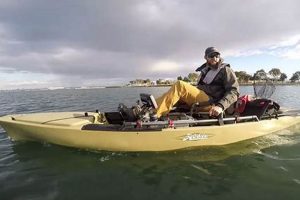
A specialized insulated container designed for transporting food and beverages while kayak fishing offers storage solutions specifically tailored to the limitations and demands of this activity. These containers are typically compact and portable, often featuring attachment points for securing them to the kayak and specialized compartments for organizing tackle and other fishing essentials.
Maintaining fresh catches and cool drinks contributes significantly to a successful and enjoyable fishing experience. This type of specialized storage allows anglers to extend their time on the water, venture further from launch points, and preserve the quality of their catch. The evolution of these products reflects the increasing popularity and specialization within the sport of kayak fishing, moving from basic coolers to purpose-built equipment integrating features like rod holders and waterproof construction.
The following sections will explore key considerations for selecting an appropriate insulated container for kayak angling, including size, features, materials, and popular brands.
Tips for Selecting a Kayak Fishing Cooler Bag
Choosing the right insulated container for kayak fishing requires careful consideration of various factors to ensure optimal performance and enjoyment on the water.
Tip 1: Size and Capacity: Consider the intended duration of fishing trips and the anticipated quantity of food and beverages. A smaller, lighter option suffices for short excursions, while longer trips necessitate larger capacities.
Tip 2: Insulation Performance: Prioritize superior insulation to maintain low temperatures for extended periods, especially in warmer climates. Look for features like thick walls and airtight seals.
Tip 3: Attachment and Stability: Secure attachment points are crucial for preventing movement or tipping during paddling and maneuvering. Non-slip surfaces on the base contribute to stability within the kayak.
Tip 4: Durability and Construction: Opt for rugged, waterproof materials designed to withstand harsh marine environments and potential impacts. Reinforced seams and robust zippers enhance longevity.
Tip 5: Features and Accessories: Consider features like integrated cutting boards, cup holders, and fishing rod holders for added convenience and functionality. Assess the practicality of each feature based on individual fishing styles.
Tip 6: Weight and Portability: Balance capacity with portability. A heavier container, even when empty, can affect kayak stability and maneuverability.
Tip 7: Price and Value: Evaluate the features and durability relative to the cost to determine overall value. While premium options offer enhanced performance, budget-friendly alternatives may suffice for occasional use.
By carefully evaluating these factors, anglers can select an insulated container optimized for their specific needs and enhance their overall kayak fishing experience.
This information provides a foundation for making informed decisions when selecting essential equipment for kayak fishing.
1. Insulation

Insulation is paramount in a kayak fishing cooler bag, directly impacting the preservation of stored items. Effective insulation minimizes heat transfer, maintaining lower internal temperatures for extended periods. This is crucial for preserving the quality and safety of catches, especially in warm climates where spoilage accelerates rapidly. Without adequate insulation, a fishing trip can be compromised by spoiled food, warm drinks, and the potential loss of valuable catches. Consider a scenario where an angler lands a prized fish several hours from the launch point. Insufficient insulation could lead to spoilage before reaching shore, negating the effort and excitement of the catch.
The type and thickness of insulation material significantly influence performance. Closed-cell foam, often used in high-end cooler bags, provides superior insulation compared to less expensive alternatives. Thicker insulation generally equates to better temperature retention, but adds to the overall weight and bulk of the bag. The choice of insulation material also affects durability and resistance to moisture and impacts. For example, closed-cell foam is more resistant to water absorption than open-cell foam, preserving its insulating properties even in wet conditions common in kayak fishing environments.
Understanding the role of insulation is essential for informed purchasing decisions. Evaluating insulation quality and thickness alongside other factors like capacity and features allows anglers to select a cooler bag that meets their specific needs and ensures a successful fishing experience. The compromise between insulation performance, weight, and cost requires careful consideration. Investing in a well-insulated cooler bag safeguards catches and provisions, ultimately contributing to a more enjoyable and productive outing on the water.
2. Capacity
Cooler bag capacity is a critical factor in kayak fishing, directly influencing the quantity of provisions and catch that can be stored. Appropriate capacity selection depends on trip duration, intended catch size, and individual storage needs. Insufficient capacity can limit fishing range and duration, while excessive capacity adds unnecessary weight and bulk, impacting kayak stability and maneuverability. Balancing these considerations is essential for an efficient and enjoyable fishing experience.
- Storage Volume:
Storage volume, typically measured in quarts or liters, determines the overall space available within the cooler bag. A smaller volume, around 20-30 quarts, suffices for short trips targeting smaller fish. Longer expeditions or pursuit of larger species necessitate larger volumes, potentially exceeding 45 quarts. Accurately estimating required storage volume ensures adequate space for food, beverages, and anticipated catches without overburdening the kayak.
- Catch Size and Quantity:
Anticipated catch size and quantity directly influence the required cooler bag capacity. Targeting larger fish necessitates a cooler with sufficient internal dimensions to accommodate them comfortably. Planning to keep multiple smaller fish requires ample overall storage volume. Overestimating capacity requirements slightly provides flexibility for unexpected catches, preventing the need to discard fish prematurely due to storage limitations.
- Trip Duration and Provisioning:
Trip duration determines the quantity of food and beverages required, influencing cooler bag capacity needs. Longer trips necessitate more provisions, increasing storage requirements. Balancing provision storage with space for anticipated catches is crucial for efficient capacity utilization. For instance, a multi-day fishing expedition requires careful planning to accommodate both food and potential catches within the available cooler space.
- Kayak Size and Stability:
Kayak size and stability impose practical limitations on cooler bag capacity. Smaller kayaks have less storage space, restricting cooler bag size. Larger, more stable kayaks can accommodate larger cooler bags but require careful weight distribution to maintain balance and maneuverability. Exceeding the kayak’s weight capacity can compromise stability, posing safety risks. Therefore, cooler bag capacity must be chosen in conjunction with kayak specifications to ensure a safe and balanced setup.
Careful consideration of these factors ensures that the chosen cooler bag capacity aligns with the specific demands of kayak fishing. Selecting the appropriate capacity enhances both the efficiency and enjoyment of the fishing experience by optimizing storage space utilization while maintaining kayak stability and maneuverability. Striking the right balance between these factors contributes significantly to a successful and rewarding outing on the water.
3. Portability
Portability is a crucial factor when selecting a kayak fishing cooler bag. Kayak anglers often navigate varying terrain and water conditions, requiring equipment that is easy to transport and manage. A cumbersome cooler bag can hinder mobility and detract from the overall fishing experience. The following facets highlight the key aspects of portability in relation to kayak fishing cooler bags.
- Weight:
A lightweight cooler bag is essential for easy transport to and from the kayak launch point. Heavier bags can be cumbersome, especially when navigating uneven terrain or launching from remote locations. The weight of the cooler bag, even when empty, should be manageable, allowing for comfortable carrying and loading onto the kayak. Materials like high-density polyethylene offer a balance of durability and lightweight construction.
- Size and Dimensions:
Compact dimensions are essential for convenient storage within the limited space of a kayak. A bulky cooler bag can impede paddling and restrict movement within the kayak. The cooler bag’s dimensions should be proportionate to the kayak’s size and available storage space. Features like collapsible designs or removable straps can enhance portability and storage efficiency.
- Carrying System:
A comfortable and efficient carrying system simplifies transport. Padded shoulder straps, adjustable back panels, and robust carry handles contribute to comfortable carrying, even over longer distances. Features like integrated tie-down points or lashing straps allow for secure attachment to the kayak, preventing shifting during transit or paddling.
- Compact Design:
A streamlined, compact design minimizes bulk and maximizes space utilization within the kayak. Features like recessed handles and integrated compartments contribute to a compact profile without sacrificing storage capacity. A well-designed cooler bag minimizes its footprint within the kayak, maximizing space for other essential equipment and enhancing overall comfort and maneuverability.
Careful consideration of these portability factors ensures that the chosen cooler bag enhances rather than hinders the kayak fishing experience. A portable cooler bag simplifies transport, maximizes kayak space utilization, and allows for greater freedom of movement on the water. By prioritizing portability, anglers can focus on the enjoyment and success of their fishing trip without being burdened by cumbersome equipment.
4. Durability

Durability is a paramount concern for kayak fishing cooler bags, given the demanding conditions they face. Exposure to saltwater, UV radiation, and potential impacts necessitates robust construction to ensure longevity and reliable performance. A durable cooler bag protects stored items and provides consistent temperature regulation throughout numerous fishing excursions. Compromising on durability can lead to premature failure, equipment replacement costs, and potential disruption of fishing trips.
- Material Selection:
The choice of material significantly influences a cooler bag’s resistance to abrasion, punctures, and UV degradation. High-density polyethylene, often used in roto-molded coolers, offers exceptional durability and impact resistance. Nylon and polyester fabrics, commonly used in soft-sided cooler bags, provide varying degrees of abrasion and tear resistance. Selecting materials specifically designed for marine environments ensures long-term performance and withstands the rigors of kayak fishing.
- Construction Quality:
Robust construction techniques, including reinforced seams, heavy-duty zippers, and durable hardware, contribute significantly to overall durability. Double-stitched or welded seams provide superior strength and resistance to tearing. High-quality zippers and buckles resist corrosion and maintain functionality even after repeated exposure to saltwater. Investing in a well-constructed cooler bag minimizes the risk of failure in demanding conditions.
- Impact Resistance:
Kayak fishing often involves navigating challenging environments, increasing the risk of impacts and drops. A cooler bag with robust impact resistance protects stored items and maintains structural integrity. Features like reinforced corners and impact-resistant liners provide additional protection against accidental damage. Cooler bags designed to withstand rough handling ensure reliable performance throughout numerous fishing trips.
- Water Resistance:
Effective water resistance safeguards stored items from moisture damage and preserves the cooler bag’s insulating properties. Waterproof zippers, sealed seams, and water-repellent fabrics contribute to overall water resistance. A cooler bag capable of withstanding splashes, rain, and even submersion protects contents and maintains performance in wet conditions inherent to kayak fishing.
Prioritizing durability in a kayak fishing cooler bag ensures long-term reliability and consistent performance in challenging environments. Investing in a durable cooler bag minimizes the risk of equipment failure, protects stored items, and ultimately enhances the overall fishing experience. By carefully considering material selection, construction quality, impact resistance, and water resistance, anglers can choose a cooler bag that withstands the rigors of kayak fishing and provides years of reliable service.
5. Attachments

Secure attachment systems are crucial for integrating a cooler bag into a kayak fishing setup. These systems prevent unwanted movement or shifting of the cooler during paddling and maneuvering, ensuring stability and accessibility. Effective attachment mechanisms contribute significantly to both safety and efficiency on the water, allowing anglers to focus on fishing rather than managing their equipment.
- Integrated Attachment Points:
Cooler bags designed specifically for kayak fishing often feature integrated attachment points, such as D-rings, loops, or straps. These built-in features provide secure anchoring points for connecting the cooler to the kayak’s deck or rails using bungee cords, straps, or carabiners. Integrated attachment points offer a convenient and reliable solution, eliminating the need for aftermarket modifications or adaptations.
- Straps and Tie-Downs:
Adjustable straps and tie-down systems allow for secure fastening of the cooler bag to various points within the kayak. These systems offer flexibility in positioning the cooler bag for optimal accessibility and weight distribution. Durable straps with secure buckles or clips ensure a firm hold, preventing movement even in rough water conditions. Selecting straps specifically designed for marine environments enhances resistance to UV degradation and saltwater corrosion.
- Kayak Compatibility:
Consideration of kayak compatibility is essential when selecting attachment methods. Different kayaks offer varying attachment points and deck configurations. Ensuring compatibility between the cooler bag’s attachment system and the kayak’s design ensures secure and stable integration. Some kayaks feature dedicated cooler bag tie-down points, while others require more versatile attachment solutions.
- Attachment Stability and Security:
The primary function of attachment systems is to prevent unwanted movement of the cooler bag during paddling and fishing. A stable and secure attachment minimizes the risk of tipping or shifting, protecting both the cooler’s contents and the kayak’s balance. Testing the attachment system’s security before venturing onto the water is crucial for ensuring a safe and enjoyable fishing experience.
Effective attachment systems contribute significantly to the overall functionality and safety of a kayak fishing cooler bag. Securely attaching the cooler bag to the kayak prevents unwanted movement, maximizes stability, and allows anglers to focus on fishing without the distraction of managing loose equipment. Careful consideration of attachment options and compatibility with the specific kayak model ensures a seamless and secure integration, enhancing the overall fishing experience.
6. Water Resistance

Water resistance is a critical feature in kayak fishing cooler bags, given the inherent exposure to moisture in this activity. From splashes and rain to occasional submersion, a cooler bag’s ability to repel water directly impacts its functionality and the preservation of its contents. Compromised water resistance can lead to soaked gear, spoiled food, and damage to the cooler itself, significantly impacting the enjoyment and success of a fishing trip.
- Protection from the Elements:
Kayak fishing exposes gear to various weather conditions, including rain, spray, and even full submersion in the event of a capsize. A water-resistant cooler bag safeguards contents from these elements, ensuring that food, drinks, and electronic devices remain dry and functional. This protection is essential for maintaining comfort and safety on the water, especially during extended trips or adverse weather conditions. For instance, a sudden downpour during a fishing trip could ruin sensitive electronic devices or spoil packed lunches without a water-resistant cooler bag.
- Preservation of Insulation:
Many cooler bags rely on insulating materials that lose their effectiveness when wet. Water ingress can saturate these materials, diminishing their ability to regulate temperature. A water-resistant cooler bag protects the insulation from moisture, maintaining its performance and preserving the integrity of stored items, particularly crucial for keeping catches fresh and beverages cool. Consider an angler who catches a prized fish several hours from shore. A waterlogged cooler bag could compromise the fish’s quality by allowing the internal temperature to rise.
- Durability and Longevity:
Constant exposure to moisture can degrade materials, leading to premature wear and tear. Water-resistant materials and construction methods protect the cooler bag from the damaging effects of water, enhancing its durability and extending its lifespan. Features like waterproof zippers and sealed seams prevent water from entering the cooler’s interior, protecting both the contents and the structural integrity of the bag itself. This durability is essential for withstanding the demanding conditions inherent to kayak fishing.
- Maintenance and Cleaning:
Water-resistant materials often facilitate easier cleaning and maintenance. Spills and splashes can be easily wiped away, and the exterior can be rinsed without fear of water damage. This ease of cleaning is particularly beneficial in a kayak fishing environment where exposure to fish, bait, and saltwater is common. A quick rinse after each trip maintains the cooler bag’s appearance and prevents the buildup of grime and odors.
In conclusion, water resistance plays a vital role in the overall performance and longevity of a kayak fishing cooler bag. Protecting contents from the elements, preserving insulation effectiveness, enhancing durability, and simplifying cleaning processes, water resistance contributes significantly to a successful and enjoyable kayak fishing experience. Choosing a cooler bag with appropriate water resistance features ensures that gear remains dry, catches stay fresh, and the cooler itself withstands the rigors of the marine environment.
7. Special Features
Specialized features distinguish kayak fishing cooler bags from standard coolers, enhancing their functionality and convenience on the water. These features cater specifically to the needs of kayak anglers, addressing challenges and improving the overall fishing experience. Understanding the purpose and benefits of these features enables informed purchasing decisions, optimizing equipment selection for individual fishing styles and preferences. For example, integrated rod holders provide secure storage for fishing rods during paddling, preventing entanglement and freeing hands for navigation. Similarly, specialized compartments for tackle and bait organization streamline access to essential gear, minimizing time spent searching and maximizing fishing time.
Several key special features enhance the utility of kayak fishing cooler bags. Non-slip surfaces or anchoring systems maintain stability during paddling and prevent sliding on wet surfaces. Built-in cutting boards offer convenient preparation areas for bait or filleting catches directly on the water. Attachment points for accessories like fish finders or GPS units further integrate the cooler into the kayak’s electronics system. Consider a scenario where an angler needs to quickly change lures. Easy access to tackle within a dedicated compartment simplifies the process without disrupting fishing flow. Furthermore, features like cup holders or bottle openers enhance convenience and comfort during longer fishing trips. These specialized features contribute to a more organized, efficient, and enjoyable kayak fishing experience.
The selection of special features depends on individual fishing preferences and needs. Anglers prioritizing mobility may favor lightweight, compact designs with minimal added features. Those focused on extended trips might prioritize larger capacities and features like cup holders and cutting boards. Understanding the practical application of each feature allows for informed choices, maximizing the utility of the cooler bag and enhancing overall fishing performance. Ultimately, the careful consideration of special features contributes to a more customized and efficient kayak fishing experience tailored to individual requirements.
Frequently Asked Questions
This section addresses common inquiries regarding specialized insulated containers designed for kayak angling.
Question 1: What distinguishes a kayak fishing cooler bag from a standard cooler?
Key distinctions include specialized attachment systems for securing the cooler to the kayak, compact and portable designs optimized for limited kayak space, and features like rod holders or tackle compartments tailored for angling needs.
Question 2: How is cooler capacity determined for kayak fishing?
Capacity selection depends on factors such as trip duration, anticipated catch size, and storage requirements for food and beverages. Balancing adequate storage with kayak stability and maneuverability is crucial.
Question 3: What materials are typically used in these specialized containers?
Common materials include high-density polyethylene for roto-molded coolers, offering durability and impact resistance, and durable nylon or polyester fabrics for soft-sided options, providing varying degrees of abrasion and tear resistance.
Question 4: What are the key considerations for insulation performance in a kayak fishing cooler bag?
Insulation type, thickness, and overall design contribute to temperature retention. Closed-cell foam offers superior insulation compared to other materials, while thicker insulation enhances performance but adds weight. Airtight seals and secure closures further minimize heat transfer.
Question 5: How does one ensure the cooler bag remains stable during paddling and maneuvering?
Secure attachment systems, including integrated D-rings, straps, or tie-down points, are essential for preventing unwanted movement. Non-slip surfaces on the cooler’s base also enhance stability within the kayak.
Question 6: What maintenance is recommended for a kayak fishing cooler bag?
Regular cleaning with mild soap and water after each use helps prevent odor buildup and prolongs the cooler’s lifespan. Thorough drying is crucial, especially for soft-sided coolers, to prevent mildew growth. Inspecting attachment points and hardware for wear and tear ensures continued safe and reliable performance.
Understanding these aspects contributes to informed purchasing decisions and ensures optimal performance on the water.
Further information regarding specific product recommendations and detailed usage tips can be found in the following sections.
Kayak Fishing Cooler Bag
Careful selection of a specialized insulated container designed for kayak angling significantly enhances on-the-water experiences. Factors such as insulation performance, capacity, portability, durability, attachment systems, water resistance, and specialized features contribute to efficient storage, preservation of catches, and overall convenience. Prioritizing these aspects ensures equipment aligns with individual angling needs and contributes to successful outings.
Investing in a suitable, purpose-built container reflects a commitment to maximizing both enjoyment and effectiveness in kayak fishing. This specialized equipment allows anglers to extend time on the water, explore further afield, and preserve the quality of their catch, ultimately enriching the overall pursuit of this demanding and rewarding sport.