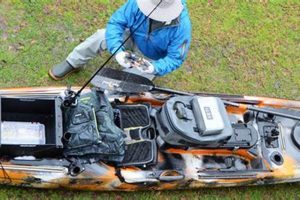
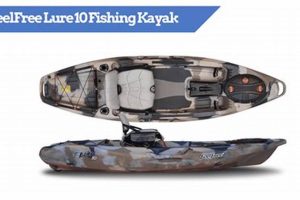
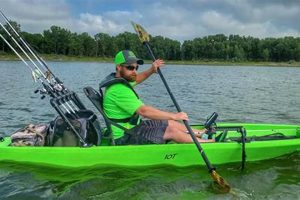
A camera mount designed for securing an action camera to a kayak while fishing provides an immersive perspective for documenting catches, techniques, and the overall experience. This setup typically involves specialized hardware that attaches securely to various points on the kayak, offering stability and flexibility for capturing high-quality video and photos, even in challenging aquatic environments. An example would be a clamp-style mount attached to the gunwale or a specialized mount affixed to a fishing rod.
Capturing the fishing experience from this unique vantage point allows anglers to relive memorable moments, analyze techniques for improvement, and share their adventures with others. Historically, documenting fishing trips relied on still photography and handwritten logs. The advent of action cameras and specialized mounting solutions has revolutionized how these experiences are recorded and shared, providing a dynamic and engaging way to preserve memories and educate others. This technology allows for detailed capture of everything from the fight with a fish to the surrounding scenery.
This discussion will further explore various mounting options, considering factors such as stability, adjustability, and compatibility with different kayak and camera models. Additionally, the importance of safety considerations and best practices for filming while kayaking will be addressed.
Tips for Effective Camera Mounting on Kayaks for Fishing
Optimizing camera placement and setup on a kayak enhances the quality of captured footage while maintaining safety and stability. Careful consideration of these factors contributes significantly to a successful and enjoyable filming experience.
Tip 1: Prioritize Stability: Secure mounts minimize shaky footage. Opt for mounts specifically engineered for kayaks, ensuring compatibility and robust attachment mechanisms.
Tip 2: Consider Perspective: Experiment with different mounting locations bow, stern, gunwale, or even attached to fishing gear to capture varied perspectives and angles.
Tip 3: Ensure Adjustability: Adjustable mounts allow for on-the-fly repositioning to capture action effectively, accommodating changing light conditions and fish activity.
Tip 4: Use Safety Lanyards: Prevent camera loss by attaching safety lanyards to the mount and the kayak. This safeguards against accidental drops or capsizing.
Tip 5: Minimize Vibrations: Use vibration dampening mounts or accessories where possible to reduce unwanted vibrations and ensure smoother footage, particularly in rough water.
Tip 6: Check Compatibility: Confirm compatibility between the camera model, housing, and chosen mount to ensure a secure and functional setup.
Tip 7: Protect Equipment: Utilize waterproof housings and consider lens filters to safeguard the camera from water damage, scratches, and glare.
By adhering to these guidelines, individuals can effectively capture high-quality footage while prioritizing safety and maximizing the overall experience. Properly secured and positioned cameras provide dynamic visuals, preserving memories and offering valuable insights into fishing techniques.
The following section will offer concluding remarks and emphasize the importance of responsible filming practices while kayak fishing.
1. Stability

Stability is paramount for capturing high-quality video footage while kayak fishing. A stable mounting platform minimizes unwanted camera shake and vibration, ensuring clear, professional-looking results. This is particularly crucial in the dynamic environment of a kayak, where movement from paddling, waves, and even fighting a fish can significantly impact camera stability.
- Mount Construction:
Rigid, robust mounts crafted from durable materials like aluminum or high-impact plastic provide a more stable base than flexible or lightweight alternatives. Consider mounts with multiple points of contact or wider bases for enhanced stability. For example, a mount that clamps to the gunwale and also utilizes a brace provides greater stability than a simple suction cup mount.
- Mounting Location:
The chosen mounting location significantly influences stability. Mounting the camera closer to the center of the kayak generally yields more stable footage compared to mounting it on extremities like the bow or stern, which are more susceptible to movement. Additionally, avoid mounting the camera directly on fishing rods, as their movement amplifies vibrations.
- Vibration Dampening:
Employing vibration dampening accessories further enhances stability. Specialized mounts incorporating rubber or gel components absorb vibrations and shocks, resulting in smoother footage, especially in choppy water or during high-speed maneuvers. These features are essential for maintaining professional-looking video quality.
- Weather Conditions:
Environmental factors significantly impact stability. Strong winds and waves increase kayak movement, necessitating more robust mounting solutions and careful attention to mounting location. In calmer conditions, a less rigid setup might suffice. Adapting the mounting strategy to prevailing conditions is key for optimal results.
Ultimately, prioritizing stability through careful consideration of mount construction, mounting location, vibration dampening, and environmental factors is crucial for capturing clear, usable footage while kayak fishing. A stable camera setup allows the focus to remain on the fishing experience itself, ensuring the captured memories are preserved in the best possible quality.
2. Durability

Durability is a critical factor for kayak fishing mounts due to the demanding conditions they face. Constant exposure to water, especially saltwater, necessitates corrosion-resistant materials. Impacts from waves, accidental drops, and general wear and tear require robust construction. A durable mount ensures reliable camera security, preventing loss or damage to valuable equipment during rigorous fishing excursions. For example, a mount constructed from marine-grade stainless steel or high-impact plastic withstands these challenges better than a standard plastic mount.
The practical implications of mount durability extend beyond simply preserving the mount itself. A durable mount maintains stable footage, even under stress. This reliability is essential for capturing critical moments, like a fish striking a lure or navigating challenging rapids. Furthermore, a durable mount reduces the need for frequent replacements, minimizing cost and inconvenience. Investing in a durable mount safeguards against equipment failure and ensures consistent performance throughout extended fishing trips, ultimately enhancing the overall experience.
Choosing a durable kayak fishing mount involves evaluating materials, construction, and user reviews. Look for features like waterproof seals, reinforced components, and corrosion-resistant hardware. While a more durable mount might represent a higher initial investment, the long-term benefits of reliability, consistent performance, and reduced replacement costs outweigh the upfront expense. Ultimately, prioritizing durability ensures a secure and dependable platform for capturing high-quality footage in the challenging environment of kayak fishing.
3. Adjustability

Adjustability in a GoPro kayak fishing mount is crucial for capturing dynamic and comprehensive footage. Changing environmental conditions, fish behavior, and paddling maneuvers necessitate on-the-fly camera angle adjustments. A fixed mount restricts perspectives, potentially missing key moments or resulting in suboptimal framing. Adjustable mounts offer flexibility, enabling quick repositioning to follow the action, capture different angles of the catch, or adapt to changing light conditions. For example, quickly adjusting the camera angle allows seamless transitions from filming the water surface to capturing a striking fish or documenting scenic surroundings.
The practical implications of adjustability extend beyond capturing compelling footage. An adjustable mount facilitates optimal camera positioning for specific fishing techniques. Whether casting, trolling, or sight fishing, adjusting the camera perspective provides tailored views that enhance documentation and analysis of the activity. Furthermore, adjustability contributes to safety by allowing repositioning without detaching or remounting the camera, minimizing distractions and maintaining secure equipment placement during critical moments. For instance, repositioning the camera to monitor surrounding boat traffic while maintaining fishing focus enhances situational awareness and safety.
Ultimately, adjustable mounts offer versatility essential for capturing dynamic content while kayak fishing. This flexibility translates to more compelling footage, enhanced documentation of techniques, and improved safety practices. While fixed mounts might suffice in some limited scenarios, the adaptability of an adjustable mount provides significant advantages in the dynamic environment of kayak fishing, ensuring comprehensive capture of the experience and supporting various angling styles.
4. Compatibility
Compatibility between the GoPro camera model, the chosen housing, and the kayak mount is essential for a secure and functional setup. Mismatched components can lead to instability, equipment damage, and potentially lost footage. For instance, a mount designed for a specific GoPro model might not securely hold a different generation or size, resulting in vibrations or even detachment. Similarly, using an incompatible housing might obstruct camera controls or lens access, hindering functionality and potentially trapping moisture, leading to damage. A common example is attempting to use a Hero 9 mount with a Hero 5 camera; the dimensional differences can prevent a secure fit. Conversely, forcing incompatible components can damage the camera’s housing or the mount itself.
Ensuring compatibility necessitates careful consideration of the specific models involved. Consulting product specifications, compatibility charts, and user reviews provides valuable insights before purchase. Understanding mounting interface standards, such as the GoPro mounting system, facilitates informed decisions. Furthermore, attention to housing compatibility ensures unimpeded camera operation and adequate protection from the elements. This proactive approach prevents frustrating compatibility issues on the water, where rectifying the problem becomes significantly more challenging. Using appropriate adapters and accessories can bridge compatibility gaps in some cases, but verifying their suitability is crucial for maintaining stability and functionality.
Ultimately, compatibility is a foundational aspect of a reliable and effective GoPro kayak fishing mount setup. Neglecting compatibility checks can compromise the entire system, jeopardizing valuable equipment and potentially ruining a fishing trip. Prioritizing compatibility through careful research and selection ensures seamless integration of components, maximizing functionality, stability, and safety, and allowing for a focused and enjoyable fishing experience.
5. Placement
Strategic camera placement significantly impacts the effectiveness of a GoPro kayak fishing mount setup. Placement determines the perspective captured, influencing the narrative and visual appeal of recorded footage. Mounting the camera near the bow offers a forward-facing view, ideal for capturing the lure’s action and strikes. A stern-mounted camera documents the angler’s actions and provides a broader perspective of the surroundings. Mounting near the rod holder focuses on reeling and fighting fish. A chest mount offers a personal perspective of the fishing process. Each placement offers unique advantages, requiring consideration of the desired footage and fishing style. For example, capturing underwater footage necessitates a placement near the waterline, whereas showcasing the kayaking experience benefits from a higher perspective.
Effective placement considers not only the desired perspective but also potential obstructions and stability. Paddle strokes, fishing rods, and even the angler’s body can inadvertently obstruct the camera’s view if placement is not carefully considered. Furthermore, placement influences camera stability. Mounting on extremities like the bow or stern increases susceptibility to movement, potentially resulting in shaky footage. Locations closer to the kayak’s center of gravity generally offer greater stability. Practical application involves testing different placements to determine optimal angles and perspectives for specific fishing scenarios. For example, mounting the camera on a boom extending away from the kayak provides unobstructed views but requires careful balancing to maintain stability.
Optimal camera placement is crucial for capturing compelling and informative fishing footage. Careful consideration of perspective, potential obstructions, and stability ensures high-quality video documentation of the fishing experience. Analyzing various placement options and their respective advantages enables informed decisions tailored to individual fishing styles and desired footage outcomes. Balancing creativity with practical considerations leads to dynamic and engaging content that effectively showcases the kayak fishing adventure.
6. Security

Securing a GoPro kayak fishing mount is paramount for preventing equipment loss and ensuring a successful fishing trip. The aquatic environment presents inherent risks, including accidental drops, capsizing, and strong currents. These factors necessitate robust mounting solutions and additional security measures. A loose or improperly secured mount can lead to camera detachment, resulting in the loss of valuable equipment and irreplaceable footage. For example, a sudden wave or an unexpected strike from a large fish can dislodge a poorly secured camera, leading to its submersion. Similarly, capsizing without a secure camera tether can result in the camera sinking or drifting away. The financial implications of equipment loss are significant, but the loss of captured memories can be even more devastating.
Several practical measures enhance camera security. Utilizing a high-quality mount specifically designed for aquatic environments is fundamental. These mounts often incorporate features like locking mechanisms, reinforced materials, and multiple attachment points for increased stability. Supplementing the mount with a secure tether or lanyard provides an additional layer of protection. Attaching the lanyard to both the camera and the kayak ensures that even if the mount fails, the camera remains connected. Regularly inspecting the mount and tether for signs of wear or damage is crucial for preventative maintenance. Addressing potential weaknesses promptly mitigates the risk of equipment failure during critical moments. Carrying spare mounting hardware and tethers allows for quick repairs or replacements in the field, further enhancing security and preparedness.
Prioritizing camera security is essential for preserving valuable equipment and capturing uninterrupted footage during kayak fishing excursions. The dynamic nature of the aquatic environment necessitates robust mounting solutions and diligent preventative measures. A secure setup minimizes the risk of equipment loss, ensuring peace of mind and allowing focus to remain on the fishing experience. This proactive approach safeguards investments and preserves captured memories, ultimately contributing to a more successful and enjoyable outing. Neglecting security measures can lead to significant financial losses and the irretrievable loss of captured moments, highlighting the critical role security plays in the overall kayak fishing experience.
Frequently Asked Questions
This section addresses common inquiries regarding GoPro kayak fishing mounts, providing concise and informative responses to facilitate informed decision-making and optimal equipment utilization.
Question 1: What are the most stable mounting locations on a kayak for a GoPro?
Locations near the center of the kayak, such as behind the seat or on the gunwales near the cockpit, generally offer greater stability compared to extremities like the bow or stern. These central locations minimize the impact of kayak movement on camera stability.
Question 2: How can vibration and shaky footage be minimized when using a GoPro kayak fishing mount?
Utilizing mounts specifically designed for action cameras with built-in vibration dampening features can significantly reduce unwanted camera shake. Additionally, selecting stable mounting locations and avoiding mounting directly on fishing rods further minimizes vibrations.
Question 3: Are there specific mounts designed for different GoPro models?
Yes, compatibility between mounts and specific GoPro models is crucial. While many mounts utilize a standard GoPro mounting interface, certain mounts are designed for specific camera sizes or generations. Confirming compatibility before purchase prevents fit and functionality issues.
Question 4: What safety precautions should be taken to prevent losing a GoPro while kayak fishing?
Employing a secondary security measure, such as a leash or tether attached to both the camera and the kayak, provides a crucial safeguard against accidental loss. Regularly inspecting the mount and tether for wear and tear is also essential.
Question 5: What materials are best suited for GoPro kayak fishing mounts in saltwater environments?
Corrosion-resistant materials like marine-grade stainless steel, anodized aluminum, and high-impact, UV-resistant plastics are best suited for saltwater conditions. These materials withstand the corrosive effects of saltwater and offer long-term durability.
Question 6: How does one choose between a fixed and an adjustable GoPro kayak fishing mount?
Fixed mounts offer simplicity and rigidity, suitable for static shots or consistent perspectives. Adjustable mounts provide flexibility for capturing dynamic action and adapting to changing conditions, though they might introduce potential points of failure if not properly secured.
Careful consideration of these frequently asked questions ensures effective selection and utilization of GoPro kayak fishing mounts, facilitating optimal video capture and preserving valuable equipment.
The subsequent section will offer a concluding summary of key takeaways and recommendations for further exploration.
GoPro Kayak Fishing Mount
Effective utilization of a GoPro kayak fishing mount hinges upon careful consideration of several key factors. Stability, durability, adjustability, compatibility, placement, and security all contribute significantly to capturing high-quality footage while safeguarding valuable equipment. Prioritizing these aspects ensures a reliable and functional setup capable of withstanding the demanding conditions of the aquatic environment. Strategic placement optimizes perspectives, while robust construction and secure attachment mechanisms minimize the risk of equipment loss. Compatibility between the camera, housing, and mount ensures seamless integration and optimal functionality. Understanding these interconnected elements allows for informed decisions, resulting in a system capable of consistently delivering compelling and dynamic content.
The evolving landscape of action camera technology and mounting solutions presents exciting opportunities for enhancing the documentation and sharing of fishing experiences. Continued exploration of innovative mounting solutions, combined with a focus on safety and responsible filming practices, promises further advancements in capturing and preserving the thrill of kayak fishing. Ultimately, the effective deployment of a GoPro kayak fishing mount empowers anglers to document their adventures, analyze techniques, and share their passion with others, contributing to a deeper appreciation for the sport.