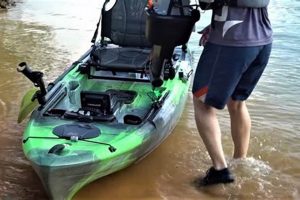
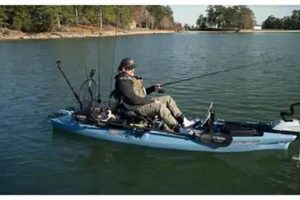
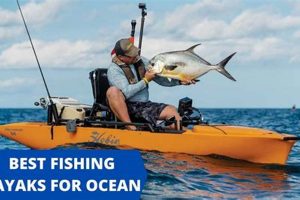
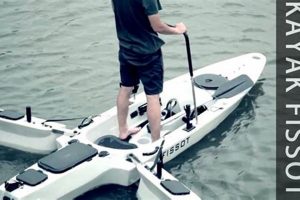
Creating a personalized watercraft for angling through self-construction offers a unique blend of customization and cost-effectiveness. This approach allows individuals to tailor their vessel to specific fishing needs, from rod holders and storage compartments to specialized seating and propulsion systems. An example would be converting a recreational sit-on-top kayak into a fishing platform by adding customized mounts and gear tracks.
The advantages of this hands-on approach are numerous. It empowers anglers to control the design, features, and ultimately, the cost of their fishing platform. Building a customized watercraft can often be significantly less expensive than purchasing a new, fully equipped fishing kayak. Moreover, the process fosters a deeper understanding of the vessel’s mechanics and performance characteristics. While historically, boat building was a specialized trade, the availability of accessible materials and online resources has democratized the process, enabling a surge in do-it-yourself boat construction.
The following sections will delve into essential aspects of constructing a personalized fishing watercraft, covering topics such as material selection, design considerations, construction techniques, and safety guidelines.
Tips for Kayak Fishing Platform Construction
Careful planning and execution are crucial for a successful outcome when undertaking a personalized fishing kayak project. The following tips offer guidance for various stages of the process.
Tip 1: Material Selection: Consider the environment and intended use when choosing materials. Marine-grade plywood, high-density polyethylene (HDPE), and fiberglass offer varying degrees of durability, weight, and cost-effectiveness.
Tip 2: Design Considerations: Stability and maneuverability are paramount. Research hull designs suitable for fishing, paying attention to factors like waterline length and beam width.
Tip 3: Planning and Research: Thorough planning prevents costly mistakes. Consult detailed plans and tutorials, paying attention to construction techniques and safety precautions.
Tip 4: Tooling and Equipment: Assemble necessary tools and equipment beforehand. Essential items may include clamps, saws, sandpaper, and appropriate adhesives or fasteners for chosen materials.
Tip 5: Construction Techniques: Adhere to recommended construction techniques for chosen materials. Proper sealing and finishing are crucial for longevity and water resistance.
Tip 6: Safety Precautions: Prioritize safety throughout the entire process. Wear appropriate safety gear, including eye protection and respirators when working with fiberglass or resins. Conduct a thorough stability test before venturing into open water.
Tip 7: Budget Management: Establish a realistic budget and track expenses. Factor in the cost of materials, tools, and potential unforeseen expenses. Repurposing existing materials can help minimize costs.
By adhering to these guidelines, the process can be streamlined and the resulting vessel safe and functional. A well-planned and executed project results in a personalized craft tailored to individual fishing needs.
Through careful consideration of design, materials, and construction techniques, anglers can create a highly functional and personalized vessel to enhance their fishing experience. The subsequent sections will provide further details on specific aspects of the building process.
1. Planning

Planning forms the cornerstone of successful fishing kayak construction. A well-structured plan mitigates potential challenges and ensures efficient resource allocation. It encompasses several key elements: defining project scope (e.g., sit-on-top vs. sit-in), establishing a realistic budget, creating a detailed timeline, and sourcing necessary materials and tools. For instance, deciding on a sit-on-top design necessitates planning for appropriate scupper hole placement and drainage systems, while a sit-in design requires consideration of cockpit dimensions and watertight hatches. Neglecting thorough planning often leads to costly rework, material waste, and compromised structural integrity.
Furthermore, the planning phase involves meticulous design considerations. Stability, maneuverability, and storage capacity are paramount. A well-designed hull ensures efficient tracking and minimizes drag, crucial for paddling efficiency. Planned integration of fishing-specific features, such as rod holders, fish finders, and anchor trolleys, maximizes functionality. For example, incorporating recessed rod holders during the planning stage prevents later structural modifications that could compromise hull integrity. Precise measurements and scaled drawings aid in visualizing the final product and identifying potential design flaws before construction begins.
In conclusion, comprehensive planning is inextricably linked to a successful outcome. It provides a roadmap for the entire project, from initial design conceptualization to final assembly and customization. Addressing potential challenges proactively during planning ensures a smoother construction process and a functional, durable, and personalized fishing kayak. The subsequent construction phase relies heavily on the groundwork laid during planning, emphasizing the importance of this initial stage.
2. Design

Design plays a pivotal role in the success of a do-it-yourself fishing kayak project. It directly influences the vessel’s performance, stability, and overall functionality. Careful consideration of design elements ensures a craft tailored to specific fishing needs and environmental conditions. The design phase bridges the gap between conceptualization and the tangible creation of the kayak, impacting every aspect from material selection to on-the-water performance. A well-defined design serves as a blueprint for construction, guiding material choices, assembly techniques, and the integration of specialized features.
Several key factors must be addressed during the design process. Hull design, a primary consideration, dictates stability, speed, and maneuverability. A flat-bottomed hull offers excellent stability for fishing in calm waters, while a V-shaped hull provides better tracking and performance in rougher conditions. Consideration must also be given to the kayak’s length and width, as these dimensions influence carrying capacity and maneuverability in tight spaces. Integrating features like rod holders, storage compartments, and anchor trolleys during the design phase ensures seamless incorporation during the construction process. For instance, a kayak designed for offshore fishing might prioritize a longer, narrower hull for speed and tracking, along with ample storage for tackle and safety gear. Conversely, a kayak intended for river fishing might benefit from a shorter, wider hull for enhanced maneuverability in shallow water and around obstacles.
In summary, a well-executed design forms the foundation of a successful fishing kayak build. It facilitates efficient construction, ensures optimal performance characteristics, and ultimately enhances the fishing experience. Neglecting thorough design considerations can lead to instability, poor tracking, and a craft ill-suited to its intended purpose. Understanding the profound impact of design empowers builders to create personalized watercraft optimized for specific fishing needs and environments, resulting in a safer, more efficient, and enjoyable on-the-water experience.
3. Construction
The construction phase represents the culmination of planning and design efforts in a fishing kayak DIY project. It involves the physical realization of the envisioned watercraft, demanding precision, adherence to best practices, and careful material handling. Construction quality directly impacts the vessel’s structural integrity, durability, and overall performance. This stage requires a thorough understanding of chosen materials, appropriate construction techniques, and meticulous attention to detail. The following facets are crucial for successful construction:
- Hull Assembly
Hull assembly forms the backbone of the construction process. It involves joining the various components of the hull structure according to the chosen design. This might include stitching together pre-cut panels of HDPE plastic, fiberglassing a mold, or assembling a wooden frame. Precise alignment and secure bonding are crucial for ensuring watertight seams and structural integrity. For example, in stitch-and-glue kayak construction, precisely aligned panels are temporarily stitched together with wire and then bonded permanently with epoxy resin, creating a strong and waterproof hull. Incorrect alignment or inadequate bonding can compromise the kayak’s structural integrity, leading to leaks or even catastrophic failure.
- Sealing and Finishing
Sealing and finishing protect the kayak from water damage and enhance its longevity. This involves applying sealants and coatings to all seams, joints, and exposed surfaces. Proper sealing prevents water intrusion, rot, and delamination. Examples include applying epoxy fillets to interior seams and coating the entire hull with marine-grade paint or varnish. Thorough sealing and finishing are particularly critical for wooden kayaks, which are more susceptible to moisture damage than plastic or fiberglass. Neglecting this step can significantly shorten the lifespan of the kayak.
- Hardware Installation
Hardware installation involves integrating various components, such as deck rigging, seat mounts, rudder systems, and hatches. Proper installation ensures functionality and safety. This includes securely mounting deck lines for gear storage, installing comfortable and adjustable seating, and ensuring proper operation of rudder or pedal systems. For example, poorly installed rod holders could fail under pressure, resulting in lost equipment or even injury. Careful attention to detail during hardware installation contributes to a safe and functional finished product.
- Quality Control
Quality control throughout the construction process is paramount. Regular inspections and testing ensure that each step meets the required standards. This includes checking for proper alignment, secure bonding, and complete sealing. Testing buoyancy and stability before final outfitting can identify potential issues early on. For example, performing a leak test after sealing the hull can prevent discovering a leak after the kayak is fully outfitted. Continuous quality control minimizes the risk of costly rework and ensures a safe and functional final product.
These interconnected facets of construction contribute significantly to the overall success of a fishing kayak DIY project. Meticulous execution in each area results in a durable, functional, and safe watercraft tailored to individual fishing needs. A well-constructed kayak provides years of reliable service, enhancing the fishing experience and offering a sense of accomplishment derived from creating something functional and personalized.
4. Customization

Customization represents a significant advantage of constructing a fishing kayak. It allows builders to tailor the vessel precisely to individual fishing styles, preferences, and target species. This personalized approach enhances functionality and efficiency on the water. Customization options range from simple modifications to complex integrations, offering a level of control unavailable with commercially produced kayaks. The following facets illustrate the potential of customization in do-it-yourself fishing kayak projects:
- Rod Holder Placement and Type
Rod holders are essential for any fishing kayak. Customization allows anglers to choose the type, number, and placement of rod holders to suit their specific fishing techniques. Flush-mount rod holders offer a streamlined profile, while adjustable rod holders provide versatility for different fishing styles. Placement considerations depend on whether the angler prefers trolling, casting, or a combination of techniques. For example, a kayak designed for trolling might feature multiple rod holders positioned along the gunwales, while a kayak intended for casting might prioritize a few strategically placed rod holders within easy reach of the cockpit.
- Storage Solutions
Storage solutions significantly impact organization and efficiency on the water. Customization allows for the integration of tailored storage compartments for tackle boxes, fishing rods, safety gear, and other essentials. Examples include built-in dry storage hatches, under-seat storage compartments, and bungee cord systems for securing loose items. Customization ensures that all gear is readily accessible and well-organized, maximizing fishing time and minimizing clutter. A kayak designed for multi-day trips might incorporate larger storage compartments and dry bags for clothing and camping gear.
- Seating and Comfort
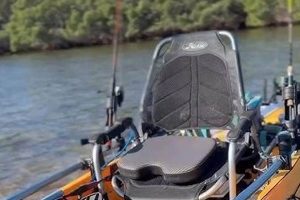
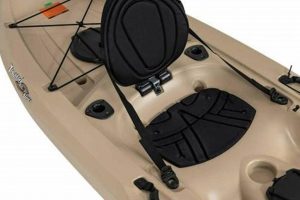
Comfort is paramount, especially during long hours on the water. Customization allows builders to choose seating systems that provide optimal support and adjustability. Options range from basic foam pads to adjustable seats with backrests and lumbar support. Custom seating configurations can accommodate individual body types and preferences, minimizing fatigue and maximizing comfort. A kayak designed for individuals with back problems might feature a high-backed seat with adjustable lumbar support and additional padding.
- Electronics Integration
Integrating electronics enhances fishing effectiveness. Customization enables seamless integration of fish finders, GPS units, and other electronic devices. This includes planning for transducer mounts, wiring conduits, and battery storage solutions. Customizing electronics integration ensures optimal device placement for easy viewing and operation, maximizing their utility on the water. For example, a kayak designed for serious anglers might include a flush-mounted fish finder display, a dedicated battery compartment, and wiring concealed within the hull for a clean and professional look.
These customization options demonstrate the potential of DIY fishing kayak projects. By tailoring the vessel to specific needs and preferences, anglers create a highly functional and personalized watercraft that enhances their fishing experience. This level of customization not only improves efficiency and comfort but also fosters a deeper connection between the angler and their self-built vessel.
5. Safety
Safety is paramount in any do-it-yourself project, especially when the final product is intended for use on the water. Constructing a fishing kayak requires careful consideration of safety measures throughout the entire process, from design and material selection to construction and on-the-water usage. Overlooking safety protocols can lead to serious consequences, compromising both the structural integrity of the vessel and the well-being of the user. A comprehensive understanding of safety considerations is essential for a successful and safe fishing kayak DIY project.
- Structural Integrity
The structural integrity of a self-built fishing kayak is crucial for safe operation. Proper material selection, meticulous construction techniques, and thorough quality control ensure the vessel can withstand the stresses of on-the-water use. Using inadequate materials or employing improper construction methods can lead to structural failure, potentially resulting in capsizing or other hazardous situations. For example, using insufficient reinforcement in high-stress areas like the hull-to-deck joint can compromise the kayak’s ability to withstand impacts and wave action. Rigorous testing, including flotation and stability tests, should be conducted before venturing into open water.
- Material Safety
Working with materials commonly used in kayak construction, such as fiberglass resins, epoxies, and solvents, requires adherence to safety precautions. These materials can pose health hazards if not handled properly. Adequate ventilation, protective clothing, including respirators and gloves, and careful disposal of hazardous waste are essential for mitigating risks. For example, prolonged exposure to fiberglass resin fumes without proper respiratory protection can cause respiratory irritation and other health issues. Understanding and adhering to material-specific safety data sheets is crucial.
- On-the-Water Safety Equipment
Regardless of construction quality, on-the-water safety equipment is essential for any kayaking excursion. Personal flotation devices (PFDs), whistles, and visual distress signals are essential safety items. Carrying a first-aid kit, communication devices, and navigation tools further enhances safety. Understanding and adhering to local boating regulations, including navigation rules and safety requirements, is paramount. For example, neglecting to wear a PFD significantly increases the risk of drowning in the event of a capsize. Regularly inspecting and maintaining safety equipment ensures its effectiveness in emergency situations.
- Stability and Handling
Understanding the stability characteristics and handling dynamics of the self-built kayak is crucial for safe operation. Factors such as hull design, weight distribution, and paddling technique influence stability. Conducting stability tests in calm water before venturing into more challenging conditions allows paddlers to familiarize themselves with the vessel’s behavior. Knowing how to recover from a capsize is a fundamental skill for safe kayaking. For example, a kayak with a high center of gravity may be more prone to tipping, requiring greater caution and skillful paddling. Practicing self-rescue techniques in a controlled environment enhances preparedness for unexpected situations.
These interconnected safety considerations underscore the importance of a proactive approach to risk management in fishing kayak DIY projects. Prioritizing safety throughout the entire process, from design and construction to on-the-water usage, ensures not only the structural integrity of the vessel but also the well-being of the paddler. A well-built and safely operated fishing kayak provides years of enjoyment on the water, while neglecting safety protocols can lead to serious consequences.
6. Budgeting

Budgeting plays a critical role in do-it-yourself fishing kayak projects. A well-defined budget influences material choices, construction techniques, and the overall feasibility of the project. Careful financial planning prevents cost overruns and ensures the project aligns with available resources. The relationship between budgeting and building a personalized fishing kayak is multifaceted, affecting every stage from initial planning to final outfitting. A realistic budget necessitates trade-offs between material quality, feature integration, and overall project scope. For example, opting for marine-grade plywood instead of more expensive composites like fiberglass or carbon fiber can significantly reduce material costs while still yielding a functional and durable hull. Similarly, choosing to build a simpler kayak design with fewer integrated features can lower the overall project cost compared to a more complex design with elaborate storage compartments and electronics integrations.
Detailed cost analysis is essential for effective budgeting. This involves itemizing anticipated expenses for materials, tools, hardware, and finishing supplies. Researching material prices from various suppliers allows for cost optimization. Contingency planning for unforeseen expenses, such as additional materials or specialized tools, prevents budget overruns. Repurposing existing materials or sourcing used equipment can further reduce costs. For instance, repurposing salvaged wood for building frames or utilizing existing hand tools can significantly lower overall project expenses. Careful tracking of actual expenses against the planned budget allows for adjustments and informed decision-making throughout the construction process. Understanding the cost implications of design choices empowers builders to make informed decisions that align with their budgetary constraints without compromising functionality or safety.
Effective budgeting is inextricably linked to the successful completion of a fishing kayak DIY project. It provides a financial framework that guides decision-making and ensures the project remains within reasonable cost parameters. A well-defined budget empowers builders to make informed choices regarding materials, features, and construction techniques, ultimately influencing the final cost and overall quality of the finished kayak. Failure to adequately budget can lead to project delays, compromised quality due to cost-cutting measures, or even project abandonment due to insufficient funds. A realistic and well-managed budget ensures the project remains feasible, enjoyable, and ultimately results in a personalized fishing kayak built within the defined financial constraints.
Frequently Asked Questions
Addressing common inquiries regarding the construction of personalized fishing kayaks provides clarity and guidance for prospective builders. The following questions and answers offer insights into key aspects of the process, from material selection to safety considerations.
Question 1: What materials are best suited for constructing a fishing kayak?
Material selection depends on budget, construction experience, and desired performance characteristics. Marine-grade plywood offers a balance of affordability and workability, while high-density polyethylene (HDPE) provides excellent durability and impact resistance. Fiberglass offers high strength and customization potential but requires more advanced construction skills.
Question 2: How much time is typically required to complete a fishing kayak DIY project?
Project timelines vary significantly based on design complexity, construction experience, and available work time. Simpler designs can often be completed within a few weeks, while more complex projects might require several months of dedicated effort.
Question 3: What are the essential safety considerations during the construction process?
Safety should be prioritized throughout the entire process. Proper ventilation, eye protection, and respiratory protection are crucial when working with resins, epoxies, and solvents. Adhering to tool safety guidelines and employing safe handling practices for materials minimizes risks.
Question 4: What is the approximate cost of building a fishing kayak compared to purchasing a new one?
Building a fishing kayak can often be significantly less expensive than purchasing a comparable commercially manufactured model. However, the cost savings depend on material choices and the complexity of the design. Repurposing materials can further reduce expenses.
Question 5: What level of experience is required for undertaking a fishing kayak DIY project?
Prior experience with woodworking or composites can be beneficial but is not always essential. Numerous online resources, tutorials, and detailed plans provide guidance for builders of all skill levels. Starting with a simpler design can be a good approach for beginners.
Question 6: How can stability be ensured in a self-built fishing kayak?
Stability is determined by hull design, weight distribution, and the kayak’s center of gravity. A wider hull generally provides greater initial stability. Conducting thorough stability tests in calm water before venturing into open water is crucial for assessing stability characteristics.
Careful consideration of these frequently asked questions empowers individuals to make informed decisions regarding the design, construction, and safe operation of their personalized fishing kayaks.
For further information on specific aspects of fishing kayak construction, consult detailed plans, tutorials, and expert resources.
Fishing Kayak DIY
Constructing a personalized fishing kayak presents a compelling alternative to commercially manufactured options. This approach offers unparalleled control over design, features, and cost, empowering anglers to create vessels tailored precisely to individual needs and preferences. From material selection and design considerations to meticulous construction and customization, each stage of the process contributes to the final product’s functionality, performance, and safety. Careful planning and execution are essential for a successful outcome, ensuring the resulting kayak meets the demands of diverse fishing environments and techniques. Moreover, the inherent cost-effectiveness of building a personalized fishing kayak makes it an attractive option for budget-conscious anglers.
Ultimately, undertaking a fishing kayak DIY project extends beyond the mere creation of a vessel. It represents an investment in personal craftsmanship, fostering a deeper understanding of kayak design, construction, and on-the-water performance. The process empowers anglers to create not just a fishing platform, but a personalized extension of their angling passion. This hands-on approach offers a unique sense of accomplishment, transforming the fishing experience from passive participation to active engagement with the very craft that enables it.