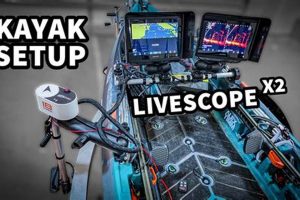
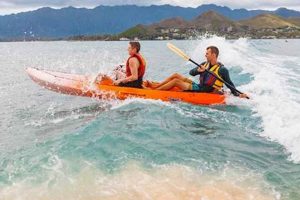
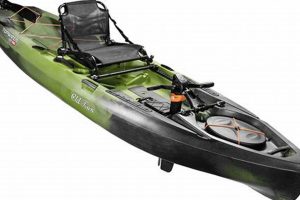
Adapting a kayak for angling involves modifications ranging from simple rod holder installations to complex electronics integrations and structural alterations. For instance, a basic setup might include mounting a few rod holders and a fish finder, while a more advanced approach could involve incorporating live wells, custom seating, and specialized storage solutions.
Tailoring a watercraft for individual angling needs enhances comfort, efficiency, and overall fishing success. A well-equipped vessel allows anglers to carry essential gear, access fishing spots efficiently, and maintain optimal positioning for casting and retrieving. Historically, kayak angling relied on minimal adaptations to existing recreational kayaks. However, the increasing popularity of this fishing style has driven innovation in specialized equipment and customization techniques, resulting in highly personalized and effective fishing platforms.
This article will explore various aspects of modifying kayaks for fishing, covering topics such as popular equipment choices, installation techniques, and safety considerations. Further exploration will include budgetary planning, maintenance tips, and the impact of specific modifications on performance and stability.
Tips for Effective Kayak Modifications
Careful planning and execution are crucial for successful kayak modifications. These tips offer guidance for enhancing a fishing kayak’s functionality and performance.
Tip 1: Prioritize Stability: Beginners should prioritize stability over speed. Adding excessive weight high on the kayak can compromise stability. Outriggers or wider hulls can enhance stability for anglers concerned about balance.
Tip 2: Plan Layout Carefully: Before drilling any holes, map out the desired locations for accessories. Consider ergonomics and accessibility when positioning rod holders, fish finders, and other equipment.
Tip 3: Choose Appropriate Mounting Hardware: Use marine-grade stainless steel hardware to resist corrosion. Select appropriate fasteners for the kayak’s construction material (plastic, fiberglass, etc.).
Tip 4: Consider Weight Capacity: Respect the kayak’s weight capacity, including the angler’s weight, gear, and added accessories. Overloading can lead to instability and decreased performance.
Tip 5: Test Modifications in Calm Water: After making modifications, test the kayak in calm water before venturing into challenging conditions. This allows one to assess stability and adjust equipment placement as needed.
Tip 6: Research and Learn from Others: Numerous online resources and communities offer valuable insights and advice on kayak modifications. Learning from experienced anglers can prevent costly mistakes.
Tip 7: Regular Maintenance is Key: Regularly inspect and maintain all modifications, ensuring hardware remains tight and equipment functions correctly. Address any signs of wear or damage promptly.
By following these guidelines, anglers can create a personalized and effective fishing platform tailored to their specific needs and preferences, leading to improved fishing experiences.
The following section will delve into specific equipment recommendations and installation techniques for popular kayak modifications.
1. Rod Holders

Rod holders represent a fundamental element of fishing kayak customization, directly impacting angling efficiency and safety. Proper rod placement facilitates hands-free operation during critical moments, such as paddling, landing fish, or adjusting tackle. Understanding the diverse types and mounting options is essential for optimized kayak configuration.
- Flush Mount Rod Holders
These holders integrate seamlessly with the kayak’s deck, minimizing obstructions and offering a streamlined profile. Recessed designs reduce snag potential while offering secure rod storage during transit. Anglers often favor flush mounts for trolling or when multiple rods are deployed.
- Adjustable Rod Holders
Adjustable rod holders provide flexibility in positioning rods at various angles and orientations. This adaptability proves advantageous for different fishing techniques and varying water conditions. Anglers targeting specific species or utilizing specialized rigs benefit from the customized positioning offered by these holders.
- Rail-Mounted Rod Holders
Kayaks equipped with accessory rails accommodate rail-mounted rod holders, offering versatile placement options. This adaptability allows anglers to position rods based on individual preferences and fishing styles. The ease of installation and removal provides further customization flexibility.
- DIY Rod Holder Solutions
Resourceful anglers often create custom rod holder solutions using PVC pipe, aluminum tubing, or other readily available materials. While cost-effective, DIY options require careful consideration of stability, durability, and safety. Improperly constructed DIY solutions can compromise kayak integrity and angler safety.
Strategic rod holder placement significantly contributes to a customized and effective fishing kayak setup. Selecting appropriate holder types and mounting locations based on individual fishing styles and target species enhances angling efficiency and overall enjoyment on the water. Consideration of factors such as rod length, fishing technique, and potential obstructions ensures optimal placement for each unique kayak configuration.
2. Fish Finders

Integrating a fish finder significantly enhances a fishing kayak’s functionality, transforming it from a simple vessel into a sophisticated angling platform. These electronic devices provide crucial underwater insights, enabling anglers to locate fish, identify structures, and understand bottom contours. Strategic fish finder selection and installation are essential aspects of kayak customization.
- Transducer Selection and Placement
Transducers, the core component of fish finders, emit sonar signals that map the underwater environment. Various transducer types exist, each with specific strengths and weaknesses. Hull-mounted transducers offer simplicity, while through-hull transducers provide optimal performance. Correct placement is crucial for accurate readings, avoiding interference from the kayak’s structure or other onboard equipment.
- Display Unit Integration
Display units present the information gathered by the transducer. Screen size, resolution, and features vary significantly across models. Integrating the display unit ergonomically within the kayak’s cockpit ensures easy viewing and operation without compromising paddling or fishing activities. Mounting options include RAM mounts, track systems, and custom-fabricated brackets.
- Power Management
Fish finders require a dedicated power source. Portable units typically utilize rechargeable batteries, while integrated systems may draw power directly from the kayak’s electrical system. Efficient power management ensures uninterrupted operation throughout the fishing trip. Calculating power consumption and selecting appropriate battery capacity are crucial considerations.
- Interpreting Sonar Data
Understanding the information displayed by the fish finder is essential for effective utilization. Distinguishing fish from structure, interpreting bottom contours, and recognizing thermoclines require practice and experience. Numerous online resources and tutorials offer guidance on interpreting sonar data and maximizing the benefits of fish finder technology.
Effective fish finder integration transforms a fishing kayak into a technologically advanced angling platform. Careful consideration of transducer selection, display placement, power management, and sonar interpretation optimizes the benefits of this essential customization, contributing significantly to angling success.
3. Comfort Seating

Comfort seating forms an integral component of fishing kayak customization, directly influencing angler endurance and overall fishing experience. Extended periods on the water, often in challenging conditions, necessitate a comfortable and supportive seating system. An uncomfortable seat can lead to fatigue, back pain, and decreased fishing effectiveness. Conversely, a well-designed seating system allows anglers to focus on fishing, maximizing enjoyment and success. For example, an angler targeting offshore species might spend hours paddling and battling strong currents. A supportive, adjustable seat minimizes fatigue, allowing for sustained focus and effective fish fighting. Similarly, an angler fishing in cold weather benefits from insulated seating that retains body heat, enhancing comfort and preventing hypothermia.
Custom seating options range from simple padded cushions to sophisticated adjustable systems with lumbar support and breathable fabrics. Aftermarket seating upgrades offer enhanced ergonomics, catering to individual body types and preferences. Factors such as seat height, backrest adjustability, and material construction contribute significantly to overall comfort. For instance, a taller angler might prefer a higher seat position for improved visibility and paddling leverage, while an angler with back issues might prioritize lumbar support and adjustable backrest angles. Selecting appropriate seating based on individual needs and fishing styles optimizes comfort and promotes prolonged on-the-water endurance.
Prioritizing comfort seating during kayak customization contributes directly to enhanced angling experiences. A comfortable angler remains focused, alert, and capable of enduring longer fishing trips. This translates to increased fishing opportunities, improved performance, and greater overall enjoyment on the water. Investing in quality seating, therefore, represents a crucial aspect of optimizing a fishing kayak for individual needs and maximizing the potential for angling success. Addressing seating comfort early in the customization process mitigates potential discomfort and ensures sustained enjoyment throughout extended fishing excursions.
4. Storage Solutions

Effective storage solutions are integral to fishing kayak customization, directly impacting organization, accessibility, and overall fishing efficiency. Kayaks, by nature, offer limited space, necessitating thoughtful storage planning to accommodate essential gear, tackle, and safety equipment. Inadequate storage can lead to cluttered decks, tangled lines, and difficulty locating essential items, compromising both safety and fishing success. Conversely, well-designed storage solutions maintain order, maximize available space, and facilitate quick access to necessary equipment. For instance, an angler targeting multiple species might carry various rods, reels, and tackle boxes. Dedicated storage compartments for each item prevent tangling, protect equipment, and allow for swift transitions between fishing techniques. Similarly, readily accessible storage for safety gear, such as flares and first-aid kits, ensures preparedness in emergencies.
Customization options range from simple bungee cords and dry bags to integrated storage compartments and custom-fabricated storage units. Milk crates, tackle boxes, and waterproof bags offer readily available and cost-effective storage solutions. More advanced customizations involve installing hatches, creating recessed compartments within the kayak’s hull, or utilizing specialized storage systems designed for specific gear, such as rod tubes or tackle organizers. Strategic placement of storage compartments ensures balanced weight distribution, maintaining kayak stability. Accessibility also plays a crucial role; frequently used items should be readily accessible, while less frequently used items can be stored in less accessible locations. For example, a fly fisherman might prioritize easy access to fly boxes and tools, while storing rain gear in a less accessible compartment. Customizing storage to suit specific fishing styles and target species optimizes efficiency and streamlines the angling experience.
Optimized storage solutions transform a fishing kayak into an organized and efficient angling platform. Careful planning, strategic placement, and utilization of appropriate storage systems maximize available space, enhance accessibility, and contribute significantly to overall fishing success. Addressing storage needs during the customization process ensures a clutter-free deck, promotes safe handling of equipment, and allows anglers to focus on the task at hand: catching fish. This thoughtful approach to storage enhances not only fishing efficiency but also the overall enjoyment and safety of each angling excursion.
5. Anchor Systems

Anchor systems represent a crucial aspect of fishing kayak customization, providing the ability to maintain position in desired fishing locations. Whether targeting specific structures, countering wind drift, or maintaining precise positioning in currents, a reliable anchor system significantly enhances angling effectiveness. Understanding the various anchor types, deployment methods, and associated accessories enables anglers to select and configure an optimal system for their specific needs and fishing environments.
- Anchor Types
Various anchor types cater to different bottom compositions and water conditions. Folding grapnel anchors excel in rocky or weedy environments, while fluke or claw anchors perform well in sandy or muddy bottoms. Lightweight, compact anchor designs suit kayak fishing, balancing holding power with portability. Selecting an appropriate anchor type for the prevalent fishing grounds ensures effective anchoring and minimizes potential damage to sensitive underwater habitats.
- Deployment Methods
Deployment methods influence anchor effectiveness and ease of use. Anchor trolleys allow for controlled anchor positioning and drift fishing, while simple anchor lines with carabiners offer straightforward deployment and retrieval. Understanding various deployment methods, including considerations for kayak stability and efficient anchor retrieval, ensures safe and effective anchor operation in varying conditions.
- Anchor Lines and Accessories
Anchor lines and associated accessories contribute significantly to anchor system performance. Marine-grade rope, resistant to abrasion and UV degradation, ensures long-lasting durability. Chain leaders protect anchor lines from chafing against rocks or debris. Accessories like anchor floats and quick-release mechanisms enhance retrieval efficiency and safety, particularly in challenging conditions.
- Anchor Positioning and Kayak Control
Strategic anchor positioning maximizes fishing effectiveness and minimizes disruption to other anglers or boaters. Understanding how wind, current, and water depth influence kayak position relative to the anchor point is crucial for maintaining desired fishing locations. Proper anchor positioning and kayak control contribute to efficient fishing and enhance overall safety on the water.
Integrating a well-designed anchor system into a fishing kayak significantly expands angling capabilities. Careful consideration of anchor type, deployment method, line selection, and positioning techniques optimizes kayak control, allowing anglers to focus on fishing rather than constantly adjusting position. This enhanced control translates to increased fishing opportunities, improved presentation of lures or bait, and ultimately, greater success on the water.
Frequently Asked Questions
Addressing common inquiries regarding fishing kayak modifications clarifies potential uncertainties and provides practical guidance for informed decision-making.
Question 1: Does customizing a fishing kayak void its warranty?
Modifications can potentially void manufacturer warranties, particularly structural alterations. Consulting the warranty terms and contacting the manufacturer before undertaking modifications is advisable. Some manufacturers offer specific guidelines for approved modifications.
Question 2: What safety precautions should one consider when modifying a kayak?
Prioritizing safety is paramount. Using appropriate marine-grade hardware, ensuring proper weight distribution, and testing modifications in calm water before venturing into challenging conditions are crucial safety considerations.
Question 3: How does customization affect kayak stability?
Added weight and improperly placed accessories can compromise stability. Careful planning and balanced weight distribution are essential to maintain kayak stability. Testing stability after modifications is crucial.
Question 4: What are the essential modifications for a beginner kayak angler?
Beginners should prioritize essential modifications like rod holders, a basic fish finder, and comfortable seating. Avoid excessive customization initially, focusing on fundamental equipment that enhances fishing experience and safety.
Question 5: How much should one budget for kayak modifications?
Customization costs vary widely depending on chosen accessories and installation complexity. Establishing a realistic budget beforehand helps manage expenses and prioritize essential modifications.
Question 6: Where can one find reliable information and guidance on kayak customization?
Numerous online resources, forums, and kayak fishing communities offer valuable insights, advice, and product recommendations. Consulting experienced kayak anglers and researching reputable sources provide informed guidance.
Understanding these frequently asked questions empowers informed decision-making regarding kayak modifications, contributing to a safer and more effective fishing experience. Addressing these common concerns proactively ensures informed customization choices and enhances overall enjoyment on the water.
Further exploration of specific modification techniques and advanced customization options will be presented in subsequent sections.
Fishing Kayak Customization
Modifying a fishing kayak represents a journey toward optimized performance and personalized angling experiences. From fundamental additions like rod holders and seating upgrades to advanced integrations such as fish finders and customized storage, thoughtful modifications enhance efficiency, comfort, and overall fishing success. Strategic planning, careful equipment selection, and adherence to safety guidelines are crucial for effective customization. Understanding the interplay between various modifications and their impact on kayak stability and performance empowers informed decision-making.
Ultimately, successful fishing kayak customization empowers anglers to create personalized vessels tailored to individual fishing styles and target species. This personalized approach fosters a deeper connection with the angling experience, enhancing not only fishing effectiveness but also the overall enjoyment and appreciation of time spent on the water. The ongoing evolution of kayak fishing equipment and techniques promises further innovation and customization opportunities, continuing to refine the pursuit of angling excellence.