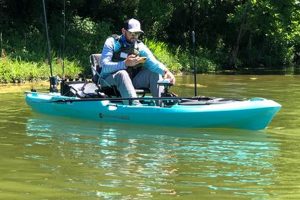
This sit-on-top vessel is a specific model designed for angling, manufactured by Ascend. Characterized by its 10-foot length, it offers stability and maneuverability ideal for navigating various water bodies, from calm lakes to slow-moving rivers. Its design often incorporates features tailored to fishing, such as rod holders, storage compartments, and anchor trolleys.
Compact watercraft like this one present a balance of portability and performance, enabling anglers to access shallower waters or areas inaccessible to larger boats. The relatively short length and lighter weight compared to longer kayaks can make transport and launching easier, while still providing adequate stability for casting and reeling. This category of fishing kayak has become increasingly popular due to its affordability and versatility, providing a practical entry point into kayak fishing.
Further exploration will delve into specific features, performance characteristics, advantages, and disadvantages to provide a detailed overview of this particular model and its place within the broader market of fishing kayaks. Considerations for choosing appropriate paddles, personal flotation devices, and other accessories relevant to safe and enjoyable kayak angling will also be addressed.
Tips for Kayak Fishing Success
Proper preparation and technique enhance safety and fishing success. These tips provide guidance for a productive and enjoyable experience on the water.
Tip 1: Stability and Balance: Prioritize a stable seating position and distribute weight evenly within the kayak. Practice entering and exiting the vessel in shallow water to gain confidence and understand its balance characteristics.
Tip 2: Paddle Selection: Choose a paddle appropriate for individual height and kayak width. A properly sized paddle improves efficiency and reduces fatigue.
Tip 3: Safety Gear: Always wear a personal flotation device (PFD) and carry essential safety equipment, including a whistle, signaling device, and first-aid kit. Check local regulations for required safety items.
Tip 4: Fishing Gear Organization: Organize tackle and equipment for easy access. Utilize rod holders and storage compartments to keep gear secure and prevent clutter.
Tip 5: Anchor and Drift Control: Utilize an anchor or drift sock to maintain position in desired fishing locations, particularly in current or wind.
Tip 6: Weather Awareness: Check weather forecasts before heading out and be prepared for changing conditions. Avoid fishing in strong winds, lightning storms, or extreme temperatures.
Tip 7: Respectful Angling: Adhere to catch and release guidelines when appropriate and follow all local fishing regulations. Leave no trace behind by properly disposing of waste.
By following these guidelines, anglers can increase their chances of a successful and safe fishing trip. Careful planning and execution contribute significantly to overall enjoyment on the water.
This information offers practical advice for enhancing one’s kayak fishing experience. A deeper understanding of these principles allows for greater focus on the sport itself.
1. Sit-on-top Design

The sit-on-top design is a defining characteristic of the Ascend D10 fishing kayak, significantly influencing its functionality and suitability for angling. This design choice directly impacts stability, maneuverability, and overall user experience. A closer examination reveals the multifaceted benefits and implications of this configuration.
- Enhanced Stability:
Sit-on-top kayaks generally offer greater initial stability compared to sit-inside models. This inherent stability stems from the wider hull and higher center of gravity, making them less prone to tipping, particularly beneficial for anglers casting lines and reeling in fish. On the Ascend D10, this translates to a confident fishing platform, even for less experienced kayakers.
- Self-Bailing System:
Scupper holes, strategically placed throughout the hull of sit-on-top kayaks, allow water to drain continuously. This self-bailing feature prevents water accumulation, maintaining buoyancy and dryness. In the context of the Ascend D10, this is crucial for fishing in choppy conditions or when navigating through shallow, weedy areas where water might splash over the deck.
- Ease of Entry and Exit:
The open design simplifies entering and exiting the kayak, a significant advantage for anglers who may need to re-enter the vessel after a swim or prefer easy access for adjusting gear or changing positions. This feature is particularly relevant for the Ascend D10, often used in diverse environments ranging from calm lakes to moving rivers.
- Versatility and Comfort:
The sit-on-top configuration allows for greater freedom of movement and adjustment, contributing to comfort during longer fishing trips. Anglers can easily shift positions, stretch their legs, and access gear. This adaptability makes the Ascend D10 suitable for various fishing styles and individual preferences.
The sit-on-top design of the Ascend D10 fishing kayak directly contributes to its suitability for angling. The enhanced stability, self-bailing system, ease of entry and exit, and overall versatility combine to create a user-friendly and practical platform for fishing in diverse environments. These features collectively enhance the angler’s experience, promoting both comfort and safety.
2. Ten-foot length

The ten-foot length of the Ascend D10 fishing kayak represents a deliberate design choice, balancing key performance characteristics crucial for its intended purpose. This dimension significantly influences maneuverability, tracking, stability, and portability, impacting the overall fishing experience. Understanding the implications of this length is essential for evaluating the kayak’s suitability for specific angling scenarios.
- Maneuverability:
A ten-foot kayak generally offers enhanced maneuverability compared to longer models. This allows for easier navigation through tight spaces, such as narrow creeks, inlets, or areas with dense vegetation. The Ascend D10’s length makes it responsive to paddle strokes, facilitating quick turns and adjustments in direction, advantageous when targeting fish in confined locations.
- Tracking:
While shorter kayaks may not track as straight as longer ones, the ten-foot length of the Ascend D10 provides a reasonable balance. The moderate length allows for sufficient glide and forward momentum while maintaining the agility required for fishing. Slight course corrections are easily managed with minimal effort, enabling anglers to cover water efficiently.
- Stability:
The ten-foot length contributes to the Ascend D10’s stability. While shorter kayaks can feel less stable initially, the D10’s hull design compensates for this, offering a platform suitable for casting and reeling. The length provides a balanced feel, reducing the tendency for excessive rocking, which can be disruptive during fishing activities.
- Portability:
The ten-foot length makes the Ascend D10 relatively easy to transport and store. Its compact size simplifies loading onto vehicle roof racks or carrying short distances. This portability expands accessibility for anglers, allowing them to reach fishing spots that might be challenging for larger kayaks to access.
The ten-foot length of the Ascend D10 fishing kayak is a critical design element directly impacting its performance on the water. The resulting balance of maneuverability, tracking, stability, and portability contributes to the kayak’s versatility, making it suitable for a range of fishing environments and angling styles. This length, in conjunction with the kayak’s other features, ultimately determines its effectiveness as a fishing platform, allowing anglers to navigate diverse waterways and target various fish species.
3. Stability
Stability is a paramount consideration in fishing kayak design, directly impacting angler safety, comfort, and fishing effectiveness. The Ascend D10 fishing kayak addresses this critical factor through a combination of design elements, contributing to a stable platform suitable for various on-the-water activities. A stable kayak allows anglers to focus on fishing rather than constantly correcting balance, enabling confident casting, reeling, and landing of fish. Conversely, instability can lead to angler fatigue, difficulty in casting accurately, and increased risk of capsizing, particularly in challenging conditions. The Ascend D10’s inherent stability stems from its relatively wide hull, flat bottom, and well-distributed weight capacity. These features combine to create a kayak that resists tipping, even when subjected to external forces like wind, waves, or the movement of an angler shifting weight.
The practical significance of stability in a fishing kayak like the Ascend D10 becomes evident in real-world scenarios. Consider an angler standing to cast in shallow water; the D10’s stability provides a secure platform, minimizing the risk of falling overboard. Similarly, when battling a strong fish, the kayak’s resistance to tipping allows the angler to maintain control and focus on the fight. Furthermore, stability is crucial when navigating challenging conditions, such as wind-blown lakes or flowing rivers. The Ascend D10’s stable platform allows anglers to maintain their course and resist capsizing, ensuring a safe and enjoyable fishing experience. This characteristic extends beyond experienced anglers; it provides novices with the confidence and security necessary to develop their skills and enjoy the sport.
In summary, the Ascend D10 fishing kayak prioritizes stability through deliberate design choices, contributing significantly to its suitability for angling. This stability translates to enhanced safety, reduced angler fatigue, increased fishing effectiveness, and overall enjoyment on the water. Understanding the factors contributing to the D10’s stability empowers anglers to utilize the kayak effectively and confidently in diverse fishing environments. The focus on stability highlights the manufacturer’s consideration for the practical needs and safety of kayak anglers.
4. Maneuverability
Maneuverability is a critical performance attribute for fishing kayaks, directly influencing an angler’s ability to navigate diverse water environments and access prime fishing locations. In the context of the Ascend D10 fishing kayak, maneuverability plays a crucial role in its suitability for various angling styles and on-the-water situations. Examining the factors contributing to the D10’s maneuverability provides valuable insights into its overall performance and effectiveness as a fishing platform. The ability to easily turn, navigate tight spaces, and adjust positioning enhances fishing success and overall user experience.
- Hull Design:
The Ascend D10’s hull design significantly influences its maneuverability. The relatively shorter length and moderate width contribute to its responsiveness to paddle input. The hull shape allows for efficient turning and maneuvering in confined areas, such as narrow creeks, shallows, or weed beds, providing access to locations often inaccessible to larger, less agile watercraft.
- Length and Width Ratio:
The ten-foot length combined with the D10’s width creates a balance between maneuverability and tracking. While shorter kayaks generally turn more easily, they may sacrifice some tracking ability. The D10’s proportions are designed to provide sufficient maneuverability for navigating various fishing environments while maintaining reasonable tracking performance for efficient paddling.
- Water Displacement:
The Ascend D10’s hull displaces a moderate amount of water, influencing its maneuverability. A kayak that displaces less water tends to turn more quickly, while one that displaces more water may offer increased stability but require more effort to turn. The D10’s water displacement characteristics are designed to provide a balance between agility and stability, suitable for fishing applications.
- Paddle Efficiency:
While not solely a characteristic of the kayak itself, paddle choice influences maneuverability. Using a paddle appropriate for the kayak’s width and the angler’s paddling style maximizes efficiency and control, contributing to precise maneuvering. A shorter, wider paddle may enhance maneuverability in tight spaces.
The maneuverability of the Ascend D10 fishing kayak is a product of interconnected design elements and user considerations. The hull design, length and width ratio, water displacement characteristics, and appropriate paddle selection all contribute to its overall agility and responsiveness on the water. Understanding these factors allows anglers to maximize the kayak’s performance, effectively navigating diverse environments and accessing productive fishing areas. This capability enhances the fishing experience, allowing for greater exploration and increased opportunities for success on the water.
5. Fishing Features
The efficacy of a fishing kayak hinges significantly on its integrated features specifically designed for angling. The Ascend D10 fishing kayak incorporates several such features, directly impacting its practicality and suitability for targeted fishing activities. These features represent a deliberate design approach, catering to the specific needs and demands of kayak anglers. Analyzing these features reveals a clear connection between design and intended function, demonstrating how the Ascend D10 facilitates efficient and enjoyable fishing experiences. Cause and effect relationships are evident; for example, integrated rod holders directly impact an angler’s ability to manage multiple lines or keep rods secure while paddling or landing fish. Similarly, strategically placed storage compartments influence organization and accessibility of tackle and gear, impacting efficiency and reducing clutter.
Real-life examples illustrate the practical significance of these features. Consider an angler trolling for trout on a lake; the Ascend D10’s flush-mounted rod holders secure rods, preventing loss or damage during paddling and allowing quick access when a fish strikes. Alternatively, envision an angler navigating a shallow river while fly fishing; strategically placed storage compartments keep flies, lines, and other essential gear organized and readily available, crucial for efficient fly changes and minimizing disruptions during casting. These practical applications underscore the importance of well-designed fishing features in enhancing angling success and overall enjoyment on the water. The Ascend D10’s fishing-specific features distinguish it from recreational kayaks, highlighting its intended purpose and suitability for serious angling pursuits.
In summary, the Ascend D10 fishing kayak’s integrated features directly contribute to its effectiveness as a fishing platform. Rod holders, storage compartments, and other specialized design elements address the practical needs of anglers, enhancing efficiency, organization, and safety. The inclusion of these features underscores the manufacturer’s focus on providing a kayak specifically tailored for fishing. Understanding the function and practical applications of these features empowers anglers to utilize the Ascend D10 effectively, maximizing their fishing potential and overall enjoyment on the water. While challenges such as limited space inherent in smaller kayaks exist, the thoughtful integration of fishing-specific features mitigates these constraints, optimizing the D10’s utility for angling.
6. Portability
Portability significantly influences the practical usability of a fishing kayak, impacting accessibility to diverse fishing locations. The Ascend D10 fishing kayak addresses portability through design and material choices, affecting transport, launch, and storage. Cause and effect relationships are evident; reduced weight and compact dimensions directly facilitate easier handling and transport. This characteristic expands fishing opportunities by enabling access to remote or difficult-to-reach waters often inaccessible with larger, heavier boats. For example, an angler can easily transport the Ascend D10 on a cars roof rack or carry it short distances to a secluded lake or riverbank. This ease of transport expands fishing possibilities beyond locations easily accessible by larger vessels. Similarly, lighter weight simplifies launching and retrieval, minimizing physical strain and broadening access for individuals with physical limitations. This practical advantage allows diverse anglers to enjoy the sport regardless of physical capabilities. Portability, therefore, directly affects fishing accessibility and user experience.
Consider an angler seeking to fish a small, secluded pond accessible only by a narrow, overgrown trail. The Ascend D10’s portability allows transport through such challenging terrain, opening up fishing opportunities unavailable to those limited by bulkier watercraft. Similarly, an angler with limited storage space benefits from the D10s compact size, enabling storage in smaller areas like apartments or garages. This convenience expands participation in the sport by eliminating storage constraints that might otherwise prevent ownership. Furthermore, the kayak’s relatively lightweight construction simplifies handling, particularly during launching and retrieval, reducing strain and promoting safety, especially for solo anglers. This practicality encourages frequent usage and enjoyment of the sport without undue physical exertion.
In summary, the Ascend D10 fishing kayaks portability directly impacts its usability and expands angling opportunities. The connection between design choices, material selection, and ease of transport broadens access to various fishing locations. While portability may sometimes compromise on-the-water performance characteristics like storage capacity, the D10s design prioritizes accessibility, making it a practical choice for anglers seeking a balance between functionality and ease of transport. This emphasis on portability ultimately expands participation in the sport by removing barriers related to transport and storage limitations, thereby increasing the accessibility of kayak fishing to a wider audience.
Frequently Asked Questions
This section addresses common inquiries regarding the Ascend D10 fishing kayak, providing concise and informative responses to facilitate informed decision-making and enhance understanding of this specific model.
Question 1: What is the weight capacity of the Ascend D10 fishing kayak?
The weight capacity typically ranges between 325 and 400 pounds, depending on the specific model year and configuration. Consulting the manufacturer’s specifications for the particular model in question is recommended.
Question 2: What materials are used in the construction of the Ascend D10?
The Ascend D10 is commonly constructed using high-density polyethylene (HDPE), a durable and UV-resistant plastic known for its impact resistance and relatively lightweight properties.
Question 3: Is the Ascend D10 suitable for use in saltwater environments?
While primarily designed for freshwater use, the Ascend D10 can be used in saltwater environments with proper care and maintenance. Thorough rinsing after each use is crucial to prevent corrosion or damage from saltwater exposure.
Question 4: What are the dimensions of the Ascend D10?
The Ascend D10 typically measures approximately 10 feet in length and 30-32 inches in width. Specific dimensions may vary slightly depending on the model year and configuration.
Question 5: What features distinguish the Ascend D10 as a fishing kayak?
The Ascend D10 incorporates several features specifically designed for fishing, including rod holders, storage compartments, and often an anchor trolley system. These features enhance its practicality and suitability for angling activities.
Question 6: How does the Ascend D10 compare to other fishing kayaks in its price range?
The Ascend D10 is generally considered a value-oriented option within its price range, offering a balance of features, performance, and portability. Comparisons with specific competitor models should consider individual needs and preferences regarding features, stability, and maneuverability.
Addressing these frequently asked questions provides a comprehensive understanding of key aspects related to the Ascend D10 fishing kayak. This information aids potential buyers in evaluating its suitability for their individual needs and preferences.
Further sections will delve deeper into specific performance characteristics, user experiences, and comparative analyses to offer a comprehensive perspective on the Ascend D10 and its position within the broader fishing kayak market.
Conclusion
Exploration of the Ascend D10 fishing kayak reveals a design prioritizing stability, maneuverability, and fishing-specific features within a portable package. Its sit-on-top configuration, ten-foot length, and specialized amenities cater to diverse angling styles and environments. Analysis indicates suitability for both novice and experienced anglers seeking a balance between performance and practicality. The examination of core attributesstability, maneuverability, fishing features, and portabilityprovides a comprehensive understanding of this model’s strengths and limitations within the broader fishing kayak market.
Careful consideration of individual needs and preferences remains crucial in kayak selection. The Ascend D10 presents a compelling option for those prioritizing a stable, maneuverable, and feature-rich fishing platform within a portable and budget-conscious package. Thorough research and informed decision-making empower anglers to select equipment best suited to their specific requirements and contribute to enhanced enjoyment on the water. The evolving landscape of kayak fishing design and technology promises continued innovation and refinement, offering anglers increasingly specialized and effective tools for pursuing their passion.