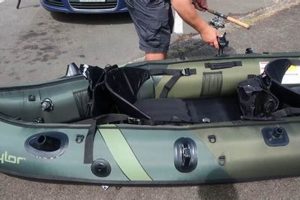
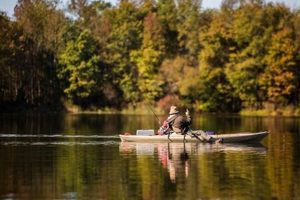
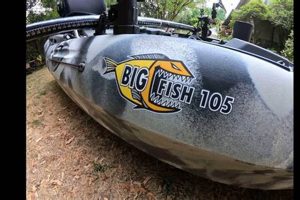
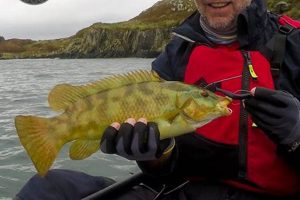
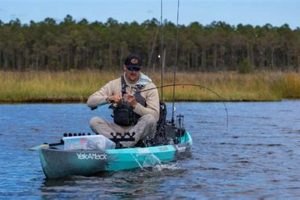
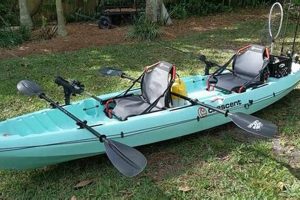
This activity involves angling from a kayak manufactured by Hobie, a company renowned for its innovative designs, particularly the MirageDrive pedal system. This hands-free propulsion allows anglers to maneuver efficiently and quietly, presenting lures or bait with greater precision while keeping their hands free for fishing. For instance, an angler might navigate shallow flats with the MirageDrive, casting to bonefish while maintaining a stealthy approach.
Hands-free fishing provides a significant advantage over traditional paddling, enabling anglers to cover more water and focus on fishing technique. The stability and specialized features of these watercraft offer access to diverse fishing environments, from shallow estuaries to open ocean. Hobie’s contributions to kayak fishing have significantly impacted the sport, expanding accessibility and enhancing the fishing experience. Their innovations have allowed anglers to reach previously inaccessible fishing grounds and engage with the sport in a more active and efficient manner.
The following sections will delve into specific aspects of this specialized angling method, including choosing the right model, essential equipment, effective fishing techniques, and popular fishing locations.
Tips for Pedal-Powered Kayak Angling
Maximizing the advantages of pedal-driven kayaks requires careful consideration of various factors, from selecting appropriate gear to understanding specific fishing techniques. These tips offer valuable insights for enhancing angling success and overall experience.
Tip 1: Choose the Right Kayak: Consider fishing style and target species. Longer kayaks offer speed and tracking for offshore fishing, while shorter, wider models provide stability for inshore or river fishing. Avid anglers targeting larger game fish might opt for a longer, ocean-going kayak, while those focused on bass fishing in calm lakes benefit from shorter, maneuverable designs.
Tip 2: Master the MirageDrive: Practice maneuvering and controlling the pedal system in various conditions. Understanding subtle adjustments in pedal pressure and steering can significantly enhance boat control and positioning during fishing. Regular practice builds confidence and enhances the overall fishing experience.
Tip 3: Organize and Secure Gear: Utilize rod holders, tackle storage, and mounting systems to maintain a clutter-free deck. Securely fastened gear prevents loss or damage and maximizes fishing efficiency. Consider purpose-built storage solutions for essential safety equipment like flares and first-aid kits.
Tip 4: Prioritize Safety: Always wear a personal flotation device (PFD) and carry essential safety equipment. Check weather conditions before embarking on any fishing trip. A well-prepared angler mitigates potential risks associated with the aquatic environment.
Tip 5: Employ Stealth Tactics: Pedal kayaks offer a quiet approach, crucial for stalking fish in shallow water. Minimizing noise and movement increases the chances of a successful catch, especially with wary species.
Tip 6: Utilize Electronics Effectively: Fish finders and GPS devices enhance fish location and navigation. Learn to interpret sonar readings and utilize GPS waypoints to mark productive fishing areas for future trips. Integrating electronic tools strategically increases fishing success.
Tip 7: Respect the Environment: Practice catch-and-release whenever possible and adhere to local fishing regulations. Proper disposal of fishing line and other waste materials minimizes environmental impact. Sustainable angling practices ensure the preservation of aquatic ecosystems for future generations.
By implementing these tips, anglers can fully leverage the advantages of pedal-powered kayaks, enhancing fishing success and promoting safe and responsible angling practices.
This guidance provides a foundation for successful pedal-powered kayak angling. The following conclusion will recap key points and offer further resources for continued learning and exploration.
1. Stability

Stability is a paramount consideration in kayak fishing, particularly when using a Hobie kayak with its hands-free MirageDrive propulsion. A stable platform allows anglers to focus on fishing techniques, casting, retrieving, and landing fish without the constant worry of capsizing. This is particularly important in challenging conditions such as windy days, choppy water, or when battling strong currents or large fish.
- Primary Stability:
Primary stability refers to a kayak’s initial resistance to tipping. A wider hull and lower center of gravity contribute to higher primary stability, creating a secure feeling for anglers when sitting still or making minor movements. This is crucial for activities like changing lures, rigging tackle, or landing fish, which often require shifting weight within the kayak. Hobie kayaks offer varying degrees of primary stability depending on the model, catering to different fishing styles and conditions. For example, a Pro Angler model offers higher primary stability than a Revolution model, making it better suited for stand-up fishing.
- Secondary Stability:
Secondary stability describes a kayak’s ability to resist capsizing when leaned or tilted. This characteristic becomes important when navigating rough water, making sharp turns, or leaning to reach for a fish or dropped item. Kayaks with a rounded hull tend to have higher secondary stability, enabling them to recover from significant leans. Hobie kayaks are known for their relatively high secondary stability, inspiring confidence in challenging conditions.
- Impact of Gear and Movement:
The distribution of weight within the kayak, including gear and the angler’s own movements, significantly influences overall stability. Properly securing gear and maintaining a balanced weight distribution enhances stability. Sudden movements, such as standing up quickly or shifting weight to one side, can compromise stability and increase the risk of capsizing. Understanding the impact of weight distribution and controlled movements is crucial for maximizing stability in a Hobie kayak, especially when utilizing the MirageDrive system.
- Influence of Water Conditions:
Water conditions, such as wind, currents, and waves, play a critical role in kayak stability. Strong winds and choppy water can significantly challenge stability, requiring anglers to adjust their positioning and paddling technique. Currents can also impact stability, especially when navigating near structures or changes in water depth. Anglers using Hobie kayaks should be aware of the impact of prevailing water conditions and exercise caution in challenging environments, potentially adjusting their fishing location or strategy based on these conditions.
Ultimately, understanding these facets of stability, in conjunction with selecting an appropriate Hobie model and practicing proper paddling techniques, empowers anglers to maximize their fishing experience while maintaining a safe and balanced platform. This ensures the angler can confidently utilize the advantages of the MirageDrive system and focus on the task at hand: catching fish.
2. MirageDrive Propulsion

MirageDrive propulsion represents a pivotal advancement in kayak fishing, particularly within the Hobie brand. This unique system employs a pedal-driven mechanism that propels the kayak, freeing the angler’s hands for fishing activities. This hands-free operation offers several distinct advantages over traditional paddle kayaks, significantly impacting the overall fishing experience. The pedal-driven system allows for continuous, efficient movement, enabling anglers to cover greater distances with less physical exertion. This proves particularly beneficial when navigating currents, wind, or larger bodies of water. Furthermore, the MirageDrive system allows for precise maneuvering and boat control, crucial for navigating shallow waters, approaching fish stealthily, or maintaining position in a specific fishing zone.
The practical significance of MirageDrive propulsion becomes readily apparent in various fishing scenarios. Consider an angler targeting bonefish in shallow flats. The MirageDrive allows for quiet and efficient movement, crucial for approaching these easily spooked fish without disturbing the water. Similarly, when trolling for offshore species, the continuous propulsion provided by the MirageDrive maintains a consistent lure presentation and speed, maximizing fishing effectiveness. The ability to steer and adjust position with foot pedals while simultaneously managing rods and reels significantly enhances an angler’s ability to respond to changing conditions and fish behavior. For example, an angler fighting a strong fish can use the MirageDrive to maintain tension and control, preventing the fish from breaking off or wrapping the line around underwater obstacles.
The integration of MirageDrive propulsion within Hobie kayaks has fundamentally altered the landscape of kayak fishing. It provides a distinct advantage by enhancing maneuverability, efficiency, and stealth, ultimately leading to improved fishing success. The ability to maintain continuous motion while keeping hands free for fishing tasks represents a significant leap forward in kayak angling technology. This innovation allows anglers to focus more on fishing technique and less on paddling, increasing overall enjoyment and productivity on the water. Further development and refinement of this technology promise to further enhance the capabilities and experience of kayak fishing in the future.
3. Fishing Features
Specialized fishing features distinguish Hobie kayaks from recreational models, optimizing them for angling. These features enhance efficiency, organization, and overall fishing success. Consider rod holders, strategically placed to keep rods secure and readily accessible while paddling or maneuvering with the MirageDrive. Integrated tackle storage systems maintain order, ensuring lures and essential gear are readily available. Livewells, designed to keep bait and caught fish alive and fresh, contribute to ethical fishing practices and enhance the chance of a successful outing, especially in tournaments.
These integrated features contribute significantly to the Hobie kayak fishing experience. Imagine an angler targeting redfish in a shallow estuary. Multiple rod holders allow for different setups, each rigged with a specific lure or bait, maximizing adaptability to changing fish behavior or water conditions. The readily accessible tackle storage enables quick changes without disrupting the fishing flow. A built-in livewell ensures bait remains lively and appealing, increasing the chance of attracting and hooking the target species. Without these specialized features, anglers would face challenges managing equipment and maintaining fishing effectiveness. The practical application of these integrated systems allows for a streamlined and focused fishing experience, increasing the probability of a successful catch.
In conclusion, the integration of specialized fishing features within Hobie kayaks directly contributes to angler success and enjoyment. These purpose-built features, from rod holders to livewells, optimize the kayak for fishing-specific needs. The strategic design and placement of these elements streamline the fishing process, reduce clutter, and enhance overall efficiency. Ultimately, these features, combined with Hobie’s innovative MirageDrive system, establish these kayaks as premier platforms for anglers seeking to maximize their time and success on the water. Consideration of these features is paramount when selecting a Hobie kayak, as individual fishing styles and target species often dictate the most beneficial configuration.
4. Hull Design
Hull design plays a crucial role in the performance of a Hobie fishing kayak, influencing stability, speed, maneuverability, and tracking. Different hull designs cater to specific fishing environments and styles. A pontoon hull, characterized by two separate hulls connected by a platform, provides exceptional stability, ideal for calm waters and stand-up fishing. This design prioritizes stability over speed, making it well-suited for anglers who value a secure platform for casting and retrieving. Conversely, a displacement hull, with its pointed bow and V-shaped bottom, excels in tracking and efficiency, enabling anglers to cover greater distances with less effort. This design prioritizes speed and directional control, making it suitable for open-water fishing and covering long distances. The tunnel hull design, featuring a recessed tunnel along the bottom, offers a balance between stability and speed, providing a versatile option for various fishing environments. This design combines attributes of both pontoon and displacement hulls, offering moderate stability and efficient tracking.
Consider a Hobie Pro Angler, known for its wide, stable pontoon hull. This design allows anglers to confidently stand and cast in calm waters, presenting a significant advantage when sight-fishing or fly-fishing. In contrast, a Hobie Revolution, featuring a displacement hull, excels in navigating choppy waters and covering distance efficiently, ideal for trolling or reaching distant fishing spots. The Hobie Outback, with its tunnel hull design, provides a balance of stability and speed, suitable for both inshore and offshore fishing applications. Choosing the right hull design depends on the intended fishing environment and personal preferences. Understanding the characteristics of each hull type enables anglers to select a Hobie kayak optimized for their specific needs. For example, an angler primarily fishing in calm lakes or rivers benefits from the stability of a pontoon hull, while someone fishing in coastal areas or open ocean may prefer the speed and tracking of a displacement hull.
In summary, hull design represents a critical factor in Hobie kayak selection. Matching hull characteristics to fishing style and environment significantly impacts performance and overall angling experience. Careful consideration of stability, speed, maneuverability, and tracking needs ensures anglers choose a Hobie kayak optimized for their individual requirements. This understanding allows for informed decision-making, leading to enhanced fishing success and enjoyment on the water. The interplay between hull design and intended use remains a crucial consideration in maximizing the potential of a Hobie fishing kayak.
5. Storage Capacity

Storage capacity directly impacts the effectiveness and enjoyment of kayak fishing, particularly when using Hobie kayaks, known for their specialized fishing features and the MirageDrive pedal system. Adequate storage allows anglers to carry essential gear, including tackle boxes, safety equipment, extra clothing, and food and water. This reduces the need for multiple trips and ensures preparedness for various situations encountered on the water. Insufficient storage can lead to a cluttered deck, hindering movement and access to essential items, ultimately compromising safety and fishing efficiency. Conversely, ample storage promotes organization and efficient retrieval of gear, contributing to a more streamlined and focused fishing experience. For instance, an angler targeting different species might require a variety of rods, reels, and lures. Sufficient storage ensures these items are readily accessible, allowing for quick adaptation to changing fishing conditions or target species. Furthermore, dedicated storage for safety equipment, like a first-aid kit, flares, and a bilge pump, remains crucial for preparedness in unforeseen circumstances.
Consider a scenario where an angler ventures offshore in a Hobie kayak. Ample storage allows for carrying essential safety gear, including a VHF radio, GPS device, and emergency signaling equipment. This preparedness enhances safety in open water and provides peace of mind during longer excursions. Additionally, sufficient storage allows for carrying enough food and water to maintain energy levels throughout the day, crucial for maintaining focus and stamina during extended fishing trips. Practical storage solutions within Hobie kayaks, such as hatches, compartments, and bungee tie-downs, facilitate organization and secure storage of gear, preventing items from shifting or getting lost during transit or while navigating rough waters.
In summary, adequate storage capacity is essential for successful kayak fishing, particularly with Hobie kayaks. It allows anglers to carry necessary gear, promoting safety, efficiency, and enjoyment on the water. Understanding storage needs and utilizing appropriate storage solutions within the kayak contributes significantly to a more organized, productive, and ultimately more rewarding fishing experience. Prioritizing storage capacity during kayak selection ensures anglers can fully utilize the advantages of Hobie’s innovative features and focus on the core pursuit: catching fish.
6. Maintenance Requirements

Maintaining a Hobie fishing kayak is crucial for optimal performance, longevity, and safety. Regular maintenance ensures the kayak remains in top condition, allowing anglers to fully utilize its features and enjoy countless hours on the water. Neglecting maintenance can lead to decreased performance, costly repairs, and potentially hazardous situations. Understanding the specific maintenance needs of a Hobie kayak, particularly concerning the MirageDrive system, is essential for responsible ownership and maximizing the kayak’s lifespan.
- MirageDrive Care
The MirageDrive system, central to Hobie kayaks, requires regular attention. Rinsing the system with fresh water after each use, especially in saltwater environments, prevents salt buildup and corrosion. Periodic lubrication of moving parts ensures smooth operation and reduces wear. Inspecting fins for damage and replacing them when necessary maintains optimal propulsion efficiency. Proper MirageDrive maintenance preserves its performance and extends its lifespan, ensuring continued efficient and enjoyable kayak propulsion. Neglecting these steps can lead to decreased performance, costly repairs, and potential failure of the system on the water.
- Hull and Deck Maintenance
Regular cleaning of the hull and deck removes dirt, grime, and saltwater residue, preserving the kayak’s appearance and preventing potential damage. Inspecting the hull for cracks, scratches, or other damage allows for timely repairs, preventing further deterioration. UV protection, applied regularly, safeguards the kayak from sun damage, particularly in harsh environments. Proper hull and deck maintenance protects the kayak’s integrity, extending its lifespan and maintaining its aesthetic appeal. Ignoring these maintenance tasks can lead to premature wear, fading, and potential structural issues.
- Hardware and Fittings Inspection
Regularly inspecting hardware, such as screws, bolts, and rudder components, ensures they remain tight and secure. Loose or corroded hardware can compromise the kayak’s structural integrity and functionality. Lubricating moving parts, like rudder cables and steering mechanisms, ensures smooth operation and prevents wear. Thorough inspection and maintenance of hardware and fittings contribute to the overall safety and performance of the Hobie kayak. Neglecting these crucial components can lead to malfunction, decreased performance, and potential safety hazards on the water.
- Storage Considerations
Proper storage protects the Hobie kayak from environmental damage and prolongs its lifespan. Storing the kayak in a shaded area or using a UV-resistant cover minimizes sun damage. Ensuring adequate ventilation during storage prevents mold and mildew growth, especially in humid climates. Storing the kayak securely, either on a rack or upside down, prevents warping and damage to the hull. Proper storage practices maintain the kayak’s condition and prepare it for future use. Failing to address these storage considerations can lead to premature wear, structural damage, and decreased performance over time.
These maintenance requirements, while specific to Hobie kayaks, represent essential practices for any kayak angler. Adhering to these guidelines contributes significantly to the longevity and performance of the kayak, ensuring many years of enjoyable fishing experiences. Regular maintenance not only protects the investment but also enhances safety and performance on the water, allowing anglers to focus on what matters most: the pursuit of fish. A well-maintained Hobie kayak, with its efficient MirageDrive and specialized features, becomes a reliable and effective tool for exploring diverse fishing environments and maximizing angling success.
7. Transportation Considerations

Transportation considerations significantly impact Hobie kayak fishing accessibility and overall experience. These kayaks, while offering unique advantages through the MirageDrive system and specialized features, often present transportation challenges due to their size and weight. Effective transport solutions are crucial for accessing diverse fishing locations and maximizing angling opportunities. Choosing an appropriate method depends on vehicle type, storage capacity, and travel distance. Analyzing available options, including roof racks, trailers, and truck beds, enables informed decisions aligned with individual needs and circumstances. Understanding the practical implications of transporting a Hobie kayak is essential for seamless integration into the fishing experience.
For instance, an angler with a compact car might opt for a roof rack system designed for kayaks. Properly securing the kayak to the roof rack with straps and tie-downs ensures safe and stable transport. Alternatively, an angler with a truck or SUV might utilize a truck bed extender or a small trailer, simplifying loading and unloading. These considerations influence not only the ease of transport but also the overall cost and accessibility of different fishing locations. For example, transporting a Hobie kayak long distances might necessitate a trailer, while shorter trips might be manageable with a roof rack system. Furthermore, access to launch sites and parking availability at these locations influences transportation choices. Some launch sites might offer limited parking, requiring anglers to carry their kayaks a considerable distance, a factor significantly impacting the practicality of heavier Hobie models.
In summary, addressing transportation challenges inherent in Hobie kayak fishing is crucial for maximizing enjoyment and expanding fishing opportunities. Evaluating available transportation solutions based on individual needs and logistical constraints enables anglers to make informed decisions. Understanding the practical implications of transporting these specialized kayaks unlocks their full potential, allowing anglers to explore diverse waterways and fully embrace the advantages of Hobie’s innovative fishing platform. Ultimately, effectively addressing transportation considerations enhances accessibility, reduces pre- and post-fishing logistical burdens, and contributes to a more streamlined and rewarding angling experience. Failure to plan for transport can significantly hinder access to desired fishing locations, limiting the overall enjoyment and potential of Hobie kayak fishing.
Frequently Asked Questions
This section addresses common inquiries regarding kayaks designed for fishing by Hobie, offering concise and informative responses.
Question 1: What differentiates these kayaks from other fishing kayaks?
The primary distinction lies in the patented MirageDrive pedal system, enabling hands-free propulsion and fishing. This system offers maneuverability and efficiency advantages over traditional paddle kayaks.
Question 2: Are these kayaks suitable for beginners?
Certain models cater specifically to beginners, offering enhanced stability and user-friendly features. Proper instruction and practice are recommended before venturing into challenging conditions.
Question 3: What is the typical cost of these specialized kayaks?
Pricing varies depending on model, features, and accessories. Generally, these kayaks represent a higher investment compared to traditional paddle kayaks due to their advanced technology and specialized design.
Question 4: How durable are these kayaks, and what kind of maintenance do they require?
Built with robust materials, these kayaks are designed for diverse fishing environments. Regular maintenance, including rinsing, lubrication, and inspection, ensures optimal performance and longevity.
Question 5: What safety precautions should one take when using these kayaks?
Standard safety practices apply, including wearing a personal flotation device, carrying essential safety equipment, and checking weather conditions prior to each outing. Understanding the kayak’s handling characteristics in various conditions is also essential.
Question 6: Where can one purchase these kayaks and related accessories?
Authorized dealers offer a range of models, accessories, and expert advice. Online retailers also provide purchasing options, but hands-on experience at a dealership is often beneficial for selecting the right kayak and accessories.
Understanding these key aspects contributes to an informed purchasing decision and a more rewarding fishing experience. Researching specific models and consulting with experienced anglers further enhances knowledge and preparedness.
The following section delves into specific model comparisons, providing detailed insights into individual Hobie kayak features and capabilities.
Conclusion
This exploration has provided comprehensive insights into the specialized niche of angling from Hobie kayaks. Key aspects, including the innovative MirageDrive system, specialized fishing features, hull design variations, storage considerations, maintenance requirements, and transportation logistics, have been examined. Understanding these elements is crucial for maximizing performance, safety, and overall enjoyment on the water. The advantages of hands-free fishing, enhanced maneuverability, and access to diverse fishing environments have been highlighted, underscoring the distinct capabilities of these specialized watercraft.
The evolution of kayak fishing continues, driven by innovation and a growing appreciation for the sport’s unique connection with nature. Careful consideration of individual needs, fishing styles, and target environments remains paramount when selecting a Hobie kayak. Informed decision-making empowers anglers to fully leverage the advantages of this specialized equipment, fostering deeper engagement with the aquatic environment and enhancing the pursuit of angling success.