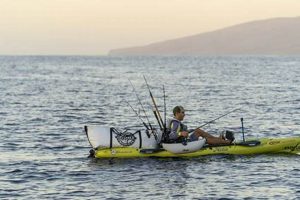
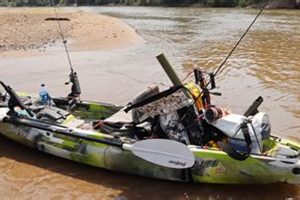
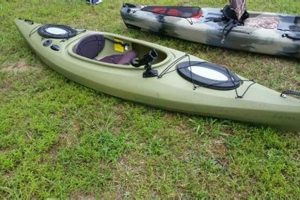
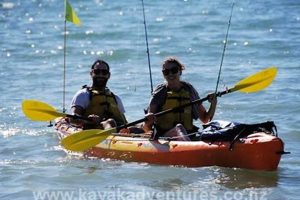
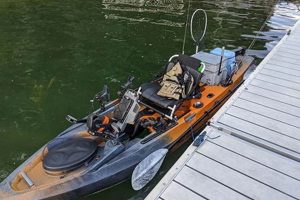
A specialized type of kayak designed for angling in marine environments offers stability, storage for gear, and specialized features like rod holders and anchor trolleys. These vessels are typically longer and wider than recreational kayaks, providing a stable platform for casting and reeling in fish. An example would be a sit-on-top model equipped with multiple rod holders, a fish finder, and ample storage for tackle boxes and other fishing necessities.
This specialized equipment enables anglers to access shallow water and other areas unreachable by larger boats, offering unique fishing opportunities. The stability of these craft allows anglers to stand and cast, improving visibility and casting range. Historically, kayaks have been utilized for fishing for centuries by indigenous cultures. Modern designs incorporate advanced materials and features that enhance performance and comfort, making them a popular choice for recreational and serious anglers alike.
The following sections will delve into specific aspects of this specialized fishing platform, including choosing the right model, essential gear, safety considerations, popular fishing techniques, and recommended locations.
Tips for Kayak Fishing in Marine Environments
Successful kayak angling requires careful planning and preparation. The following tips offer valuable insights into enhancing safety and maximizing fishing success.
Tip 1: Choose the Right Kayak: Consider stability, storage capacity, and features like rod holders and anchor trolleys. Sit-on-top kayaks are often preferred for their self-bailing design.
Tip 2: Prioritize Safety Gear: A personal flotation device (PFD), a whistle, and a signaling device are essential. A first-aid kit and a communication device should also be carried.
Tip 3: Plan Your Trip: Check weather forecasts, tides, and currents. Inform someone of the planned route and estimated return time.
Tip 4: Pack Essential Gear: Appropriate fishing rods, reels, tackle, and bait are crucial. A dry bag can protect electronics and other valuables from water damage.
Tip 5: Practice Paddle Strokes: Efficient paddling conserves energy and improves maneuverability. Learning basic strokes allows for effective navigation in various conditions.
Tip 6: Understand Local Regulations: Research fishing licenses and size/catch limits for the target species. Respect local regulations and conservation efforts.
Tip 7: Be Aware of Wildlife: Marine environments can be home to various animals. Maintain a respectful distance and avoid disturbing wildlife.
Tip 8: Practice Self-Rescue Techniques: Knowing how to re-enter a kayak after a capsize is a crucial safety skill. Practice these techniques in a controlled environment.
By following these guidelines, anglers can enhance their safety and increase their chances of a successful and enjoyable fishing experience.
The information provided here offers a solid foundation for planning and executing a safe and productive kayak fishing trip. Careful preparation and adherence to safety protocols are paramount for a rewarding experience.
1. Stability

Stability is a critical factor in selecting a sea kayak for fishing. A stable platform is essential for casting, reeling, landing fish, and remaining safe in varied water conditions. Compromised stability can lead to capsizing, equipment loss, and potentially dangerous situations. This section explores key facets contributing to kayak stability specifically for angling purposes.
- Hull Design
Hull design significantly influences stability. Wider hulls generally offer greater initial stability, making them suitable for calmer waters and activities like stand-up fishing. However, wider hulls can be slower and less maneuverable. Longer kayaks tend to track better in a straight line but may be less agile. Specific hull designs, like pontoon hulls or multi-hull designs, offer enhanced stability but may sacrifice speed and maneuverability. The choice depends on the intended fishing environment and angler preferences. For example, a shallow-water angler targeting bonefish might prefer a wider, more stable hull for sight casting while standing.
- Center of Gravity
A lower center of gravity enhances stability. The distribution of weight within the kayak significantly impacts the center of gravity. Keeping heavier items low and centered improves stability. Anglers should consider the weight of fishing gear, tackle boxes, and other equipment when loading the kayak. An angler carrying a heavy cooler filled with ice and drinks should position it low and centrally to maintain optimal stability. Higher seating positions raise the center of gravity and can decrease stability.
- Water Conditions
Calm waters allow for greater stability, while rough seas and strong currents can significantly challenge stability. Wind also plays a role, potentially affecting balance and making paddling more difficult. Anglers must assess water conditions before venturing out and choose a kayak appropriate for the expected conditions. A kayak stable in calm bays might be unsuitable for open ocean fishing. Understanding and adapting to changing water conditions is crucial for maintaining stability and safety on the water.
- Angler Experience and Skill
Experienced anglers often develop a better sense of balance and can handle less stable kayaks effectively. Beginners should prioritize stability until they gain experience and confidence. Proper paddling technique and body positioning contribute significantly to maintaining balance. Practicing self-rescue techniques in calm water can build confidence and enhance safety. An experienced angler might feel comfortable fishing from a narrower, higher-performance kayak in moderately challenging conditions, whereas a beginner should opt for a wider, more stable platform.
Understanding these factors and their interplay is crucial for selecting a sea kayak that provides adequate stability for a safe and successful fishing experience. Choosing a kayak with appropriate stability for the intended fishing environment and the angler’s skill level can significantly enhance safety and enjoyment on the water.
2. Storage Capacity
Adequate storage capacity is a crucial factor in a sea kayak designed for fishing. The ability to transport essential gear directly impacts fishing success and safety. Insufficient storage can limit the range of fishing techniques, compromise safety by hindering access to essential equipment, and detract from the overall fishing experience. Several factors contribute to the importance of storage capacity.
Fishing necessitates a variety of equipment, including rods, reels, tackle boxes, bait, safety gear, and potentially food and water. Limited storage necessitates careful selection and prioritization of gear, potentially restricting fishing options. For example, an angler targeting larger pelagic species offshore requires heavier tackle and larger lures, demanding greater storage space than someone fishing for panfish in a sheltered bay. Ample storage allows anglers to carry a wider range of tackle and adapt to changing conditions or target different species. Carrying insufficient water or safety equipment due to limited storage can compromise safety, particularly during longer trips or in remote locations. Designated storage compartments designed for specific gear, such as rod holders or tackle storage, enhance organization and accessibility, maximizing efficiency and minimizing clutter. Secure storage prevents gear from shifting during paddling or rough conditions, reducing noise and potential entanglement. Dry storage compartments protect sensitive electronics, communication devices, and other essential items from water damage.
In conclusion, sufficient and well-designed storage contributes significantly to a positive and productive kayak fishing experience. It allows anglers to carry the necessary gear for diverse fishing situations, enhancing adaptability and success. Appropriate storage also ensures essential safety equipment is readily available and protects valuable items from the elements. Careful consideration of storage needs is essential when selecting a sea kayak for fishing.
3. Specialized Features
Specialized features distinguish fishing kayaks from recreational models, enhancing functionality, safety, and overall fishing success. These features cater specifically to the needs of anglers, enabling diverse fishing techniques and improving the on-the-water experience. Careful consideration of these features is crucial when selecting a sea kayak for fishing.
- Rod Holders
Rod holders secure fishing rods, freeing hands for paddling, maneuvering, and other tasks. Various types exist, including flush-mounted, adjustable, and rotating rod holders. Multiple rod holders allow anglers to carry different setups for various species or techniques. For example, a trolling angler might have one rod holder positioned for a trailing lure and another for a deeper-running bait. Securely held rods minimize the risk of losing valuable equipment overboard.
- Anchor Trolleys
Anchor trolleys allow controlled drifting and precise positioning in currents or wind. They enable anglers to maintain an optimal fishing position relative to structure or cover. This is particularly useful in rivers or tidal flows where maintaining a desired position without constant paddling is crucial. An anchor trolley allows an angler to fish a specific area effectively, even in challenging currents. This feature enhances fishing efficiency and reduces the need for constant adjustments.
- Gear Tracks and Mounts
Gear tracks and mounts provide versatile attachment points for fish finders, GPS units, cameras, and other accessories. They allow customization and personalization of the kayak setup to suit individual angler preferences. For example, a dedicated mount for a fish finder allows clear visibility and easy access to crucial information. These features enhance fishing effectiveness and overall enjoyment on the water. The flexibility offered by gear tracks and mounts enables anglers to adapt their kayaks to specific fishing needs and environments.
- Paddle Holders/Leashes
Paddle holders or leashes secure the paddle when not in use, preventing loss and freeing hands for fishing activities. This is particularly important in rough conditions or when fighting a fish. A secure paddle eliminates the risk of it drifting away and ensures it is readily accessible when needed. This seemingly simple feature contributes significantly to safety and convenience while fishing.
These specialized features, while seemingly minor individually, collectively contribute significantly to a more effective and enjoyable kayak fishing experience. They enable anglers to focus on fishing rather than managing equipment or maintaining position, leading to increased success and enhanced safety on the water. Investing in a kayak equipped with appropriate specialized features significantly improves the overall fishing experience.
4. Marine Environment Suitability

Marine environment suitability is paramount when selecting a sea kayak for fishing. The kayak’s design must align with the intended environment’s specific characteristics to ensure safety and maximize fishing effectiveness. A mismatch between kayak and environment can lead to compromised stability, reduced maneuverability, and a potentially hazardous situation. This section explores key facets of marine environment suitability.
- Water Conditions
Prevailing water conditions, including wave height, currents, and tidal flows, dictate the necessary kayak characteristics. Calm, protected bays require different hull designs than open ocean environments exposed to significant wave action. A shorter, more maneuverable kayak excels in sheltered areas, while a longer, more stable kayak with a higher volume is better suited for offshore conditions. Choosing a kayak appropriate for the anticipated water conditions is crucial for safety and efficient fishing. For example, attempting to navigate rough seas in a small, recreational kayak designed for calm lakes would be extremely dangerous.
- Wind Exposure
Wind significantly impacts kayak handling and stability. Kayaks with higher windage are more susceptible to being blown off course, requiring greater paddling effort and potentially compromising fishing effectiveness. In exposed areas with consistent strong winds, a kayak with a lower profile and streamlined design performs better. Understanding prevailing wind patterns and selecting a kayak that minimizes wind resistance is essential for a safe and enjoyable fishing experience. For instance, a kayak angler fishing in consistently windy conditions might choose a sit-inside model with a smaller cockpit opening to reduce windage.
- Target Species and Fishing Techniques
The target species and intended fishing techniques influence kayak selection. Fishing for larger pelagic species offshore necessitates a stable platform capable of handling rougher conditions. Conversely, inshore fishing for smaller species in shallow water may require a shallower draft and enhanced maneuverability for navigating tight spaces. The kayak’s design should align with the specific fishing techniques employed. A kayak angler targeting bottom-dwelling fish in deep water requires a stable platform for vertical jigging, while a fly fisherman pursuing bonefish in shallow flats needs a kayak that allows for quick, silent movement and easy casting.
- Accessibility and Launch Points
Accessibility to the intended fishing grounds and available launch points influence kayak choice. Transporting and launching a larger, heavier kayak requires more effort and potentially specialized equipment, like a roof rack or trailer. Accessing remote fishing locations may necessitate a kayak that can be easily portaged or car-topped. Considering logistical factors, such as transportation and launch site accessibility, is crucial for a smooth and enjoyable fishing trip. An angler fishing in a remote area accessible only by a long hike might opt for a lightweight, inflatable kayak that is easy to transport.
Careful consideration of these facets of marine environment suitability is essential when selecting a sea kayak for fishing. Matching the kayak’s design and features to the specific characteristics of the intended fishing environment ensures safety, maximizes fishing effectiveness, and contributes to a more enjoyable and rewarding experience on the water. Overlooking these factors can lead to compromised performance, increased risk, and a less productive fishing trip.
5. Fishing-Specific Design
Fishing-specific design differentiates specialized angling kayaks from recreational models, prioritizing functionality and enhancing on-the-water effectiveness. These design elements cater directly to the needs of anglers, improving safety, comfort, and fishing success. Understanding these design considerations is crucial for selecting a sea kayak optimized for angling.
- Hull Design and Stability
Hull design directly impacts stability, maneuverability, and tracking. Fishing kayaks often feature wider, flatter hulls for enhanced stability, particularly important for stand-up fishing. Specific hull designs, such as tunnel hulls or modified pontoon hulls, offer increased stability but may compromise speed or maneuverability in certain conditions. A wider hull provides a more stable platform for casting and fighting fish but may be slower and less responsive in currents or wind compared to a narrower, V-shaped hull designed for speed. The optimal hull design depends on the intended fishing environment and techniques employed.
- Integrated Features and Accessories
Integrated features, such as rod holders, anchor trolleys, and gear tracks, distinguish fishing kayaks. Rod holders secure rods, freeing hands for paddling and other tasks. Anchor trolleys control drift and positioning. Gear tracks allow customization with fish finders, GPS units, and other accessories. These features streamline fishing operations and enhance overall efficiency. For example, a well-placed transducer scupper eliminates the need for drilling holes in the hull for mounting a fish finder transducer, maintaining hull integrity and providing a clean installation.
- Seating and Comfort
Ergonomic seating and adjustable features enhance comfort during long fishing trips. Elevated seating positions improve visibility and casting range. Adjustable footrests and backrests accommodate different body types and paddling styles. Comfortable seating reduces fatigue and allows anglers to focus on fishing rather than discomfort. A well-designed seat with proper lumbar support and adjustable features allows for hours of comfortable fishing, even in challenging conditions. This contributes to increased endurance and enjoyment on the water.
- Storage and Accessibility
Purpose-built storage compartments accommodate fishing gear, tackle boxes, and other essentials. Easy-access hatches and storage areas ensure quick retrieval of necessary items. Dry storage compartments protect sensitive electronics and valuables from water damage. Well-designed storage maximizes space utilization and minimizes clutter. For instance, dedicated tackle storage within easy reach allows for quick lure changes without disrupting fishing flow. Efficient storage contributes to a more organized and productive fishing experience.
These design elements collectively enhance the functionality and effectiveness of a sea kayak for fishing. Choosing a kayak with thoughtful, fishing-specific design features improves safety, comfort, and overall fishing success. A well-designed fishing kayak provides a stable, efficient, and enjoyable platform for pursuing a variety of species in diverse marine environments.
6. Targeted Species Accessibility

Targeted species accessibility represents a crucial factor influencing sea kayak selection for fishing. The kayak’s characteristics must align with the habitat and behavior of the desired species to maximize fishing success. Kayaks grant access to shallow-water environments and other areas often inaccessible to larger vessels, expanding angling opportunities. Consideration of species-specific habitat preferences, including water depth, vegetation, and structure, informs kayak choice. For instance, pursuing bonefish in shallow flats necessitates a shallow-draft kayak with excellent maneuverability, while targeting offshore pelagic species requires a larger, more stable craft capable of handling open ocean conditions. Matching kayak selection to target species behavior, such as feeding patterns and movement within the water column, further refines equipment choices. Anglers targeting ambush predators lurking in submerged structures benefit from a kayak facilitating precise positioning and quiet movement. Understanding these nuances directly impacts fishing effectiveness.
A kayak’s design influences the range of fishing techniques applicable to specific species. A stable platform is essential for sight casting to wary fish in shallow water, while a kayak equipped with rod holders and downriggers facilitates trolling for open-water species. Furthermore, kayak portability expands access to remote fishing grounds, potentially harboring unique or less pressured fish populations. Transporting a kayak via car-top or trailer opens up a wider range of fishing locations compared to boat ramps required for larger vessels. This expanded access can be instrumental in targeting specific species inhabiting secluded areas. For example, accessing isolated mangrove creeks or protected estuaries, often teeming with juvenile fish and baitfish, requires a smaller, easily transportable vessel like a kayak.
In summary, targeted species accessibility is intrinsically linked to effective sea kayak fishing. Careful consideration of species-specific habitat, behavior, and preferred fishing techniques informs appropriate kayak selection. This understanding, coupled with the inherent portability of kayaks, expands angling opportunities and maximizes the potential for successful encounters with desired species. Overlooking these factors can limit fishing effectiveness and restrict access to prime fishing grounds. Choosing a kayak aligned with targeted species accessibility enhances the overall fishing experience and increases the likelihood of success.
Frequently Asked Questions
This section addresses common inquiries regarding the utilization of sea kayaks for fishing, providing concise and informative responses.
Question 1: What are the primary advantages of using a sea kayak for fishing?
Key advantages include enhanced access to shallow or otherwise inaccessible areas, affordability compared to motorized boats, stealthy approach for minimizing disturbance to fish, and the physical engagement inherent in paddling.
Question 2: How does one choose the appropriate sea kayak for fishing?
Selection hinges on factors such as intended fishing environment (calm bays versus open ocean), target species, preferred fishing techniques, storage needs, and individual angler experience and physical capabilities. Stability, maneuverability, and storage capacity are crucial considerations.
Question 3: What essential safety precautions should be observed when kayak fishing in marine environments?
Essential safety measures encompass wearing a personal flotation device (PFD), carrying a whistle and signaling device, checking weather forecasts and tides before embarking, informing someone of the planned route and estimated return time, and possessing basic self-rescue skills.
Question 4: What specialized equipment enhances kayak fishing effectiveness?
Specialized equipment includes rod holders, anchor trolleys, fish finders, GPS units, dry bags for protecting electronics, and appropriate fishing tackle tailored to target species. Proper storage solutions and comfortable seating arrangements also enhance the experience.
Question 5: Are there specific fishing techniques particularly well-suited to kayak angling?
Kayak angling lends itself well to techniques like trolling, jigging, bottom fishing, and fly fishing. The kayak’s maneuverability and shallow draft enable precise positioning and access to areas often unreachable by larger boats. Adapting techniques to the specific target species and environment is key.
Question 6: How does one maintain and care for a sea kayak used for fishing?
Proper maintenance includes regular rinsing with fresh water after each use, especially after exposure to saltwater. Thorough drying, proper storage out of direct sunlight, periodic inspection for damage, and timely repairs contribute to the kayak’s longevity and performance. Proper care ensures optimal performance and extends the lifespan of the kayak.
Addressing these frequently asked questions provides foundational knowledge for those considering or actively engaged in sea kayak fishing. Careful consideration of these points enhances safety, improves fishing effectiveness, and contributes to a more rewarding experience on the water. Prioritizing safety and responsible angling practices is paramount.
The next section delves further into advanced techniques for sea kayak fishing, covering topics such as navigation, weather interpretation, and species-specific strategies.
Conclusion
Sea kayaks designed for fishing offer a unique approach to angling, blending access to diverse marine environments with the physical engagement of paddling. Selection hinges on careful consideration of factors like stability, storage capacity, specialized features, marine environment suitability, fishing-specific design elements, and targeted species accessibility. Prioritizing safety through appropriate gear and responsible practices is paramount for a successful and rewarding experience.
The integration of thoughtful design, appropriate equipment, and informed decision-making elevates sea kayak fishing beyond mere recreation. It becomes a purposeful pursuit, fostering a deeper connection with the marine environment and the thrill of angling. Continued exploration of advanced techniques and responsible stewardship of these resources will ensure the sustainability and enjoyment of this unique angling experience for future generations.