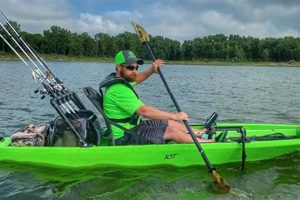
This specific type of watercraft designates a kayak manufactured by Ascend, designed for fishing, and measuring twelve feet in length. Such vessels typically feature specialized components like rod holders, tackle storage, and potentially other fishing-oriented accessories. These kayaks are commonly constructed from durable materials like high-density polyethylene (HDPE) for enhanced stability and impact resistance.
A twelve-foot fishing kayak offers a balance of stability and maneuverability, making it suitable for diverse fishing environments from calm lakes and slow-moving rivers to sheltered coastal areas. The length provides ample storage for fishing gear and contributes to tracking performance in the water. The specialized design allows anglers to access fishing locations often unreachable by larger boats, offering a closer connection to the sport and environment. Historically, fishing from small, human-powered vessels has been a common practice, but the development of purpose-built fishing kayaks with modern materials and designs has significantly enhanced the angling experience.
This article will further examine various aspects of this class of kayak, including key features to consider when selecting a model, popular fishing techniques compatible with its design, and essential safety precautions for on-the-water excursions. It will also delve into the advantages and disadvantages compared to other kayak sizes and styles, providing readers with a comprehensive understanding to facilitate informed purchasing and usage decisions.
Tips for Utilizing a 12-Foot Fishing Kayak
Proper utilization of a 12-foot fishing kayak enhances safety and maximizes angling success. The following tips offer guidance for effective deployment and operation of such vessels.
Tip 1: Pre-Trip Planning: Thorough planning is essential. Research potential fishing locations, considering water conditions, weather forecasts, and access points. Packing essential safety gear, including a personal flotation device (PFD), whistle, and navigation lights, is paramount.
Tip 2: Proper Kayak Loading: Distribute weight evenly within the kayak to maintain stability. Secure gear to prevent shifting during movement. Prioritize essential items for easy access.
Tip 3: Paddle Technique: Employ efficient paddling techniques to conserve energy and maintain control. Practice proper posture and stroke mechanics for optimal performance.
Tip 4: Fishing Strategies: Adapt fishing techniques to the kayak’s design and the target species. Utilize rod holders and onboard storage to manage fishing gear effectively. Maintain awareness of surrounding conditions and adjust strategies as needed.
Tip 5: Safety Precautions: Always wear a PFD while on the water. Carry a communication device in case of emergencies. Inform someone of planned fishing locations and estimated return times. Adhere to local boating regulations.
Tip 6: Kayak Maintenance: Regularly rinse the kayak with fresh water after each use to remove salt, dirt, and debris. Inspect the hull for damage and address any necessary repairs promptly. Proper storage in a shaded area prolongs the lifespan of the vessel.
Tip 7: Anchoring Techniques: Master appropriate anchoring techniques to maintain position in desired fishing areas. Consider factors like water depth, current, and bottom composition when selecting an anchor type and deployment method.
Adhering to these guidelines promotes efficient and enjoyable kayak fishing experiences while prioritizing safety and responsible use of the environment.
These tips offer a starting point for effective kayak fishing; however, continued learning and experience are invaluable. The following section will provide a concise conclusion and recommendations for further exploration of this topic.
1. Brand

Ascend represents a significant player within the recreational kayak market, particularly within the fishing kayak segment. Understanding Ascend’s brand identity and its connection to the ascend 12ft fishing kayak provides valuable context for evaluating this specific product’s position within the broader landscape of fishing kayaks. This section will explore key facets of the Ascend brand and their implications for the 12-foot fishing kayak offering.
- Affordability
Ascend kayaks are often recognized for their competitive pricing. This affordability makes them accessible to a wider range of anglers, particularly those entering the sport or seeking a cost-effective option. The ascend 12ft fishing kayak, benefiting from this brand-wide focus on value, allows anglers to acquire a specialized fishing platform without a substantial financial investment.
- Durability and Construction
Ascend kayaks typically employ rotomolded high-density polyethylene (HDPE) construction. This material contributes to the kayak’s durability and impact resistance, essential features for navigating various water environments and enduring the rigors of fishing activities. The ascend 12ft fishing kayak, built with this robust construction, offers anglers a reliable vessel capable of withstanding typical on-the-water conditions.
- Features and Accessories
Ascend kayaks frequently incorporate fishing-specific features such as rod holders, tackle storage compartments, and mounting points for fish finders or other accessories. These integrated features enhance the angler’s experience by providing convenient and organized solutions for gear management. The ascend 12ft fishing kayak typically includes these specialized features, further reinforcing its practicality for angling purposes.
- Retail Availability and Distribution
Ascend kayaks are often sold through major retailers, both online and in physical stores, ensuring widespread availability and accessibility. This broad distribution network simplifies the purchasing process for consumers, allowing for convenient acquisition of the ascend 12ft fishing kayak through established retail channels.
By examining these facets of the Ascend brand, one gains a deeper understanding of the value proposition offered by the ascend 12ft fishing kayak. Its combination of affordability, durability, fishing-specific features, and accessibility makes it a compelling option for anglers seeking a dedicated fishing platform within a reasonable budget. While other brands may offer premium features or specialized designs, Ascend effectively serves the needs of a broad angler demographic.
2. Length

The length of a kayak significantly influences its performance characteristics, impacting maneuverability, tracking, and storage capacity. Within the context of the Ascend 12ft fishing kayak, the 12-foot length represents a deliberate design choice aimed at balancing stability and ease of handling. This section explores the implications of this specific length dimension in relation to various performance attributes and practical considerations for anglers.
- Tracking and Speed
A 12-foot kayak generally offers reasonable tracking performance, allowing for relatively straight-line movement with less effort compared to shorter kayaks. This length contributes to efficient paddling over longer distances, a valuable attribute for anglers seeking to cover water and access different fishing spots. While not as fast as longer touring kayaks, a 12-foot length provides a suitable balance between speed and maneuverability for fishing applications.
- Maneuverability and Turning
While offering decent tracking, a 12-foot kayak retains sufficient maneuverability for navigating tighter spaces and making turns within reasonable effort. This balance is crucial for fishing scenarios requiring precise boat control, such as maneuvering around structure or following fish in shallow water. Compared to shorter, more agile kayaks, a 12-foot model may require slightly wider turns but still provides adequate responsiveness for most fishing situations.
- Stability and Capacity
The 12-foot length contributes to the kayak’s overall stability, providing a platform less susceptible to tipping compared to shorter kayaks. This enhanced stability is particularly important for fishing activities, allowing anglers to stand up for casting or landing fish with increased confidence. Furthermore, this length typically allows for ample weight capacity, accommodating anglers, fishing gear, and potential catches comfortably.
- Storage and Transportation
A 12-foot kayak offers sufficient storage space for fishing gear and equipment, accommodating tackle boxes, rods, and other essentials. However, its length requires consideration for transportation and storage. Roof racks or trailers may be necessary for transport, and adequate storage space is required when not in use. While longer kayaks offer even greater storage, a 12-foot model presents a practical compromise for many anglers.
The 12-foot length of the Ascend fishing kayak represents a carefully considered design choice, optimizing key performance characteristics for fishing applications. It balances tracking and maneuverability, provides reasonable stability, and offers adequate storage capacity while remaining manageable for transportation and storage. This length, combined with other features, contributes to the kayak’s overall suitability for diverse fishing environments and angling styles. Understanding the implications of this specific length empowers anglers to make informed decisions and maximize their on-the-water experiences.
3. Purpose
The designation “fishing kayak” signifies a vessel explicitly designed and equipped for angling activities. This purpose fundamentally shapes the design and features of the Ascend 12ft fishing kayak, distinguishing it from recreational or touring kayaks. Examining the implications of this dedicated purpose provides insights into its suitability for various fishing styles and environments.
- Stability and Handling
Fishing kayaks prioritize stability, crucial for casting, retrieving, and landing fish. The Ascend 12ft fishing kayak’s design emphasizes stability, allowing anglers to maintain balance while performing fishing-related tasks. Its hull design and length contribute to a stable platform, reducing the likelihood of tipping, even when engaging with larger fish. This stability enhances angler confidence and safety.
- Specialized Features and Accessories
Fishing kayaks often incorporate features like rod holders, tackle storage compartments, and mounting points for fish finders or other accessories. The Ascend 12ft fishing kayak typically includes such features, streamlining gear organization and access. Rod holders secure fishing rods while paddling or preparing tackle, and dedicated storage compartments keep essential gear readily available. These features enhance efficiency and convenience on the water.
- Adaptability to Diverse Environments
Fishing kayaks are designed for diverse environments, from calm lakes and rivers to coastal waters. The Ascend 12ft fishing kayak’s length and design provide versatility, enabling its use in various fishing locations. Its stability and maneuverability make it suitable for navigating different water conditions and accessing shallow or vegetated areas where fish may congregate.
- Performance Considerations for Angling
Performance considerations for a fishing kayak include tracking, speed, and maneuverability. The Ascend 12ft fishing kayak offers a balance of these attributes, enabling anglers to cover water efficiently while maintaining control and responsiveness. While not designed for long-distance touring or racing speeds, its performance profile prioritizes stability and control, essential for effective fishing techniques.
The “fishing” designation of the Ascend 12ft kayak directly influences its design and features, optimizing its suitability for angling activities. The prioritization of stability, the inclusion of specialized features, and the consideration of diverse fishing environments collectively contribute to a platform designed to enhance angling success and enjoyment. Understanding these purpose-driven design elements allows anglers to appreciate the value and functionality this specialized kayak offers within the broader context of recreational watercraft.
4. Type
The “sit-on-top” classification significantly influences the functionality and user experience of the Ascend 12ft fishing kayak. This design choice directly impacts stability, comfort, and overall suitability for various fishing scenarios. Understanding the implications of this design type provides valuable insights into its advantages and limitations for anglers.
- Stability and Self-Recovery
Sit-on-top kayaks offer inherent stability due to their wider hull design and open deck. This design facilitates self-recovery after capsizing, simplifying re-entry into the kayak without the need for complex procedures. For the Ascend 12ft fishing kayak, this stability is crucial for anglers, allowing confident movement and reducing the risk of tipping, especially when casting or reeling in fish.
- Comfort and Accessibility
The open deck of a sit-on-top kayak promotes comfort, particularly in warmer climates, as it allows for better ventilation and freedom of movement. Entry and exit are simplified compared to sit-inside kayaks, benefiting anglers with mobility limitations. In the Ascend 12ft fishing kayak, this design element enhances comfort during longer fishing trips and facilitates easy access for diverse users.
- Gear Storage and Accessibility
Sit-on-top kayaks often feature integrated storage compartments and bungee systems for securing gear. This design allows for convenient access to essential equipment while on the water. The Ascend 12ft fishing kayak benefits from this design, providing ample space for tackle boxes, rods, and other fishing essentials. The open deck allows for customization and attachment of additional accessories.
- Limitations in Cold or Rough Conditions
While offering advantages in warm and calm conditions, sit-on-top kayaks offer limited protection from the elements. Anglers are exposed to water, wind, and cold temperatures. In colder climates or rough waters, the Ascend 12ft fishing kayak’s sit-on-top design may necessitate specialized clothing and gear for comfort and safety.
The sit-on-top design of the Ascend 12ft fishing kayak significantly influences its overall functionality and user experience. The enhanced stability, comfort, and gear accessibility offered by this design make it a suitable choice for many anglers, particularly in warmer climates and calmer waters. However, the limitations regarding protection from the elements should be considered when evaluating its suitability for specific fishing conditions and personal preferences. Understanding these factors enables anglers to make informed decisions based on their individual needs and intended usage scenarios.
5. Material

High-Density Polyethylene (HDPE) is a common material choice for kayak construction, including the Ascend 12ft fishing kayak. This thermoplastic polymer offers a specific combination of properties that make it suitable for this application. HDPE’s impact resistance contributes significantly to the kayak’s durability, allowing it to withstand collisions with rocks, submerged obstacles, and other potential hazards encountered in various aquatic environments. Its inherent buoyancy aids in floatation, a critical safety factor. Furthermore, HDPE’s resistance to UV radiation and weathering ensures the kayak maintains its structural integrity and color over extended periods of outdoor use, even under direct sunlight exposure. The relatively low cost of HDPE compared to other materials like fiberglass or composites makes it an economically viable choice for manufacturing kayaks accessible to a wider consumer base. This cost-effectiveness is particularly relevant for the Ascend brand, often recognized for its value-oriented offerings. For example, an angler navigating a rocky riverbed benefits from the impact resistance of an HDPE kayak, preventing significant damage from potential collisions. Similarly, the UV resistance ensures the kayak’s color and material integrity are maintained despite prolonged exposure to sunlight during fishing trips.
HDPE’s formability through rotational molding allows manufacturers to create complex kayak hull shapes, optimizing design features for specific purposes like stability and tracking. This manufacturing process contributes to the consistent wall thickness and uniform density of the kayak, enhancing structural integrity and overall performance. The smooth surface finish of HDPE simplifies cleaning and maintenance, reducing the accumulation of dirt, grime, and aquatic organisms. This ease of maintenance contributes to the longevity of the kayak and preserves its aesthetic appeal. Moreover, HDPE is recyclable, mitigating its environmental impact at the end of the product’s lifecycle. This recyclability aligns with increasing consumer demand for environmentally conscious products. In practical application, the seamless construction afforded by rotational molding eliminates potential leak points or weak spots, enhancing the kayak’s overall reliability. The smooth surface minimizes drag in the water, contributing to efficient paddling and fuel conservation if using a motorized version.
In summary, the selection of HDPE as the primary material for the Ascend 12ft fishing kayak reflects a deliberate balance of performance, durability, affordability, and environmental considerations. The material’s properties directly contribute to the kayak’s suitability for diverse fishing environments, offering impact resistance, UV protection, and ease of maintenance. While alternative materials may offer advantages in specific areas like weight or stiffness, HDPE provides a practical and versatile solution for a wide range of anglers. Challenges related to HDPE’s relatively higher weight compared to composite materials are often addressed through design optimizations that maintain overall performance while minimizing bulk. This understanding of material properties provides a foundation for informed decision-making when selecting and utilizing fishing kayaks constructed from HDPE.
6. Stability
Enhanced stability represents a critical design element within the context of an ascend 12ft fishing kayak. Stability directly influences angler safety and effectiveness on the water. A stable platform enables anglers to cast, retrieve, and land fish without compromising balance, a crucial factor for successful angling. The enhanced stability inherent in the ascend 12ft fishing kayak derives from a combination of factors, including hull design, length, and width. A wider hull generally provides greater initial stability, resisting tipping tendencies. The 12-foot length contributes to directional stability, reducing susceptibility to rocking motions. Consider an angler attempting to hook a large fish; a stable kayak platform allows for greater control during the fight, minimizing the risk of capsizing. Conversely, a less stable kayak would significantly increase the difficulty and potential danger of this scenario.
Several design features specifically contribute to enhanced stability in fishing kayaks. A flat hull bottom, common in many fishing kayak designs, provides a stable platform at rest, particularly in calm water conditions. Outriggers or pontoon systems further augment stability, extending the kayak’s effective width and reducing the likelihood of tipping. Specialized seating systems designed for lower centers of gravity also enhance stability, contributing to a more secure and balanced feel for the angler. For example, an angler standing to cast in a kayak equipped with outriggers experiences significantly greater stability compared to standing in a kayak without such features. This enhanced stability allows for more confident and accurate casting, leading to improved fishing outcomes.
Understanding the factors contributing to enhanced stability empowers anglers to make informed decisions when selecting and utilizing fishing kayaks. Recognizing the relationship between hull design, length, width, and specialized features allows anglers to choose kayaks appropriate for their intended fishing environments and personal preferences. While enhanced stability benefits most fishing scenarios, anglers operating in extreme conditions like strong currents or rough seas must consider additional factors beyond basic stability features. This awareness of stability’s crucial role in fishing kayak performance enhances both safety and angling effectiveness. The ability to maintain balance while performing various fishing tasks, from casting and retrieving to landing fish, directly influences success and enjoyment on the water. Enhanced stability provides a platform for confident and controlled angling, maximizing the overall fishing experience.
7. Capacity

The single-person capacity of the Ascend 12ft fishing kayak directly influences its design, functionality, and suitability for specific angling scenarios. This capacity designation reflects a deliberate design choice, optimizing the kayak for individual use and impacting maneuverability, storage capacity, and overall performance. Understanding the implications of this single-person capacity is crucial for anglers evaluating its suitability for their individual needs and fishing styles.
- Maneuverability and Control
A single-person kayak generally offers enhanced maneuverability compared to larger, multi-person designs. The reduced weight and length contribute to greater responsiveness and easier turning, allowing anglers to navigate tight spaces and quickly adjust position while fishing. In the context of the Ascend 12ft fishing kayak, this single-person design facilitates precise boat control, essential for targeting specific fishing locations and reacting to fish movements.
- Storage Capacity and Gear Management
While designed for a single occupant, the Ascend 12ft fishing kayak still provides ample storage space for essential fishing gear. Dedicated compartments and bungee systems accommodate tackle boxes, rods, and other equipment, ensuring organized storage and easy access. The single-person capacity allows for efficient use of available storage space, optimizing gear placement for individual anglers. This dedicated space allows for customized organization tailored to individual fishing styles and preferences.
- Weight and Transportation
The single-person design contributes to the kayak’s manageable weight, simplifying transportation and launching. A lighter kayak requires less effort to load onto vehicles, carry to launch points, and maneuver in the water. The Ascend 12ft fishing kayak’s single-person capacity aligns with this focus on portability, making it a practical choice for anglers frequently transporting their kayaks to various fishing locations.
- Solo Fishing Experience
The single-person capacity inherently caters to anglers who prefer solitary fishing experiences. This design fosters independence and allows anglers to focus on their individual fishing techniques and strategies without the coordination required for multi-person kayaking. The Ascend 12ft fishing kayak, designed for solo use, provides a platform for focused and immersive angling experiences, enhancing personal connection with the environment and the sport.
The single-person capacity of the Ascend 12ft fishing kayak significantly influences its suitability for various angling scenarios. The enhanced maneuverability, optimized storage, manageable weight, and focus on individual use collectively contribute to a kayak designed for solo fishing excursions. While multi-person kayaks offer advantages for shared experiences, the single-person capacity of the Ascend 12ft model caters to anglers seeking independent exploration and focused fishing pursuits. Understanding this design choice allows for informed decision-making based on individual angling preferences and desired on-the-water experiences.
Frequently Asked Questions
This section addresses common inquiries regarding 12-foot fishing kayaks, providing concise and informative responses to facilitate informed decision-making and enhance user understanding.
Question 1: What are the key advantages of a 12-foot length for fishing kayaks?
A 12-foot length offers a balance of stability and maneuverability, suitable for various fishing environments. This length typically provides ample storage for gear and contributes to efficient paddling over moderate distances.
Question 2: How does the stability of a 12-foot fishing kayak compare to shorter or longer models?
Twelve-foot kayaks generally offer greater stability than shorter kayaks, particularly important for activities like casting and landing fish. While longer kayaks might offer slightly more stability in open water, they can be less maneuverable in tighter spaces.
Question 3: What types of fishing are best suited for a 12-foot kayak?
Twelve-foot kayaks are versatile and suitable for various fishing styles, including freshwater fishing in lakes and rivers, inshore saltwater fishing, and calm coastal waters. Their stability makes them well-suited for techniques requiring standing or casting larger lures.
Question 4: What features should one look for when choosing a 12-foot fishing kayak?
Essential features include rod holders, ample storage compartments, comfortable seating, and a stable hull design. Additional features like adjustable footrests, anchor trolleys, and mounting points for fish finders enhance convenience and functionality.
Question 5: How does one transport a 12-foot kayak?
Transportation options include roof racks, trailers, and truck beds. Proper securing methods are crucial to prevent damage during transit. Some kayaks are designed for easier transport with integrated carrying handles or lighter-weight construction.
Question 6: What safety precautions should be taken when using a 12-foot fishing kayak?
Wearing a personal flotation device (PFD) is paramount. Checking weather conditions before embarking, informing someone of planned fishing locations, and carrying essential safety gear like a whistle and signaling devices are crucial safety practices.
These responses offer a concise overview of common considerations regarding 12-foot fishing kayaks. Consulting specialized resources or experienced anglers can provide further insights and guidance tailored to specific needs and fishing environments.
The subsequent section delves further into specific aspects of kayak selection and usage, providing a comprehensive understanding for informed decision-making.
Conclusion
This exploration of the Ascend 12ft fishing kayak encompassed key aspects defining its functionality and suitability for angling. The analysis covered the brand’s reputation for affordability and durability, the implications of the 12-foot length regarding performance and handling, the purpose-driven design elements catering specifically to fishing activities, the advantages and limitations of the sit-on-top configuration, the properties of the core construction material (HDPE), the significance of enhanced stability for angling tasks, and the implications of its single-person capacity for maneuverability and storage. These elements collectively contribute to a comprehensive understanding of this specific kayak model’s position within the broader fishing kayak market.
The Ascend 12ft fishing kayak presents a practical and accessible option for anglers seeking a dedicated fishing platform. Its blend of features, performance characteristics, and price point caters to a wide range of angling styles and experience levels. Careful consideration of individual needs, intended fishing environments, and desired features remains crucial for informed purchasing decisions. Continuous exploration of available options and advancements within the fishing kayak industry empowers anglers to select equipment optimally suited to their specific requirements and aspirations. Ultimately, informed decision-making contributes to enhanced on-the-water experiences and promotes responsible engagement with the aquatic environment.