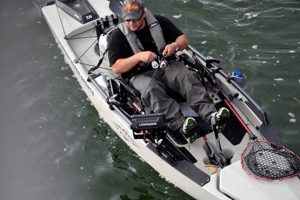
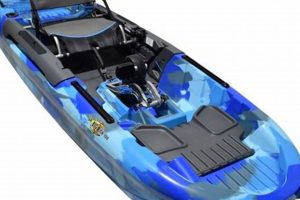
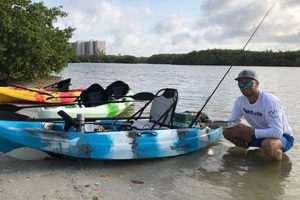
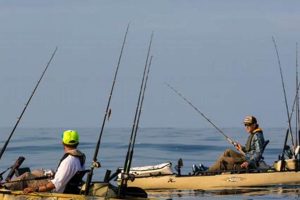
A stable, accessible, and purpose-designed vessel ideal for novice anglers offers an excellent entry point to kayak fishing. Such watercraft typically feature qualities like a wide hull for stability, ample storage for gear, and readily available accessories like rod holders and paddle clips. An example would be a sit-on-top style kayak made from durable, lightweight materials, with a comfortable seating arrangement and sufficient weight capacity to accommodate an angler and their equipment.
Choosing an appropriate watercraft for entering the sport of kayak fishing is crucial for safety, enjoyment, and overall success. A properly selected vessel provides a comfortable and stable platform, allowing beginners to focus on learning basic fishing techniques rather than struggling with balance or inadequate gear storage. This fosters confidence and encourages continued participation in the sport. Over the last few decades, advancements in kayak design and materials have led to increasingly specialized watercraft tailored for specific activities like fishing, increasing accessibility and enhancing the overall experience.
Key considerations for selecting an appropriate vessel include hull design, length, width, weight capacity, storage options, and available accessories. Understanding these factors will help new anglers make informed decisions, leading to a more rewarding experience on the water. Subsequent sections will delve deeper into each of these crucial elements.
Tips for Selecting a Kayak for Beginner Fishing
Selecting an appropriate vessel for fishing is crucial for both safety and enjoyment. These tips offer guidance for novice anglers entering the sport.
Tip 1: Prioritize Stability: Wider hulls offer greater stability, which is paramount for beginners. Look for designs specifically engineered for stability, such as those with a flat bottom or pontoon-style hulls. This allows anglers to focus on fishing rather than maintaining balance.
Tip 2: Consider Weight Capacity: Ensure the kayak’s weight capacity accommodates the angler’s weight, plus fishing gear, and potential catches. Exceeding the capacity can compromise stability and safety.
Tip 3: Evaluate Storage Options: Ample storage is essential for tackle boxes, rods, and other fishing essentials. Look for integrated storage compartments, bungee cords, and accessory mounting points.
Tip 4: Choose a Comfortable Seat: Long hours on the water necessitate a comfortable and supportive seat. Adjustable seating systems and padded backrests enhance comfort and reduce fatigue.
Tip 5: Select Appropriate Length and Width: Shorter kayaks offer enhanced maneuverability in tighter spaces, while longer kayaks track better in open water. Wider kayaks provide more stability but may be slower.
Tip 6: Think About Transportation and Storage: Consider the kayak’s weight and dimensions relative to available transportation and storage space. Lighter kayaks are easier to transport and store.
Tip 7: Explore Sit-On-Top vs. Sit-Inside Designs: Sit-on-top kayaks offer greater stability and easier access, making them ideal for beginners. Sit-inside kayaks provide more protection from the elements but can be more challenging to re-enter after a capsize.
By considering these factors, novice anglers can select a kayak that suits their needs, enhancing their fishing experience and promoting safety on the water.
These tips provide a starting point for selecting an appropriate fishing kayak. Further research and potentially testing various models are recommended before making a final decision.
1. Stability

Stability is a paramount consideration when selecting a kayak, particularly for beginners venturing into fishing. A stable platform is crucial for casting lines, reeling in fish, and navigating various water conditions safely and comfortably. Compromised stability can lead to capsizing, hindering the fishing experience and potentially creating hazardous situations. This section explores key facets contributing to kayak stability, highlighting their significance for novice anglers.
- Hull Design
Hull design significantly influences a kayak’s stability. Wider, flatter hulls provide greater initial stability, making them ideal for beginners. These designs resist tipping, allowing anglers to shift their weight and make casting motions without feeling precarious. For example, pontoon-style hulls offer exceptional stability due to their increased width and buoyant chambers. Conversely, narrower, V-shaped hulls prioritize speed and tracking but offer less initial stability, making them less suitable for novices.
- Center of Gravity
A lower center of gravity contributes to increased stability. Kayaks designed with a lower seating position inherently enhance stability by positioning the angler closer to the waterline. Adding weight lower in the hull, such as tackle boxes stored beneath the seat, further lowers the center of gravity and improves stability. Conversely, placing heavy items high in the kayak raises the center of gravity and increases the risk of tipping.
- Water Conditions
Calm, flat water conditions generally present fewer stability challenges compared to choppy or moving water. Beginners should initially practice in calm environments to develop their balance and confidence. As skills progress, they can gradually venture into more challenging waters. Wind, currents, and boat wakes can significantly impact stability, demanding increased awareness and control.
- Angler’s Skill and Body Position
An angler’s experience and body position also affect stability. Maintaining a centered and balanced posture within the kayak is essential. Sudden movements or leaning too far to one side can compromise stability. Experience gained through practice improves balance and control, enhancing overall stability. Learning basic paddling techniques and bracing maneuvers further contributes to maintaining stability in various conditions.
Understanding these factors related to stability is critical for selecting a suitable kayak for beginners. Prioritizing stability enhances safety, comfort, and the overall fishing experience, allowing novice anglers to focus on developing their fishing skills rather than constantly battling to maintain balance. Selecting a kayak designed with stability in mind, coupled with practice and proper technique, establishes a solid foundation for successful kayak fishing.
2. Maneuverability

Maneuverability represents a critical factor influencing the suitability of a kayak for beginner anglers. Effective maneuvering enables exploration of diverse fishing spots, precise positioning in advantageous locations, and efficient navigation through various water conditions. A highly maneuverable kayak empowers novice anglers to access shallower areas, navigate around obstacles like fallen trees or rocks, and adjust positioning quickly to changing currents or wind. Conversely, a less maneuverable kayak can prove cumbersome and frustrating, limiting access to prime fishing locations and potentially hindering the overall experience. For instance, a shorter, wider kayak with a pronounced rocker (upward curve at the bow and stern) generally offers superior maneuverability in tight spaces compared to a longer, narrower kayak designed for tracking in open water. Understanding the interplay between kayak design and maneuverability is essential for selecting a vessel appropriate for a beginner’s needs and intended fishing environment.
Several factors influence a kayak’s maneuverability, including hull design, length, and the presence of a rudder or skeg. Shorter kayaks generally turn more quickly and require less effort to change direction. Wider kayaks, while offering greater stability, tend to be less maneuverable. A rockered hull improves maneuverability in shallow water and facilitates turning, but can sacrifice tracking performance in open water. A rudder or skeg enhances directional stability, particularly in windy conditions, and can improve tracking in longer kayaks, making them easier to control in a straight line. The choice between a rudder and a skeg depends on the specific fishing environment and personal preference. Selecting a kayak with appropriate maneuverability characteristics for the intended fishing location enhances the angler’s efficiency and enjoyment.
Optimizing maneuverability contributes significantly to a positive fishing experience for beginners. A kayak that responds easily to paddle strokes and changes direction effortlessly allows novice anglers to focus on fishing techniques and exploring new waters. This ease of control builds confidence and reduces frustration, fostering a more enjoyable and productive outing. While stability remains a primary concern for beginners, balancing stability with adequate maneuverability is crucial for accessing desirable fishing spots and effectively navigating varying water conditions. Therefore, selecting a kayak with the appropriate balance of stability and maneuverability is essential for creating a rewarding experience on the water. This informed decision allows anglers to explore diverse fishing environments, enhance their angling skills, and ultimately derive greater satisfaction from the sport.
3. Storage Capacity

Adequate storage capacity is a critical factor in selecting a good beginner fishing kayak. Effective organization and accessibility of essential gear contribute significantly to a successful and enjoyable fishing experience. Insufficient storage can lead to cluttered decks, tangled lines, and lost or damaged equipment, hindering fishing performance and potentially compromising safety. Understanding storage needs and evaluating various storage solutions enables novice anglers to select a kayak well-suited for their fishing style and anticipated excursions.
- Types of Storage
Kayak fishing necessitates carrying a variety of equipment, including rods, reels, tackle boxes, safety gear, and personal items. Different storage solutions cater to specific needs. Open storage areas with bungee cords secure larger items like rods and paddles. Sealed hatches protect sensitive items like electronics and wallets from water damage. Recessed compartments offer organized storage for smaller items like lures and tools. The availability and configuration of these storage types significantly influence a kayak’s suitability for fishing.
- Accessibility of Gear
Convenient access to frequently used items is crucial for efficient fishing. Well-placed storage compartments and readily accessible hatches minimize disruptions and allow anglers to quickly switch lures, adjust tackle, or deploy safety equipment when needed. Struggling to retrieve gear from cramped or awkwardly positioned storage areas can lead to frustration and lost fishing opportunities. Optimal storage design prioritizes quick and easy access to essential items, enhancing overall fishing efficiency.
- Weight Distribution and Stability
Proper weight distribution within the kayak impacts both stability and performance. Distributing gear evenly throughout the vessel, rather than concentrating weight in one area, maintains balance and prevents the kayak from becoming unstable. Securely storing heavier items lower in the hull contributes to a lower center of gravity, further enhancing stability. Understanding how storage placement affects weight distribution is crucial for maintaining optimal kayak performance and safety.
- Customization and Add-ons
Many kayaks offer opportunities for customization and the addition of aftermarket accessories to enhance storage capacity. Gear tracks, mounting points, and compatible accessories like rod holders, tackle organizers, and fish finders allow anglers to tailor their kayaks to their specific fishing needs. These customization options provide flexibility and expand storage possibilities beyond the kayak’s standard configuration.
Evaluating storage capacity in relation to anticipated fishing needs is essential for selecting a suitable beginner fishing kayak. Ample and well-organized storage solutions contribute significantly to a comfortable, efficient, and enjoyable fishing experience. Considering the types of storage, accessibility of gear, weight distribution implications, and customization options enables novice anglers to make informed decisions and choose a kayak that enhances their time on the water. A well-equipped kayak, optimized for storage, allows beginners to focus on developing their fishing skills and enjoying the sport without the frustration and limitations imposed by inadequate storage capacity.
4. Comfort and Seating

Comfort and seating are integral components of a good beginner fishing kayak, directly impacting the angler’s overall experience and success. Extended periods on the water necessitate a comfortable and supportive seating system to minimize fatigue and maximize focus on fishing. An uncomfortable seat can lead to back pain, stiffness, and decreased concentration, ultimately detracting from the enjoyment and productivity of the fishing trip. For example, an angler experiencing discomfort might shift positions frequently, potentially spooking fish or hindering casting accuracy. Conversely, a comfortable and supportive seat allows the angler to remain focused on fishing, enhancing their chances of success and overall enjoyment. Kayaks featuring adjustable seating systems, breathable padding, and lumbar support contribute significantly to angler comfort, enabling longer, more productive outings.
Several factors contribute to comfortable kayak seating. Adjustable backrests allow anglers to customize the seat to their individual preferences and body type. Adequate padding and cushioning minimize pressure points and enhance comfort during prolonged periods of sitting. Breathable materials promote airflow, preventing overheating and discomfort in warm weather. Furthermore, the seat’s height and positioning relative to the kayak’s deck influence paddling efficiency and overall comfort. A seat positioned too high can create instability, while a seat positioned too low can hinder paddling and strain leg muscles. Choosing a kayak with a well-designed and adjustable seating system is crucial for maximizing comfort and ensuring a positive fishing experience.
Selecting a kayak with appropriate seating contributes significantly to the success and enjoyment of beginner anglers. Prioritizing comfort enables extended fishing sessions, increases focus and concentration, and enhances overall satisfaction with the experience. While other factors like stability and maneuverability are essential, neglecting seating comfort can negatively impact even the most well-equipped kayak. Therefore, careful consideration of seating design and adjustability is paramount when choosing a good beginner fishing kayak, ensuring a comfortable and productive time on the water.
5. Durability and Material

Durability and material selection are paramount considerations when selecting a good beginner fishing kayak. Kayaks face exposure to various environmental factors, including UV radiation, fluctuating temperatures, and potential impacts with rocks, logs, or other submerged obstacles. A durable kayak withstands these challenges, ensuring longevity and minimizing the risk of damage during use. Material choice directly influences a kayak’s durability, weight, performance, and overall cost. Selecting appropriate materials ensures a reliable and long-lasting vessel capable of withstanding the rigors of kayak fishing. For example, kayaks constructed from high-density polyethylene (HDPE) offer excellent impact resistance and durability, making them suitable for navigating rocky shorelines or shallow waters. Conversely, kayaks made from less durable materials may be susceptible to cracks, punctures, or other damage, potentially compromising safety and necessitating costly repairs.
Various materials find application in kayak construction, each offering distinct performance characteristics and durability profiles. HDPE kayaks provide a balance of durability, affordability, and UV resistance, making them a popular choice for beginners. Rotomolded polyethylene kayaks offer enhanced durability and impact resistance compared to traditionally molded HDPE kayaks, but often come at a higher price point. Composite kayaks, constructed from materials like fiberglass or carbon fiber, offer superior performance in terms of speed and efficiency but require greater care and maintenance due to their susceptibility to scratches and damage from impacts. Thermoformed ABS kayaks offer a good balance of durability and affordability, while inflatable kayaks provide portability and convenience but may be less durable in the long term. Understanding the advantages and disadvantages of each material type allows informed selection based on individual needs and budget.
The durability of a kayak directly impacts its long-term value and overall cost-effectiveness. A durable kayak requires less frequent repairs and replacements, reducing maintenance expenses and maximizing the return on investment. Choosing a kayak constructed from robust, high-quality materials ensures longevity and minimizes the risk of premature failure. Investing in a durable kayak upfront can save money and frustration in the long run. Furthermore, a durable kayak enhances safety on the water, providing a reliable platform for navigating varying conditions and minimizing the risk of equipment failure in challenging situations. Therefore, prioritizing durability and selecting appropriate materials are essential for maximizing the value, longevity, and safety of a good beginner fishing kayak.
6. Affordability
Affordability plays a crucial role in the accessibility of kayak fishing for beginners. The initial investment required to enter the sport can significantly influence participation. Reasonably priced kayaks allow a wider range of individuals to experience kayak fishing without a prohibitive financial barrier. Balancing cost with essential features like stability, durability, and storage remains crucial. For instance, an angler on a limited budget might prioritize a durable, stable sit-on-top kayak made from high-density polyethylene over a more expensive, feature-rich model constructed from composite materials. This allows entry into the sport without compromising essential functionality or safety. Recognizing the importance of affordability promotes inclusivity and encourages broader participation in kayak fishing.
While affordability is a key consideration, compromising essential features solely for cost reduction can negatively impact the fishing experience. An excessively inexpensive kayak might lack stability, durability, or adequate storage, potentially hindering performance and diminishing enjoyment. Such compromises could lead to frustration, decreased fishing success, and ultimately discourage continued participation in the sport. Striking a balance between affordability and essential functionality is crucial for a positive and rewarding experience. Researching various models, comparing features, and reading reviews can help prospective buyers identify affordable kayaks that meet their specific needs and budget without sacrificing essential performance characteristics.
Understanding the relationship between affordability and a good beginner fishing kayak empowers individuals to make informed purchasing decisions. Prioritizing essential features while remaining within budget constraints ensures a positive and rewarding introduction to the sport. This informed approach fosters long-term enjoyment of kayak fishing by providing a stable, functional, and durable platform for exploring the water and honing angling skills without requiring a significant financial investment. Ultimately, recognizing the importance of affordability expands access to kayak fishing and cultivates a more inclusive and accessible angling community.
Frequently Asked Questions
This section addresses common inquiries regarding the selection and use of appropriate kayaks for novice anglers.
Question 1: What is the ideal length for a beginner fishing kayak?
Optimal kayak length depends on intended fishing locations and individual preferences. Shorter kayaks (under 10 feet) offer enhanced maneuverability in tight spaces, while longer kayaks (over 12 feet) provide better tracking in open water. Beginners often benefit from kayaks between 10 and 12 feet, balancing stability and maneuverability.
Question 2: Sit-on-top or sit-inside kayak: which is better for beginners?
Sit-on-top kayaks are generally recommended for beginners due to their inherent stability and ease of entry and exit. They are also self-bailing, making them less susceptible to sinking. Sit-inside kayaks offer greater protection from the elements but can be more challenging to re-enter after a capsize.
Question 3: What essential features should one look for in a beginner fishing kayak?
Essential features include a stable hull design, sufficient weight capacity, ample storage for gear, a comfortable seat, and readily available accessories like rod holders and paddle clips. Prioritizing stability and comfort enhances the learning experience and promotes safety.
Question 4: How much should a beginner expect to spend on a fishing kayak?
Entry-level fishing kayaks typically range from $500 to $1,000. Higher-end models with advanced features can exceed $1,500. Establishing a budget beforehand helps narrow down options and ensures a suitable kayak within a reasonable price range.
Question 5: What safety precautions should beginners take when kayak fishing?
Always wear a personal flotation device (PFD). Inform someone of your fishing plans, including location and expected return time. Check weather conditions before heading out and avoid fishing in inclement weather. Carry essential safety equipment, including a whistle, signaling device, and first-aid kit.
Question 6: Where can one find reputable resources for learning more about kayak fishing?
Reputable resources include local kayak fishing clubs, online forums, instructional videos, and publications specializing in kayak fishing techniques and safety guidelines. These resources offer valuable insights, tips, and community support for novice anglers.
Careful consideration of these frequently asked questions equips prospective kayak anglers with the knowledge necessary to make informed decisions regarding kayak selection, safety practices, and overall enjoyment of the sport.
The next section delves into specific kayak models recommended for beginners, providing further guidance in the selection process.
Conclusion
Selecting an appropriate vessel for novice anglers involves careful consideration of various factors. Stability, maneuverability, storage capacity, comfort, durability, affordability, and material construction contribute significantly to a positive and productive fishing experience. Understanding these elements empowers informed decision-making, ensuring a kayak suited to individual needs and intended fishing environments. Prioritizing these aspects enhances safety, promotes enjoyment, and fosters long-term participation in the sport.
Investing time and effort in researching and selecting a suitable kayak yields significant dividends in terms of enjoyment, safety, and overall fishing success. A well-chosen vessel serves as a reliable platform for exploring the water, honing angling skills, and experiencing the rewarding aspects of kayak fishing. This informed approach paves the way for countless rewarding experiences on the water.