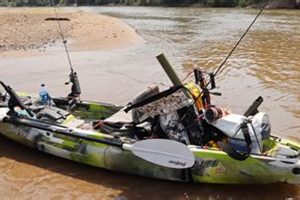
Catching a fish from a kayak using a single hook, often baited with live or artificial lures, represents a fundamental style within the sport of kayak angling. This technique, emphasizing simplicity and a direct connection with the underwater environment, allows anglers to target a wide variety of species. An example might be a kayak angler slowly paddling along a weed bed, presenting a worm-baited hook to entice bass.
This minimalist approach offers several advantages. It simplifies tackle management and reduces the chance of tangles, particularly important in the confined space of a kayak. Furthermore, using a single hook often leads to cleaner releases, minimizing stress on the fish and contributing to conservation efforts. Historically, fishing with single hooks predates more complex tackle systems, highlighting the technique’s enduring effectiveness and connection to traditional angling methods. This focus on simplicity also enhances the angler’s awareness of subtle takes and improves the overall fishing experience.
This foundational method serves as a starting point for exploring diverse aspects of kayak fishing, such as selecting appropriate hooks and bait, identifying productive fishing locations, and employing effective retrieval techniques. Further exploration will delve into these topics in detail.
Tips for Single Hook Kayak Fishing
Optimizing the effectiveness of single hook angling from a kayak involves attention to detail and a focus on fundamental techniques. These tips emphasize practical strategies for improving catch rates and overall fishing success.
Tip 1: Match the Hook to the Target Species: Hook size and style should correspond to the target species’ mouth size and feeding habits. Smaller hooks are generally preferred for smaller fish or finesse presentations, while larger hooks are suitable for larger species or more robust bait.
Tip 2: Bait Selection is Crucial: Live bait, such as worms, minnows, or crickets, can be highly effective. Alternatively, artificial lures, including soft plastics, jigs, or spinners, offer versatility and convenience.
Tip 3: Focus on Stealth and Kayak Positioning: Minimize noise and movement within the kayak to avoid spooking fish. Utilize the kayak’s maneuverability to position for optimal casting angles and drift control.
Tip 4: Master Basic Retrieval Techniques: Experiment with different retrieve speeds and actions to entice strikes. Slow, steady retrieves are often effective for live bait, while varied retrieves with pauses and twitches can trigger strikes with artificial lures.
Tip 5: Understand Fish Behavior and Habitat: Target areas where fish are likely to congregate, such as weed beds, drop-offs, or structure. Knowledge of fish behavior and feeding patterns will significantly increase success rates.
Tip 6: Practice Proper Hooking and Landing Techniques: A firm hookset is essential to secure the catch. Use a landing net to minimize handling time and reduce stress on the fish during the landing process.
Tip 7: Prioritize Safety and Environmental Responsibility: Always wear a personal flotation device and adhere to local fishing regulations. Practice catch-and-release principles to conserve fish populations and ensure the sustainability of the sport.
By focusing on these key elements, anglers can maximize their single hook kayak fishing experience, improving catch rates while minimizing environmental impact. These fundamental techniques provide a solid foundation for consistent angling success.
These insights offer a practical guide for optimizing single hook kayak fishing techniques, setting the stage for a rewarding experience on the water.
1. Hook Selection

Hook selection plays a critical role in the effectiveness of single-hook kayak fishing. The chosen hook must complement the target species, bait or lure, and fishing environment. Careful consideration of hook size, shape, and material impacts hooking and landing success. A mismatch between hook and lure can lead to poor presentation, reduced hook-up rates, and increased fish loss. For instance, a large treble hook on a small finesse worm intended for panfish may deter bites, while a small, thin wire hook may bend or break when fighting a larger, more powerful fish like a pike.
Hook size should correspond to the target species’ mouth dimensions. Smaller hooks are generally preferred for smaller species or when using smaller baits, enabling more natural presentation and increased hook-up potential. Larger hooks are necessary for larger species and robust baits, providing the strength required to land powerful fish. Hook shape influences hooking efficiency and hold. Circle hooks, designed to hook in the corner of the fish’s mouth, promote catch-and-release practices, minimizing injury to the fish. J-hooks, with their more traditional shape, are versatile across various fishing styles. Hook material influences strength, durability, and corrosion resistance. High-carbon steel hooks offer strength and sharpness, while stainless steel hooks provide enhanced corrosion resistance in saltwater environments.
Strategic hook selection ensures efficient presentations, secure hooksets, and successful landings, maximizing the effectiveness of single-hook kayak fishing. Understanding the interplay between hook selection and target species behavior improves angling success and promotes responsible fishing practices. This understanding directly translates into increased catch rates and contributes to a more enjoyable and ethical fishing experience.
2. Bait/Lure Choice

Bait and lure selection is paramount in single-hook kayak fishing, directly influencing species targeted and fishing success. The chosen offering must align with the target species’ feeding preferences, prevailing environmental conditions, and the angler’s chosen fishing style. Understanding the nuances of bait and lure characteristics empowers anglers to make informed decisions, maximizing their chances of a successful catch.
- Live Bait
Live bait, encompassing worms, minnows, crickets, and leeches, presents a natural and often irresistible offering to various fish species. Its inherent lifelike movement and scent can trigger aggressive strikes, particularly in clear water or when targeting species with a preference for live prey. For example, a live worm fished on the bottom can be highly effective for catfish, while a lively minnow under a float can tempt bass or crappie. Live baits effectiveness, however, requires careful handling and storage to maintain its viability.
- Artificial Lures
Artificial lures, including soft plastics, jigs, spinners, and crankbaits, provide versatility and convenience. These lures imitate the appearance and movement of prey, triggering strikes from predatory fish. A soft plastic worm rigged weedless can be fished through heavy cover, while a brightly colored spinner can attract fish in murky water. Artificial lures allow anglers to explore different depths and presentations without the need for continuous rebaiting. Selection depends on factors such as water clarity, target species, and depth.
- Scent and Attractants
Incorporating scent or attractants can enhance both live and artificial bait presentations. These additions appeal to a fish’s olfactory senses, increasing the likelihood of a strike. Commercial scents designed to mimic natural prey odors or attractants like fish oil can be applied to lures or incorporated into bait presentations. For example, adding a garlic scent to a plastic worm can entice finicky bass, while applying a crawfish attractant to a jig can improve catches when targeting catfish.
- Matching Bait/Lure to Target Species
Aligning bait or lure selection with the target species’ dietary preferences is fundamental. Researching the primary forage in a given waterway provides insights into the most effective offerings. For example, if the primary forage in a lake is shad, using shad-imitating lures or live shad as bait can be highly effective. Understanding the feeding habits of the target species is crucial for consistent success in single-hook kayak fishing.
Effective bait and lure selection, tailored to the target species and fishing environment, significantly impacts catch rates in single-hook kayak fishing. By carefully considering these factors, anglers can refine their approach, improving their chances of success while enjoying a deeper connection with the underwater world. Mastering bait and lure selection is a cornerstone of successful and rewarding kayak angling.
3. Kayak Positioning

Kayak positioning is integral to successful single-hook kayak fishing, influencing presentation, hookset effectiveness, and overall angling success. A kayak’s maneuverability offers unique advantages, allowing anglers to access areas inaccessible to other boat types. However, effective positioning requires understanding wind, current, and fish behavior to optimize presentations and maximize catch potential.
- Current Management
Current significantly impacts lure presentation and drift. Positioning the kayak upstream allows natural drift, presenting the bait or lure effectively through target areas. Understanding current flow enables precise lure placement and drift control, maximizing exposure to fish. For example, drifting a single-hook setup baited with a worm along a river seam can be highly effective for targeting trout or smallmouth bass.
- Wind Considerations
Wind affects kayak control and casting accuracy. Positioning the kayak to minimize wind impact improves presentation and reduces line drag. Utilizing an anchor or drift sock can stabilize the kayak in windy conditions, optimizing fishing effectiveness. For instance, anchoring in the lee of an island can create a sheltered fishing environment, allowing for precise casts with minimal wind interference.
- Structure and Cover
Positioning the kayak near structure, such as submerged logs, weed beds, or drop-offs, increases the likelihood of encountering fish. These areas provide shelter and ambush points for predators. Casting parallel to structure maximizes lure exposure within the strike zone. Quietly approaching and positioning alongside a weed bed allows for targeted casts with a single hook setup baited with a frog, enticing bass or pike lurking within.
- Stealth and Approach
Kayaks offer a stealthy approach, minimizing disturbance and maximizing fishing success. Approaching target areas slowly and quietly prevents spooking fish. Using the kayak’s maneuverability to maintain optimal casting angles maximizes lure presentation and control. For example, silently paddling into position near a shoreline allows for precise casts with a single-hook lure towards shallow-water targets without alarming them.
Effective kayak positioning optimizes single-hook presentations, increasing angler effectiveness. Understanding environmental factors and fish behavior allows strategic positioning, maximizing catch potential. This control enhances the kayak angler’s ability to target specific areas and species, maximizing the effectiveness of the single-hook approach and increasing the likelihood of a successful fishing trip.
4. Retrieval Technique

Retrieval technique in single-hook kayak fishing significantly influences lure action, attracting fish and triggering strikes. Effective retrieval requires understanding target species behavior, lure characteristics, and environmental conditions. Varying retrieval speed, cadence, and action enhances lure presentation, maximizing its effectiveness and enticing fish to strike.
- Steady Retrieve
A steady retrieve involves reeling the lure at a constant speed, creating a consistent action. This technique is effective for covering water and searching for active fish. For example, a steady retrieve with a crankbait can trigger reaction strikes from bass or walleye. The speed of the retrieve should be adjusted based on the target species and water temperature.
- Stop-and-Go Retrieve
The stop-and-go retrieve incorporates pauses during the retrieve, allowing the lure to fall or suspend momentarily. This technique mimics the behavior of injured prey, enticing strikes from predatory fish. For instance, a stop-and-go retrieve with a soft plastic jerkbait can be effective for targeting pike or muskie. The length of the pauses can be varied to find what triggers strikes.
- Twitching and Jerking
Twitching and jerking retrieves involve imparting erratic movements to the lure, simulating the actions of fleeing prey. This technique can trigger aggressive strikes from reactive fish. For example, twitching a topwater lure can create a commotion that attracts bass or other surface feeders. The intensity of the twitches and jerks can be adjusted based on fish activity levels.
- Slow Rolling
Slow rolling involves retrieving a lure slowly along the bottom, maintaining contact with the substrate. This technique is effective for targeting bottom-dwelling species like catfish or carp. A slow-rolled spinnerbait with a single hook trailer can entice strikes from fish feeding near the bottom. The weight of the lure and retrieval speed should be adjusted to maintain bottom contact.
Mastery of various retrieval techniques maximizes lure potential in single-hook kayak fishing. Adapting the retrieve to target species behavior, lure characteristics, and environmental conditions enhances lure presentation, triggering strikes and increasing catch rates. Strategic manipulation of retrieval speed and action allows anglers to effectively target different species and optimize fishing success from the kayak.
5. Target Species
Target species selection is paramount in hook 1 kayak fishing, dictating tackle choices, location selection, and overall angling strategy. The specific species pursued influences hook size and style, bait or lure selection, and retrieval techniques. Understanding the target species’ behavior, habitat preferences, and feeding patterns is crucial for maximizing angling success.
- Species-Specific Tackle
Matching tackle to the target species is fundamental. Larger species, such as pike or muskie, necessitate heavier tackle and larger, stronger hooks to manage their size and power. Conversely, smaller species, like panfish or trout, require lighter tackle and smaller hooks for optimal presentation and hookset effectiveness. A large hook intended for a muskie would be unsuitable for catching sunfish, while a small hook designed for panfish would likely fail to hold a large bass. Therefore, selecting appropriate tackle based on the target species is crucial for successful hook 1 kayak fishing.
- Habitat and Location
Target species habitat preferences dictate location choices. Species like bass, which prefer structure and cover, are often targeted near weed beds, submerged logs, or rocky areas. Pelagic species, such as tuna or mackerel, require open water approaches. Understanding these preferences allows anglers to focus their efforts in areas where the target species are most likely to be found. Fishing for bass in open water with a single hook and worm, while possible, is less effective than targeting structure-rich areas. Similarly, targeting bottom-dwelling catfish in shallow, weedy areas is less productive than focusing on deeper channels or holes.
- Bait and Lure Selection
Bait and lure choices must align with the target species’ feeding patterns. Carnivorous species, like pike, respond well to lures mimicking smaller fish, while bottom feeders, like catfish, are often targeted with bait presented on or near the bottom. Understanding the target species’ diet allows anglers to select the most effective offerings. Using a large, flashy lure designed for pike is unlikely to attract panfish, which primarily feed on insects and small crustaceans. Conversely, using a small nymph pattern designed for trout is unlikely to entice a largemouth bass.
- Retrieval Techniques
Retrieval techniques must complement the target species’ behavior and the chosen lure. Fast, erratic retrieves may trigger strikes from aggressive species like pike, while slow, steady retrieves might be more effective for species like walleye. Understanding the target species’ predatory instincts informs retrieval strategy. A slow, methodical retrieve is often effective for bottom-dwelling species like catfish, while a fast, erratic retrieve might be more productive for pelagic species like tuna. Matching retrieval technique to target species behavior maximizes lure effectiveness and increases the likelihood of a strike.
Targeting specific species in hook 1 kayak fishing requires a comprehensive understanding of their behavior, habitat, and feeding patterns. This knowledge informs tackle choices, location selection, and retrieval techniques, maximizing angling success and promoting a more engaging and rewarding fishing experience. A tailored approach, informed by the nuances of the target species, is essential for consistently successful hook 1 kayak fishing.
Frequently Asked Questions
This FAQ section addresses common queries regarding single-hook kayak fishing, offering insights for both novice and experienced anglers. Clarifying these points enhances understanding and promotes responsible angling practices.
Question 1: What are the advantages of using a single hook while kayak fishing?
Single hooks offer several advantages in the kayak fishing context. They minimize tangles, particularly important in a kayak’s limited space. Additionally, single hooks often facilitate easier hook removal, reducing fish handling time and minimizing potential harm.
Question 2: Are single hooks less effective than treble hooks for catching fish?
Not necessarily. Single hooks can be equally effective, especially when targeting specific species or employing finesse techniques. While treble hooks offer multiple points of contact, single hooks often result in more secure hooksets and reduce foul hooking occurrences.
Question 3: What types of bait work best with a single hook?
Both live and artificial baits are effective with single hooks. Live bait, such as worms or minnows, offers a natural presentation, while artificial lures, like jigs or soft plastics, provide versatility and durability. Bait choice should align with the target species’ feeding preferences.
Question 4: How does hook size selection influence fishing success?
Hook size should correspond to the target species and bait size. Larger hooks are suitable for larger fish and more substantial bait, while smaller hooks are appropriate for smaller species or finesse presentations. A mismatched hook and bait combination can hinder hooking effectiveness.
Question 5: Are there specific regulations regarding single hook usage?
Regulations vary by location. Some areas mandate single, barbless hooks for specific species or during certain seasons. Anglers must consult local fishing regulations to ensure compliance and promote conservation efforts.
Question 6: How does kayak positioning affect single-hook fishing success?
Kayak positioning is crucial for optimizing presentations and reaching target areas effectively. Utilizing the kayak’s maneuverability to approach structure, manage current, and control drift maximizes single-hook fishing effectiveness.
Understanding these frequently asked questions enhances angler preparedness and promotes responsible angling practices within the context of single-hook kayak fishing.
This information provides a foundation for successful and ethical single-hook kayak fishing. Further exploration into specific techniques and strategies can refine skills and enhance overall angling experience.
Hook 1 Kayak Fishing
Single-hook kayak fishing represents a refined approach to angling, emphasizing simplicity, precision, and a direct connection with the aquatic environment. From hook selection and bait choice to kayak positioning and retrieval techniques, each element plays a crucial role in maximizing angling success. Understanding target species behavior and adapting techniques accordingly further refines this approach, enhancing both effectiveness and ethical considerations. This method’s focus on minimizing environmental impact through reduced tackle complexity and enhanced fish handling practices underscores its significance within the broader context of sustainable angling.
The pursuit of single-hook kayak fishing offers a pathway to a deeper understanding of angling principles and a heightened appreciation for the delicate balance within aquatic ecosystems. Continued exploration of refined techniques and responsible angling practices will ensure the enduring enjoyment and sustainability of this rewarding pursuit.