A kayak designed for fishing typically features specialized components absent in recreational models. These include rod holders, often multiple and strategically positioned; tackle storage compartments, sometimes integrated with livewells or bait tanks; and enhanced stability features like wider hulls or outriggers to facilitate casting and reeling. Sit-on-top designs are prevalent due to their self-bailing capabilities and ease of entry and exit, vital for anglers. Recreational kayaks, conversely, prioritize speed, maneuverability, and comfort for general paddling, often featuring sleeker designs and enclosed cockpits for protection from the elements.
The development of specialized fishing kayaks has greatly enhanced the angling experience, providing increased access to waterways and a stealthier approach to fish. Anglers benefit from a stable platform dedicated to their needs, allowing them to carry all necessary equipment and focus entirely on fishing. This evolution reflects the growing popularity of kayak fishing, a pursuit that combines the tranquility of paddling with the excitement of the catch.
Further exploration will delve into specific features, comparing various fishing kayak types and highlighting the factors to consider when choosing between a dedicated fishing kayak and adapting a standard recreational model for angling.
Tips for Choosing Between a Fishing and Recreational Kayak
Selecting the appropriate kayak depends significantly on intended usage. The following tips offer guidance for making an informed decision.
Tip 1: Prioritize Stability for Fishing: Fishing kayaks offer enhanced stability crucial for casting, reeling, and landing fish. Consider a wider hull or outrigger system for improved balance.
Tip 2: Evaluate Storage Needs: Ample storage is essential for fishing gear. Look for dedicated compartments, rod holders, and potentially a livewell or bait tank.
Tip 3: Consider Sit-On-Top vs. Sit-Inside Designs: Sit-on-top kayaks offer superior stability and ease of entry/exit, beneficial for anglers. Sit-inside models offer better protection from the elements but can be limiting when fishing.
Tip 4: Factor in Propulsion: Pedal-driven kayaks free up hands for fishing, while traditional paddle kayaks offer simplicity and affordability. Electric motors provide effortless navigation, particularly beneficial for covering larger distances.
Tip 5: Assess Water Conditions: Consider the typical fishing environment. Shorter kayaks are maneuverable in rivers and creeks, while longer kayaks track better in open water.
Tip 6: Recognize Budget Constraints: Fishing kayaks often come with a higher price tag due to specialized features. Evaluate needs and budget to determine the most suitable option.
Tip 7: Consider Adapting a Recreational Kayak: For occasional fishing, a recreational kayak can be adapted with aftermarket accessories like rod holders and storage solutions. However, dedicated fishing kayaks offer superior performance and convenience for serious anglers.
Careful consideration of these factors ensures the selection of a kayak best suited to individual needs and preferences, maximizing enjoyment on the water whether prioritizing fishing or recreational paddling.
By understanding the distinctions between fishing and recreational kayaks, informed decisions can be made, leading to a more rewarding and enjoyable experience on the water.
1. Stability

Stability represents a critical differentiating factor between fishing and recreational kayaks. A stable platform is paramount for anglers, enabling casting, fighting fish, and maneuvering in various water conditions without compromising safety. Recreational kayaking, while benefiting from stability, often prioritizes other performance characteristics such as speed and maneuverability.
- Primary Stability:
Primary stability refers to a kayak’s initial resistance to tipping when at rest. Fishing kayaks generally exhibit higher primary stability due to wider hulls and lower centers of gravity. This inherent stability allows anglers to remain upright while casting and retrieving, even in challenging conditions such as wind or choppy water. Recreational kayaks, particularly those designed for speed and touring, often have narrower hulls, sacrificing some primary stability for enhanced glide and efficiency.
- Secondary Stability:
Secondary stability describes a kayak’s resistance to tipping further once it has begun to lean. While fishing kayaks may have less secondary stability than some recreational models, their superior primary stability typically prevents reaching the point where secondary stability becomes critical. This characteristic allows anglers to lean into turns or reach for objects without fear of capsizing. Recreational kayaks designed for maneuvering in whitewater or rough conditions often emphasize secondary stability, allowing for dynamic leaning and edging.
- Hull Design Impact:
Hull design significantly influences stability. Wider, flatter hulls, characteristic of many fishing kayaks, provide greater initial stability. Features like pontoon hulls or outriggers further enhance stability but can compromise maneuverability. Recreational kayaks designed for speed often feature longer, narrower hulls with a V-shape or rounded bottom, promoting efficient tracking but reducing primary stability. Understanding hull design differences is crucial for selecting a kayak suited to specific needs.
- Impact of Weight Distribution:
Weight distribution plays a key role in kayak stability. Fishing kayaks often incorporate strategically placed storage compartments and seating positions to optimize weight distribution and enhance stability. Anglers must also be mindful of how their gear and movements impact stability. Recreational kayakers also benefit from proper weight distribution, particularly in challenging conditions, but have fewer specialized features designed specifically for managing gear and maintaining balance.
The stability differences between fishing and recreational kayaks directly reflect the divergent demands of these activities. Anglers require a stable platform for fishing activities, while recreational kayakers may prioritize speed, maneuverability, or other performance attributes. Selecting a kayak with appropriate stability characteristics is paramount for safety and enjoyment on the water.
2. Storage

Storage capacity and design represent a significant distinction between fishing and recreational kayaks. Fishing necessitates carrying specialized equipment, including rods, reels, tackle boxes, bait, and potentially safety gear or fish-handling tools. Dedicated fishing kayaks address this need with integrated storage solutions designed for accessibility and organization. Recreational kayaks, conversely, prioritize carrying personal items and perhaps minimal safety gear, often utilizing simpler storage compartments. This fundamental difference in storage requirements stems from the divergent activities each kayak type supports.
Consider the practical implications. An angler requires readily accessible rods, often multiple, secured in rod holders. Lures and tackle must be organized and within easy reach, necessitating specialized compartments or tackle boxes integrated into the kayak’s design. A recreational kayaker, however, might only need a dry bag for personal belongings and a small compartment for snacks or a first-aid kit. This contrast in storage needs is reflected in the kayak designs themselves. Fishing kayaks frequently feature specialized compartments, including dry storage hatches, recessed tackle trays, and even livewells for keeping bait or caught fish alive. These features are generally absent in recreational kayaks designed for simplicity and unencumbered paddling.
The storage capacity and configuration directly impact the overall kayaking experience. A well-organized fishing kayak enables efficient retrieval of essential gear, maximizing fishing time and minimizing disruption. Inadequate storage can lead to frustration, tangled lines, and lost or damaged equipment. For recreational kayaking, streamlined storage keeps personal items secure and dry without adding unnecessary bulk or weight to the vessel. Understanding these storage considerations is crucial for selecting a kayak tailored to specific needs. Choosing the correct kayak based on storage needs ultimately contributes to a more enjoyable and productive experience on the water, whether the objective is landing a trophy fish or exploring a scenic waterway.
3. Features
Distinct features differentiate fishing kayaks from recreational models, reflecting the specialized needs of anglers. These features contribute significantly to the overall fishing experience, impacting efficiency, convenience, and safety on the water. Examining these key features provides crucial insights into the fundamental differences between these kayak types.
- Rod Holders
Rod holders are a defining feature of fishing kayaks, providing secure storage and quick access to fishing rods. Multiple rod holders, strategically positioned for trolling, casting, or storing rods while paddling, are common. Recreational kayaks typically lack rod holders, highlighting their primary purpose of general paddling rather than specialized fishing activities. The presence and configuration of rod holders significantly impact an angler’s efficiency and enjoyment on the water.
- Storage Compartments
Dedicated storage compartments for tackle, bait, and other fishing essentials are integral to fishing kayak design. These compartments vary in size, location, and configuration, offering tailored solutions for organizing gear and maximizing space utilization. Recreational kayaks, generally requiring less specialized storage, typically offer simpler storage solutions, often limited to a single dry hatch or smaller compartments for personal items. The availability and design of storage compartments contribute significantly to the overall functionality and convenience of a fishing kayak.
- Livewells and Bait Tanks
Many fishing kayaks incorporate livewells or bait tanks, designed to keep bait or caught fish alive. These features, crucial for certain fishing techniques, represent a specialized adaptation absent in recreational kayaks. Livewells and bait tanks vary in size and complexity, ranging from simple buckets to integrated, aerated systems. The presence of these features underscores the specialized nature of fishing kayaks and their focus on enhancing angling success.
- Mounting Tracks and Accessories
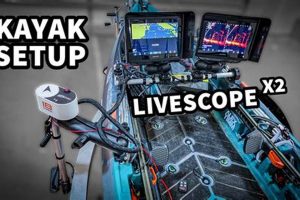
Fishing kayaks often feature mounting tracks or rails, enabling the attachment of various accessories such as fish finders, GPS units, cameras, or additional rod holders. This modularity allows anglers to customize their kayaks to suit specific fishing styles and needs. Recreational kayaks may offer limited mounting options, reflecting their focus on simplicity and core paddling functionality. The adaptability offered by mounting tracks and accessories contributes significantly to the versatility and specialized nature of fishing kayaks.
These specialized features contribute significantly to the distinction between fishing and recreational kayaks. While recreational kayaks prioritize speed, maneuverability, and comfort for general paddling, fishing kayaks prioritize stability, storage, and specialized features that enhance the angling experience. Understanding these key differences is crucial for selecting the appropriate kayak for individual needs and maximizing enjoyment on the water.
4. Hull Design

Hull design represents a pivotal distinction between fishing and recreational kayaks, directly influencing stability, maneuverability, and tracking performance. Fishing kayaks often prioritize stability over speed, employing wider, flatter hulls that resist tipping and provide a secure platform for casting and reeling. Recreational kayaks, conversely, may prioritize speed and efficiency, utilizing narrower, more streamlined hulls that slice through the water with reduced resistance but offer less inherent stability. This fundamental difference reflects the contrasting demands of these distinct activities.
Consider the practical implications. A wide, flat-bottomed hull, characteristic of many sit-on-top fishing kayaks, provides excellent primary stability, allowing anglers to stand and cast comfortably. This design, however, sacrifices speed and maneuverability compared to a longer, V-shaped hull found on touring kayaks. The latter design excels in tracking straight and covering distance efficiently but may feel less stable for activities requiring frequent shifting of weight, such as fishing. Pontoon hulls, featuring two separate hulls connected by a platform, offer exceptional stability, ideal for fishing in calm waters, but can be cumbersome to maneuver in tight spaces or against strong currents. Understanding these design trade-offs is essential for selecting a kayak suited to specific needs.
Ultimately, hull design significantly impacts the overall kayaking experience. Choosing the appropriate hull design depends on prioritizing stability for fishing versus speed and maneuverability for recreational paddling. Recognizing this connection between hull design and intended use empowers informed decisions, leading to enhanced safety, performance, and enjoyment on the water.
5. Propulsion
Propulsion methods constitute a significant distinction between fishing and recreational kayaks, directly impacting how users interact with their environment and achieve their objectives. Fishing kayaks often prioritize hands-free propulsion, allowing anglers to focus on casting, reeling, and managing their equipment. Pedal-powered kayaks, utilizing leg muscles for propulsion, exemplify this adaptation, offering a distinct advantage for fishing activities. Recreational kayaks, conversely, frequently rely on traditional paddles, providing a versatile and readily adaptable means of propulsion suitable for diverse paddling styles and environments. Electric motors represent another propulsion option gaining popularity in both fishing and recreational kayaking, offering effortless movement across larger distances and against currents. This divergence in propulsion preferences underscores the distinct priorities of each activity: efficient hands-free movement for fishing versus adaptable and versatile propulsion for recreational paddling.
Consider the practical implications. A pedal-powered fishing kayak allows an angler to maintain position and control while simultaneously manipulating fishing gear. This hands-free operation proves invaluable in situations requiring precise boat control, such as navigating currents or maintaining position near structure. A recreational kayaker, however, might prioritize the portability and simplicity of a traditional paddle, readily adaptable to varying water conditions and requiring minimal maintenance. Electric motors offer an alternative, eliminating the physical exertion of paddling and allowing for exploration of larger bodies of water or extended trips, a benefit relevant to both fishing and recreational kayaking but potentially more critical for certain fishing scenarios involving covering vast distances. The choice of propulsion directly impacts the overall kayaking experience, influencing speed, maneuverability, and the physical demands placed on the user.
The selection of an appropriate propulsion system hinges on understanding the specific demands of each activity. Fishing often benefits from hands-free options like pedal drives or electric motors, while recreational paddling may prioritize the versatility and simplicity of traditional paddles. Recognizing this connection between propulsion and intended use empowers informed decision-making, leading to enhanced efficiency, enjoyment, and success on the water, whether the goal is landing a prized catch or exploring a scenic waterway.
Frequently Asked Questions
This section addresses common inquiries regarding the distinctions between fishing and recreational kayaks, providing concise and informative responses to facilitate informed decision-making.
Question 1: Can a recreational kayak be used for fishing?
While recreational kayaks can be adapted for occasional fishing with aftermarket accessories, their inherent design limitations may compromise stability, storage, and overall fishing effectiveness compared to dedicated fishing kayaks. Adaptation may suffice for infrequent or casual fishing, but serious anglers will likely find dedicated fishing kayaks significantly more suitable.
Question 2: What are the primary advantages of a dedicated fishing kayak?
Dedicated fishing kayaks offer enhanced stability, specialized storage for tackle and equipment, features like rod holders and livewells, and often hands-free propulsion options, all designed to optimize the angling experience and maximize efficiency on the water.
Question 3: Are fishing kayaks more expensive than recreational kayaks?
Generally, fishing kayaks tend to be more expensive than recreational kayaks due to their specialized features and construction. However, pricing varies widely depending on features, materials, and brand. Evaluating individual needs and budget constraints is crucial for determining the most appropriate kayak investment.
Question 4: What hull design is best suited for fishing kayaks?
Wider, flatter hulls generally provide greater stability for fishing, essential for casting, reeling, and maintaining balance. Pontoon hulls offer exceptional stability but may sacrifice maneuverability. The optimal hull design depends on the intended fishing environment and personal preferences.
Question 5: What propulsion options are available for fishing kayaks?
Fishing kayaks offer various propulsion options, including traditional paddles, pedal drives, and electric motors. Pedal drives and electric motors provide hands-free operation, allowing anglers to focus on fishing, while traditional paddles offer versatility and affordability.
Question 6: How important is stability in a fishing kayak?
Stability is paramount for fishing kayaks, ensuring safety and facilitating essential activities like casting, reeling, and landing fish. A stable platform allows anglers to maintain balance and control, even in challenging conditions or when handling large fish.
Careful consideration of these factors contributes significantly to selecting the optimal kayak for individual needs and maximizing enjoyment on the water. Understanding the core distinctions between fishing and recreational kayaks empowers informed choices, leading to enhanced performance, safety, and overall satisfaction.
For further guidance on selecting the appropriate kayak, consult expert resources or visit a specialized retailer to gain practical insights and personalized recommendations.
Conclusion
The distinction between fishing and recreational kayaks hinges on a series of key design elements and features. Specialized storage, integrated rod holders, enhanced stability through wider hull designs, and hands-free propulsion options like pedal drives or motors distinguish fishing kayaks. These features cater specifically to the angler’s needs, optimizing functionality and enhancing the overall fishing experience. Recreational kayaks, conversely, prioritize speed, maneuverability, and versatility for general paddling, often featuring sleeker hulls and simpler storage solutions.
Understanding these fundamental differences empowers informed decisions, enabling individuals to select the appropriate kayak tailored to their specific needs and aspirations on the water. Choosing the right kayak, whether for the pursuit of trophy fish or the exploration of serene waterways, contributes significantly to safety, performance, and overall enjoyment. Consideration of these distinctions ensures a rewarding and fulfilling kayaking experience.