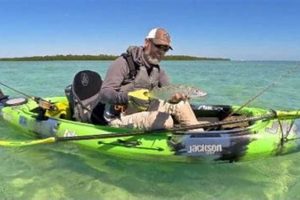
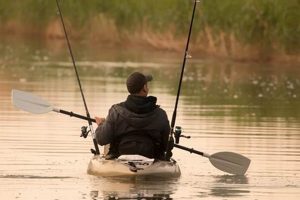
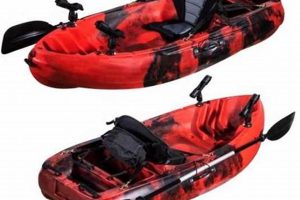
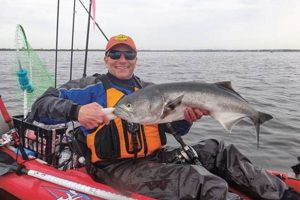
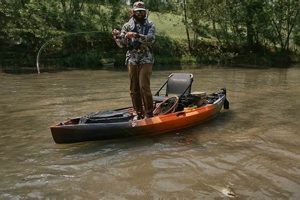
A robust, ocean-going kayak designed specifically for the rigors of offshore angling represents a significant advancement in the sport of kayak fishing. These vessels typically feature enhanced stability, ample storage for gear and catches, and specialized mounting points for fishing accessories like rod holders and fish finders. They offer anglers the opportunity to target larger pelagic species in deeper waters previously inaccessible to traditional kayak fishermen.
The development of this specialized type of fishing kayak has expanded the horizons of the sport, allowing anglers to venture further offshore with confidence. Increased stability and storage capacity are essential for tackling challenging conditions and larger game fish. The ability to customize these kayaks with specialized equipment enhances their effectiveness and caters to individual fishing styles. This evolution in kayak design empowers anglers to explore new fishing grounds and pursue more ambitious targets, contributing to the growing popularity of offshore kayak fishing.
The following sections will delve into specific features, selection criteria, and techniques associated with this type of offshore fishing kayak, providing a comprehensive resource for both novice and experienced anglers. Topics covered will include hull design, propulsion systems, safety considerations, essential gear, and recommended fishing locations.
Tips for Offshore Kayak Fishing
Preparation and careful consideration are crucial for successful and safe offshore kayak fishing excursions. The following tips offer guidance for anglers venturing into deeper waters.
Tip 1: Stability is Paramount: Select a vessel with exceptional stability, prioritizing a wide hull and a low center of gravity. Consider multi-hull designs for enhanced stability in challenging conditions.
Tip 2: Prioritize Safety Equipment: Carry essential safety gear, including a personal flotation device, a VHF radio, flares, a signaling mirror, and a first-aid kit. A float plan filed with a responsible individual is highly recommended.
Tip 3: Understand Weather and Tides: Check marine weather forecasts meticulously before embarking on any trip. Understanding tidal currents and their influence on navigation is essential.
Tip 4: Effective Propulsion is Key: Choose a propulsion system suited to the intended fishing locations and conditions. Pedal-powered kayaks offer efficiency for longer distances, while paddle kayaks provide maneuverability in tighter spaces. Consider a trolling motor for added versatility.
Tip 5: Navigation and Electronics: Utilize reliable navigation tools, including a chartplotter, GPS, and compass. A fish finder can significantly enhance the ability to locate target species.
Tip 6: Rigging for Success: Equip the kayak with appropriate rod holders, tackle storage solutions, and a landing net suitable for the target species. Consider incorporating outriggers for increased stability when fighting larger fish.
Tip 7: Sustainable Fishing Practices: Adhere to local fishing regulations and practice catch-and-release whenever possible. Utilize appropriate tackle and handling techniques to minimize stress on released fish.
Careful preparation and adherence to these guidelines will contribute significantly to both safety and success on the water. Offshore kayak fishing offers a unique and rewarding experience, connecting anglers with the ocean environment.
By understanding the nuances of offshore kayak fishing and prioritizing safety, anglers can confidently pursue their passion in deeper waters. The next section will cover advanced techniques for targeting specific pelagic species from a kayak.
1. Stability

Stability forms the cornerstone of a successful offshore fishing kayak experience. In the demanding environment of open water, a stable platform is paramount for angler safety, efficient casting and retrieval, and effective fish fighting. Compromised stability jeopardizes not only fishing success but also the angler’s well-being.
- Hull Design and Stability
Hull design plays a crucial role in determining a kayak’s stability. Wider hulls and flatter bottoms generally offer greater initial stability, resisting tipping. However, these designs may sacrifice maneuverability. Specialized hull shapes, such as catamaran or tri-hull configurations, enhance stability significantly, particularly in challenging conditions like rough seas or strong currents. A carefully chosen hull design balances stability and maneuverability based on the intended fishing environment.
- Center of Gravity and Stability
A lower center of gravity contributes directly to increased stability. The distribution of weight within the kayak significantly influences the center of gravity. Proper loading and positioning of gear and the angler’s body are critical for maintaining a low center of gravity and maximizing stability. Avoid high stacking of gear, which raises the center of gravity and increases the risk of capsizing.
- Stability and Angling Performance
Enhanced stability directly translates to improved angling performance. A stable platform allows for more accurate casting, particularly in windy conditions. It also provides a secure base for fighting powerful fish, minimizing the risk of being pulled overboard. Furthermore, increased stability allows anglers to stand up in the kayak, providing a better vantage point for spotting fish and sight casting.
- Environmental Factors and Stability
Wind, waves, and currents directly impact a kayak’s stability. Understanding how these forces interact with the hull is essential for maintaining balance and avoiding capsizing. Proper paddling techniques and knowledge of sea conditions are crucial for adapting to changing environments and preserving stability in dynamic offshore conditions.
The stability of a fishing kayak designed for offshore use directly influences safety and effectiveness on the water. Prioritizing stability through careful consideration of hull design, weight distribution, and environmental factors is paramount for a successful and enjoyable offshore fishing experience. Understanding these elements empowers anglers to select the appropriate vessel and operate it safely in challenging offshore environments.
2. Storage Capacity

Ample storage capacity is a defining characteristic of a battleship fishing kayak, directly influencing its practicality and effectiveness for offshore excursions. The ability to stow essential gear, safety equipment, and the anticipated catch comfortably and securely is paramount for a successful and enjoyable fishing experience. Insufficient storage can compromise both safety and efficiency on the water.
- Tackle Organization
Dedicated compartments and storage solutions for fishing tackle are essential for maintaining order and efficiency while on the water. Rod holders, lure trays, and compartments for terminal tackle keep essential gear readily accessible and prevent tangling or loss. Efficient tackle organization minimizes wasted time searching for equipment, allowing anglers to focus on fishing.
- Catch Management
Sufficient space for storing the anticipated catch is crucial, particularly when targeting larger species offshore. Designated areas, such as insulated fish holds or live wells, preserve the quality and freshness of the catch. Proper catch management ensures responsible fishing practices and maximizes the enjoyment of the harvest.
- Safety Equipment Storage
Secure and readily accessible storage for safety equipment, including personal flotation devices, flares, first-aid kits, and communication devices, is non-negotiable. Designated compartments for safety gear ensure these essential items are readily available in emergencies, contributing to angler safety and peace of mind.
- Provisioning and Personal Gear
Storage for personal items, such as food, water, sunscreen, and extra clothing, contributes to comfort and preparedness during extended offshore trips. Dry storage compartments protect sensitive items from the elements, ensuring anglers remain comfortable and equipped for varying conditions.
The storage capacity of a battleship fishing kayak directly impacts its functionality and the overall fishing experience. Adequate and well-organized storage solutions for tackle, catch, safety equipment, and personal gear are essential for maximizing efficiency, ensuring safety, and enhancing comfort during offshore fishing expeditions. A kayak equipped with comprehensive storage capabilities allows anglers to focus on the pursuit of their target species, confident in their preparedness and organization.
3. Durability
Durability is a critical factor for a battleship fishing kayak, given the demanding conditions of offshore environments. These kayaks must withstand the rigors of saltwater exposure, impacts from waves and submerged objects, and the stresses of battling large fish. A durable construction ensures longevity and maintains performance over time, safeguarding the investment and ensuring angler safety.
- Hull Material
The hull material plays a pivotal role in a kayak’s durability. High-density polyethylene (HDPE) offers excellent impact resistance and UV stability, making it a popular choice. Thermoformed ABS and composite materials, such as fiberglass or carbon fiber, provide enhanced strength and rigidity, albeit often at a higher price point. Selecting a hull material appropriate for the intended usage ensures long-term resilience.
- Construction Techniques
Robust construction techniques are essential for a durable kayak. Rotational molding creates a seamless, one-piece hull with uniform thickness, enhancing impact resistance. Thermoforming allows for precise shaping and the integration of reinforcing ribs. Advanced composite construction techniques, like vacuum infusion, optimize strength-to-weight ratios for increased durability and performance.
- Hardware and Fittings
Marine-grade stainless steel hardware and corrosion-resistant fittings are crucial for withstanding the harsh saltwater environment. High-quality components ensure long-term functionality and prevent premature failure. Reinforced mounting points for seats, rod holders, and other accessories contribute to overall structural integrity.
- UV Resistance
Prolonged exposure to ultraviolet radiation can degrade kayak materials, leading to brittleness and reduced lifespan. UV-resistant coatings and additives in the hull material protect against sun damage, preserving the kayak’s structural integrity and aesthetics over time. Proper storage practices, such as covering the kayak when not in use, further mitigate UV degradation.
The durability of a battleship fishing kayak is fundamental to its performance and longevity in demanding offshore conditions. Careful consideration of hull material, construction techniques, hardware quality, and UV resistance ensures the vessel can withstand the rigors of the marine environment and provide years of reliable service. A durable kayak represents a sound investment and contributes significantly to angler safety and confidence on the water.
4. Propulsion System

Propulsion systems are integral to the functionality and effectiveness of a battleship fishing kayak, directly influencing its range, maneuverability, and overall performance in offshore environments. The choice of propulsion system significantly impacts an angler’s ability to cover distance, navigate challenging conditions, and position the kayak effectively for fishing. Selecting the appropriate propulsion system is paramount for maximizing fishing success and ensuring angler safety.
Paddle propulsion, the traditional method, offers excellent maneuverability and control in tight spaces, crucial for navigating complex shorelines or structure-rich areas. However, paddling over long distances can be physically demanding, potentially limiting the range of exploration. Pedal-powered kayaks offer increased efficiency for covering greater distances with reduced physical exertion. This advantage allows anglers to access more distant fishing grounds and conserve energy for fighting fish. However, pedal systems may be less maneuverable than paddles in confined areas. Motorized kayaks provide the greatest range and speed, enabling anglers to cover vast distances quickly. This capability is particularly advantageous for reaching offshore fishing grounds or exploring expansive bodies of water. However, motors introduce additional complexity and maintenance requirements, as well as considerations for battery life and charging.
The selection of a propulsion system for a battleship fishing kayak requires careful consideration of the intended fishing environment, target species, and personal preferences. Balancing factors such as range, maneuverability, speed, and physical exertion is crucial for optimizing performance and maximizing the enjoyment of offshore fishing expeditions. Understanding the advantages and limitations of each propulsion system empowers anglers to make informed decisions and select the most appropriate option for their specific needs. This informed decision contributes directly to a more productive and enjoyable offshore fishing experience.
5. Customization Options
Customization options represent a significant advantage of battleship fishing kayaks, allowing anglers to tailor their vessels to specific fishing styles, target species, and environmental conditions. The ability to adapt the kayak through the addition of specialized equipment enhances its versatility and effectiveness on the water. This adaptability is crucial for maximizing fishing success and ensuring angler comfort and efficiency.
Common customization options include rod holders, fish finders, GPS units, and anchor trolleys. Rod holders secure fishing rods, freeing the angler’s hands for other tasks. Fish finders assist in locating fish and identifying underwater structures. GPS units aid in navigation and marking productive fishing spots. Anchor trolleys control the kayak’s position in current or wind, optimizing fishing presentations. These customizations, while not exhaustive, illustrate the potential for tailoring a battleship fishing kayak to individual needs. For example, an angler targeting pelagic species might prioritize rod holders designed for heavy tackle and a high-powered fish finder, while an angler focused on inshore fishing might opt for a simpler setup with fewer rod holders and a basic GPS. The ability to customize the kayak allows for specialization and enhances the overall fishing experience.
The modularity inherent in customizable kayaks offers significant practical benefits. Anglers can adapt their vessels to changing conditions, target different species, and experiment with various fishing techniques. This adaptability extends the utility of the kayak and enhances its long-term value. Furthermore, the ability to customize the kayak fosters a sense of ownership and allows anglers to create a truly personalized fishing platform optimized for their individual needs and preferences. Understanding the range of customization options available empowers anglers to make informed decisions, ultimately contributing to a more productive and enjoyable offshore fishing experience.
Frequently Asked Questions
This section addresses common inquiries regarding kayaks designed for offshore fishing, providing concise and informative responses to clarify key aspects and assist in informed decision-making.
Question 1: What differentiates a battleship fishing kayak from a recreational kayak?
Kayaks designed for offshore angling prioritize stability, storage, and specialized features for fishing, unlike recreational kayaks intended for calmer waters. Enhanced durability and specialized mounting points for fishing accessories further distinguish these purpose-built vessels.
Question 2: How far offshore can one safely venture in a battleship fishing kayak?
Safe offshore distances depend on factors such as weather conditions, watercraft stability, angler experience, and available safety equipment. Careful consideration of these factors, along with adherence to established safety guidelines, is paramount.
Question 3: What essential safety gear is recommended for offshore kayak fishing?
Essential safety equipment includes a personal flotation device, VHF radio, signaling devices (flares, whistle, mirror), first-aid kit, navigation tools (chart, compass, GPS), and a bilge pump. A float plan filed with a responsible individual is highly recommended.
Question 4: What propulsion systems are commonly used in battleship fishing kayaks?
Common propulsion systems include paddle power, pedal drives, and electric motors. Paddle power offers maneuverability, pedal drives provide efficient long-distance travel, and motors maximize range and speed. The optimal choice depends on individual needs and fishing styles.
Question 5: How does one select the appropriate size and weight capacity for an offshore fishing kayak?
Appropriate kayak size and weight capacity depend on the angler’s size and weight, the anticipated gear and catch, and the intended fishing conditions. Manufacturers provide weight capacity guidelines, which should be adhered to for optimal performance and safety.
Question 6: What maintenance is required for a battleship fishing kayak?
Regular maintenance includes rinsing with freshwater after each use, inspecting and lubricating moving parts, checking for hull damage, and storing the kayak properly. Adherence to manufacturer maintenance recommendations ensures longevity and optimal performance.
Careful consideration of these frequently asked questions provides a foundation for informed decisions regarding offshore kayak fishing. Prioritizing safety and understanding the unique characteristics of these specialized vessels are crucial for a successful and enjoyable experience.
The following section delves into advanced techniques for targeting specific pelagic species from a kayak, building upon the foundational knowledge presented here.
Conclusion
Specialized kayaks designed for offshore angling represent a significant advancement in the sport of fishing. Exploration of key features, including stability, storage capacity, durability, propulsion systems, and customization options, reveals the capabilities of these purpose-built vessels. Understanding these attributes empowers anglers to make informed decisions, selecting the appropriate kayak for individual needs and maximizing performance on the water. Furthermore, addressing common inquiries regarding offshore kayak fishing clarifies important considerations for both novice and experienced anglers.
The evolution of kayak design continues to expand the horizons of the sport, enabling access to previously inaccessible fishing grounds. Offshore kayak fishing offers a unique connection with the marine environment, challenging anglers while providing rewarding experiences. Careful consideration of the information presented here, coupled with a commitment to safety and responsible fishing practices, contributes to successful and sustainable offshore kayak fishing adventures.