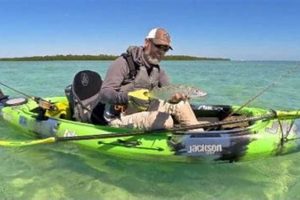
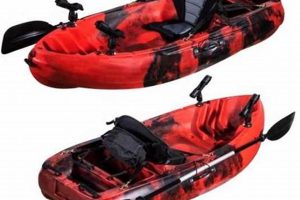
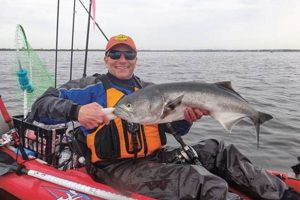
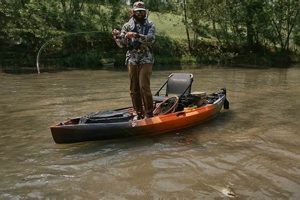
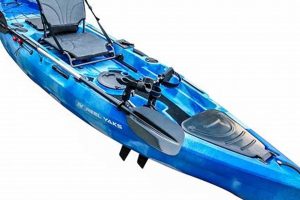
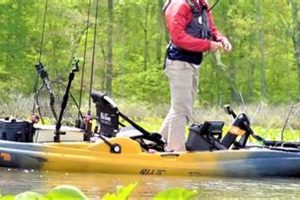
Beginning this watersport involves acquiring essential equipment, understanding basic techniques, and prioritizing safety precautions. This includes selecting an appropriate kayak, paddle, and personal flotation device, as well as learning fundamental paddling strokes and self-rescue maneuvers. A novice angler might start by practicing in calm, shallow waters before venturing into more challenging environments.
Entering the world of angling from a kayak offers a unique blend of accessibility and adventure. It allows individuals to explore diverse waterways often inaccessible by larger vessels, fostering a deeper connection with nature. Historically, kayaks were utilized for hunting and transportation, but their adaptability has led to their widespread adoption for recreational fishing, providing an intimate and engaging angling experience. This approach allows for stealthy movement and precise lure placement, often leading to increased fishing success.
The following sections will explore key aspects of embarking on this rewarding pursuit. Topics covered will include selecting the right equipment, mastering essential skills, ensuring safety on the water, and identifying productive fishing locations. This comprehensive guide will equip aspiring anglers with the knowledge and resources needed to confidently begin their kayak fishing journey.
Tips for Starting Kayak Fishing
Careful preparation contributes significantly to a successful and enjoyable initial experience. The following tips provide crucial guidance for novice kayak anglers.
Tip 1: Research Suitable Kayak Types: Different kayak designs (sit-on-top, sit-inside, inflatable) offer varying stability, maneuverability, and storage capacity. Selecting a kayak suited to individual needs and the intended fishing environment is essential.
Tip 2: Prioritize Safety Gear: A personal flotation device (PFD) is paramount. Other essential safety equipment includes a whistle, signaling devices, and a first-aid kit. Checking weather conditions before embarking on any fishing trip is crucial.
Tip 3: Practice Basic Paddling Techniques: Mastering fundamental paddling strokes allows for efficient navigation and conserves energy. Practicing in calm waters before venturing into more challenging conditions builds confidence and skill.
Tip 4: Learn Self-Rescue Techniques: Knowing how to re-enter a kayak after a capsize is a critical safety skill. Practicing self-rescue in a controlled environment ensures preparedness for unexpected situations.
Tip 5: Start Simple with Essential Fishing Gear: Initially, a basic rod, reel, and tackle selection are sufficient. Focus on acquiring a few versatile lures or baits suitable for the target species. Avoid overcomplicating the initial setup.
Tip 6: Choose Calm, Accessible Fishing Locations: Beginners should opt for sheltered areas with minimal current or wind. Protected bays, ponds, or slow-moving rivers provide ideal environments for gaining experience and building confidence.
Tip 7: Understand Local Regulations and Licensing Requirements: Research and adhere to all applicable fishing regulations and licensing requirements for the chosen fishing area. Responsible angling practices ensure the sustainability of fish populations and protect the environment.
By following these guidelines, individuals can confidently begin their kayak fishing journey, maximizing enjoyment and minimizing potential risks. Preparation, practice, and adherence to safety protocols contribute significantly to positive experiences on the water.
These foundational tips pave the way for a rewarding entry into the world of kayak angling. The subsequent conclusion will offer further insights and resources for continued growth and exploration in this exciting pursuit.
1. Planning

Adequate planning forms the cornerstone of a successful kayak fishing initiation. A well-structured plan mitigates potential risks and maximizes the chances of a productive and enjoyable outing. This preparation involves several key considerations. Target species identification influences location choice and tackle selection. Researching potential fishing areas helps determine optimal launch points, water conditions, and species-specific regulations. Consulting weather forecasts is crucial for safety and comfort, allowing anglers to avoid inclement weather and adapt to changing conditions. For instance, planning for a windy day might include selecting a sheltered location or using a drift sock for stability. Neglecting pre-trip planning can lead to unforeseen challenges, compromising safety and diminishing the overall fishing experience.
Effective planning extends beyond pre-trip preparations. On-the-water planning involves continuous assessment of conditions and adaptation to changing circumstances. Observing wind direction, current flow, and water clarity influences lure selection, retrieval techniques, and kayak positioning. Contingency planning is also essential. Having a backup location in mind, packing extra layers of clothing, and establishing communication protocols contribute to preparedness for unexpected events. A well-defined float plan, shared with a trusted individual, provides an added layer of safety in case of emergencies. These ongoing adjustments and proactive measures enhance safety and optimize fishing success throughout the outing.
In summary, comprehensive planning, both before and during the fishing trip, represents a critical component of successful kayak angling. Thorough preparation, combined with adaptability and ongoing assessment, mitigates risks, enhances efficiency, and contributes significantly to a positive and rewarding experience. Failing to prioritize planning can jeopardize safety and diminish the overall enjoyment of the activity. A proactive and adaptable mindset ensures preparedness for various situations, ultimately increasing the likelihood of a productive and memorable kayak fishing adventure.
2. Essential Gear
Appropriate gear selection is fundamental to a safe and successful kayak fishing initiation. Equipment choices directly influence comfort, performance, and overall angling effectiveness. Understanding the function and importance of essential gear contributes significantly to a positive initial experience. The following facets highlight key equipment considerations for novice kayak anglers.
- Personal Flotation Device (PFD)
A properly fitted PFD is paramount for safety. It provides essential buoyancy in case of capsize or accidental immersion. Selecting a PFD designed specifically for kayaking, with unrestricted arm movement, enhances comfort and mobility while paddling and casting. Neglecting this crucial piece of equipment risks serious injury or even fatality.
- Paddle
An appropriately sized and efficiently designed paddle facilitates effortless propulsion and maneuverability. Paddle length and blade shape influence paddling efficiency and comfort. Lightweight, durable materials minimize fatigue during extended outings. A properly chosen paddle enhances navigation and overall control of the kayak.
- Rod and Reel
Rod and reel selection depends on target species and fishing techniques. Shorter rods offer greater control in confined kayak spaces, while longer rods facilitate longer casts. Matching the reel size and line capacity to the target species ensures efficient line retrieval and fighting capability. A balanced rod and reel combination enhances casting accuracy and overall fishing effectiveness.
- Tackle and Accessories
Essential tackle includes a selection of hooks, lures, weights, and line appropriate for the target species. A basic tackle box provides organized storage and easy access to essential items. Additional accessories, such as a landing net, fishing pliers, and line cutters, contribute to efficient fish handling and tackle management. Proper tackle selection enhances the chances of attracting and landing target fish.
Careful consideration of these essential gear components contributes significantly to a successful and enjoyable kayak fishing initiation. Prioritizing safety, comfort, and functionality in equipment choices enhances performance on the water and sets the stage for positive initial experiences. Investing in appropriate gear lays a solid foundation for continued growth and enjoyment in the sport.
3. Safety First
Prioritizing safety is paramount when initiating kayak fishing. This activity inherently presents specific risks mitigated through careful preparation and adherence to established safety protocols. A “safety first” mindset forms the foundation for a positive and sustainable engagement with the sport. Understanding potential hazards and implementing preventative measures ensures both personal well-being and the enjoyment of the activity. Neglecting safety precautions can lead to serious consequences, ranging from minor injuries to life-threatening situations.
Several factors underscore the critical connection between safety and kayak fishing initiation. Kayaks, being relatively small vessels, are susceptible to capsizing, particularly in adverse weather conditions or through improper handling. Cold water immersion presents a significant risk, even in moderately cool temperatures, potentially leading to hypothermia and impaired physical function. Collisions with other vessels or submerged objects pose further hazards, emphasizing the importance of situational awareness and navigational vigilance. Additionally, encounters with wildlife, such as aggressive animals or stinging insects, require specific safety considerations and preventative measures. Understanding these potential dangers and proactively mitigating them is crucial for a safe and enjoyable experience. For instance, wearing a brightly colored PFD increases visibility to other boaters, reducing the risk of collision. Similarly, carrying a signaling device, like a whistle or flare, can prove crucial in attracting attention in case of an emergency.
Integrating safety practices into the initial stages of kayak fishing establishes a foundation for responsible and sustainable engagement with the sport. This includes acquiring essential safety equipment, such as a properly fitted PFD, and practicing self-rescue techniques in a controlled environment. Regularly checking weather forecasts before embarking on any fishing trip allows for informed decision-making and avoidance of hazardous conditions. Informing someone of the planned fishing location and estimated return time provides an additional safety net in case of unforeseen circumstances. Continuously assessing environmental conditions and adapting to changing circumstances on the water further minimizes risks. These proactive measures, combined with a “safety first” mentality, cultivate a culture of responsible kayak angling, ensuring both personal well-being and the long-term enjoyment of the activity.
4. Kayak Selection

Kayak selection represents a pivotal decision within the broader context of kayak fishing initiation. The chosen vessel directly influences stability, maneuverability, and overall fishing effectiveness. A thoughtfully selected kayak enhances comfort, facilitates access to diverse fishing locations, and contributes significantly to a positive initial experience. Conversely, an unsuitable kayak can compromise safety, limit fishing opportunities, and diminish overall enjoyment. Understanding the nuanced relationship between kayak selection and successful entry into the sport is essential for aspiring anglers.
Several factors underscore the significance of appropriate kayak selection. Hull design plays a crucial role in determining stability and maneuverability. Wider, flatter hulls offer enhanced stability, ideal for beginners or fishing in calm waters. Longer, narrower hulls prioritize speed and tracking, better suited for experienced paddlers or covering larger distances. Sit-on-top kayaks offer inherent buoyancy and self-bailing capabilities, advantageous for fishing in warmer climates or rougher waters. Sit-inside kayaks provide greater protection from the elements and enhanced paddling efficiency, often preferred for colder conditions or longer expeditions. Consider, for example, an angler intending to fish in shallow, weedy areas. A shorter, sit-on-top kayak with a wider hull would provide superior maneuverability and stability compared to a longer, sit-inside touring kayak. Conversely, an angler targeting offshore species would benefit from the speed and tracking of a longer, more specialized fishing kayak. Material choice further influences kayak performance and durability. Polyethylene kayaks offer excellent impact resistance and affordability, while composite kayaks prioritize lighter weight and enhanced performance. Understanding these design and material considerations allows individuals to select a kayak aligned with their specific needs and fishing objectives.
Ultimately, successful kayak selection hinges on aligning vessel characteristics with individual skill level, fishing environment, and target species. A well-chosen kayak serves as a stable and efficient fishing platform, enhancing both safety and enjoyment. Careful consideration of design features, material properties, and intended usage ensures a harmonious balance between performance, comfort, and practicality. This informed decision sets the stage for a positive and rewarding introduction to the world of kayak fishing, fostering confidence and promoting continued growth within the sport. Neglecting the importance of kayak selection can lead to frustration, compromised safety, and a diminished appreciation for the activity.
5. Basic Techniques

Fundamental techniques form the cornerstone of successful kayak fishing initiation. Mastery of these skills directly influences safety, efficiency, and overall angling effectiveness. A clear understanding of basic paddling strokes, kayak control maneuvers, and fundamental fishing techniques empowers novice anglers to navigate waterways confidently and engage with the sport effectively. Neglecting these foundational skills can lead to frustration, compromised safety, and a diminished appreciation for the activity. A solid grasp of basic techniques provides the framework for a positive and rewarding introduction to kayak fishing.
Several key techniques highlight the crucial connection between skill development and successful kayak fishing initiation. Efficient forward paddling propels the kayak smoothly and conserves energy, essential for covering distances and reaching desired fishing locations. Maneuvering strokes, such as sweep strokes and draws, enable precise kayak positioning for optimal casting angles and lure presentation. Understanding how to maintain balance and stability, particularly in challenging conditions like wind or current, is crucial for both safety and effective fishing. Consider, for example, an angler attempting to fish a shoreline structure. Proficiency in maneuvering strokes allows for precise placement of the kayak alongside the structure, maximizing casting opportunities. Similarly, an angler encountering crosswinds benefits from effective bracing techniques to maintain stability and prevent capsize. Furthermore, basic fishing techniques, such as knot tying, casting, and retrieving lures, contribute directly to angling success. Mastering these skills enhances the likelihood of attracting and landing target species, fostering a sense of accomplishment and encouraging continued engagement with the sport.
In summary, proficiency in basic techniques represents a prerequisite for successful and enjoyable kayak fishing initiation. These foundational skills empower anglers to navigate safely, position themselves effectively, and engage in productive fishing practices. A structured approach to skill development, incorporating practice and refinement in a controlled environment, builds confidence and enhances overall performance on the water. Neglecting these core techniques can hinder progress, compromise safety, and diminish the overall experience. Mastering fundamental skills paves the way for a positive and fulfilling introduction to kayak fishing, fostering a deeper appreciation for the sport and encouraging continued growth and exploration.
6. Location Choice
Location choice represents a critical factor in successful kayak fishing initiation. The selected environment directly influences safety, angling opportunities, and overall enjoyment. Careful consideration of water conditions, accessibility, and species presence contributes significantly to a positive initial experience. A thoughtfully chosen location enhances the likelihood of success while minimizing potential risks. Neglecting this crucial aspect can lead to frustration, compromised safety, and a diminished appreciation for the activity. Understanding the nuanced relationship between location choice and effective entry into the sport is essential for aspiring kayak anglers.
Several factors underscore the significance of appropriate location selection. Calm, sheltered waters, such as small ponds, lakes, or slow-moving rivers, provide ideal environments for beginners. These locations offer predictable conditions, minimizing the challenges of navigating wind, waves, and currents. Protected bays or estuaries can also provide suitable introductory experiences, offering opportunities to target a variety of inshore species. Conversely, open ocean environments or large bodies of water with strong currents or unpredictable weather patterns present significant challenges for novice kayak anglers and should be avoided during initial excursions. Accessibility also plays a key role in location choice. Easy launch points, such as designated kayak launches or gently sloping shorelines, simplify entry and exit from the water, minimizing the risk of capsizing or equipment damage. Considering the presence of target species within a given location further refines selection criteria. Researching local fish populations and understanding their preferred habitats enhances the probability of successful angling. For example, targeting panfish in a small, weedy pond presents a more attainable objective for beginners compared to pursuing pelagic species offshore. This targeted approach builds confidence and fosters a sense of accomplishment, encouraging continued participation in the sport.
In summary, effective location choice serves as a cornerstone of successful kayak fishing initiation. Prioritizing safety, accessibility, and species presence ensures a positive and productive initial experience. Selecting appropriate locations allows novice anglers to focus on developing fundamental skills and building confidence, fostering a deeper appreciation for the sport. Neglecting this crucial aspect can compromise safety, limit angling opportunities, and diminish overall enjoyment. A thoughtful and informed approach to location selection establishes a foundation for continued growth and exploration within the world of kayak fishing, paving the way for rewarding and memorable experiences on the water. This understanding empowers individuals to make informed decisions, maximizing their chances of success while prioritizing safety and fostering a sustainable engagement with the activity.
Frequently Asked Questions
Addressing common inquiries regarding kayak fishing initiation provides clarity and fosters a well-informed approach to this activity. Understanding potential challenges and acquiring practical knowledge empowers individuals to engage with the sport safely and effectively.
Question 1: What is the most suitable kayak type for a beginner?
Sit-on-top kayaks are generally recommended for beginners due to their inherent stability and self-bailing capabilities. Their open design simplifies entry and exit, enhancing comfort and reducing anxiety for novice paddlers.
Question 2: What essential safety gear is required?
A properly fitted personal flotation device (PFD) is paramount. Additional safety essentials include a whistle, signaling device, first-aid kit, and communication device. Checking weather forecasts before each trip is crucial.
Question 3: How does one choose an appropriate paddle?
Paddle length depends on factors such as torso height, kayak width, and paddling style. Consulting a kayak specialist can assist in determining the optimal paddle length for individual needs.
Question 4: Where are suitable locations for initial kayak fishing experiences?
Calm, sheltered waters, such as small ponds, lakes, or slow-moving rivers, provide ideal learning environments. Avoiding areas with strong currents, heavy boat traffic, or unpredictable weather patterns is recommended for beginners.
Question 5: What basic fishing techniques should beginners focus on developing?
Mastering fundamental paddling strokes for efficient navigation, practicing casting techniques, and learning basic knot tying are essential initial skills.
Question 6: How can one minimize environmental impact while kayak fishing?
Adhering to “leave no trace” principles, properly disposing of fishing line and other waste, and respecting local wildlife contribute to preserving natural environments.
Careful consideration of these frequently asked questions empowers individuals to approach kayak fishing initiation with confidence and preparedness. Prioritizing safety, acquiring essential knowledge, and respecting natural environments contribute significantly to positive and sustainable engagement with this rewarding activity.
For further information and resources, consult local kayak fishing clubs, outfitters, or online communities. These platforms offer valuable insights, expert guidance, and opportunities to connect with experienced anglers.
Kayak Fishing Getting Started
Successfully initiating kayak fishing necessitates a multifaceted approach encompassing careful planning, appropriate gear selection, unwavering prioritization of safety, informed kayak choice, mastery of basic techniques, and judicious location selection. Each element contributes significantly to a positive and sustainable engagement with this rewarding outdoor activity. Neglecting any of these fundamental aspects can compromise safety, diminish enjoyment, and hinder overall success on the water. A comprehensive understanding of these interconnected principles empowers individuals to embark on their kayak fishing journey with confidence and preparedness.
The insights presented herein provide a foundational framework for novice anglers. Continued learning, skill development, and responsible angling practices foster a deeper appreciation for the sport and contribute to its long-term sustainability. Through diligent preparation and a commitment to continuous improvement, individuals can unlock the full potential of kayak fishing, experiencing the unique blend of tranquility, adventure, and connection with nature that defines this increasingly popular pursuit. The journey begins with a single paddle stroke, guided by knowledge, fueled by passion, and anchored by a steadfast commitment to safety and environmental stewardship.