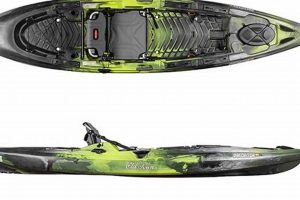
A high-visibility marker affixed to a small, human-powered watercraft indicates the vessel is engaged in angling. These markers typically consist of a stiff pole with a brightly colored flag, often orange or red, and may include additional reflective elements for enhanced visibility in low-light conditions. An example would be a fluorescent orange triangular flag mounted on a flexible fiberglass pole attached to the stern of a recreational watercraft.
Enhanced visibility is crucial for angler safety. Smaller vessels sit low in the water and can be difficult for larger motorized boats to spot. Such markers significantly reduce the risk of collision, particularly in congested waterways or areas with limited visibility. Historically, anglers have employed various methods to increase their visibility, but standardized high-visibility markers offer a consistent and readily recognizable signal to other boaters. This practice contributes significantly to safer recreational boating environments.
This discussion will further explore the various types of these safety devices available, their legal requirements in different regions, recommended mounting practices, and best practices for safe kayaking while fishing.
Safety and Visibility Tips for Kayak Anglers
Optimizing visibility is paramount for safe kayak angling. The following tips offer guidance on maximizing safety through appropriate equipment selection and practices.
Tip 1: Choose a Highly Visible Marker: Opt for brightly colored markers, preferably fluorescent orange or red. Consider designs with reflective tape or other elements that enhance visibility in low light or foggy conditions.
Tip 2: Ensure Proper Mounting: Securely mount the visibility marker to the stern of the kayak. It should be high enough to be seen over any onboard equipment or the angler themselves. Ensure the mounting hardware is durable and resistant to corrosion in saltwater environments.
Tip 3: Check Local Regulations: Regulations regarding marker size and requirements vary by jurisdiction. Consult local boating authorities to ensure compliance with specific regulations.
Tip 4: Consider Additional Lighting: Supplement the visibility marker with navigation lights, especially when fishing during dawn, dusk, or night. A white light visible from 360 degrees is often required by regulations for nighttime operation.
Tip 5: Maintain Proper Distance: Even with proper marking, maintain a safe distance from motorized vessels. Be aware of traffic patterns and avoid congested areas whenever possible.
Tip 6: Wear a Personal Flotation Device (PFD): A PFD is essential safety equipment for any kayaking activity, including fishing. Ensure the PFD is properly fitted and worn at all times while on the water.
Tip 7: Inform Someone of Your Plans: Always tell someone where you are going and when you expect to return when kayaking. This allows for faster response in case of an emergency.
By adhering to these guidelines, anglers can significantly increase their visibility and enhance safety on the water. This contributes to a more enjoyable and secure fishing experience for all.
These safety precautions are vital for responsible kayak angling. The following section will conclude the discussion with a summary of key points and recommendations for further resources.
1. Visibility
Visibility is paramount for kayak anglers, directly impacting safety on the water. Kayaks, being small and low to the waterline, are inherently difficult for larger vessels to detect. This vulnerability necessitates measures to enhance their visibility, particularly in congested waterways or during periods of reduced light. A highly visible marker, such as a brightly colored flag, significantly increases the likelihood of being seen by other boaters, mitigating the risk of collision. For example, a fluorescent orange flag mounted on a tall, flexible pole significantly improves a kayak’s visibility, especially against the backdrop of open water or in choppy conditions. This increased visibility creates a safer environment for both the kayaker and other boaters sharing the waterway.
The effectiveness of a visibility marker hinges on several factors. Color plays a crucial role, with vibrant hues like fluorescent orange, red, or yellow being highly effective at attracting attention. Size also matters; larger flags are generally more visible from a greater distance. The height of the flagpole is equally important; a higher mount elevates the flag above potential obstructions on the kayak itself or on the water’s surface, further maximizing visibility. Strategic placement, typically at the stern of the kayak, also optimizes visibility from multiple angles. Adding reflective elements to the flag further amplifies its effectiveness, particularly in low-light situations or during nighttime fishing. Understanding these factors enables informed decisions regarding marker selection and placement, ultimately contributing to enhanced safety.
Maximizing visibility is not merely a matter of personal safety; it contributes to the overall safety of the boating environment. Increased visibility allows other boaters to anticipate and react appropriately to the presence of kayaks, facilitating safer navigation and reducing the potential for accidents. This consideration underscores the importance of prioritizing visibility as a fundamental aspect of responsible kayak angling. Choosing appropriate safety equipment, adhering to best practices, and understanding the factors influencing visibility contribute significantly to mitigating risk and fostering a safer and more enjoyable experience for all on the water.
2. Safety

Safety is intrinsically linked to the use of a high-visibility marker when fishing from a kayak. These small, low-profile vessels are often difficult for larger, faster-moving motorized craft to detect. This inherent vulnerability increases the risk of collision, particularly in congested waterways, during periods of limited visibility, or when operating near larger vessels with restricted sightlines due to their size or design. A brightly colored marker acts as a crucial visual signal, alerting other boaters to the presence of the kayak and reducing the likelihood of an accident. Failure to utilize such a marker significantly elevates the risk of a collision, potentially resulting in serious injury or even fatality. For example, in a busy harbor, a powerboat operator may have difficulty spotting a kayak amidst waves and boat wakes; a highly visible flag increases the kayak’s detectability, allowing the powerboat operator to take evasive action and prevent a collision.
Implementing this straightforward safety measure contributes considerably to accident prevention. This simple action creates a safer environment not only for the kayak angler but also for other boaters. Beyond collision avoidance, a readily visible marker can also assist in locating a kayak in the event of an emergency, such as a capsize or medical distress. Rapid identification and location are critical in emergency situations, where timely response can significantly influence outcomes. The enhanced visibility provided by a marker facilitates quicker response times from rescue personnel, potentially mitigating the severity of an incident. Furthermore, using a marker demonstrates a commitment to responsible boating practices and consideration for the safety of others on the water.
In summary, deploying a high-visibility marker while kayak fishing is a fundamental safety practice with potentially life-saving implications. It serves as a critical visual aid, reducing collision risks, assisting in emergency location, and promoting responsible boating behavior. Understanding the direct relationship between marker usage and safety is essential for all kayak anglers. This awareness, combined with appropriate safety equipment and adherence to boating regulations, fosters a safer and more enjoyable experience on the water for all.
3. Regulations
Regulations regarding high-visibility markers for kayaks engaged in fishing vary considerably by jurisdiction. These regulations often specify minimum flag dimensions, acceptable colors (typically vibrant hues like fluorescent orange or red), and mounting requirements to ensure optimal visibility. Some regions may mandate the use of such markers during specific times of day or in certain waterway conditions. Non-compliance can result in penalties, ranging from warnings to fines. For example, some states require a flag at least 12 inches high and wide, while others may stipulate a minimum height for the flagpole above the waterline. Understanding and adhering to local regulations is crucial for legal compliance and contributes to overall boating safety.
The rationale behind these regulations stems from the need to enhance the visibility of kayaks, which are inherently difficult for larger vessels to detect. A standardized approach to marking kayaks improves safety by providing a consistent visual cue to other boaters. This consistency allows operators of motorized craft to readily identify and anticipate the movements of kayaks, reducing the risk of collisions. Furthermore, regulations often address specific safety concerns relevant to local waterways. For instance, areas with high boat traffic density or limited visibility due to fog or other environmental factors may have more stringent requirements for high-visibility markers. These tailored regulations reflect the specific safety challenges presented by the local boating environment.
Compliance with regulations regarding high-visibility markers is a fundamental aspect of responsible kayak angling. It demonstrates a commitment to safe boating practices, minimizes the risk of legal penalties, and contributes to the overall safety of the waterway. Consulting local boating authorities or resources such as the U.S. Coast Guard or state-specific boating agencies provides the most accurate and up-to-date information on applicable regulations. Staying informed about these regulations is crucial for ensuring compliance and promoting a safe and enjoyable experience for all on the water. This awareness is essential not only for legal reasons but also for fostering a culture of safety and mutual respect among all waterway users.
4. Mounting

Proper mounting of a high-visibility marker is crucial for maximizing its effectiveness and ensuring the safety of kayak anglers. Incorrect mounting can compromise visibility, negating the intended safety benefits. Understanding various mounting methods, location considerations, and hardware options allows for informed decisions that optimize visibility and contribute to a safer boating environment.
- Location
The optimal location for a visibility marker is typically at the stern of the kayak. This placement maximizes visibility from all directions, particularly from approaching vessels. Mounting the marker too low can obscure it behind the angler or gear, while placement too far forward may reduce its effectiveness when viewed from behind. Stern mounting offers the clearest and most consistent signal to other boaters.
- Height
The height of the marker above the waterline directly influences its visibility. Higher mounting positions generally improve visibility, especially in choppy conditions or amidst other vessels. However, excessively tall mounts can become unstable. A balance must be struck between height and stability, considering factors such as typical water conditions and the type of kayak being used. A common practice involves mounting the marker on a flexible pole, allowing it to bend in the wind while maintaining sufficient height.
- Stability
A secure and stable mount is essential to prevent the marker from dislodging or becoming obscured during use. A stable mount ensures the marker remains upright and visible, regardless of water conditions or kayak movement. Various mounting hardware options, such as adjustable mounts, clamps, or specialized brackets, cater to different kayak designs and marker types. Ensuring compatibility between the mounting hardware and the kayak’s structure is essential for achieving a stable and reliable attachment.
- Hardware
Selecting appropriate mounting hardware is crucial for durability and longevity. Materials should be corrosion-resistant, especially in saltwater environments. Stainless steel or marine-grade aluminum components are often preferred for their resistance to rust and degradation. The hardware should be appropriately sized and robust enough to withstand the stresses of use, including wind, waves, and potential impacts. Regular inspection and maintenance of mounting hardware are essential to ensure its continued effectiveness and prevent failure.
Effective mounting practices are fundamental to the proper functioning of a high-visibility marker. Careful consideration of location, height, stability, and hardware ensures optimal visibility and contributes significantly to angler safety. Correct mounting, combined with a brightly colored and appropriately sized marker, enhances detectability and minimizes collision risks, ultimately fostering a safer and more enjoyable kayaking experience. These mounting considerations, along with adherence to other safety practices and regulations, contribute significantly to responsible kayak angling.
5. Materials

Material selection significantly influences the effectiveness and longevity of high-visibility markers used in kayak fishing. Appropriate materials ensure durability, visibility, and resistance to the harsh marine environment. Careful consideration of material properties contributes to a safer and more reliable signaling system.
- Flag Material
Flags are typically constructed from durable, brightly colored synthetic fabrics like nylon or polyester. These materials offer excellent resistance to fading, tearing, and mildew. Nylon offers high strength and abrasion resistance, while polyester provides superior colorfastness, ensuring the flag remains vibrant and visible over extended periods. Flags made from these materials withstand the stresses of wind, waves, and sun exposure, maintaining their effectiveness in demanding marine environments. For example, a nylon flag treated with a UV protectant will resist fading and maintain its bright color even after prolonged exposure to sunlight. This durability ensures the flag remains a reliable safety signal throughout its lifespan.
- Pole Material
Flagpoles are often constructed from flexible materials like fiberglass or lightweight, corrosion-resistant metals such as aluminum. Fiberglass offers excellent flexibility, allowing the pole to bend in the wind and reduce stress on the mounting hardware. This flexibility also helps prevent the pole from snapping in strong winds or during accidental impacts. Aluminum poles provide a robust and lightweight alternative, offering excellent resistance to corrosion in saltwater environments. An anodized aluminum pole, for instance, provides an added layer of protection against saltwater corrosion, ensuring longevity and reliable performance.
- Mounting Hardware
Mounting hardware, including screws, bolts, clamps, and brackets, must be corrosion-resistant to withstand the marine environment. Stainless steel is a common choice due to its exceptional resistance to rust and corrosion. Marine-grade plastics can also be utilized for specific components, offering durability and resistance to saltwater degradation. Using non-corrosive hardware ensures the secure attachment of the visibility marker and prevents premature failure due to rust or material degradation. For instance, stainless steel screws and clamps provide reliable, long-lasting attachment points, even in saltwater conditions.
- Reflective Elements
Reflective tape or other reflective materials are often incorporated into flag designs to enhance visibility in low-light conditions. These materials reflect light from external sources, such as boat navigation lights or headlights, making the flag more conspicuous at night or during periods of reduced visibility. The inclusion of reflective elements significantly improves the chances of being seen by other boaters during critical periods, contributing to enhanced safety. High-intensity prismatic reflective tape, for example, provides superior reflectivity compared to standard reflective materials, maximizing visibility in low-light situations.
The careful selection of materials for high-visibility markers directly impacts their effectiveness and durability. Using robust, weather-resistant materials ensures the marker remains visible and functional over time, contributing significantly to angler safety. Durable materials, combined with proper mounting techniques and adherence to regulations, create a more reliable and effective visual signaling system, enhancing safety and promoting responsible kayak angling practices.
6. Maintenance

Maintaining a kayak fishing flag in optimal condition is crucial for ensuring its continued effectiveness as a safety device. Neglecting regular maintenance can compromise its visibility, potentially increasing the risk of accidents on the water. A well-maintained flag ensures reliable performance, contributing to angler safety and responsible boating practices.
- Regular Inspection
Regular inspection of the flag, pole, and mounting hardware is essential for identifying potential issues before they compromise safety. Checking for fraying or fading of the flag material, cracks or damage to the pole, and corrosion or loosening of mounting hardware allows for timely intervention and prevents more significant problems from developing. For example, a small tear in the flag, if left unaddressed, could worsen over time, eventually rendering the flag ineffective. Regular inspections allow for such issues to be identified and rectified promptly.
- Cleaning
Saltwater, dirt, and grime can accumulate on the flag and hardware, reducing visibility and accelerating wear. Periodic cleaning with mild soap and fresh water helps maintain the flag’s brightness and prolongs the lifespan of the hardware. Rinsing the flag and hardware after each use in saltwater is a good practice, while more thorough cleaning may be necessary depending on usage and environmental conditions. This simple maintenance task preserves the flag’s visibility and the hardware’s functionality.
- Storage
Proper storage protects the flag and hardware from damage during periods of non-use. Storing the flag in a dry, protected location prevents mildew and UV degradation. Disassembling the flagpole and storing it in a protective bag or case minimizes the risk of damage. For instance, storing a damp flag in a confined space can lead to mildew growth, which can weaken the fabric and reduce its visibility. Proper storage safeguards the flag’s condition and extends its usable lifespan.
- Repair or Replacement
Damaged components should be repaired or replaced promptly to maintain the flag’s effectiveness as a safety device. A frayed or faded flag should be replaced with a new one, ensuring optimal visibility. Damaged or corroded hardware should be replaced with marine-grade components to maintain structural integrity and prevent further deterioration. For example, a bent or cracked flagpole could compromise the stability of the flag, reducing its visibility and potentially leading to failure. Timely replacement of damaged components ensures the flag remains a reliable safety signal.
Consistent maintenance practices are essential for ensuring the long-term effectiveness and reliability of a kayak fishing flag. Regular inspection, cleaning, proper storage, and timely repair or replacement contribute significantly to maximizing visibility, enhancing safety, and promoting responsible angling practices. By prioritizing maintenance, kayak anglers demonstrate a commitment to their own safety and the safety of others on the water.
Frequently Asked Questions
This section addresses common inquiries regarding the use of high-visibility markers for kayak fishing, providing concise and informative responses.
Question 1: Are high-visibility markers legally required for kayak fishing?
Regulations vary by jurisdiction. Consulting local boating authorities or resources such as the U.S. Coast Guard or state-specific boating agencies provides definitive information on local requirements.
Question 2: What is the recommended height for a kayak fishing flag?
While regulations may specify minimum heights, a general guideline suggests the flag should extend a sufficient distance above the waterline to be readily visible to other boaters, especially in choppy conditions. Local regulations should be consulted for specific requirements.
Question 3: What are the most effective colors for kayak fishing flags?
Bright, fluorescent colors such as orange or red are generally considered most effective for attracting attention and enhancing visibility on the water.
Question 4: Where should the flag be mounted on the kayak?
The stern of the kayak is generally the recommended mounting location to maximize visibility from all directions, particularly from approaching vessels.
Question 5: What type of material is best for a kayak fishing flagpole?
Flexible materials like fiberglass or durable, corrosion-resistant metals like aluminum are commonly used for flagpoles. Fiberglass offers flexibility in windy conditions, while aluminum provides strength and resistance to saltwater corrosion.
Question 6: How should one maintain a kayak fishing flag?
Regular inspection for wear and tear, cleaning with mild soap and water, and proper storage are essential maintenance practices. Damaged components should be repaired or replaced promptly.
Understanding these commonly addressed concerns promotes responsible and informed decision-making regarding the use of high-visibility markers in kayak fishing. Prioritizing safety and adherence to regulations ensures a more secure and enjoyable experience for all on the water.
This concludes the frequently asked questions section. The following section will provide concluding remarks and recommendations for further resources.
Kayak Fishing Flag
This exploration of high-visibility markers for kayak angling underscores their critical role in promoting safety and responsible boating practices. Key takeaways include the importance of marker visibility, adherence to regional regulations regarding size and placement, proper mounting techniques for optimal effectiveness, material selection for durability and longevity, and the necessity of regular maintenance. Understanding these elements contributes significantly to mitigating risks associated with kayak fishing, particularly the potential for collisions with motorized vessels.
Prioritizing angler visibility through the proper use of these markers contributes to a safer and more responsible boating environment for all. Continued education and adherence to best practices remain essential for fostering a culture of safety and mutual respect among all waterway users. This commitment to safety enhances not only the individual angler’s experience but also contributes to the collective well-being of the broader boating community.