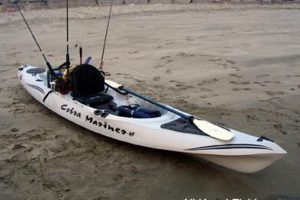
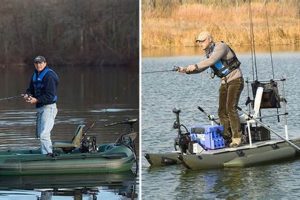
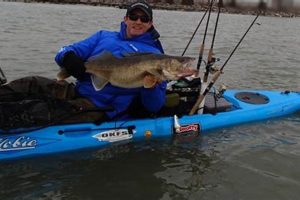
A kayak crafted from wood, specifically designed for angling, offers a unique blend of traditional craftsmanship and functionality. Such vessels typically feature specialized storage for fishing gear, rod holders, and potentially even livewells. They represent a departure from mass-produced plastic kayaks, often reflecting a more artisanal approach to boat building.
The use of wood in kayak construction offers potential advantages, including inherent stability and a connection to the heritage of boatbuilding. Historically, kayaks were constructed from natural materials like wood and skin by indigenous peoples for hunting and fishing. Modern builders often leverage contemporary woodworking techniques and finishes to enhance durability and performance in diverse aquatic environments. This results in a craft prized for its aesthetic qualities and potential performance characteristics.
This article will further explore the various aspects of these specialized watercraft, delving into topics such as construction methods, materials, design considerations, and the overall experience of owning and operating one.
Tips for Wooden Fishing Kayak Ownership
Maintaining and utilizing a wooden fishing kayak requires specific considerations to ensure longevity and optimal performance. The following tips offer guidance for both prospective and current owners.
Tip 1: Regular Maintenance is Crucial: Wood requires more diligent upkeep than other kayak materials. Regular cleaning, oiling, and varnishing are essential to protect the wood from moisture damage, rot, and UV degradation.
Tip 2: Proper Storage is Essential: Store the kayak in a covered, dry area, ideally out of direct sunlight. Consistent exposure to the elements can accelerate wear and tear.
Tip 3: Consider Professional Restoration: For older or damaged kayaks, consulting a professional specializing in wooden boat restoration may be necessary. They possess the expertise to address complex repairs and ensure the kayak’s structural integrity.
Tip 4: Choose Appropriate Finishes: Select marine-grade finishes specifically designed for wooden boats. These provide superior protection against water and UV damage compared to standard wood finishes.
Tip 5: Inspect Regularly for Damage: Before each outing, thoroughly inspect the hull for any cracks, scratches, or signs of wear. Addressing minor issues promptly can prevent them from escalating into major repairs.
Tip 6: Transport with Care: Utilize proper padding and secure tie-downs when transporting the kayak. Avoid dragging the hull across rough surfaces to prevent scratches and damage.
Tip 7: Understand Wood Movement: Wood expands and contracts with changes in temperature and humidity. This natural movement should be factored into maintenance and storage considerations.
By following these tips, owners can significantly extend the lifespan of their wooden fishing kayaks and enjoy years of reliable performance on the water. Proper care ensures that these unique vessels remain both functional fishing platforms and beautiful examples of craftsmanship.
This information provides a foundation for making informed decisions about owning and maintaining these specialized kayaks. The subsequent sections of this article will delve deeper into specific aspects of wooden fishing kayak construction and usage.
1. Material Selection

Material selection is paramount in crafting a functional and durable wood fishing kayak. The chosen wood species significantly impacts the vessel’s performance, longevity, and aesthetic appeal. Factors such as rot resistance, weight, workability, and cost influence the decision-making process. Western Red Cedar, known for its natural resistance to decay and lightweight properties, often serves as a preferred choice. Alternatively, marine-grade plywood, composed of multiple wood veneers laminated together, offers high strength and dimensional stability. Other suitable options include Okoume, Cypress, and White Oak, each possessing unique characteristics relevant to kayak construction.
The inherent properties of the selected wood species directly affect the kayak’s performance on the water. A denser wood like White Oak results in a heavier, more stable craft, potentially beneficial in challenging conditions. Conversely, a lighter wood like Western Red Cedar yields a more easily maneuverable kayak, advantageous for navigating shallow waters or covering greater distances. The chosen wood also interacts with the chosen finish; certain woods absorb finishes differently, impacting the kayak’s overall maintenance requirements and appearance. For instance, an open-grain wood like Oak requires more coats of finish to achieve a smooth, watertight seal compared to a closed-grain wood like Cedar.
Careful material selection ensures the long-term viability of the kayak. Choosing a wood naturally resistant to decay or employing appropriate treatments mitigates the risk of rot and extends the vessel’s lifespan. Understanding the properties of different wood species allows builders to create kayaks tailored to specific needs and preferences, balancing performance, durability, and aesthetic considerations. This knowledge empowers informed decision-making throughout the design and construction process, leading to a craft built to withstand the rigors of the aquatic environment.
2. Construction Techniques
Construction techniques employed in building a wood fishing kayak significantly influence its structural integrity, performance, and aesthetic appeal. The chosen method reflects a blend of traditional craftsmanship and modern innovations, each approach offering distinct advantages and challenges. Understanding these techniques provides insight into the complexity and skill involved in creating these specialized vessels.
- Stitch-and-Glue:
This popular technique involves stitching pre-cut plywood panels together with wire or strong nylon thread, then bonding them permanently with epoxy resin. Stitch-and-glue simplifies complex hull shapes, making it accessible to amateur builders. The epoxy creates a strong, waterproof seam, contributing to the kayak’s durability. Examples include using this method for intricate deck designs or incorporating curved hull sections for improved maneuverability. This technique offers a balance of simplicity and strength, suitable for various kayak designs.
- Strip Building:
Thin strips of wood, often cedar or redwood, are edge-glued together over a form to create the hull. This method allows for greater control over the kayak’s shape and aesthetics, facilitating intricate curves and fine details. Strip-built kayaks are known for their elegant appearance and lightweight nature, though the process requires more time and skill. Examples include using contrasting wood strips to create decorative patterns or precisely shaping the hull for optimal performance in specific water conditions. This technique offers a high degree of customization and aesthetic refinement.
- Traditional Joinery:
This time-honored method utilizes joinery techniques like mortise and tenon or lapstrake construction to assemble the hull. Traditional joinery requires specialized woodworking skills and tools but results in a robust and visually appealing craft. Examples include incorporating intricate joinery details for both structural integrity and aesthetic enhancement, creating kayaks that showcase traditional craftsmanship. This technique prioritizes durability and the preservation of traditional boatbuilding methods.
- Composite Construction:
Combining wood with other materials, such as fiberglass or carbon fiber, creates a hybrid structure that leverages the benefits of each material. A wooden core encased in fiberglass, for example, offers increased strength and stiffness while retaining the aesthetic appeal of wood. Examples include using fiberglass cloth to reinforce high-stress areas or incorporating carbon fiber for weight reduction and increased performance. This technique blends modern materials with traditional craftsmanship to optimize performance and durability.
The chosen construction technique fundamentally impacts the kayak’s performance, durability, and overall aesthetic. Each method offers distinct advantages and requires varying levels of skill and time investment. Understanding the nuances of these techniques enables informed decisions aligning with specific design goals and construction capabilities, ultimately resulting in a wood fishing kayak tailored to individual needs and preferences.
3. Design and Functionality

Design and functionality are inextricably linked in a wood fishing kayak, impacting performance, comfort, and overall fishing success. Careful consideration of hull design, deck layout, and specialized features ensures a harmonious balance between aesthetics and practicality. The chosen design influences stability, maneuverability, tracking, and load capacity, crucial factors in diverse fishing environments. Integrating functional elements, such as rod holders, storage compartments, and anchor systems, enhances the angler’s efficiency and enjoyment on the water.
Hull design dictates how the kayak interacts with the water. A flat-bottomed hull provides stability, advantageous in calm waters and for stand-up fishing, but sacrifices tracking ability. A V-shaped hull enhances tracking and speed, beneficial in open water or currents, but may feel less stable. The chosen hull design must align with the intended fishing environment and angler preferences. Deck layout impacts accessibility and organization. Strategically placed rod holders, within easy reach of the angler, maximize fishing efficiency. Ample storage compartments, secured against water intrusion, protect gear and provisions. An ergonomic seating position, promoting comfort during long hours on the water, reduces fatigue and enhances the overall fishing experience.
Practical applications of design and functionality are readily apparent. A kayak designed for river fishing might feature a shallow-V hull for maneuverability in shallows and rocky areas, combined with recessed rod holders to prevent snagging on overhanging branches. A kayak intended for offshore fishing might incorporate a longer, V-shaped hull for speed and tracking in open water, complemented by ample storage for larger tackle and safety equipment. Understanding this interplay between design and functionality empowers informed decisions, leading to a wood fishing kayak optimized for specific fishing styles and environments. The careful integration of these elements transforms a simple vessel into a high-performance fishing platform.
4. Maintenance Requirements

Maintenance requirements represent a crucial aspect of wood fishing kayak ownership, directly impacting the vessel’s longevity, performance, and aesthetic appeal. Unlike synthetic materials, wood requires consistent care to protect it from the elements and preserve its structural integrity. The inherent properties of wood, including its susceptibility to moisture absorption, UV degradation, and rot, necessitate a proactive maintenance approach. Neglecting these requirements can lead to costly repairs, diminished performance, and a shortened lifespan.
The specific maintenance tasks required vary depending on the type of wood, finish, and usage patterns. Regular cleaning removes dirt, salt, and other debris that can degrade the finish and promote rot. Periodic oiling replenishes the wood’s natural oils, preventing drying and cracking. Applying a fresh coat of varnish or other protective finish every few years safeguards against UV damage and moisture intrusion. Addressing minor damage promptly, such as scratches or small cracks, prevents them from escalating into major repairs. For example, a kayak frequently used in saltwater environments requires more frequent rinsing and cleaning than one used primarily in freshwater. Similarly, a kayak stored outdoors requires more diligent UV protection than one stored indoors.
Understanding and adhering to the maintenance requirements of a wood fishing kayak ensures its long-term viability and optimal performance. This proactive approach preserves the vessel’s aesthetic beauty and structural integrity, allowing owners to enjoy years of reliable service. Failure to properly maintain a wood kayak can lead to significant deterioration, potentially requiring extensive and costly restoration. Therefore, regular maintenance is not merely a recommendation but a crucial investment in the kayak’s longevity and overall value.
5. Performance Characteristics

Performance characteristics of a wood fishing kayak represent a complex interplay between material properties, construction techniques, and design choices. These characteristics significantly influence the vessel’s handling, stability, and overall suitability for specific fishing environments. Understanding the factors affecting performance empowers informed decision-making during the design and construction process, ultimately leading to a kayak optimized for individual needs and preferences. Factors such as hull shape, length, width, and weight distribution directly impact speed, maneuverability, tracking, and stability.
The inherent properties of wood contribute uniquely to a kayak’s performance. Wood’s natural buoyancy, combined with careful design, can yield a craft that is both stable and efficient. The stiffness of the wood, influenced by species and construction techniques, affects responsiveness and handling in various water conditions. For example, a lighter wood like Western Red Cedar can create a more responsive kayak, quicker to accelerate and turn, while a denser wood like Oak might provide a more stable platform, particularly beneficial in rougher waters. The chosen construction method further influences these characteristics; a strip-built kayak, with its thin, precisely joined strips, can offer superior performance due to its lightweight and streamlined form, while a stitch-and-glue kayak might prioritize stability and load-carrying capacity over speed.
Optimizing performance characteristics requires careful consideration of the intended fishing environment. A kayak designed for calm lakes or slow-moving rivers prioritizes stability and maneuverability, potentially featuring a flatter hull and shorter length. Conversely, a kayak intended for open ocean or fast-flowing rivers necessitates speed and tracking, often incorporating a longer, V-shaped hull. Understanding the relationship between design choices and resulting performance is crucial for creating a wood fishing kayak that excels in its intended environment. This knowledge enables informed trade-offs, balancing competing performance characteristics to achieve the desired outcome. Ultimately, the successful integration of these elements results in a craft that is not merely functional but a true extension of the angler’s skill and connection to the water.
Frequently Asked Questions about Wood Fishing Kayaks
This section addresses common inquiries regarding wood fishing kayaks, offering concise and informative responses to clarify potential concerns and misconceptions.
Question 1: How does the maintenance of a wood kayak compare to that of a fiberglass or plastic kayak?
Wood kayaks require more frequent and specialized maintenance compared to fiberglass or plastic options. Regular oiling, varnishing, and minor repairs are necessary to protect the wood from moisture and UV damage. Fiberglass and plastic kayaks typically require less frequent cleaning and occasional waxing.
Question 2: Are wood fishing kayaks heavier than those made from other materials?
The weight of a wood kayak varies depending on the wood species and construction method. Generally, they are comparable in weight to fiberglass kayaks and can be heavier than some rotomolded plastic kayaks. However, advanced construction techniques can minimize weight while maintaining structural integrity.
Question 3: What is the lifespan of a properly maintained wood fishing kayak?
With diligent maintenance, a wood kayak can last for decades. Regular care, including proper storage and timely repairs, significantly extends the vessel’s lifespan.
Question 4: Are wood kayaks suitable for all types of water conditions?
Wood kayaks can perform well in various water conditions, but specific design considerations are essential. Hull shape and construction influence stability and performance in different environments, from calm lakes to open ocean waters. Choosing the right design for the intended use is crucial.
Question 5: How resistant are wood kayaks to damage from impacts or abrasion?
Wood kayaks can withstand moderate impacts and abrasion, but they are generally less resistant to severe damage than plastic kayaks. Properly applied finishes and timely repairs help protect the wood and maintain its structural integrity.
Question 6: What are the key factors to consider when choosing a wood fishing kayak?
Key considerations include intended use, desired performance characteristics, maintenance requirements, budget, and aesthetic preferences. Carefully evaluating these factors ensures selecting a kayak that aligns with individual needs and expectations.
Addressing these frequently asked questions provides a foundational understanding of wood fishing kayaks, highlighting their unique qualities and considerations for ownership. This information empowers informed decision-making, enabling individuals to assess whether a wood kayak aligns with their fishing style and maintenance capabilities.
The following section will explore the rich history and cultural significance of wood kayaks, tracing their evolution from traditional designs to modern interpretations.
Wood Fishing Kayak
This exploration of wood fishing kayaks has traversed the multifaceted aspects of these unique vessels. From the careful selection of materials and intricate construction techniques to the nuanced interplay of design, functionality, and performance characteristics, these kayaks represent a distinct segment of the angling world. The inherent beauty and craftsmanship of a wooden kayak, combined with its potential for customization and performance tailoring, offer a compelling alternative to mass-produced options. The importance of diligent maintenance, specific to wood as a natural material, underscores the commitment required for long-term ownership. Understanding the nuances of these kayaks, from performance characteristics to maintenance requirements, empowers informed decisions regarding their suitability for individual needs and preferences.
The enduring appeal of wood fishing kayaks lies in the harmonious blend of tradition and innovation. They represent a connection to the historical roots of kayaking, while simultaneously embracing modern advancements in design and construction. As anglers seek increasingly specialized and personalized equipment, wood kayaks offer a compelling option for those who value craftsmanship, performance, and a connection to the natural world. Their continued presence in the angling community signifies an appreciation for the artistry and dedication inherent in these finely crafted vessels. The future of wood fishing kayaks rests on a continued commitment to sustainable practices, innovative design, and the preservation of traditional craftsmanship, ensuring these unique vessels remain a viable option for generations to come.