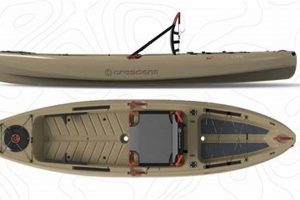
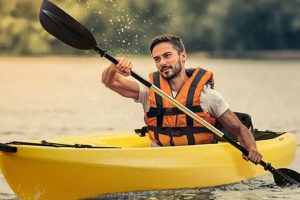
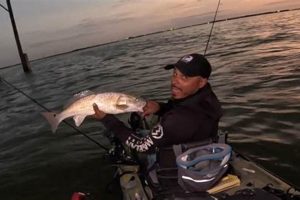
Specialized kayaks designed for angling often contrast sharply with those intended for general paddling. Angling kayaks typically incorporate features like rod holders, tackle storage, and anchor trolleys, prioritizing stability and ample deck space. Recreational kayaks, conversely, prioritize comfort, speed, and maneuverability for casual exploration, often featuring a more streamlined hull design and simpler outfitting.
The distinction between these vessel types reflects the diverse needs of paddlers. Choosing the correct watercraft profoundly impacts the on-water experience, contributing to both safety and enjoyment. The evolution of kayak design reflects this growing specialization, with manufacturers responding to increasing demand for purpose-built vessels. This has resulted in a wider range of options catering to specific activities, from fishing and photography to whitewater and touring.
This article will further delve into the key differentiating features, exploring hull design, materials, propulsion systems, and additional equipment commonly found on each type of kayak. It will also consider budgetary factors and offer guidance on selecting the appropriate vessel based on individual needs and paddling styles.
Tips for Choosing Between Specialized and General-Purpose Kayaks
Selecting the appropriate kayak hinges on a clear understanding of intended usage. Careful consideration of several factors can lead to a more informed decision and a significantly enhanced paddling experience.
Tip 1: Define Primary Activity: Clarify whether angling will be the primary activity or a secondary pursuit. If fishing takes precedence, a specialized vessel offers significant advantages.
Tip 2: Evaluate Stability Requirements: Angling often requires a stable platform, particularly when casting or reeling. Wider, flatter hulls generally offer greater stability compared to narrower, more agile designs.
Tip 3: Consider Storage Needs: Fishing gear necessitates dedicated storage. Purpose-built kayaks frequently offer integrated rod holders, tackle compartments, and other specialized storage solutions.
Tip 4: Assess Maneuverability vs. Tracking: While maneuverability proves beneficial in confined waters, open-water angling often favors vessels designed for efficient tracking and straight-line paddling.
Tip 5: Prioritize Comfort for Longer Trips: Extended time on the water demands a comfortable seating system and ample legroom. Carefully evaluate seating options and cockpit dimensions.
Tip 6: Factor in Propulsion Systems: Consider whether paddle power alone suffices or if a pedal or motor-driven system would enhance the experience, particularly for covering larger distances.
Tip 7: Analyze Budgetary Constraints: Specialized kayaks typically command a higher price point than general-purpose models. Balance desired features with budgetary limitations.
By carefully weighing these factors, individuals can select a kayak best suited to their individual needs and paddling style, ultimately leading to a safer and more rewarding on-water experience.
This careful evaluation process will ultimately contribute to a more informed purchasing decision and greater enjoyment on the water. The subsequent sections will offer a deeper dive into specific kayak features and recommendations.
1. Stability

Stability plays a crucial role in kayak selection, particularly when differentiating between fishing and recreational models. A kayak’s stability directly impacts safety and comfort, influencing performance in various water conditions and activities. This factor becomes paramount when considering activities like fishing, which require a stable platform for casting, reeling, and landing fish.
- Primary Stability:
Primary stability refers to a kayak’s initial resistance to tipping. Wider, flatter hulls exhibit higher primary stability, making them ideal for calmer waters and activities requiring stationary positioning, such as fishing. Recreational kayaks designed for speed and maneuverability often have narrower hulls and lower primary stability.
- Secondary Stability:
Secondary stability describes a kayak’s resistance to capsizing once it’s tilted beyond its initial stability point. This factor becomes crucial in rougher waters or during dynamic movements. Fishing kayaks, while often prioritizing primary stability, may sacrifice some secondary stability. Recreational kayaks with rounded hulls may offer higher secondary stability, allowing for more aggressive leaning and maneuvering.
- Center of Gravity:
A lower center of gravity contributes significantly to overall stability. The distribution of weight within the kayak, including the paddler and any gear, influences the center of gravity. Fishing kayaks, often loaded with gear, benefit from designs that maximize stability even with a higher center of gravity. Recreational kayaks generally carry less weight, allowing for a naturally lower center of gravity.
- Hull Design:
Hull design significantly influences stability characteristics. Flat-bottomed hulls offer excellent primary stability, while rounded or V-shaped hulls enhance secondary stability. Pontoon hulls, occasionally seen in specialized fishing kayaks, provide exceptional stability but compromise maneuverability. Recreational kayaks typically employ a variety of hull designs depending on their intended use, prioritizing either speed and maneuverability or stability in rougher conditions.
The careful consideration of these stability facets plays a vital role in selecting between fishing and recreational kayaks. Understanding the nuances of primary and secondary stability, center of gravity, and hull design empowers informed decision-making, ensuring a safe and enjoyable paddling experience tailored to specific needs and water conditions.
2. Storage

Storage capacity and design represent critical differentiators between fishing and recreational kayaks. The nature of angling necessitates dedicated compartments and mounting points for rods, reels, tackle boxes, and other fishing-specific equipment. Recreational kayaking, while requiring space for personal items and safety gear, typically demands less specialized storage. This fundamental difference in storage requirements significantly influences kayak design and overall functionality.
Fishing kayaks often feature integrated rod holders, typically flush-mounted or adjustable, allowing anglers to keep rods readily accessible while paddling or at rest. Recessed tackle compartments provide organized storage for lures, hooks, and other small items, protecting them from the elements and preventing loss. Larger storage wells, often located behind the seat, accommodate tackle boxes, coolers, and other bulky gear. Bungee cord systems and D-rings offer additional attachment points for securing dry bags, paddles, and other accessories. Recreational kayaks, conversely, generally provide simpler storage solutions, such as a single rear tank well for a dry bag or cooler, and smaller compartments for personal items. This streamlined approach prioritizes speed and maneuverability over extensive storage capacity.
The practical implications of these storage differences are substantial. A well-designed fishing kayak enables anglers to carry all necessary equipment comfortably and safely, maximizing time on the water and optimizing fishing efficiency. Inadequate storage can lead to tangled lines, lost gear, and a generally frustrating experience. For recreational paddlers, the minimalist storage approach in recreational kayaks reduces weight and complexity, enhancing paddling performance and ease of transport. Understanding these distinct storage requirements is paramount when selecting a kayak, ensuring that the chosen vessel aligns with the intended activity and contributes to a safe and enjoyable experience on the water.
3. Hull Design

Hull design constitutes a pivotal distinction between fishing kayaks and recreational kayaks, directly influencing performance, stability, and overall suitability for their respective purposes. The hull’s shape dictates how the kayak interacts with the water, affecting speed, maneuverability, and tracking. Fishing kayaks typically prioritize stability over speed, employing wider, flatter hulls. This design promotes a stable platform for casting, reeling, and landing fish, even in challenging conditions. Recreational kayaks, conversely, often prioritize speed and maneuverability, featuring narrower, more streamlined hulls that efficiently cut through the water. This design sacrifices some stability for enhanced agility and responsiveness. Consider a sit-on-top fishing kayak designed for coastal angling. Its wide, flat hull provides exceptional stability, allowing anglers to stand and cast comfortably, even in moderate chop. A recreational kayak intended for lake paddling, however, might feature a V-shaped hull, prioritizing speed and efficient tracking for covering longer distances.
The practical implications of these design differences are substantial. A fishing kayak’s stable hull allows anglers to focus on fishing without constantly battling instability. This enhanced stability becomes especially crucial in challenging environments, such as windy conditions or currents. Recreational kayakers benefit from the maneuverability afforded by narrower hulls, enabling effortless navigation through tight turns and obstacles. The choice between these hull designs represents a fundamental decision when selecting a kayak, reflecting the prioritization of stability versus speed and maneuverability. For example, a longer, narrower recreational kayak designed for touring will excel in covering long distances efficiently, while a shorter, wider fishing kayak will offer a more stable platform for angling in calmer waters.
Understanding the relationship between hull design and intended use is crucial for selecting the appropriate kayak. Evaluating individual needs and paddling style informs this decision. While fishing kayaks prioritize stability for a specialized activity, recreational kayaks emphasize versatility and performance for general paddling. Careful consideration of these design elements ensures a safe and rewarding experience on the water, tailored to the specific demands of each activity. This informed selection process ultimately contributes to enhanced performance, comfort, and overall enjoyment on the water.
4. Propulsion
Propulsion systems represent a key differentiating factor between fishing and recreational kayaks, impacting speed, maneuverability, and overall efficiency on the water. The choice of propulsion directly influences how users interact with their environment, affecting their ability to cover distances, navigate various water conditions, and engage in specific activities like fishing. Understanding the nuances of different propulsion methods is crucial for selecting the optimal kayak for individual needs and paddling styles.
- Paddle Propulsion:
Traditional paddle propulsion remains the most common method for both fishing and recreational kayaks. Paddles offer excellent control and maneuverability, allowing for precise adjustments in direction and speed. While effective for shorter distances and calm waters, paddle propulsion can become tiring over extended periods or in challenging conditions. Recreational kayakers often prioritize lighter, more efficient paddles for touring and exploration, while fishing kayaks may utilize shorter, wider paddles better suited for maneuvering in tight spaces and maintaining stability while casting.
- Pedal Drive Systems:
Pedal-powered kayaks, increasingly popular among anglers, offer hands-free propulsion, allowing for simultaneous fishing and maneuvering. These systems utilize leg power to drive a propeller or fin system, providing efficient and sustained propulsion. While generally more expensive than paddle-powered kayaks, pedal drives offer significant advantages for fishing, enabling anglers to cover larger distances and maintain position without paddling. This hands-free operation proves particularly valuable for techniques like trolling or maintaining position in currents.
- Motorized Kayaks:
Motorized kayaks offer the greatest speed and range, utilizing electric or gas-powered motors for propulsion. These systems provide effortless travel over long distances and in challenging conditions, eliminating the physical exertion of paddling. While convenient, motorized kayaks often come with increased weight, complexity, and cost. They also require additional maintenance and may be subject to regulations depending on the waterway. Motorized propulsion is becoming increasingly popular among fishing kayaks, enabling anglers to access remote fishing spots and cover larger areas efficiently.
- Combination Systems:
Some kayaks offer hybrid propulsion systems, combining paddle power with either pedal drives or motors. This versatility allows users to adapt to varying conditions and preferences. For instance, an angler might use a pedal drive for covering distance and then switch to paddle propulsion for quieter maneuvering in shallow water or near fish. This adaptability makes combination systems a compelling option for those seeking maximum flexibility on the water.
The choice of propulsion system significantly influences the overall kayaking experience. Fishing kayaks often prioritize features like pedal drives and motors for hands-free fishing and increased range, while recreational kayaks often emphasize the simplicity and versatility of paddle propulsion. Careful consideration of intended use, paddling style, and budgetary constraints will guide the selection of the most appropriate propulsion system, ultimately contributing to a more enjoyable and efficient experience on the water. This consideration of propulsion, combined with hull design and storage features, ultimately defines the suitability of a kayak for fishing or recreational purposes.
5. Customization

Customization options represent a significant point of divergence between fishing and recreational kayaks, reflecting the specialized needs of anglers versus the more generalized requirements of recreational paddlers. The ability to tailor a kayak to specific activities dramatically enhances its functionality and overall user experience. While recreational kayaks offer some customization options related to comfort and storage, fishing kayaks provide a far greater range of modifications, enabling anglers to optimize their vessels for specific fishing styles and environments.
- Rod Holders:
Rod holders constitute a quintessential customization feature for fishing kayaks. These specialized mounts secure fishing rods, freeing up the angler’s hands for paddling, navigating, and other tasks. Various rod holder types exist, including flush-mounted, adjustable, and rotating models, each catering to different fishing styles and preferences. Recreational kayaks rarely feature integrated rod holders, highlighting the specialized nature of this customization.
- Fish Finders and Electronics:
Integrating electronic devices, such as fish finders and GPS units, represents a key customization aspect for fishing kayaks. These technologies provide valuable information about water depth, fish location, and navigation, enhancing angling success and safety. Mounting systems and power sources are often integrated into fishing kayak designs, facilitating seamless installation and operation of these electronics. Recreational kayaks rarely require such specialized electronic integrations.
- Anchor Trolleys:
Anchor trolleys allow anglers to control their kayak’s position in current or wind, maintaining an optimal fishing location without constantly adjusting the anchor. This specialized customization, rarely found on recreational kayaks, proves invaluable for various fishing techniques. The trolley system allows the anchor point to be adjusted along the side of the kayak, enabling anglers to control drift and position relative to fishing targets.
- Tackle Storage Solutions:
Customized tackle storage solutions represent a hallmark of fishing kayaks. These range from simple tackle boxes and trays to intricate storage systems integrated into the kayak’s hull. Such customized storage keeps essential fishing gear organized, accessible, and protected from the elements. Recreational kayaks, while often offering basic storage compartments, rarely provide the specialized storage configurations necessary for serious angling.
The extent of customization options directly reflects the specialized nature of fishing kayaks compared to their recreational counterparts. While recreational kayaks prioritize comfort and versatility, fishing kayaks emphasize functionality and adaptability to specific angling needs. The ability to tailor a fishing kayak through rod holders, electronics integration, anchor trolleys, and specialized storage solutions significantly enhances its effectiveness as a fishing platform, demonstrating the clear distinction between these two kayak categories.
Frequently Asked Questions
This section addresses common inquiries regarding the distinctions between fishing and recreational kayaks, aiming to provide clarity and guide informed decision-making.
Question 1: Can a recreational kayak be used for fishing?
While technically feasible, using a recreational kayak for fishing presents limitations. Lack of specialized features like rod holders and ample storage can hinder fishing effectiveness and overall enjoyment. Stability may also be a concern, particularly when casting or reeling. Adapting a recreational kayak for fishing often necessitates aftermarket modifications, which can add complexity and cost.
Question 2: Are fishing kayaks more expensive than recreational kayaks?
Generally, specialized fishing kayaks command a higher price point due to integrated features like rod holders, specialized storage, and enhanced stability designs. However, entry-level fishing kayaks can offer comparable pricing to higher-end recreational models. Evaluating long-term needs and budgetary constraints is crucial for making an informed purchase.
Question 3: Which type of kayak is better for beginners?
The optimal kayak for beginners depends on intended usage. For those primarily interested in casual paddling and exploration, a recreational kayak offers simplicity and ease of use. Beginners specifically interested in fishing might consider a stable, entry-level fishing kayak. Prioritizing stability and ease of maneuverability is crucial for novice paddlers.
Question 4: What are the key differences in hull design between fishing and recreational kayaks?
Fishing kayaks often feature wider, flatter hulls for enhanced stability, crucial for casting and reeling. Recreational kayaks prioritize speed and maneuverability, often employing narrower, more streamlined hulls. Understanding these design differences is essential for selecting a kayak suited to specific needs.
Question 5: How important is storage capacity when choosing between these kayak types?
Storage capacity holds significant importance, particularly for fishing kayaks. Ample storage accommodates tackle, rods, and other fishing essentials. Recreational kayaks typically require less storage, focusing on carrying personal items and safety gear. Evaluating storage needs is crucial for a comfortable and efficient paddling experience.
Question 6: Can a fishing kayak be used for recreational paddling?
While designed primarily for fishing, a fishing kayak can certainly be used for recreational paddling. However, the added features designed for fishing, such as rod holders and specialized storage, might not be necessary for recreational use and can add weight and complexity. The wider hull, optimized for stability, may also slightly reduce speed and maneuverability compared to a dedicated recreational kayak.
Careful consideration of individual needs and priorities, informed by the information presented here, should guide the selection process. Choosing the appropriate kayak ensures a safe, enjoyable, and productive experience on the water.
The subsequent sections will delve further into specific kayak models and recommendations tailored to various paddling styles and budgets.
Conclusion
The distinction between fishing kayaks and recreational kayaks hinges upon prioritizing specific design elements. Fishing kayaks emphasize stability, storage, and specialized features catering to angling needs. Rod holders, tackle storage, and anchor trolleys optimize fishing functionality. Recreational kayaks prioritize speed, maneuverability, and comfort for general paddling and exploration. Hull design, propulsion systems, and customization options further differentiate these distinct vessel categories. The appropriate kayak selection ultimately depends on individual needs, paddling style, and primary on-water activities.
Careful consideration of these factors empowers informed decision-making, ensuring a safe and rewarding paddling experience. A thorough assessment of intended use, budgetary constraints, and desired features leads to a kayak selection optimized for individual requirements. This informed approach ultimately enhances enjoyment and safety on the water, whether pursuing angling or recreational paddling.