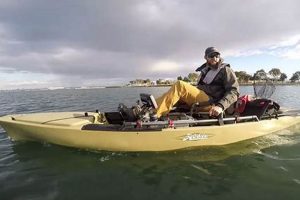
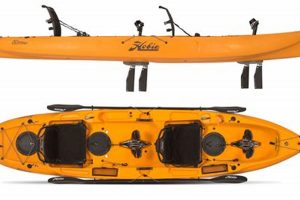
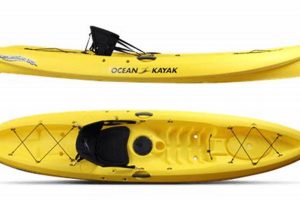
A small, human-powered watercraft designed for angling, modified to accommodate a canine companion, offers a unique recreational experience. This typically involves features like a wider hull for stability, a dedicated padded area or well for the dog to sit, and potentially tie-down points for safety. Imagine a stable, maneuverable vessel gliding through calm waters, an angler casting a line while their four-legged friend enjoys the journey.
Integrating canine companions into the angling experience enhances the enjoyment for both owner and pet. The added companionship combats the potential solitude of fishing, fostering a deeper bond between human and animal. Furthermore, the modifications necessary for canine inclusion contribute to the overall stability and sometimes carrying capacity of the vessel, benefiting anglers of all types. While the precise historical evolution is unclear, it reflects a growing trend of shared human-animal outdoor activities. This rising popularity has driven manufacturers to innovate and cater to this specific market segment.
The subsequent sections will explore key aspects of selecting and utilizing such a specialized watercraft. Topics will include factors affecting stability and performance, important safety considerations for both human and canine passengers, and recommended accessories to enhance the shared experience. Additionally, the discussion will encompass relevant regulations and responsible practices for navigating waterways with animals.
Tips for Kayaking with Canine Companions
Careful planning and preparation are essential for a safe and enjoyable kayaking experience with a dog. The following tips offer guidance for ensuring both human and canine safety and maximizing the shared adventure.
Tip 1: Acclimate the Dog Gradually: Introduce the dog to the kayak on dry land first, allowing it to explore the vessel and become comfortable. Short, supervised introductory trips on calm water are recommended before embarking on longer excursions.
Tip 2: Prioritize Safety Equipment: A properly fitting canine life vest is paramount. Ensure the vest has a handle for easy retrieval from the water. Carry a first-aid kit equipped to address both human and canine injuries.
Tip 3: Maintain Stability: Distribute weight evenly within the kayak. Train the dog to remain seated or in a designated area to minimize shifting and maintain balance. Avoid sudden movements that could capsize the vessel.
Tip 4: Provide Shade and Hydration: Offer ample shade and fresh water, especially during warm weather. Consider a collapsible water bowl and a sun shade for the dog’s comfort.
Tip 5: Practice Water Entry and Exit: Train the dog how to enter and exit the kayak safely from both the shore and the water. This is crucial in case of an unexpected capsize.
Tip 6: Respect Wildlife and Other Boaters: Keep the dog leashed when appropriate and ensure it does not disturb wildlife or interfere with other boaters. Adhere to leash laws and waterway regulations.
Tip 7: Pack Essential Supplies: Bring waste disposal bags, a floating leash, and familiar toys or treats to keep the dog occupied and comfortable.
Adherence to these guidelines contributes significantly to a positive experience. A well-prepared excursion fosters a stronger bond between owner and dog while mitigating potential risks associated with on-water activities.
By understanding and implementing these recommendations, individuals can confidently embark on kayaking adventures with their canine companions, creating lasting memories and fostering a deeper appreciation for the shared experience.
1. Stability

Stability is paramount when choosing a fishing kayak intended for use with a canine companion. A dog’s movements, even subtle shifts in weight, can significantly impact the balance of a small watercraft. This is amplified when the angler is also engaged in activities like casting or reeling in a fish. A stable platform minimizes the risk of capsizing, ensuring the safety of both the angler and the dog. Consider the scenario of a dog suddenly shifting its weight to one side upon spotting a bird; a less stable kayak could easily tip, whereas a kayak designed for stability will remain upright. This stability relies on factors such as hull design, width, and weight capacity.
Wider, flatter-bottomed hulls generally offer greater primary stability, meaning they resist initial tipping. A lower center of gravity further enhances stability. Kayaks designed for fishing often incorporate these features, making them suitable for canine companions. For instance, a kayak with a wider beam and a flat hull will remain more stable than a narrower, V-shaped hull when a dog moves around. However, stability should not compromise maneuverability, as anglers still need to navigate and position the kayak effectively. The optimal balance between stability and maneuverability depends on the intended fishing environment and the size and activity level of the dog.
Understanding the relationship between stability and kayak design allows for informed decision-making. Choosing a kayak with adequate stability is crucial for safe and enjoyable fishing trips with a dog. This contributes to a positive experience, promoting continued enjoyment of shared on-water adventures. Neglecting this factor could jeopardize safety and deter future excursions. Further research into specific kayak models and their stability ratings can provide additional valuable insights.
2. Space and Comfort

Adequate space and comfort are critical factors when selecting a fishing kayak designed to accommodate a canine companion. A cramped and uncomfortable environment can lead to restlessness, anxiety, and disruptive behavior in the dog, negatively impacting both the fishing experience and the safety of all occupants. Careful consideration of these factors ensures a positive and productive outing.
- Dog-Dedicated Space:
A designated area within the kayak specifically for the dog is essential. This space should be large enough for the dog to sit, lie down, and shift position comfortably without interfering with the angler’s movements or equipment. A dedicated space minimizes the risk of entanglement with fishing lines and provides a sense of security for the dog. For example, a recessed well or a flat platform covered with non-slip padding creates a comfortable and secure area for the dog.
- Angler Legroom:
Sufficient legroom for the angler is crucial, even with a dog on board. Cramped legroom can lead to discomfort, fatigue, and reduced mobility, hindering the angler’s ability to cast, reel, and manage the kayak effectively. Ample legroom ensures that the angler can maintain a comfortable and balanced position for extended periods, regardless of the dog’s presence. This may necessitate selecting a slightly longer kayak or one with a thoughtfully designed cockpit layout.
- Weight Distribution and Balance:
Careful consideration of weight distribution is crucial for both stability and comfort. An uneven distribution of weight can make the kayak difficult to control and uncomfortable for both the angler and the dog. Evenly distributing the weight of the dog, angler, and gear ensures optimal balance and stability. This may involve positioning the dog closer to the center of the kayak and strategically storing gear to maintain an even keel. Proper weight distribution also contributes to a more comfortable and efficient paddling experience.
- Padding and Protection:
Providing adequate padding for the dog enhances comfort and minimizes the risk of injury. A padded surface protects the dog’s joints and provides insulation from the hard surface of the kayak. This is particularly important in colder conditions or during longer outings. Non-slip padding also improves traction, preventing the dog from sliding around and potentially destabilizing the kayak. Consider adding a padded mat or specialized dog bed designed for kayaks to enhance comfort and safety.
Addressing these factors contributes significantly to a positive and safe kayaking experience with a dog. A comfortable and well-designed environment allows both the angler and the canine companion to relax and enjoy the outing, fostering a stronger bond and promoting future shared adventures. Discomfort, on the other hand, can lead to stress and anxiety, potentially creating negative associations with kayaking and discouraging future participation.
3. Dog-Specific Features
Specialized features designed for canine passengers distinguish fishing kayaks intended for shared human-animal adventures from standard angling kayaks. These features directly address the unique needs and challenges associated with bringing a dog aboard, impacting both safety and enjoyment. Consider the causal relationship: the desire to safely and comfortably integrate dogs into kayaking necessitates the inclusion of dog-specific features. Without these adaptations, the experience could be uncomfortable, unsafe, and ultimately detrimental to the human-animal bond the activity aims to strengthen. For instance, a standard fishing kayak lacks the secure footing and designated space a dog requires, potentially leading to falls, anxiety, and interference with the angler’s activities.
Several key features exemplify this crucial connection. Non-slip surfaces, often composed of textured EVA foam or specialized rubber padding, provide secure footing for dogs, preventing slips and falls. Tie-down points or D-rings offer secure attachment locations for canine life vests and leashes, ensuring the dog remains safely confined within the kayak. Recessed wells or designated platforms offer a dedicated space for dogs to sit or lie down, reducing interference with the angler and promoting a sense of security. Consider a real-life scenario: a dog, startled by a sudden splash, could easily lose its footing on a smooth kayak surface; however, a non-slip surface mitigates this risk. Similarly, a secure tie-down point allows the angler to quickly restrain the dog in case of an unexpected encounter with another vessel or challenging water conditions.
Understanding the practical significance of dog-specific features is crucial for selecting the appropriate kayak. These features contribute directly to the safety and comfort of the canine passenger, which in turn enhances the overall enjoyment and success of the fishing trip. The absence of such features increases the risk of accidents, anxiety, and ultimately, a negative experience for both the dog and the angler. This knowledge empowers informed decision-making, ensuring the chosen kayak supports a positive and safe shared experience. Choosing a kayak specifically designed with canine companions in mind, rather than adapting a standard fishing kayak, reflects a commitment to responsible pet ownership and enhances the human-animal bond through shared outdoor pursuits.
4. Weight Capacity
Weight capacity is a critical factor when selecting a fishing kayak designed to accommodate a canine companion. It directly impacts safety, stability, and overall performance. Insufficient weight capacity compromises buoyancy and stability, increasing the risk of capsizing. Conversely, excessive capacity can lead to a sluggish, less responsive kayak, hindering maneuverability. Careful consideration of this factor ensures a safe and enjoyable experience for both angler and dog. Understanding the relationship between weight capacity and on-water performance enables informed decision-making.
- Combined Weight of Occupants and Gear:
Calculating the combined weight of the angler, dog, and all gear, including fishing equipment, safety gear, and personal items, is essential. This total weight must fall well within the kayak’s specified weight capacity. Exceeding the limit compromises stability and performance. For example, an angler weighing 175 lbs with a 50 lb dog and 30 lbs of gear requires a kayak with a capacity exceeding 255 lbs. Adequate capacity ensures safe and efficient operation, contributing to a positive on-water experience.
- Impact of Weight Distribution on Stability:
Proper weight distribution influences stability. Evenly distributing the weight within the kayak enhances balance and control, minimizing the risk of tipping. Concentrating weight in one area compromises stability, particularly during movements or changes in water conditions. For instance, positioning the dog near the center of the kayak, rather than at the bow or stern, optimizes balance. Understanding the impact of weight distribution is crucial for maintaining stability and preventing accidents.
- Performance Considerations Related to Capacity:
Weight affects performance. A heavily loaded kayak sits lower in the water, increasing drag and reducing speed and maneuverability. This is particularly noticeable when paddling against wind or current. Selecting a kayak with adequate capacity ensures efficient and enjoyable paddling. Consider the scenario of paddling against a strong headwind; a heavily loaded kayak will require significantly more effort than one operating well within its capacity. Choosing the appropriate capacity enhances performance and overall enjoyment.
- Manufacturer Specifications and Safety Margins:
Consulting manufacturer specifications provides crucial information regarding weight capacity. These specifications represent the maximum safe operating weight for the kayak. Adhering to these limits ensures optimal performance and safety. Furthermore, maintaining a safety margin below the maximum capacity provides an additional buffer for unexpected situations. For instance, encountering rough water or unexpected weight shifts necessitates a safety margin to prevent exceeding the kayak’s limits. Respecting manufacturer recommendations contributes significantly to safe and enjoyable kayaking experiences.
Understanding these factors related to weight capacity allows for informed selection of a fishing kayak suitable for both angler and canine companion. Proper consideration of weight limits, distribution, and their impact on performance ensures a safe, stable, and enjoyable experience on the water. Neglecting these aspects can compromise safety and detract from the overall enjoyment of shared kayaking adventures.
5. Storage Options

Ample and well-designed storage options are essential in fishing kayaks intended for canine companions. The presence of a dog necessitates additional gear beyond standard fishing equipment, impacting storage requirements. This connection arises from the causal relationship between canine inclusion and the need for specific supplies, such as food, water, waste bags, and safety equipment. Without sufficient storage, these essential items would be difficult to transport, compromising both safety and comfort. Imagine embarking on a fishing trip with a dog only to realize halfway through that essential supplies, like water or a first-aid kit, are inaccessible or, worse, left behind due to inadequate storage. This highlights the practical significance of ample storage within these specialized kayaks.
Dedicated compartments for dog-specific gear enhance organization and accessibility. Waterproof compartments safeguard essential items from splashes and submersion. Consider the scenario of navigating through choppy water; a waterproof compartment ensures that essential supplies, such as a canine first-aid kit or emergency blanket, remain dry and functional. Furthermore, strategically placed storage compartments allow for efficient weight distribution, contributing to stability and balanced handling. Positioning heavier items lower in the kayak and distributing weight evenly enhances performance and reduces the risk of capsizing. The availability of various storage options, such as hatches, bungee cords, and recessed wells, caters to diverse needs and preferences. A kayak equipped with a variety of storage options empowers anglers to personalize their organization strategies based on their specific requirements and the duration of their fishing trips.
Understanding the importance of storage solutions in kayaks designed for canine companionship is crucial for informed decision-making. Adequate storage directly impacts safety, comfort, and the overall success of fishing excursions with a dog. Lack of proper storage solutions can lead to disorganized gear, compromised safety, and a less enjoyable experience. This understanding underscores the critical connection between specialized kayak design and responsible pet ownership, facilitating positive and safe shared adventures on the water. Choosing a kayak with ample and appropriate storage reflects a commitment to the well-being of the canine companion and enhances the overall enjoyment of shared outdoor pursuits.
6. Durability

Durability is a paramount consideration when selecting a fishing kayak designed to accommodate a canine companion. Dogs, by nature, interact with their environment differently than humans, often involving scratching, clawing, and shifting weight. This necessitates a higher level of durability compared to kayaks intended solely for human use. The connection arises from the cause-and-effect relationship between canine behavior and the potential for wear and tear on the kayak. Without robust construction, the kayak’s lifespan could be significantly shortened, potentially leading to costly repairs or replacements. Consider the scenario of a dog excitedly scrambling into the kayak, potentially scratching the hull with its claws. A durable kayak resists such wear, maintaining its structural integrity and aesthetic appeal. This inherent durability is not merely a desirable feature but a crucial component contributing directly to the long-term value and safety of the vessel.
Several factors contribute to enhanced durability in these specialized kayaks. High-density polyethylene (HDPE) is a common material choice due to its impact resistance and ability to withstand abrasion. Reinforced seams and robust hull construction further enhance durability, protecting against punctures and leaks. Consider a real-life example: navigating through shallow, rocky waters could easily damage a less durable kayak; however, a reinforced hull and robust seams mitigate this risk. Furthermore, UV-resistant coatings protect the kayak from sun damage, preserving its structural integrity and preventing color fading over time. This is particularly important for kayaks frequently exposed to direct sunlight, ensuring long-term performance and aesthetic appeal. Investing in a durable kayak minimizes the long-term cost of ownership, reducing the need for frequent repairs or premature replacement.
Understanding the crucial role of durability in fishing kayaks designed for dogs is essential for informed decision-making. Durability directly influences the kayak’s lifespan, safety, and overall cost-effectiveness. Choosing a kayak constructed from durable materials and employing robust manufacturing techniques ensures long-term enjoyment and minimizes the risk of damage from canine activity. This understanding empowers informed purchasing decisions, supporting safe and enjoyable shared kayaking adventures for years to come. Neglecting this aspect could lead to premature wear and tear, compromising safety and incurring unnecessary expenses. Ultimately, prioritizing durability reflects a commitment to both responsible pet ownership and sustainable recreational practices.
Frequently Asked Questions
This section addresses common inquiries regarding fishing kayaks designed to accommodate canine companions. Clear and concise answers provide practical guidance for informed decision-making.
Question 1: What size fishing kayak is suitable for a large dog?
Kayak selection depends on the dog’s weight and size, but a longer, wider kayak (12+ feet) with a high weight capacity is generally recommended for larger breeds. Stability is paramount.
Question 2: Are all fishing kayaks suitable for dogs?
While many fishing kayaks can accommodate dogs, kayaks specifically designed for this purpose often incorporate features like non-slip surfaces and tie-down points, enhancing safety and comfort.
Question 3: What safety precautions are essential when kayaking with a dog?
A properly fitted canine life vest, a leash, and a first-aid kit are crucial. Gradual acclimation to the kayak and consistent training reinforce safe behavior.
Question 4: How can one prevent a dog from capsizing a kayak?
Proper weight distribution, maintaining a low center of gravity, and training the dog to remain seated or in a designated area contribute significantly to stability.
Question 5: What essential gear is recommended for kayaking with a dog?
Essential items include a canine life vest, leash, water bowl, shade device, waste bags, and a first-aid kit equipped for both human and canine needs.
Question 6: How can one find reputable resources for further information?
Consult specialized kayak retailers, online forums dedicated to kayak fishing with dogs, and reputable canine training resources for expert advice and community insights.
Careful consideration of these frequently asked questions promotes informed decision-making and enhances the safety and enjoyment of kayaking with a canine companion. Prioritizing safety and responsible practices ensures a positive experience for both human and animal.
The following section will delve into specific kayak models and accessories suitable for anglers and their canine companions.
Fishing Kayak with Room for Dog
Selecting a fishing kayak with room for a dog requires careful evaluation of specific design elements. Prioritizing stability, ample space, dog-specific features, sufficient weight capacity, appropriate storage, and robust durability ensures a safe and enjoyable experience for both angler and canine companion. These interconnected factors contribute directly to successful on-water adventures, fostering a stronger bond between human and animal. Neglecting these considerations can compromise safety, limit functionality, and detract from the overall experience.
The integration of dogs into fishing kayak design reflects a growing recognition of the importance of shared human-animal experiences in outdoor recreation. Careful selection of appropriate equipment, combined with responsible practices and a focus on safety, unlocks the full potential of these shared adventures, promoting positive interactions with the natural world and strengthening the human-animal bond. This thoughtful approach ensures not only enjoyable fishing excursions but also fosters a deeper appreciation for the interconnectedness of humans, animals, and the environment.