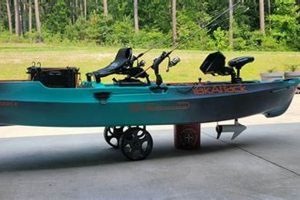
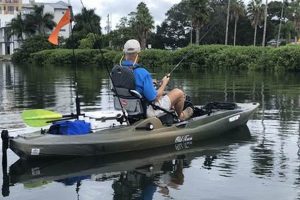
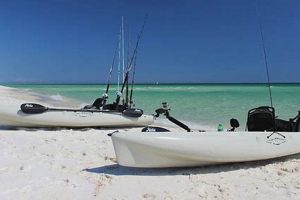
Portable, collapsible kayaks designed for angling offer a convenient solution for those with limited storage or transportation options. These vessels typically utilize a folding frame and flexible skin, allowing them to be compactly stored when not in use and easily assembled for fishing excursions. A typical example might feature built-in rod holders, adjustable seating, and ample storage for tackle and gear.
The increasing popularity of these craft stems from their enhanced portability and ease of use. Their compact form eliminates the need for roof racks or trailers, making them ideal for apartment dwellers, those with smaller vehicles, or anyone seeking a simplified approach to kayak fishing. This innovation democratizes the sport, making it accessible to a wider audience previously limited by logistical constraints. Historically, kayak fishing required significant investment in transportation and storage, but the development of collapsible designs removes these barriers.
This article will explore the various types of portable kayaks for angling, highlighting key features, construction materials, and performance characteristics. Further discussion will address essential accessories, safety considerations, and tips for selecting the ideal model to suit individual needs and preferences.
Tips for Portable Kayak Angling
Careful consideration of several factors ensures a safe and successful experience with collapsible fishing kayaks.
Tip 1: Prioritize Stability and Capacity: Hull design significantly impacts stability and weight capacity. Wider, flatter hulls offer greater initial stability, while longer, narrower designs enhance speed and tracking. Anglers should select a model appropriate for their weight, anticipated gear, and expected water conditions.
Tip 2: Thorough Inspection and Practice: Before each outing, carefully inspect the assembled kayak for any damage or loose components. Practice assembly and disassembly several times before venturing onto the water to ensure familiarity with the process.
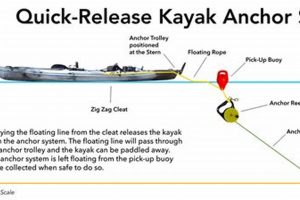
Tip 3: Choose Suitable Accessories: Consider essential accessories such as a paddle leash, personal flotation device (PFD), dry bag for electronics, and appropriate fishing gear. Rod holders, anchor systems, and fish finders can enhance the angling experience.
Tip 4: Understand Water Conditions: Check weather forecasts and water conditions before heading out. Avoid strong currents, high winds, and areas with significant boat traffic, especially during initial outings.
Tip 5: Practice Safety Procedures: Inform someone of your planned location and estimated return time. Carry a communication device, such as a waterproof cell phone or VHF radio, in case of emergencies. Familiarize oneself with basic paddling techniques and self-rescue maneuvers.
Tip 6: Respect the Environment: Adhere to Leave No Trace principles. Pack out all trash, avoid disturbing wildlife, and respect fishing regulations.
Tip 7: Proper Storage and Maintenance: Rinse the kayak thoroughly with fresh water after each use, especially after exposure to saltwater. Allow it to dry completely before folding and storing to prevent mildew and damage. Store the kayak in a cool, dry place away from direct sunlight.
Adhering to these guidelines enhances safety, improves performance, and promotes responsible enjoyment of portable kayak angling.
The following section offers a concluding overview of key points and considerations for prospective portable kayak anglers.
1. Portability

Portability stands as a defining characteristic of fold-up fishing kayaks, directly influencing their appeal and practicality. The ability to collapse these vessels into a compact form significantly reduces transportation and storage constraints. This characteristic contrasts sharply with traditional rigid kayaks, which often necessitate roof racks, trailers, or ample storage space. Consider an angler living in an apartment with limited storage. A foldable kayak offers the freedom to transport and store the vessel efficiently, enabling participation in the sport without the logistical challenges posed by a rigid hull.
This inherent portability expands access to fishing locations previously difficult to reach with conventional kayaks. Transporting a folded kayak in a car trunk, on public transport, or even on an airplane opens up a wider range of fishing opportunities. For example, accessing remote lakes or rivers, previously requiring arduous portages with a rigid kayak, becomes significantly simpler. The reduced bulk and weight simplify navigation through challenging terrain, expanding the angler’s reach and enhancing the overall fishing experience.
In summary, portability directly shapes the utility and appeal of foldable fishing kayaks. This defining feature removes barriers to entry for individuals facing storage or transportation limitations, expanding access to a wider range of fishing environments. Consequently, the portability inherent in these designs broadens participation in the sport and enriches the overall angling experience. Understanding this core aspect proves crucial when evaluating various models and considering the practical implications for individual fishing pursuits.
2. Storage Convenience

Storage convenience represents a significant advantage of foldable fishing kayaks, directly addressing the challenges posed by traditional rigid-hull designs. The compact, folded state of these vessels drastically reduces required storage space. This characteristic proves particularly beneficial for individuals residing in apartments, smaller homes, or those lacking dedicated storage areas like garages or sheds. Consider, for example, an urban angler living in a limited-space apartment. A foldable kayak allows for compact storage under a bed, in a closet, or even in a storage locker, eliminating the need for dedicated space typically required for a conventional kayak. This practicality expands ownership possibilities to those previously constrained by storage limitations.
This ease of storage extends beyond residential settings. Transporting a folded kayak in a vehicle eliminates the need for roof racks or trailers, further enhancing convenience. For instance, an individual traveling to a remote fishing location can easily store the folded kayak within their vehicle, preserving interior space and avoiding the added complexity and fuel consumption associated with external carrying methods. This streamlined approach facilitates spontaneous fishing trips and reduces the logistical overhead associated with transporting and storing traditional kayaks.
In summary, storage convenience constitutes a core benefit of foldable fishing kayaks. The ability to compactly store these vessels expands accessibility for individuals with limited space, simplifies transportation logistics, and promotes spontaneous fishing excursions. Understanding the practical implications of this storage advantage proves crucial for informed decision-making and maximizing the utility of these specialized kayaks. The compact storage capability directly addresses the limitations of traditional kayaks, facilitating broader participation in the sport and enhancing the overall angling experience.
3. Fishing Functionality
Fishing functionality represents a critical aspect of fold-up fishing kayaks, distinguishing them from recreational folding kayaks. While portability and storage convenience remain important, the integration of features specifically designed for angling elevates these vessels into specialized tools for fishing enthusiasts. Effective integration of these features directly impacts the kayak’s practicality and the angler’s overall success on the water.
- Rod Holders
Integrated rod holders provide secure storage and easy access to fishing rods. Multiple rod holders, strategically positioned, allow anglers to troll with various lines or quickly switch between different fishing techniques. Dedicated rod holders free up the angler’s hands for paddling, landing fish, or managing other equipment. For example, an angler trolling for trout can position rods at varying depths and with different lures, maximizing their chances of a catch without constantly holding and adjusting the rods.
- Tackle Storage
Designated compartments and storage areas within the kayak accommodate tackle boxes, lures, bait, and other essential fishing gear. Well-designed storage solutions keep equipment organized and readily accessible, minimizing clutter and maximizing efficiency on the water. Ample storage capacity allows anglers to carry a diverse range of tackle, adapting to changing fishing conditions or targeting different species. For instance, an angler pursuing both bass and panfish can organize their tackle boxes with species-specific lures and readily access them as needed, optimizing their chances of success throughout the fishing trip.
- Gear Tracks and Mounts
Gear tracks and mounting points provide flexibility for attaching accessories such as fish finders, GPS units, cameras, and anchor systems. These customizable options enhance the angler’s ability to personalize their setup and integrate essential electronics or equipment. For example, mounting a fish finder allows anglers to identify underwater structures and locate fish, while a GPS unit aids in navigation and marking productive fishing spots. This adaptability caters to individual preferences and specific fishing needs.
- Stability and Hull Design
Hull design plays a crucial role in overall fishing functionality. A stable hull provides a secure platform for casting, reeling, and landing fish, particularly in challenging conditions. Features like a wider beam or a flatter hull bottom contribute to stability, allowing anglers to stand and cast in certain models. This stability is crucial for maintaining balance and effectively managing fishing equipment, particularly when battling larger fish. For instance, a stable hull enables an angler to confidently stand and sight-cast to bonefish in shallow flats, maximizing their ability to spot and target these elusive fish.
The integration of these fishing-specific features distinguishes fold-up fishing kayaks from their recreational counterparts. Careful consideration of these functionalities, combined with an assessment of individual fishing styles and target species, ensures selection of the most appropriate model. By prioritizing fishing functionality, anglers optimize their on-the-water experience and maximize their chances of success.
4. Assembly/Disassembly
The ease and efficiency of assembly and disassembly directly influence the practicality and overall user experience of a fold-up fishing kayak. A streamlined setup process encourages frequent use, while a complex or time-consuming assembly can deter spontaneous outings. Understanding the intricacies of this process, including the components involved and best practices, proves crucial for maximizing the benefits of a foldable design. The following facets explore key aspects of assembly and disassembly.
- Component Familiarity
Thorough understanding of the kayak’s various components and their interconnections is essential for efficient assembly. Familiarization with the frame elements, connecting mechanisms, skin attachment points, and seat installation procedures streamlines the setup process. For example, recognizing the specific sequence for unfolding the frame sections and securing the locking mechanisms ensures structural integrity and prevents accidental misalignment. This foundational knowledge reduces assembly time and minimizes potential frustration.
- Practice and Efficiency
Repeated practice significantly improves assembly and disassembly speed and efficiency. Initial attempts may prove challenging, but subsequent repetitions refine the process. Regular practice allows users to develop a systematic approach, minimizing errors and optimizing the sequence of actions. For instance, practicing the folding and unfolding of the hull skin several times allows for quicker and more effective packing, reducing the overall setup and breakdown time on subsequent fishing trips. This acquired proficiency promotes spontaneous outings by minimizing the perceived effort involved in preparing the kayak.
- Durability of Components
The durability of connecting mechanisms, frame elements, and the hull skin directly impacts the long-term reliability and usability of the kayak. Robust components withstand repeated assembly and disassembly cycles without premature wear or failure. High-quality materials and construction techniques ensure sustained performance over extended periods. For example, reinforced hinges and locking mechanisms resist stress and maintain structural integrity, while a durable, puncture-resistant hull skin withstands abrasion and impacts during transport and use. These durable components contribute to the kayak’s longevity and minimize the need for repairs or replacements.
- Compact Storage Dimensions
The folded dimensions of the kayak directly influence storage convenience and transportation practicality. A compact folded size facilitates storage in limited spaces, such as vehicle trunks or apartment closets. Efficient packing procedures further optimize storage space utilization. For example, a well-designed folding system combined with included storage bags allows for compact packing, minimizing the kayak’s footprint and maximizing storage efficiency. This compact form factor enhances portability and expands transportation options.
Proficiency in assembling and disassembling a fold-up fishing kayak significantly enhances its practicality and overall user experience. A streamlined process promotes spontaneous fishing trips and maximizes enjoyment on the water. Understanding the key facets of component familiarity, practice, durability, and compact storage dimensions enables informed selection and optimal utilization of a fold-up fishing kayak, aligning with the angler’s pursuit of efficient and rewarding fishing experiences.
5. Durability and Materials

Durability and material selection directly impact the longevity, performance, and overall user experience of a fold-up fishing kayak. These vessels endure repeated folding, unfolding, transportation, and exposure to various environmental conditions, necessitating robust construction and resilient materials. The interplay between material properties and structural design determines the kayak’s ability to withstand these stresses and maintain its functionality over time. A thorough understanding of this relationship empowers informed purchasing decisions and ensures long-term satisfaction.
Consider the impact of UV exposure on a kayak’s hull. Prolonged exposure to sunlight can degrade certain materials, leading to cracking, fading, and reduced structural integrity. A hull constructed from a UV-resistant polymer, however, mitigates these effects, ensuring prolonged lifespan and sustained performance in sunny environments. Similarly, the frame material plays a crucial role in overall durability. Aluminum alloys, known for their strength-to-weight ratio and corrosion resistance, offer a robust framework capable of withstanding repeated stress from folding, unfolding, and impacts during transport. Conversely, a frame constructed from less durable materials might be prone to bending, cracking, or corrosion, compromising the kayak’s structural integrity and potentially leading to premature failure. Reinforced stitching and bonding techniques further enhance the overall durability of the hull and its connection to the frame, contributing to a longer-lasting, more reliable vessel.
The selection of appropriate materials and construction techniques directly influences the kayak’s resistance to punctures, abrasion, and impact damage encountered during transport and on-water use. A durable, puncture-resistant hull material, such as reinforced PVC or Hypalon, minimizes the risk of damage from submerged obstacles or sharp rocks. Similarly, robust frame components and secure connection points contribute to overall structural integrity, ensuring the kayak maintains its shape and functionality under stress. Understanding the relationship between materials, construction techniques, and real-world performance empowers informed decision-making. Choosing a kayak built with durable materials and robust construction ensures long-term reliability, minimizes the risk of damage, and ultimately maximizes the enjoyment and longevity of the fishing experience. This knowledge translates to a more confident and rewarding experience on the water, allowing anglers to focus on fishing rather than concerns about equipment failure.
6. Performance on Water

Performance on the water constitutes a critical consideration when evaluating fold-up fishing kayaks. While portability and convenience motivate the selection of a foldable design, the on-water performance directly impacts the fishing experience. Factors such as tracking, stability, speed, and maneuverability influence angling effectiveness and overall enjoyment. Understanding how these performance characteristics relate to design features enables informed decision-making and ensures the chosen kayak aligns with individual fishing styles and target environments.
- Tracking and Stability
Tracking, the kayak’s ability to maintain a straight course, and stability, its resistance to tipping, directly affect paddling efficiency and angler comfort. A kayak that tracks well requires less effort to maintain direction, conserving energy for fishing. Stability provides a secure platform for casting, reeling, and landing fish, particularly in challenging conditions or when standing to cast. Hull design, including length, width, and keel configuration, significantly influences both tracking and stability. For example, a longer, narrower hull generally tracks better in calm water, while a wider, flatter hull offers enhanced stability, particularly in choppy conditions or when maneuvering in tight spaces.
- Speed and Efficiency
Speed and paddling efficiency influence the angler’s ability to cover water and reach desired fishing locations. Efficient hull designs minimize drag, allowing for faster speeds with less effort. This efficiency becomes particularly important when paddling longer distances or against currents. Factors such as hull length, waterline length, and rocker profile contribute to overall speed and efficiency. For example, a longer kayak with a streamlined hull design typically glides through the water more efficiently than a shorter, wider kayak. However, shorter kayaks often offer enhanced maneuverability, proving advantageous in tight quarters or when navigating shallow, obstacle-filled waterways.
- Maneuverability
Maneuverability, the kayak’s responsiveness to paddle strokes and its ability to turn quickly, proves crucial when navigating complex waterways, avoiding obstacles, or positioning for optimal casting angles. Shorter kayaks with a pronounced rocker (upward curve of the hull at the bow and stern) generally offer greater maneuverability, allowing for tighter turns and quick adjustments in direction. This agility becomes advantageous when fishing in narrow creeks, maneuvering around submerged structures, or quickly repositioning to follow moving fish. Conversely, longer kayaks excel in open water, offering superior tracking and speed but potentially sacrificing maneuverability in confined spaces.
- Capacity and Load Management
Weight capacity and load management directly impact stability, performance, and safety. Exceeding the recommended weight capacity compromises stability and can lead to swamping or capsizing. Proper distribution of weight within the kayak, including gear and angler weight, influences balance and trim, affecting both tracking and maneuverability. Centering heavier items and securing gear to prevent shifting during paddling maintains optimal performance. For instance, distributing fishing tackle evenly throughout the storage compartments and securing larger items, such as coolers or tackle boxes, prevents imbalance and maintains stability, particularly in rough conditions.
Understanding the interplay between these performance characteristics and design features allows anglers to select a fold-up fishing kayak best suited to their individual needs and target fishing environments. Prioritizing performance aspects relevant to the intended use, whether it be open-water trolling, navigating tight rivers, or fishing in shallow flats, ensures a more rewarding and successful experience on the water. Careful consideration of these factors contributes to enhanced fishing efficiency, increased comfort, and ultimately, a more enjoyable and productive time on the water.
Frequently Asked Questions
This section addresses common inquiries regarding fold-up fishing kayaks, providing concise and informative responses to facilitate informed decision-making.
Question 1: How durable are fold-up fishing kayaks compared to traditional rigid kayaks?
While rigid kayaks generally offer greater overall durability, advancements in materials and construction techniques have significantly improved the robustness of fold-up models. High-quality foldable kayaks utilize durable materials like reinforced PVC or Hypalon for the hull and aluminum alloys for the frame, providing comparable resilience for typical fishing conditions. However, they might be less suitable for extreme whitewater or consistently harsh environments.
Question 2: How long does it take to assemble and disassemble a fold-up fishing kayak?
Assembly time varies depending on the model and user familiarity. Initial assembly might take 15-20 minutes, but with practice, this can be reduced to 5-10 minutes. Disassembly typically requires a similar timeframe.
Question 3: What is the typical weight capacity of a fold-up fishing kayak?
Weight capacity varies depending on the model, typically ranging from 250 to 400 pounds. It’s crucial to select a model with adequate capacity for the combined weight of the angler, gear, and any potential catch.
Question 4: Are fold-up fishing kayaks suitable for all water conditions?
While suitable for most calm to moderately choppy waters, including lakes, slow-moving rivers, and protected coastal areas, fold-up kayaks are generally not recommended for extreme whitewater or open ocean conditions. Always consider weather forecasts and water conditions before venturing out.
Question 5: How do fold-up fishing kayaks perform in terms of tracking and stability compared to traditional kayaks?
Tracking and stability vary depending on the specific design of the foldable kayak. Generally, longer, narrower models track better in calm water, while wider, flatter hulls offer enhanced stability. Modern designs often incorporate features like tracking fins or inflatable chambers to improve performance characteristics.
Question 6: What maintenance is required for a fold-up fishing kayak?
Regular maintenance includes rinsing the kayak with fresh water after each use, particularly after exposure to saltwater, and allowing it to dry completely before storage. Periodic inspection of the frame, hull, and connecting components for wear or damage is also recommended. Proper storage in a cool, dry place away from direct sunlight prolongs the kayak’s lifespan.
Addressing these common questions provides a clearer understanding of fold-up fishing kayaks, enabling potential users to make informed decisions based on individual needs and preferences.
The subsequent section will delve into specific model comparisons and reviews, offering further guidance in selecting the ideal fold-up fishing kayak.
Fold-Up Fishing Kayak
This exploration of fold-up fishing kayaks has highlighted their transformative impact on angling accessibility and convenience. Key attributes, including portability, storage convenience, and specialized fishing functionality, position these vessels as compelling alternatives to traditional rigid kayaks. Analysis of assembly/disassembly processes, material durability considerations, and on-water performance characteristics provides a comprehensive understanding of the factors influencing selection and optimal utilization. Addressing common inquiries further clarifies the advantages and limitations of these innovative craft, empowering informed decision-making.
The evolution of fold-up fishing kayak design continues to refine performance and expand angling possibilities. As technology advances and materials improve, these vessels promise enhanced durability, increased functionality, and refined on-water performance. Careful consideration of individual needs and preferences, coupled with thorough research and evaluation, ensures selection of the ideal fold-up fishing kayak, unlocking new avenues for angling exploration and enjoyment.