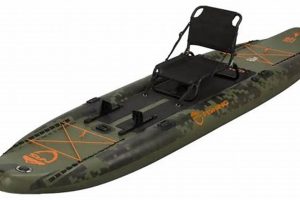
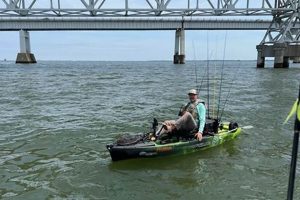
The practice of angling from a small, human-powered watercraft in the coastal waters near Clearwater, Florida, offers a unique blend of recreation and sport. This activity allows close-to-water access to a diverse range of fish species and habitats, from shallow grass flats to deeper channels and mangrove islands. The calm, clear waters of the Gulf of Mexico and its estuaries around Clearwater provide an ideal setting.
This style of fishing provides several advantages. Its quiet approach minimizes disturbance to fish, improving catch rates. The maneuverability of kayaks grants access to shallow or confined areas inaccessible to larger boats. Furthermore, this method offers a low-impact, eco-friendly way to experience the natural beauty of the region. The area’s rich angling history, combined with modern equipment and techniques, contributes to its growing popularity.
The following sections will delve into specific aspects of this activity, including target species, recommended equipment, ideal locations, and responsible fishing practices for ensuring a sustainable and enjoyable experience.
Tips for Kayak Fishing in Clearwater, Florida
Successful excursions require careful planning and preparation. The following tips offer valuable insights for maximizing enjoyment and effectiveness on the water.
Tip 1: Prioritize Safety. Always wear a personal flotation device (PFD) and carry essential safety gear, including a whistle, signaling device, and first-aid kit. Check weather conditions before departure and inform someone of planned fishing locations and return time.
Tip 2: Choose Appropriate Gear. Select a kayak suited to the intended fishing environment and personal preferences. Rods, reels, and tackle should match target species. Consider a fish finder and GPS for enhanced navigation and fish location.
Tip 3: Understand Local Regulations. Obtain necessary fishing licenses and familiarize oneself with local fishing regulations, including size and bag limits for specific species. Adhere to responsible angling practices to preserve fish populations.
Tip 4: Plan for Tides and Currents. Tidal movements significantly impact fishing conditions. Consult tide charts and plan fishing trips around optimal tide levels and current flows for target species.
Tip 5: Research Fishing Locations. Explore various fishing spots, including grass flats, mangrove shorelines, and deeper channels. Research prevalent species in each area to select appropriate tackle and techniques.
Tip 6: Practice Kayak Handling. Develop proficient paddling and maneuvering skills before venturing into open water. Practice stability techniques and learn how to handle different wind and current conditions.
Tip 7: Employ Effective Fishing Techniques. Learn techniques suited to target species and local conditions. Explore different lures, baits, and retrieval methods to maximize catch rates.
Adherence to these guidelines can significantly enhance safety, improve fishing success, and promote responsible enjoyment of the Clearwater, Florida, fishing environment.
By embracing these practices, anglers contribute to the preservation of this valuable ecosystem, ensuring its continued enjoyment for generations to come.
1. Safety Equipment (PFDs, Whistles)

Safety equipment, particularly Personal Flotation Devices (PFDs) and whistles, plays a critical role in mitigating risks inherent to kayak fishing in Clearwater, Florida. The dynamic marine environment, characterized by changing weather conditions, vessel traffic, and potential encounters with wildlife, necessitates a proactive approach to safety. A PFD provides essential buoyancy in the event of capsizing or accidental overboard entry, a crucial safeguard in open water. A whistle serves as a readily accessible signaling device for attracting attention in emergencies, especially given the limited visibility from a low-profile kayak. For instance, a sudden squall can easily capsize a kayak, and a PFD ensures the angler remains afloat until assistance arrives. Similarly, a whistle can alert nearby boaters in case of disorientation or injury.
The importance of these safety devices extends beyond their immediate functionality. They contribute to a broader culture of responsible angling, fostering peace of mind and enabling anglers to focus on the enjoyment of the sport. Adequate preparation allows for a more relaxed and immersive experience, minimizing distractions caused by safety concerns. Regular inspection and proper maintenance of safety equipment, including checking PFDs for wear and tear and ensuring whistle functionality, are essential practices. Furthermore, understanding how to use these devices effectively in emergency scenarios is crucial. Practicing self-rescue techniques and familiarizing oneself with emergency procedures can significantly enhance safety outcomes.
In conclusion, prioritizing safety equipment like PFDs and whistles is paramount for responsible kayak fishing in Clearwater, Florida. These devices provide crucial protection against unforeseen circumstances and contribute to a more enjoyable and secure angling experience. Investing time in understanding their use and maintaining their functionality enhances preparedness and mitigates potential risks in the dynamic coastal environment. This proactive approach to safety fosters a sustainable and responsible angling culture, allowing individuals to appreciate the sport while minimizing potential hazards.
2. Appropriate Kayak Selection
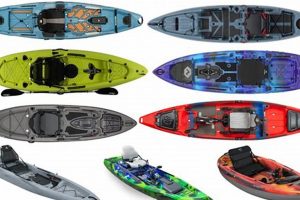
Appropriate kayak selection significantly impacts the effectiveness and enjoyment of kayak fishing in Clearwater, Florida. The diverse fishing environments, ranging from shallow grass flats to open bay waters, necessitate careful consideration of kayak characteristics to ensure stability, maneuverability, and compatibility with specific fishing styles.
- Hull Design
Hull design directly influences kayak performance. A sit-on-top kayak offers enhanced stability and ease of re-entry after a water landing, advantageous in calmer inshore waters. Sit-in kayaks provide better protection from the elements and greater speed, making them suitable for longer trips in open water. A shorter, wider hull offers increased stability for sight fishing in shallow areas, while a longer, narrower hull provides improved tracking and speed for covering larger distances. Choosing the right hull design optimizes performance based on the angler’s chosen fishing location and style. For example, a angler targeting tarpon near bridges might prioritize a maneuverable sit-on-top, while someone fishing offshore for grouper might prefer a stable, faster sit-in kayak.
- Propulsion System
Kayak propulsion systems vary widely, impacting angler fatigue and fishing range. Paddle kayaks offer excellent maneuverability and quiet operation, ideal for stalking fish in shallow water. Pedal-driven kayaks allow hands-free fishing and faster speeds, beneficial for covering larger distances or contending with currents. Motorized kayaks significantly extend range, providing access to distant fishing grounds. Selecting the optimal propulsion system allows anglers to reach their desired fishing locations efficiently and conserve energy for fishing. Anglers fishing the shallow flats for redfish might prefer the stealth of a paddle kayak, while those targeting kingfish further offshore could opt for the speed and range of a motorized kayak.
- Storage Capacity
Adequate storage capacity is essential for carrying fishing gear, safety equipment, and personal items. Kayaks designed for fishing typically feature specialized storage compartments, including rod holders, tackle storage, and dry hatches for protecting electronics and other valuables. Assessing anticipated gear needs and choosing a kayak with appropriate storage ensures efficient organization and accessibility of essential items during the fishing trip. Anglers carrying extensive tackle and equipment for a full-day trip need larger storage compartments than those going for a shorter, simpler excursion.
- Weight Capacity
Kayak weight capacity dictates the safe carrying limit, encompassing the angler’s weight, gear, and potential catch. Exceeding the weight capacity compromises stability and increases the risk of capsizing. Choosing a kayak with sufficient weight capacity ensures safe and stable operation, essential for maintaining balance and preventing accidental water entry. This consideration is particularly important for anglers carrying heavier gear or targeting larger fish species.
Appropriate kayak selection directly influences fishing success and safety in Clearwater, Florida. By carefully evaluating hull design, propulsion system, storage capacity, and weight capacity, anglers can choose a kayak that best suits their individual needs and the specific demands of their target fishing environments. Optimizing these factors leads to a more productive, comfortable, and secure fishing experience, ultimately maximizing enjoyment on the water.
3. Targeted Fish Species

The diverse fish species inhabiting Clearwater, Florida’s coastal waters offer abundant opportunities for kayak anglers. Target species selection significantly influences equipment choices, fishing locations, and employed techniques. Understanding species-specific habitats, feeding patterns, and seasonal behaviors is crucial for a successful fishing experience. For instance, targeting redfish in shallow grass flats requires different tackle and techniques compared to pursuing snook near mangrove shorelines or trolling for kingfish in deeper offshore waters. Clearwater’s varied ecosystem supports a wide range of game fish, including tarpon, trout, snapper, and grouper, each presenting unique challenges and rewards for kayak anglers.
Matching tackle and techniques to target species maximizes catch rates and minimizes environmental impact. Light tackle and artificial lures prove effective for speckled trout in grassy areas, while heavier gear and live bait may be necessary for larger species like tarpon or grouper. Knowledge of preferred bait, such as shrimp for redfish or pinfish for snook, increases angling success. Seasonal migrations and spawning patterns also influence species availability. For example, tarpon become more prevalent in coastal waters during their spring migration, offering prime fishing opportunities for kayak anglers prepared with appropriate gear and techniques. Respectful catch-and-release practices contribute to the sustainability of these valuable fisheries.
Effective target species selection optimizes kayak fishing experiences in Clearwater. Understanding habitat preferences, feeding behaviors, and seasonal availability of target species allows anglers to choose appropriate locations, employ effective techniques, and maximize their chances of success. This knowledge, coupled with responsible fishing practices, ensures a sustainable and rewarding angling experience while contributing to the preservation of Clearwater’s diverse fish populations. Further research on specific species characteristics enhances angling proficiency and contributes to a deeper appreciation of the region’s rich marine ecosystem.
4. Effective Fishing Techniques
Effective fishing techniques are integral to successful kayak fishing in Clearwater, Florida. The unique characteristics of kayak fishing, such as a smaller, quieter platform and closer proximity to the water, necessitate specialized techniques adapted to the local environment and target species. Casting accuracy becomes paramount due to the limited casting space, and quieter presentations minimize disturbance to fish in the shallow, clear waters. Techniques such as drift fishing, trolling with lighter lines, and sight fishing become highly effective. For example, accurately presenting a live shrimp under a popping cork to a school of redfish on a shallow flat requires precise kayak positioning and a delicate casting technique. Similarly, sight fishing for snook along mangrove shorelines demands stealthy kayak maneuvering and accurate lure placement.
Mastery of specific techniques tailored to Clearwater’s diverse fishing environments enhances angling success. Understanding tidal currents and their influence on fish behavior allows for strategic positioning and drift fishing presentations. Employing lighter tackle and lures maximizes sensitivity and presentation finesse in the clear waters, increasing strike detection and hookup ratios. Adapting techniques based on species-specific feeding habits, such as using topwater lures for snook during their early morning feeding activity or bottom fishing with cut bait for grouper in deeper channels, improves catch rates. Consider the scenario of fishing near residential docks: a quiet approach and precise casting beneath the docks with a jig can entice sheepshead and snapper, requiring adaptation to the confined space and structure.
Effective techniques in kayak fishing Clearwater, Florida, require a nuanced understanding of the local environment, target species behavior, and adaptation of traditional fishing methods. The combination of precise kayak control, adapted tackle and lure selection, and knowledge of fish behavior in relation to tidal flows and habitat are critical success factors. This targeted approach not only increases angling success but also promotes responsible fishing practices by minimizing disturbance to the aquatic ecosystem and maximizing catch-and-release survival rates. Continuous refinement of techniques based on experience and observation further enhances angling proficiency and contributes to a deeper appreciation of the sport.
5. Tidal Flow Awareness
Tidal flow awareness is paramount for successful kayak fishing in Clearwater, Florida. The region’s intricate network of estuaries, shallow flats, and coastal waters experiences significant tidal fluctuations that directly influence fish behavior, habitat accessibility, and kayak maneuverability. Understanding tidal currents, cycles, and their impact on fishing conditions allows anglers to optimize fishing strategies, improve catch rates, and ensure safe navigation.
- Predicting Fish Movement
Tidal currents dictate the movement of baitfish and, consequently, the predatory fish that pursue them. Incoming tides flood shallow flats, creating feeding opportunities for species like redfish and snook as they ambush prey swept in by the rising water. Conversely, outgoing tides concentrate fish in deeper channels and along edges of flats as they follow receding baitfish. Anglers who understand these patterns can position themselves strategically to intercept fish movement. For example, fishing the edges of mangrove islands during an outgoing tide can prove highly effective for targeting snook as they ambush baitfish leaving the flooded mangroves.
- Accessing Shallow Water Habitats
Tidal fluctuations significantly impact water depth in shallow areas. High tides provide access to flats and creeks that become inaccessible during low tide. Planning kayak excursions based on tide charts ensures anglers can reach desired fishing grounds without grounding or damaging their kayaks. Understanding tidal cycles allows for efficient navigation and access to prime fishing spots. For instance, targeting tailing redfish on shallow grass flats necessitates fishing during higher tide stages when the flats are sufficiently flooded.
- Influencing Kayak Maneuverability
Strong tidal currents can significantly impact kayak control and maneuverability. Paddling against strong currents can be strenuous and challenging, particularly in narrow channels or open water. Planning kayak routes with tidal flow in mind conserves energy and ensures efficient navigation. Leveraging currents for drift fishing presentations allows for natural bait movement and coverage of larger areas. Understanding current direction and strength enables anglers to adjust paddling efforts and maintain desired fishing positions. For example, fishing a bridge or channel during a strong incoming tide requires careful positioning to avoid being swept out of position or colliding with structure.
- Enhancing Safety
Tidal flow awareness contributes to safer kayak fishing practices. Strong currents can create hazardous conditions, especially for inexperienced kayakers. Awareness of tide changes and potential current shifts allows for informed decision-making regarding fishing location choices and safe navigation routes. Avoiding areas with strong currents during periods of peak flow minimizes risks. Understanding the relationship between tides and weather patterns, such as increased current strength during storms or after heavy rainfall, further enhances safety consciousness. For example, kayaking in narrow channels during an ebb tide coinciding with a strong outgoing wind can create challenging conditions and increased risk of capsize.
Tidal flow awareness is an essential element of successful kayak fishing in Clearwater, Florida. Understanding the intricate interplay between tides, fish behavior, and kayak maneuverability allows anglers to optimize their fishing strategies, access productive fishing grounds, and ensure a safer and more rewarding experience on the water. By integrating tidal knowledge into pre-fishing planning and on-the-water decision-making, anglers can enhance their connection with the coastal environment and significantly improve their chances of angling success.
6. Local Fishing Regulations

Adherence to local fishing regulations is essential for the sustainable practice of kayak fishing in Clearwater, Florida. Regulations established by the Florida Fish and Wildlife Conservation Commission (FWC) govern size limits, bag limits, seasonal closures, and permitted fishing methods to protect fish populations and maintain healthy ecosystems. These regulations apply equally to all anglers, regardless of fishing platform, including those fishing from kayaks. Ignoring these regulations can result in fines, license suspension, and contribute to the depletion of fish stocks. For example, exceeding the bag limit for redfish, even unintentionally, carries penalties. Understanding and complying with regulations ensures the long-term health of Clearwater’s fisheries and the continued enjoyment of the sport.
Specific regulations pertaining to kayak fishing in Clearwater often address species-specific limits, permitted gear, and designated fishing areas. For instance, certain areas may be designated as “no motor zones” to protect sensitive habitats or enhance safety for non-motorized vessels like kayaks. Regulations may also restrict the use of certain types of fishing gear, such as gill nets or specific hook sizes, to minimize bycatch or protect certain species. Knowledge of these specific regulations, available on the FWC website and through local bait and tackle shops, allows kayak anglers to fish legally and responsibly. Staying informed about current regulations and any recent changes ensures compliance and avoids unintentional violations. Practical examples include adhering to seasonal closures for gag grouper or using circle hooks when fishing for reef fish to minimize injury and increase survival rates upon release.
Compliance with local fishing regulations demonstrates respect for the environment and contributes to the sustainability of Clearwater’s valuable fishery resources. Responsible anglers understand the importance of these regulations and actively participate in conservation efforts by adhering to catch limits, utilizing proper fishing techniques, and reporting any illegal fishing activity. This commitment to responsible angling ensures that future generations can enjoy the diverse fishing opportunities Clearwater offers. Challenges may include staying abreast of changing regulations and interpreting complex rules, but resources like the FWC website, local fishing clubs, and experienced anglers provide valuable guidance. Ultimately, responsible angling practices, including adherence to local regulations, maintain the ecological balance of Clearwater’s aquatic ecosystems and preserve the future of kayak fishing in the region.
7. Respectful Environmental Practices
Respectful environmental practices are integral to sustainable kayak fishing in Clearwater, Florida. The close interaction with the natural environment inherent in this activity necessitates a mindful approach to minimize impact and preserve the delicate coastal ecosystem. Direct contact with the water and shoreline increases the potential for environmental disturbance, emphasizing the importance of responsible angling practices. Discarded fishing line, improperly disposed of hooks, and damage to sensitive habitats like seagrass beds and mangrove roots can have detrimental effects on the marine environment. For example, discarded fishing line entangles marine wildlife, causing injury or death, while damage to seagrass beds disrupts essential habitat for juvenile fish and other marine organisms. Practical applications of respectful practices include proper disposal of all fishing gear, avoiding anchoring in seagrass beds, and minimizing disturbance to wildlife.
The practical significance of respectful environmental practices extends beyond immediate ecological impact. Preserving water quality through responsible waste disposal and minimizing noise pollution contributes to the long-term health of the ecosystem and enhances the overall fishing experience. Protecting the natural beauty of the Clearwater area ensures its continued enjoyment for future generations of anglers and other recreational users. Consider the scenario of a kayak angler encountering a nesting seabird. Respectful behavior dictates maintaining a safe distance and avoiding disturbance, ensuring the bird’s successful breeding and contributing to the overall health of the bird population. Challenges may include balancing fishing activity with environmental protection, but adopting a mindful approach and incorporating responsible practices into every fishing trip minimizes negative impacts.
Sustainable kayak fishing in Clearwater relies on a conscious commitment to respectful environmental practices. Minimizing disturbance to habitats, responsible waste disposal, and adherence to ethical angling guidelines contribute to the long-term preservation of the coastal ecosystem. This approach ensures the continued health of fish populations, protects the natural beauty of the area, and enhances the overall fishing experience. Integrating these practices into every outing fosters a culture of responsible angling and safeguards Clearwater’s valuable natural resources for future generations. The challenge lies not only in adopting these practices but also in promoting them within the wider angling community, fostering a collective responsibility for environmental stewardship.
Frequently Asked Questions
This section addresses common inquiries regarding kayak fishing in Clearwater, Florida, providing concise and informative responses to assist anglers in planning successful and enjoyable fishing excursions.
Question 1: What are the essential safety precautions for kayak fishing in Clearwater?
Essential safety measures include wearing a personal flotation device (PFD), carrying a whistle and signaling device, checking weather conditions before departure, informing someone of fishing plans, and carrying a first-aid kit. Knowledge of basic navigation and self-rescue techniques is also recommended.
Question 2: What type of kayak is best suited for fishing in Clearwater?
Kayak selection depends on individual preferences and target fishing locations. Sit-on-top kayaks offer enhanced stability and ease of re-entry, while sit-in kayaks provide better protection from the elements. Consider hull design, propulsion system (paddle, pedal, or motor), storage capacity, and weight capacity when selecting a kayak.
Question 3: What fish species can be targeted from a kayak in Clearwater?
Clearwater waters offer diverse fishing opportunities, with common target species including redfish, snook, trout, tarpon, snapper, grouper, and kingfish. Species availability varies depending on season and location.
Question 4: Where are recommended kayak fishing locations in Clearwater?
Clearwater offers numerous kayak fishing locations, including the shallow grass flats of Clearwater Harbor, the mangrove shorelines of Caladesi Island State Park, and the deeper channels around the Dunedin Causeway. Researching specific locations based on target species enhances fishing success.
Question 5: What fishing gear is recommended for kayak fishing in Clearwater?
Recommended gear includes light to medium tackle appropriate for target species, a variety of lures and baits (live shrimp, pinfish, artificial lures), and essential tools like pliers, line cutters, and a landing net. A fish finder and GPS can be valuable additions.
Question 6: Are there specific regulations or licensing requirements for kayak fishing in Clearwater?
A valid Florida fishing license is required for anglers over 16 years of age, unless exempt. Specific regulations govern size and bag limits, seasonal closures, and permitted fishing methods. Consult the Florida Fish and Wildlife Conservation Commission (FWC) website for detailed information.
Understanding these fundamental aspects of kayak fishing in Clearwater enhances preparedness, ensures safety, and promotes responsible angling practices. This knowledge contributes to a more enjoyable and successful fishing experience while preserving the region’s valuable marine resources.
For those seeking further guidance, the next section offers a list of additional resources, including local fishing guides, kayak rental services, and online forums dedicated to kayak fishing in Clearwater.
Kayak Fishing Clearwater FL
Kayak fishing in Clearwater, Florida, offers a unique blend of angling excitement and intimate engagement with nature. This exploration has highlighted essential elements for successful and responsible participation, from safety precautions and kayak selection to effective fishing techniques and adherence to local regulations. Understanding tidal influences, targeting specific species, and minimizing environmental impact contribute to a rewarding and sustainable angling experience. Preparation, informed decision-making, and respect for the marine environment are fundamental to maximizing enjoyment and preserving this valuable resource.
Clearwater’s diverse ecosystem provides exceptional opportunities for kayak anglers. Continued exploration of its varied fishing grounds, coupled with responsible angling practices, promises rewarding experiences for years to come. The future of kayak fishing in Clearwater rests on the collective commitment to conservation and the preservation of its natural beauty. Embracing these principles ensures the sustainability of this unique angling experience and safeguards the region’s aquatic treasures for future generations.