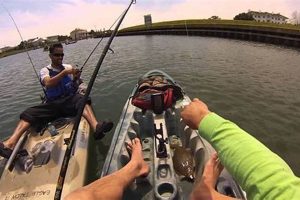
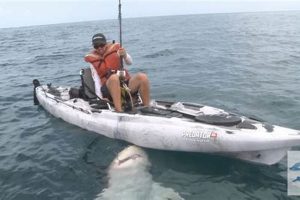
Angling for large game species from a kayak offers a unique and challenging experience. This pursuit typically involves specialized equipment, advanced paddling techniques, and a deep understanding of fish behavior and habitat. For instance, targeting marlin or tuna from a small, self-propelled vessel necessitates robust fishing rods, high-test lines, and specialized rigging. It also requires careful consideration of weather conditions, currents, and the target species’ migratory patterns.
This specialized approach to fishing provides several advantages. The low profile of a kayak allows anglers to approach fish with minimal disturbance, increasing the likelihood of a successful hookup. Furthermore, the maneuverability of a kayak grants access to shallow waters and complex structures often inaccessible to larger boats, opening opportunities to target species in their preferred environments. Historically, smaller vessels have played a significant role in fishing cultures worldwide, and the modern adaptation with kayaks continues this tradition by blending traditional angling skills with contemporary technology.
This article will explore the various aspects of pursuing large fish species from a kayak, covering topics such as essential gear, suitable kayak types, effective fishing techniques, and safety considerations for open-water angling. It will also delve into the conservation aspects and ethical considerations surrounding this exciting and demanding pursuit.
Tips for Targeting Large Fish Species from a Kayak
Successfully landing trophy fish from a kayak requires careful planning and execution. The following tips provide valuable insights for anglers seeking to maximize their chances of success while prioritizing safety.
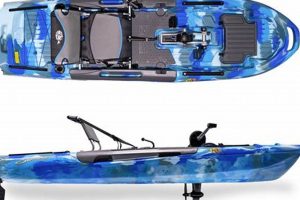
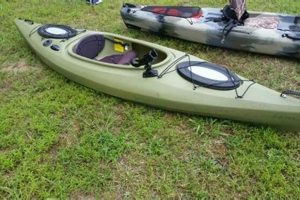
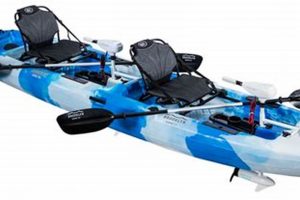
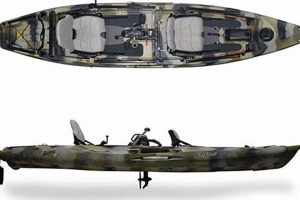
Tip 1: Choose the Right Kayak: Selecting a kayak specifically designed for fishing is crucial. Look for features like stability, ample storage, and dedicated rod holders. Consider a sit-on-top design for easier maneuverability and re-entry in case of capsizing.
Tip 2: Utilize Specialized Equipment: Heavy-duty rods, reels, and lines are essential for battling large fish. Invest in high-quality tackle designed to withstand the stress of these powerful species.
Tip 3: Understand Fish Behavior: Research the target species’ habits and preferred habitats. Knowledge of their feeding patterns and migratory routes significantly increases the chances of a successful encounter.
Tip 4: Prioritize Safety: Always wear a personal flotation device (PFD) and carry essential safety equipment, including a VHF radio, signaling devices, and a first-aid kit. Inform someone of your fishing plans and estimated return time.
Tip 5: Master Kayak Control: Practice maneuvering the kayak efficiently, especially in challenging conditions. Learn techniques for paddling against currents and maintaining stability while fighting a fish.
Tip 6: Employ Effective Fishing Techniques: Adapt fishing techniques to suit the target species and the kayak environment. Consider trolling, jigging, or live baiting depending on the situation.
Tip 7: Respect the Environment: Practice catch-and-release whenever possible, handling fish with care to minimize stress and ensure their survival. Adhere to all local fishing regulations and respect the natural habitat.
By adhering to these guidelines, anglers can enhance their chances of a rewarding and safe experience while pursuing large fish from a kayak. Preparation and knowledge are key to maximizing success and minimizing risk in this challenging but exhilarating pursuit.
This information provides a foundation for anglers seeking to embark on the adventure of kayak fishing for large game species. The following sections will delve into more specific aspects of this pursuit.
1. Stable Kayak Platform

A stable kayak platform is paramount for successful angling of large fish species. Stability directly influences an angler’s ability to effectively hook, fight, and land powerful fish. A stable platform minimizes the risk of capsizing, particularly during critical moments such as hookset and when a fish makes strong runs. This stability translates to greater control over the kayak and the fishing rod, increasing the likelihood of a successful outcome. For example, when battling a large tuna, a stable kayak allows the angler to maintain balance and leverage while applying pressure, preventing the fish from breaking free. Conversely, an unstable platform jeopardizes the angler’s safety and reduces the chances of landing the fish.
The importance of stability extends beyond the fight itself. A stable kayak platform also facilitates other critical aspects of large fish angling, such as casting accuracy and efficient retrieval. It allows anglers to maintain a comfortable and balanced position, optimizing casting distance and precision. Furthermore, a stable kayak enables anglers to effectively manage fishing gear and accessories, streamlining the process of changing lures, adjusting lines, and handling captured fish. For instance, when trolling for marlin, a stable kayak allows the angler to maintain a consistent trolling speed and direction, increasing the chances of attracting and hooking the fish. Practical applications of this understanding include choosing kayaks with wider beams and lower centers of gravity, and utilizing stabilizing outriggers or stabilizers for enhanced stability.
In conclusion, a stable kayak platform is fundamental to success and safety when targeting large fish species. Its significance permeates every stage of the angling process, from casting and hooking to fighting and landing. Understanding this connection empowers anglers to make informed decisions regarding kayak selection, equipment choices, and fishing techniques. While inherent kayak design contributes significantly to stability, anglers can further enhance stability through proper weight distribution and the utilization of supplementary stabilizing devices. This ultimately leads to a safer, more efficient, and more rewarding large fish kayak angling experience.
2. Specialized Fishing Gear

Specialized fishing gear plays a crucial role in successfully targeting large fish species from a kayak. The demanding nature of this pursuit necessitates equipment designed to withstand the immense power and fighting ability of these fish. Standard fishing tackle often proves inadequate for the challenges presented by large game species, increasing the risk of line breakage, rod failure, and ultimately, losing the fish. The connection between specialized gear and success in kayak fishing for large species lies in the gear’s ability to handle extreme stress and provide the angler with the necessary control and leverage during a protracted fight. For example, targeting a large bluefin tuna requires heavy-duty rods designed for high line capacity and strong drag systems, along with reels capable of withstanding the strain of rapid runs and powerful dives.
Further emphasizing this connection is the consideration of specific terminal tackle. Reinforced leaders, heavy-duty hooks, and specialized lures or baits are essential components. Leaders made from robust materials like fluorocarbon or wire prevent abrasion and breakage when battling fish with sharp teeth or abrasive skin. Hooks designed for large game species offer increased strength and durability to ensure a secure hold throughout the fight. Lures and baits tailored to the target species’ feeding preferences increase the likelihood of attracting and hooking the fish. For instance, when trolling for marlin, specialized lures that mimic the movements and appearance of their prey are crucial for success. Similarly, when bottom fishing for large grouper, heavy-duty circle hooks and strong, abrasion-resistant leaders are essential for extracting these powerful fish from their rocky habitats.
In conclusion, the relationship between specialized fishing gear and success in kayak fishing for large fish is undeniable. The selection and utilization of appropriate equipment significantly impacts the angler’s ability to effectively hook, fight, and land these challenging species. Investing in high-quality, purpose-built gear minimizes the risk of equipment failure and maximizes the chances of a successful outcome. While specialized gear represents an investment, it is a crucial one for anglers seeking to engage in this demanding yet rewarding pursuit. This understanding empowers anglers to make informed decisions about their equipment choices, contributing to a safer, more efficient, and ultimately more successful experience on the water.
3. Target Species Knowledge

Comprehensive knowledge of the target species is paramount for successful kayak angling of large fish. This understanding encompasses various aspects of fish behavior, including feeding patterns, habitat preferences, migratory routes, and species-specific vulnerabilities. Such knowledge directly influences the angler’s ability to locate, attract, and hook the desired species. For instance, understanding that marlin often feed near the surface on schools of baitfish informs the angler’s choice of fishing location and technique, such as trolling with surface lures that mimic the baitfish. Conversely, lacking this knowledge significantly reduces the likelihood of encountering the target species, making the endeavor less efficient and potentially unproductive. Essentially, target species knowledge forms the foundation upon which successful strategies are built, transforming a chance encounter into a targeted pursuit.
This knowledge base extends beyond general behavior to encompass the nuances of each species’ response to environmental factors. Water temperature, current patterns, tidal fluctuations, and even lunar cycles can significantly influence fish behavior and location. Anglers equipped with this understanding can predict fish movements and adjust their strategies accordingly. For example, knowing that tarpon prefer warmer waters and often congregate near inlets during incoming tides allows anglers to optimize their fishing time and location. This predictive capability significantly increases the probability of encountering the target species. Furthermore, understanding the specific vulnerabilities of each species, such as their susceptibility to certain lure types or presentations, enhances the effectiveness of fishing techniques, leading to higher hookup rates. This precise targeting minimizes wasted effort and maximizes the angler’s chances of success.
In conclusion, target species knowledge is an indispensable component of successful large fish kayak angling. This deep understanding of fish behavior, habitat preferences, and environmental influences empowers anglers to make informed decisions regarding fishing location, techniques, and timing. The practical significance of this knowledge lies in its ability to transform a pursuit based on chance into a strategic and targeted approach. While acquiring this knowledge requires dedicated research and observation, the resulting increase in efficiency and success makes it an invaluable asset for any angler seeking to maximize their chances of landing trophy fish from a kayak. This detailed knowledge ultimately bridges the gap between simply fishing and successfully targeting specific species, increasing the likelihood of a rewarding experience on the water.
4. Effective Fishing Techniques

Effective fishing techniques are essential for successfully targeting large fish species from a kayak. The limited space and maneuverability inherent in kayak fishing necessitate adapting techniques to suit this unique environment. Choosing and implementing the right techniques significantly impacts the angler’s ability to present baits or lures effectively, hook fish securely, and manage the fight successfully. This discussion will explore key fishing techniques relevant to kayak angling for large species, highlighting their practical applications and benefits.
- Trolling
Trolling involves dragging lures or baits behind a moving kayak. This technique covers a wide area, increasing the chances of encountering pelagic species such as marlin, tuna, and wahoo. In the context of kayak fishing, trolling requires careful speed control and precise lure selection. Specialized trolling equipment, such as outriggers and downriggers, can enhance the effectiveness of this technique by allowing for precise lure placement and spread. For example, trolling skirted lures at specific depths and speeds can effectively target different species.
- Jigging
Jigging involves vertically presenting lures or baits to entice fish. This technique proves effective for targeting bottom-dwelling species like grouper and snapper, as well as pelagic species that occasionally feed near the bottom. From a kayak, jigging requires precise boat control and a keen understanding of bottom structure. Heavy jigs are often necessary to reach the desired depth, and specialized rods and reels are essential for handling the strong pulls of large fish. Reading a fish finder to identify promising locations significantly increases the likelihood of success. Using braided line helps detect subtle bites and increases sensitivity during the jigging process.
- Drift Fishing/Live Baiting
Drift fishing involves allowing the kayak to drift naturally with the current while presenting baits or lures. This technique proves particularly effective in areas with strong currents or tidal flows. For kayak anglers, drift fishing offers a stealthy approach to targeting species such as sharks, cobia, and amberjack. Live bait, such as mullet or pilchards, often proves irresistible to these predators. Using appropriate tackle and rigging ensures a secure hookset and increases the chances of landing these powerful fish. Chumming can further enhance the effectiveness of this technique by attracting fish to the kayak.
- Casting
Casting involves propelling lures or baits towards a target area. This technique proves adaptable to various environments and species, from targeting inshore species like redfish and snook to pursuing offshore pelagics. Kayak anglers often employ specialized casting techniques, such as sidearm or underhand casts, to navigate the confines of the kayak. Accurate casting becomes crucial for placing lures near structure, where large fish often ambush prey. Utilizing lightweight lures and rods designed for increased casting distance maximizes the angler’s reach. Utilizing different types of casts allows anglers to adapt to various wind and water conditions, maximizing presentation accuracy.
Mastering these techniques, combined with knowledge of the target species and proper equipment selection, significantly enhances the chances of success when kayak fishing for large fish. Adapting these techniques to the unique challenges and opportunities presented by the kayak platform is essential for a safe and rewarding experience. While each technique requires specific skills and equipment, they share a common thread: the effective presentation of baits or lures to entice and hook large fish. Ultimately, the choice of technique depends on the target species, the fishing environment, and the angler’s personal preference. By combining these techniques with strategic planning and careful execution, anglers can maximize their chances of landing trophy fish from their kayaks.
5. Comprehensive Safety Measures

Targeting large fish species from a kayak presents inherent risks. Comprehensive safety measures are not merely recommended, but essential for mitigating these risks and ensuring a positive outcome. The demanding nature of battling powerful fish in a relatively small and unstable vessel necessitates a proactive and multifaceted approach to safety. Overlooking these precautions can lead to serious consequences, jeopardizing not only the fishing trip but also the angler’s well-being.
- Personal Flotation Device (PFD)
A PFD is non-negotiable. Constant wear is paramount, regardless of perceived swimming ability or proximity to shore. Unexpected events, such as capsizing during a fight or encountering rough water, necessitate immediate flotation. A PFD can prevent drowning, especially when an angler is entangled in fishing gear or incapacitated after a fall. Modern PFDs designed specifically for fishing offer comfort and functionality without hindering casting or paddling movements, ensuring both safety and practicality.
- Communication Equipment
Reliable communication equipment is crucial for summoning assistance in emergencies. A VHF radio enables direct contact with the Coast Guard and other vessels in the area. A waterproof cell phone or satellite communication device provides a backup communication method, especially in areas with limited VHF range. Regularly checking weather forecasts before and during the trip allows anglers to anticipate and avoid potentially hazardous conditions. Informing someone on shore of the fishing plan, including the intended location and estimated return time, provides an additional layer of security. Should an emergency arise, these communication tools enable rapid response, minimizing the potential for serious consequences.
- Safety Gear and Emergency Preparedness
Carrying essential safety gear is crucial for handling unforeseen situations. A well-stocked first-aid kit allows for immediate treatment of minor injuries, such as hook punctures or cuts. A signaling device, such as a flare gun or whistle, can attract attention in case of distress. A knife or multi-tool proves invaluable for cutting lines or performing other essential tasks. Carrying spare paddle and a bilge pump allows for quick recovery from equipment failure or capsizing. Understanding basic first aid and survival techniques further enhances preparedness for various emergencies.
- Kayak Handling and Stability
Proper kayak handling skills and an understanding of stability principles are fundamental. Knowing how to maneuver the kayak efficiently, especially in challenging conditions, increases control and reduces the risk of capsizing. Maintaining a low center of gravity and distributing weight evenly within the kayak enhances stability, particularly during the fight with a large fish. Practicing self-rescue techniques, such as re-entering the kayak after a capsize, builds confidence and preparedness for unexpected situations. Avoiding exceeding the kayak’s weight capacity and refraining from fishing in conditions beyond one’s skill level further contribute to a safe and controlled experience.
These safety measures are interconnected and contribute synergistically to mitigating the risks associated with kayak fishing for large fish. Neglecting any one aspect compromises overall safety and increases the likelihood of adverse outcomes. While the thrill of battling powerful fish from a kayak is undeniable, prioritizing safety ensures that the experience remains enjoyable and, most importantly, safe. Adopting a proactive approach to safety allows anglers to focus on the challenge of the fishing itself, confident in their ability to handle unforeseen circumstances. This preparedness transforms a potentially risky pursuit into a calculated and controlled adventure, enhancing the overall experience.
6. Respectful Conservation Practices
Respectful conservation practices are inextricably linked to the sustainability of kayak fishing for large species. These practices extend beyond simply adhering to regulations; they represent a commitment to preserving the health and vitality of fish populations and their ecosystems. The act of targeting large fish, particularly from a kayak, carries an inherent responsibility to minimize the impact on these often vulnerable populations. This connection stems from the understanding that the future of this specialized angling pursuit depends directly on the responsible stewardship of the resources it utilizes. For example, practicing catch-and-release with proper handling techniques, such as minimizing air exposure and supporting the fish horizontally, significantly increases post-release survival rates, particularly for sensitive species like billfish.
The practical significance of this understanding lies in its impact on long-term sustainability. Overfishing and habitat degradation pose significant threats to fish populations globally. Kayak anglers, by virtue of their direct interaction with the aquatic environment, can play a crucial role in mitigating these threats. Supporting and adhering to sustainable fishing practices, such as size and bag limits, safeguards against overexploitation and ensures the continued viability of target species. Minimizing environmental impact through practices like proper waste disposal and avoiding sensitive habitats further contributes to ecosystem health. For instance, choosing biodegradable fishing lines and refraining from anchoring on coral reefs demonstrates a tangible commitment to responsible angling. These actions, collectively, contribute to the preservation of healthy fish populations and the overall ecological balance, ensuring future generations can continue to enjoy the pursuit of large fish from a kayak.
In conclusion, respectful conservation practices constitute an integral aspect of kayak fishing for large species. This connection underscores the responsibility anglers bear in safeguarding the resources that sustain this pursuit. The practical application of conservation principles translates directly into tangible benefits for fish populations and their ecosystems. Embracing these practices ensures the long-term viability of this specialized form of angling, guaranteeing its sustainability for future generations. This understanding fosters a shift from simply extracting resources to actively participating in their preservation, creating a symbiotic relationship between angler and environment. Ultimately, the future of kayak fishing for large species depends on the collective commitment to responsible stewardship and the continued implementation of respectful conservation practices.
Frequently Asked Questions
This section addresses common inquiries regarding the pursuit of large fish from a kayak, providing concise and informative responses.
Question 1: What type of kayak is best suited for targeting large fish?
Kayaks designed specifically for fishing, often sit-on-top models, offer enhanced stability, specialized features like rod holders, and ample storage for gear. Longer kayaks, typically exceeding 12 feet, provide increased tracking and load capacity, crucial for battling powerful fish.
Question 2: What essential safety equipment should one carry when kayak fishing offshore?
Essential safety equipment includes a personal flotation device (PFD), a VHF radio, signaling devices (flares, whistle), a first-aid kit, a knife, a spare paddle, a bilge pump, and a leash for essential gear. Informing someone of fishing plans and estimated return time is crucial.
Question 3: What fishing techniques are most effective for large fish from a kayak?
Effective techniques include trolling with specialized lures or baits, jigging near the bottom, drift fishing with live bait, and casting near structure. Adapting techniques to the target species and prevailing conditions maximizes effectiveness.
Question 4: How does one handle a large fish hooked from a kayak safely?
Maintaining a low center of gravity, using a rod with sufficient lifting power, and employing appropriate drag settings are crucial. Utilizing a fighting belt or harness distributes the load and reduces strain. Exercising patience and allowing the fish to tire before attempting to land it minimizes the risk of capsizing.
Question 5: What conservation considerations are relevant to kayak fishing for large species?
Practicing catch-and-release whenever possible, using circle hooks to minimize injury, handling fish with care, and adhering to size and bag limits are essential conservation practices. Minimizing environmental impact through responsible waste disposal and avoiding sensitive habitats contributes to ecosystem health.
Question 6: What are the primary challenges associated with kayak fishing for large species?
Challenges include maintaining stability during the fight, handling the physical demands of battling powerful fish, navigating potentially challenging weather conditions, and effectively landing large fish in a confined space. Proper preparation, knowledge, and experience mitigate these challenges.
Careful consideration of these commonly asked questions enhances preparedness and contributes to a safer and more rewarding kayak fishing experience.
This concludes the frequently asked questions section. The following section will offer concluding remarks on kayak fishing for large species.
Kayak Big Fish
This exploration of pursuing large fish species from a kayak has highlighted key elements essential for success and safety. A stable kayak platform, specialized fishing gear, in-depth target species knowledge, effective fishing techniques, comprehensive safety measures, and respectful conservation practices are fundamental to this demanding pursuit. Each element contributes significantly to the angler’s ability to effectively locate, hook, fight, and land large fish while minimizing environmental impact and ensuring personal safety. The interconnectedness of these elements underscores the importance of a holistic approach, where preparation and knowledge converge to create a rewarding experience.
The pursuit of large fish from a kayak represents a unique blend of challenge, skill, and respect for the natural world. Continued emphasis on responsible angling practices and ongoing refinement of techniques will ensure the sustainability of this exciting pursuit. The potential for unforgettable experiences awaits those who embrace the challenge and dedicate themselves to mastering the art of kayak big fish angling. This pursuit offers not merely the thrill of the catch, but a deeper connection with the aquatic environment and the magnificent creatures that inhabit it.